Luoghi d’Italia

  • Luoghi d'Italia

    Step into the Renaissance: Inside the Uffizi Gallery in Florence

    Reading Time: 9 minutes

    Some museums display art; others allow you to feel as though you have stepped into the very space where art history took shape. The Uffizi Gallery belongs firmly to the second category: a place where the distance between present and past narrows so much that you begin to sense the Renaissance not as a historical period, but as a living presence unfolding around you.

    The Uffizi Gallery sits right in the centre of Florence, between the river and Piazza della Signoria, yet the moment you step inside, the atmosphere changes. The noise of the city fades, replaced by the soft echo of footsteps on stone floors and the quiet movement of visitors adjusting to the light. The building seems to invite you to slow down, look carefully, and let the Renaissance reveal itself room by room.

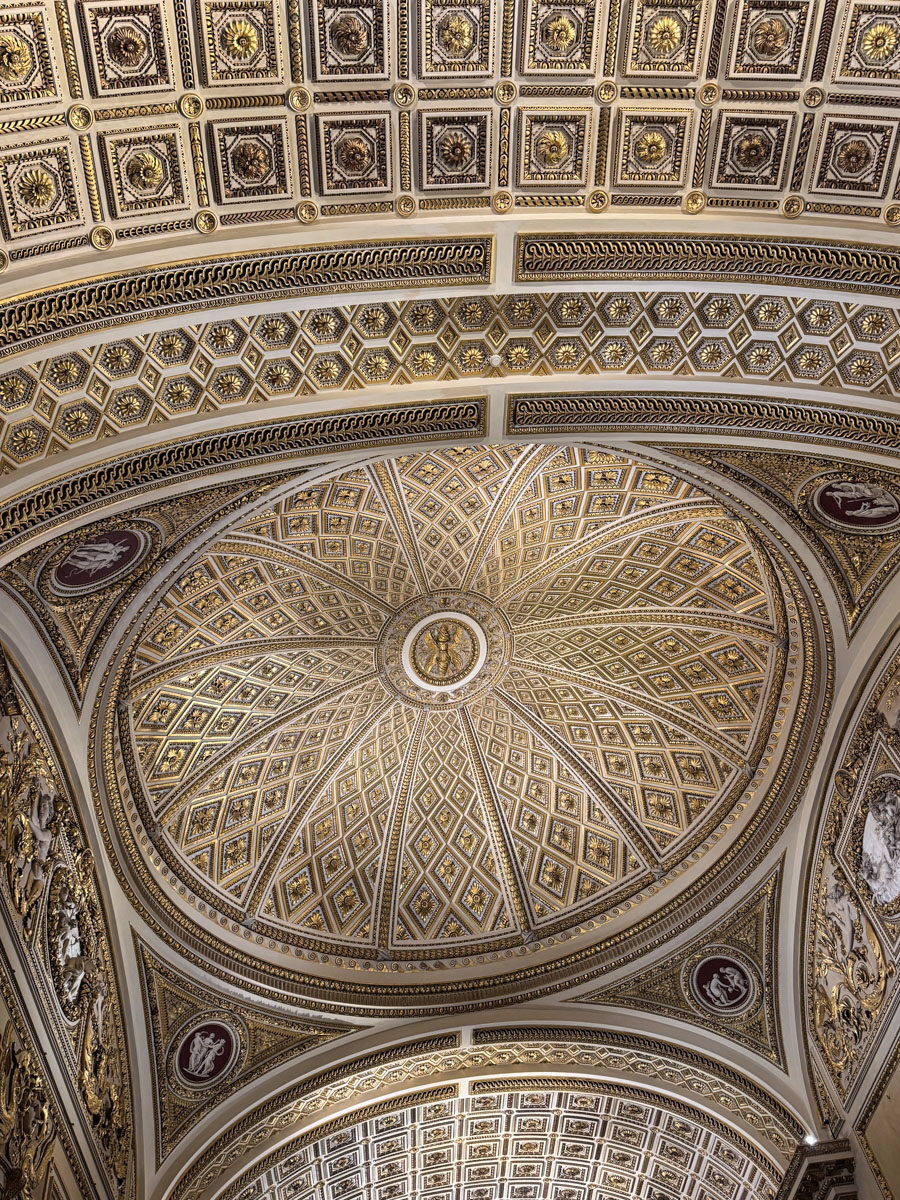
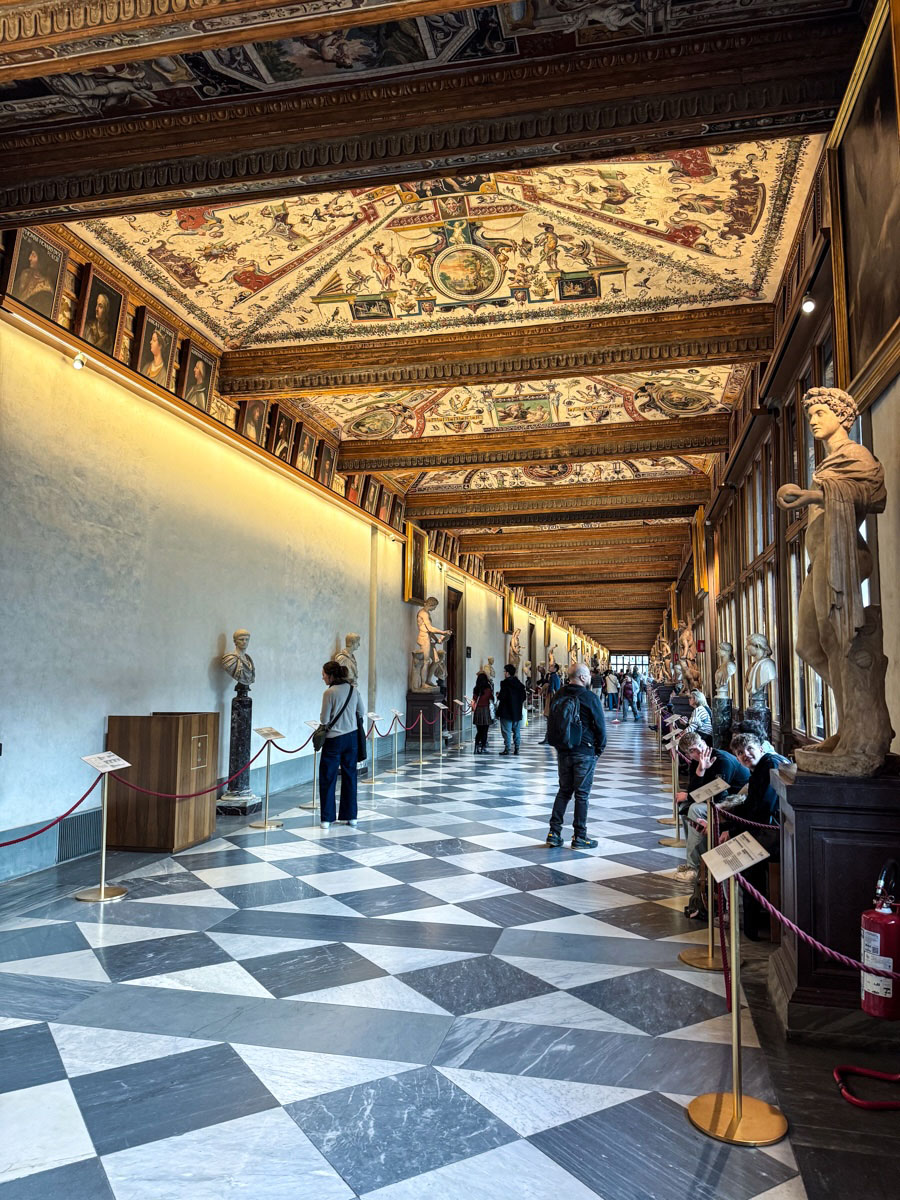
    As you move through the entrance, the building itself guides your attention. The visit begins with a long walk up the staircase and into the corridors designed by Giorgio Vasari in the 16th century. The long sequence of vaulted ceilings and the rhythm of statues and portraits create an atmosphere that encourages you to slow down and prepare for the encounters ahead. Through the windows, Florence appears framed like a series of paintings: Ponte Vecchio, the rooftops, the dome of the cathedral in the distance. It’s a moment of transition, a gentle shift from the present into a different kind of time.

    This is where the word rinascimento — “rebirth” — starts to feel appropriate. It’s not just a historical term; it describes the sense of curiosity and renewal that shaped the art you are about to see.

    Cimabue, Giotto, and the First Steps Toward the Renaissance

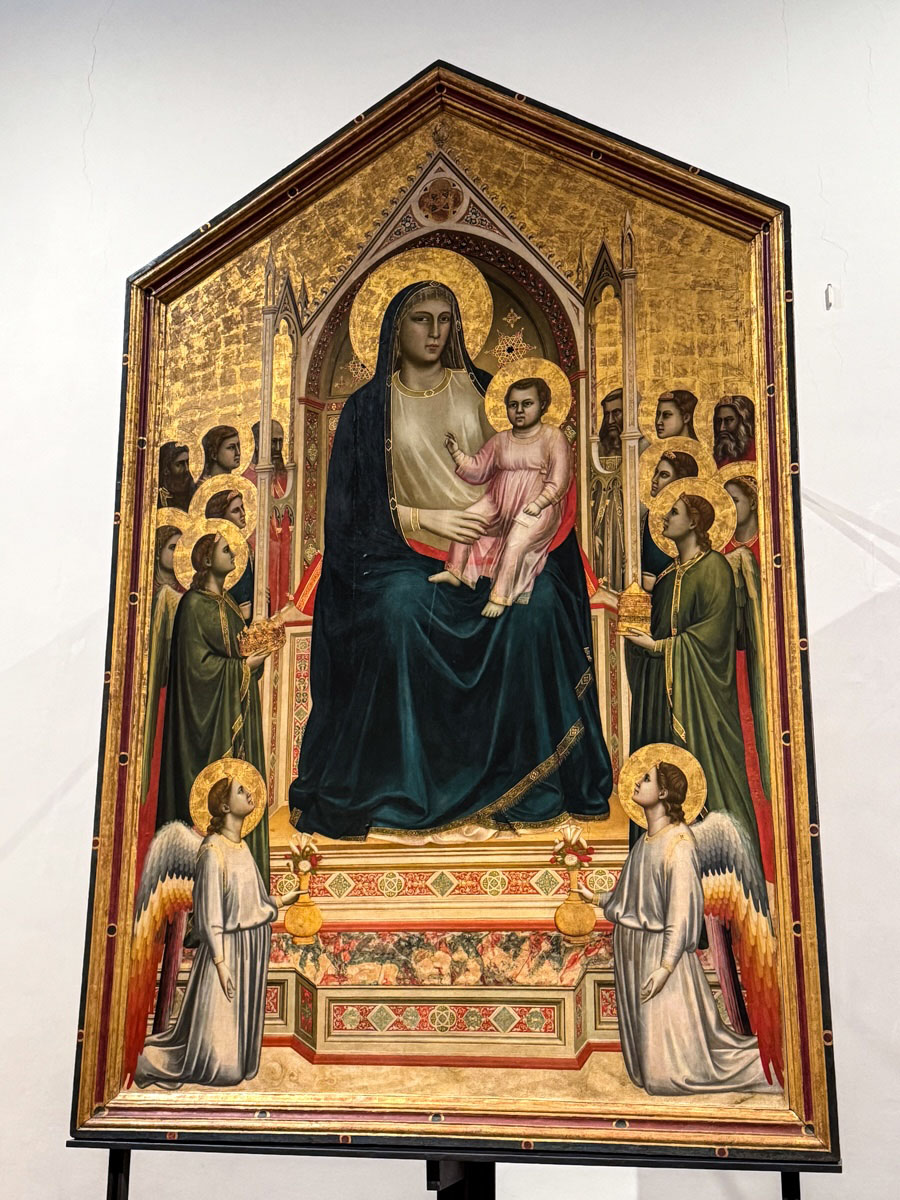
    The Uffizi’s story begins before the Renaissance itself, in the rooms dedicated to the early masters. Here, works by Cimabue and Giotto show the moment Italian painting began to shift away from the rigid, symbolic language of Byzantine art toward something more human, spatial, and emotionally legible. Cimabue’s altarpieces still carry the solemn gold backgrounds and elongated figures of medieval tradition, yet you can sense an early curiosity for volume and presence. His Madonnas feel slightly more grounded, their gestures more intentional, as if the painter were testing how far he could push the boundaries of the sacred image without breaking them.

    Giotto takes that tentative step and turns it into a confident stride. His works in the Uffizi reveal a painter who understood space not as a decorative surface but as a stage where human stories unfold. Faces gain weight and individuality, drapery falls with believable gravity, and gestures begin to express real emotion rather than symbolic convention. Standing before these panels, you can feel the Renaissance gathering momentum long before Botticelli or Leonardo appear.

    Botticelli: Where Mythology and Light Converge

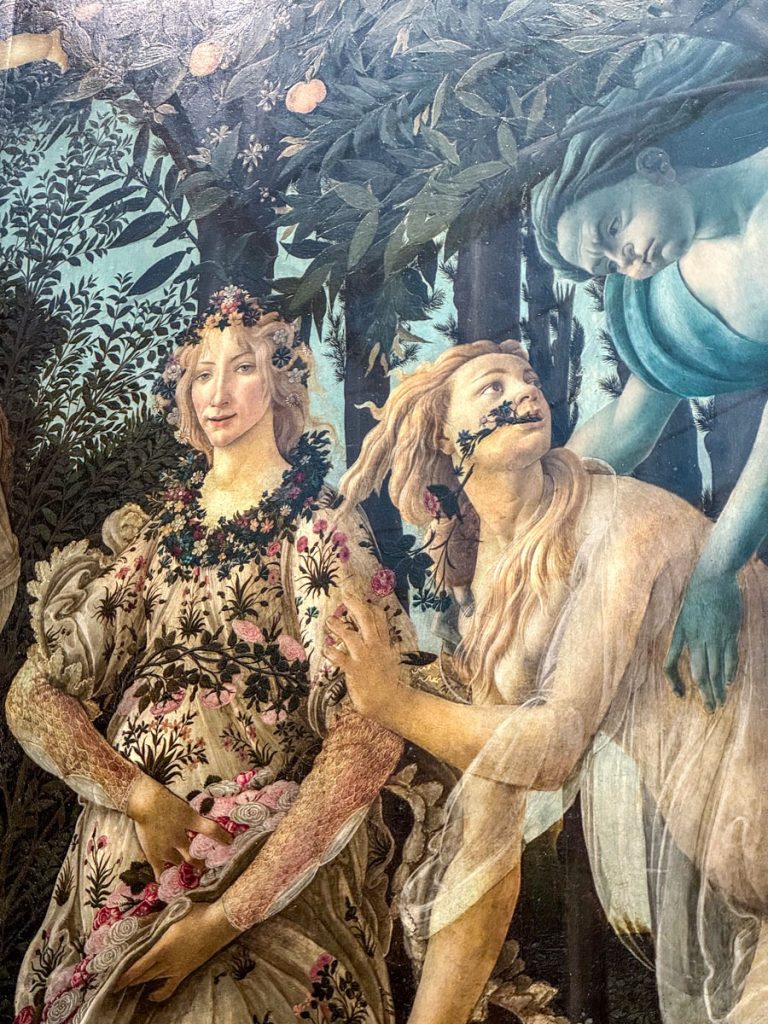
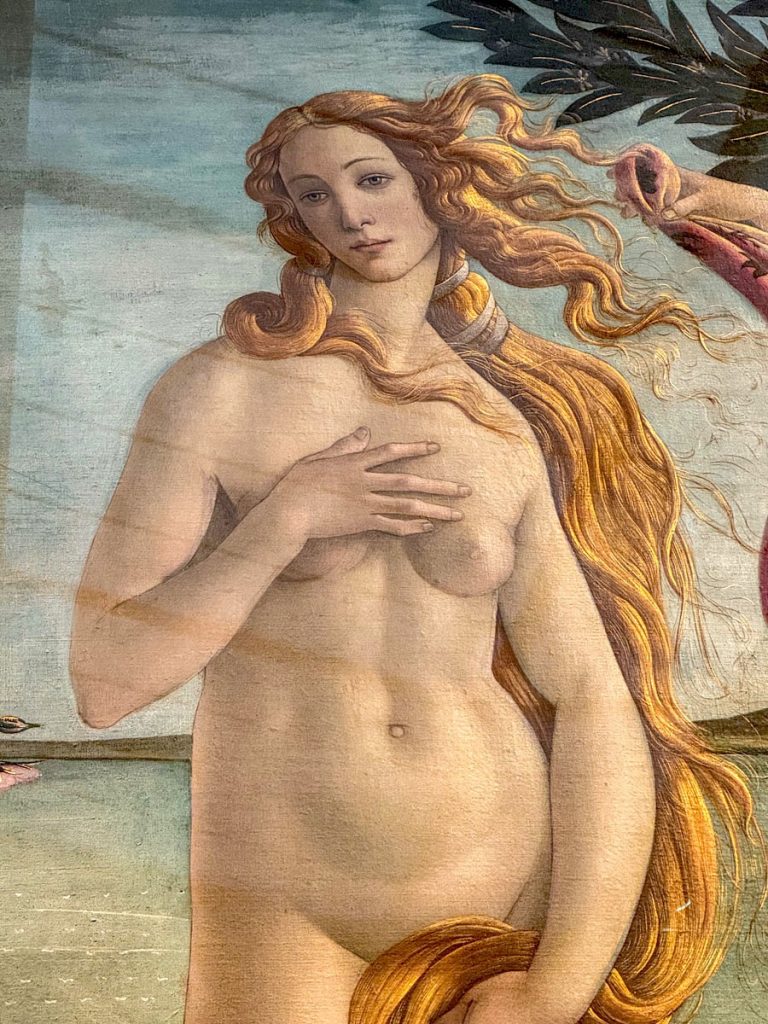
    The transition into the Botticelli rooms is almost imperceptible, yet unmistakable. Standing before the Birth of Venus or Primavera, you realize how inadequate reproductions are: the paintings are larger, more delicate, and more complex than memory suggests. The figures appear suspended in a world where myth and nature coexist. Botticelli’s idea of bellezza — beauty as harmony and proportion — becomes clearer when you can stand close enough to see his fine brushwork.

    What makes these paintings unforgettable is not only their beauty but the physical experience of encountering them. The room is almost always crowded, a constant flow of visitors trying to find a clear view, yet the moment you finally stand in front of these iconic masterpieces, everything else seems to recede. Even with people shifting and cameras clicking, there is a brief, thrilling instant when the paintings seem to belong only to you — a private encounter with images that have shaped the world’s idea of beauty for centuries.

    Michelangelo and Leonardo: Two Opposing Visions of Creation

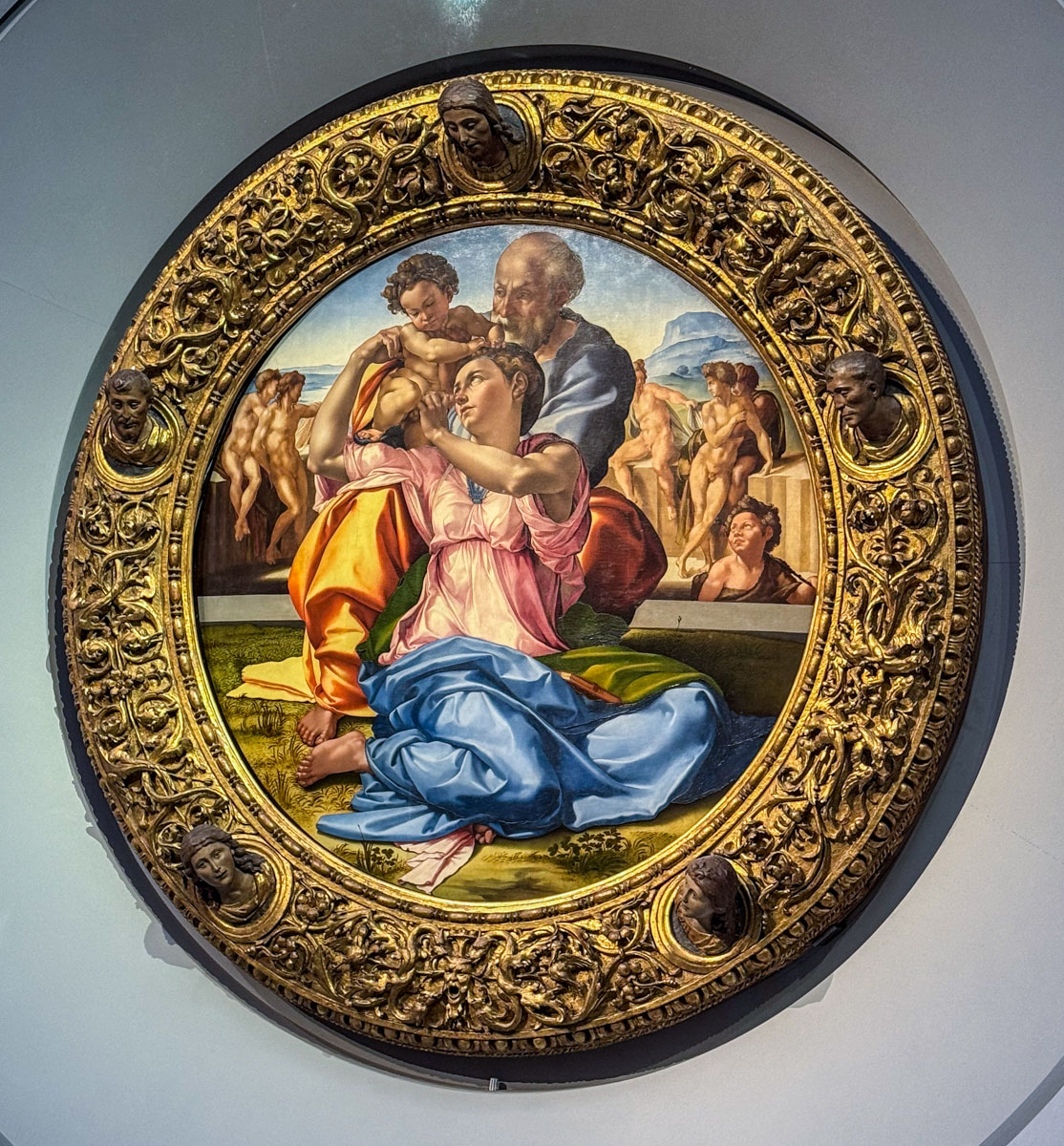
    Michelangelo - Tondo Doni

    Michelangelo is represented in the Uffizi by a single work of extraordinary intensity: the Tondo Doni, the only surviving finished panel painting by his hand. Its circular format seems to concentrate the energy of the scene, drawing the figures into a tight, sculptural knot. Mary twists in a powerful, almost athletic movement as she lifts the Christ Child. The colors are vivid, the contours sharply defined, and the bodies carry the weight and tension of carved marble — a reminder that Michelangelo approached painting with the mind and discipline of a sculptor. Even the enigmatic group of nudes in the background feels like a meditation on the human form, a bridge between the spiritual subject and the artist’s lifelong fascination with anatomy and physical strength. This single painting is enough to show how radically Michelangelo reshaped the language of Renaissance art through movement, tension, and the unmistakable vitality of the human body.

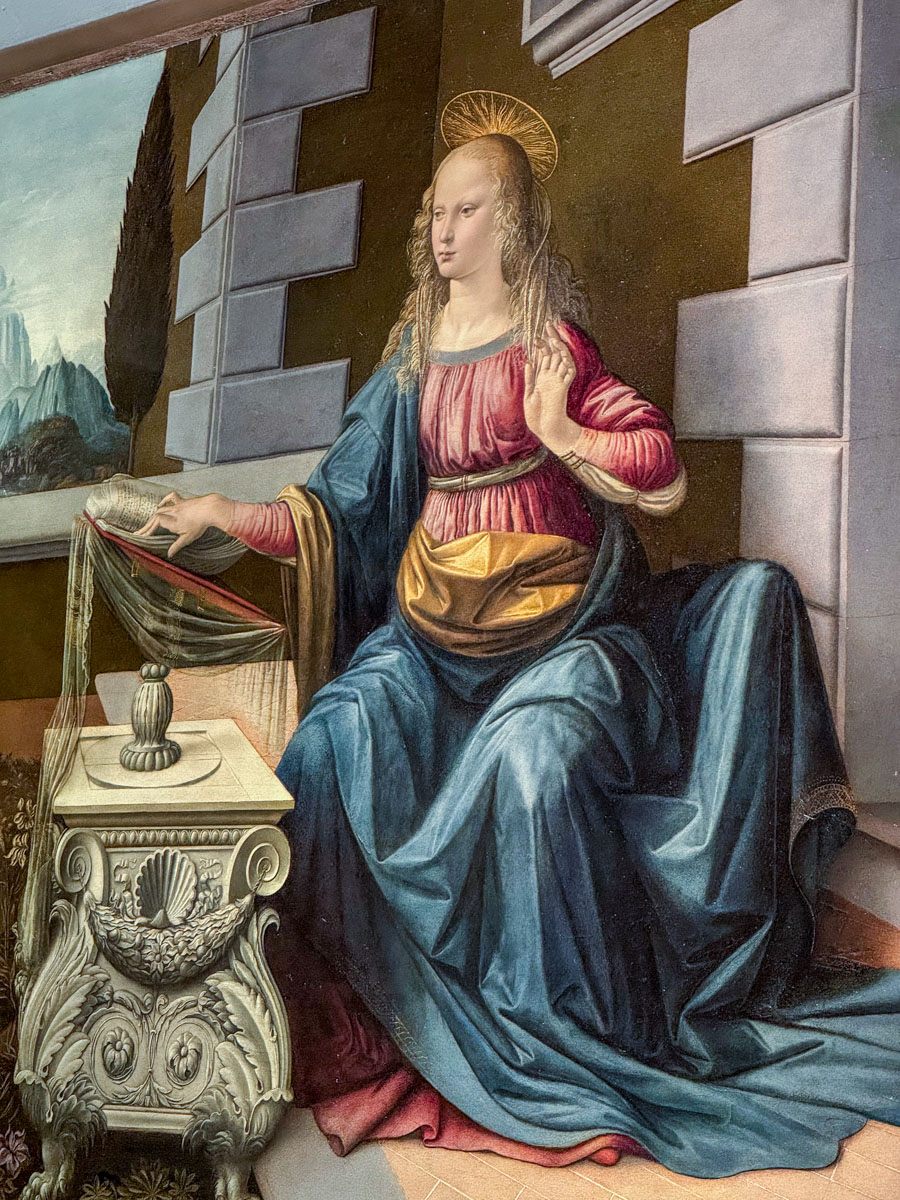
    Leonardo da Vinci - Annunciazione

    Leonardo’s paintings in the Uffizi feel like moments suspended between observation and imagination. His Annunciazione is a perfect example: the angel approaches with a quiet, almost hesitant grace, while Mary turns toward him with a gesture so subtle it seems to unfold in real time. The landscape behind them dissolves into soft blues and distant light, a world built from Leonardo’s fascination with nature and atmosphere. Even in this detail of the Madonna’s posture, you can see the delicacy of his sfumato, that gentle transition between light and shadow that gives her expression its calm, inward depth.

    Nearby, the Adorazione dei Magi reveals a different side of Leonardo: restless, experimental, and endlessly curious. The unfinished surface exposes his thought process, the way he layered gestures, architecture, and swirling groups of figures to create a composition that feels alive even in its incomplete state. Together, these works show Leonardo searching for a new visual language, one that blends scientific observation with emotional nuance. They form a bridge between the clarity of the early Renaissance and the psychological complexity that later artists would explore in their own ways.

    Raphael and Caravaggio: Balance and Contrast

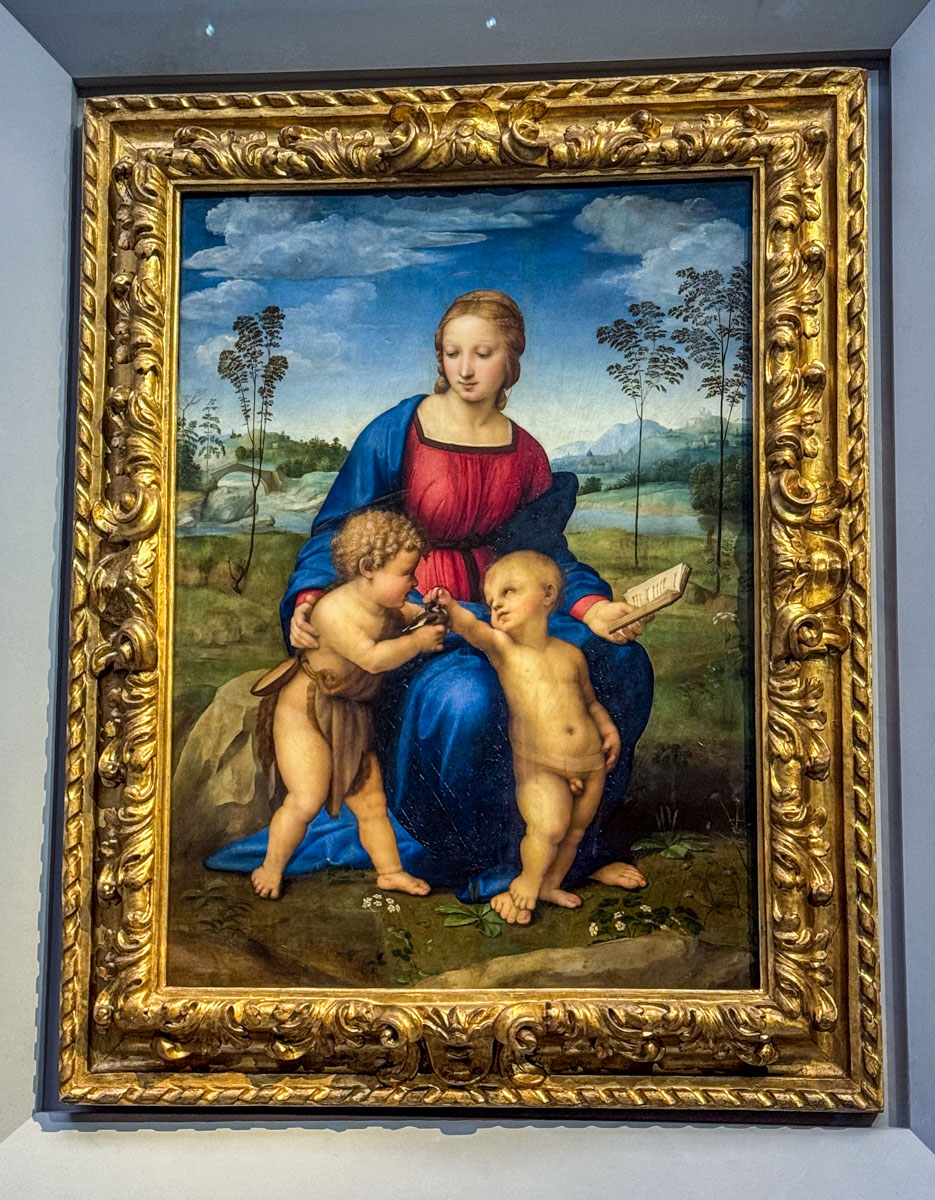
    Raffaello - Madonna del Cardellino

    Raphael’s portraits offer a moment of quiet clarity. Their elegance lies not in ornament but in the psychological depth of the sitters, who seem to inhabit the space with a naturalness that feels surprisingly modern. This quality becomes especially clear in the Madonna del Cardellino, where the tenderness between Mary, the Christ Child, and the young John the Baptist is expressed through gentle gestures and a serene landscape that seems to breathe around them. The painting embodies the Renaissance ideal of misura — balance, proportion, and thoughtful restraint — yet it also reveals Raphael’s gift for creating scenes that feel intimate rather than idealized, as if the viewer were quietly invited into a private moment.

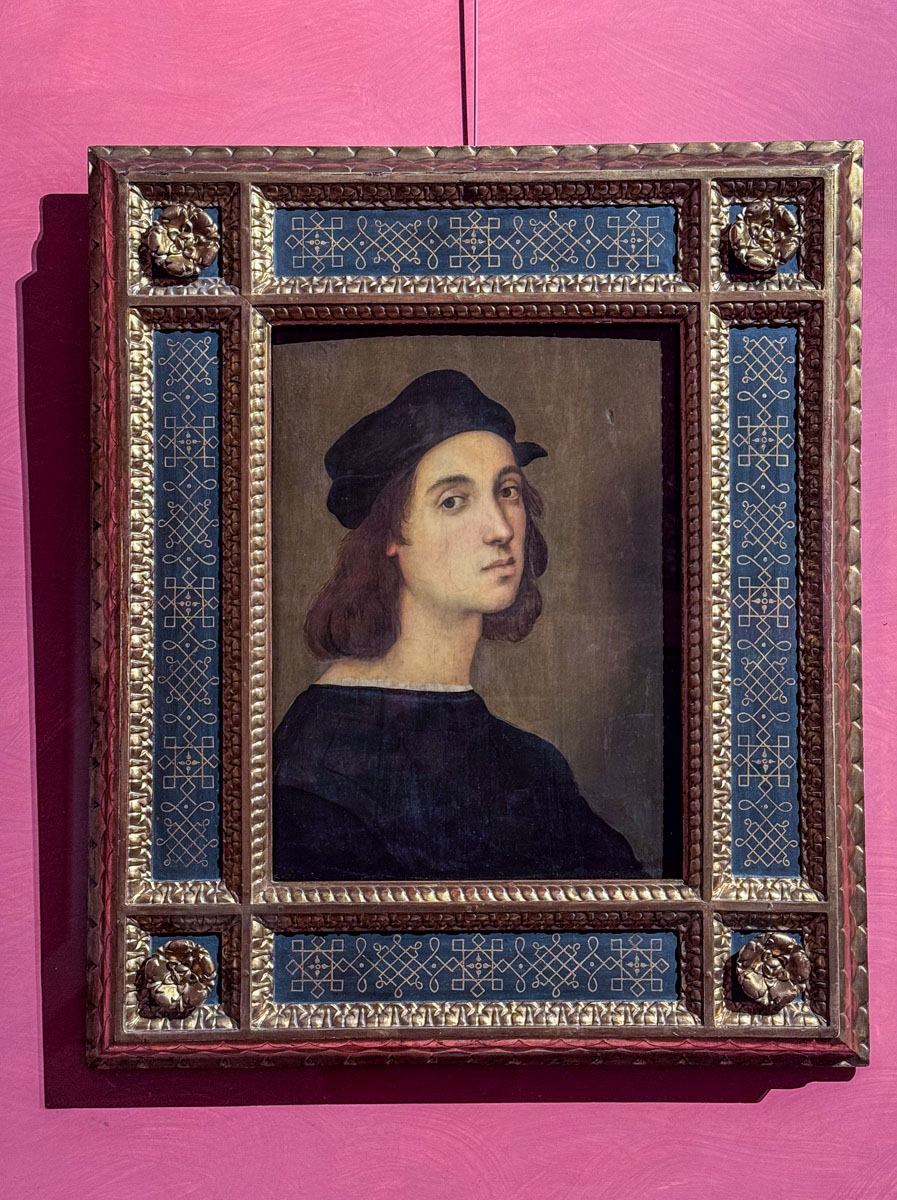
    Raffaello - Autoritratto

    Raphael’s self‑portrait adds another layer to this experience: a young artist looking out with calm confidence, aware of his place within the evolving language of Renaissance art. These works form a small but powerful constellation within the Uffizi, offering a pause between the intensity of Leonardo and the drama of Caravaggio — a space where clarity, balance, and human presence quietly take center stage. Read more about Raphael in our article L’arte sublime di Raffaello: la Dama col liocorno (in Italian).

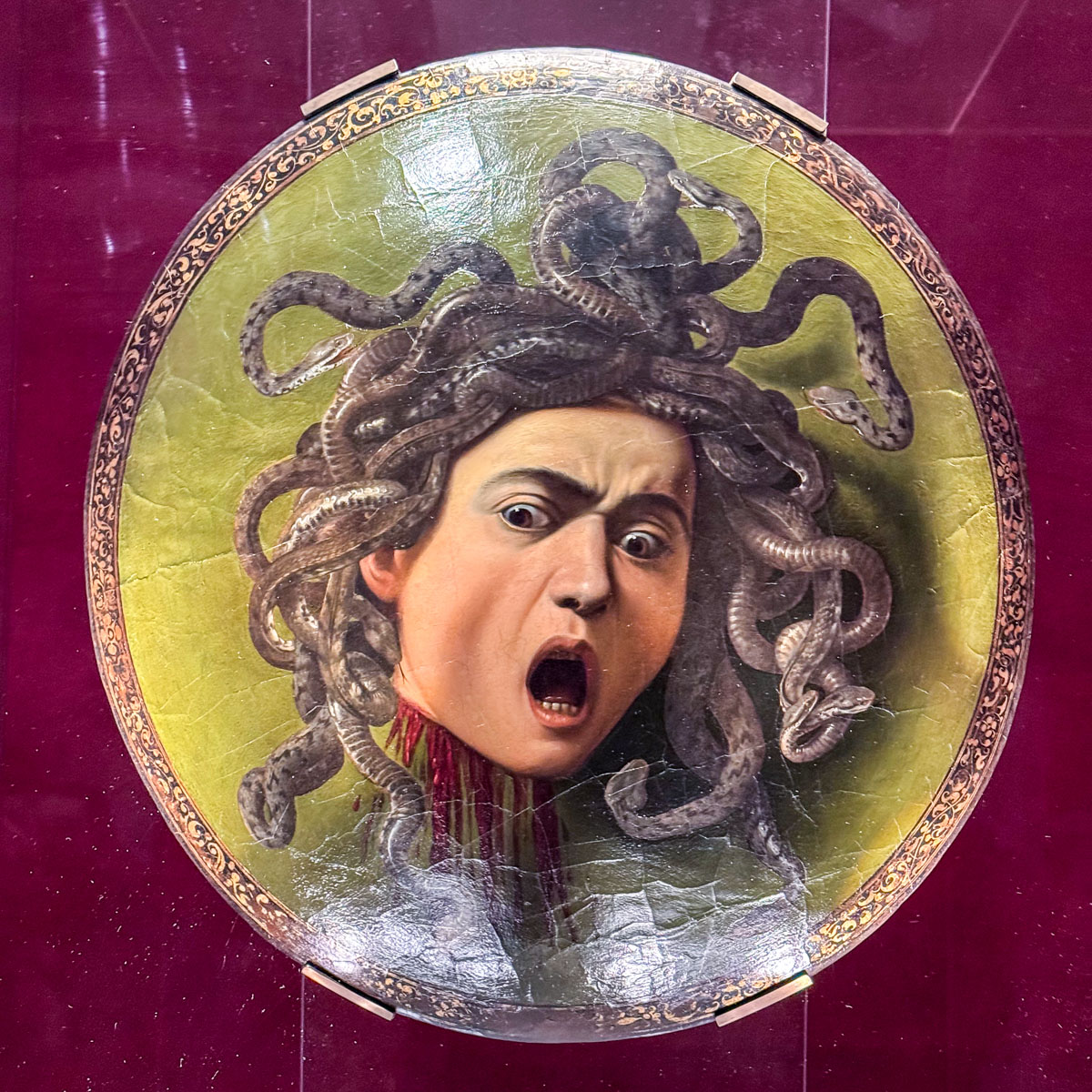
    Caravaggio - Medusa

    Caravaggio’s rooms in the Uffizi feel like a sudden plunge into a different emotional temperature. His paintings confront you with a world where light slices through darkness and human drama is stripped of every decorative veil. His Medusa, painted on a ceremonial shield, is one of the most unsettling images in the museum: the moment of decapitation frozen with terrifying immediacy, the head still alive in its final instant of shock. Caravaggio turns a myth into something disturbingly real, using his own face as the model and letting the chiaroscuro (contrast between light and darkness) carve out every detail with surgical precision.

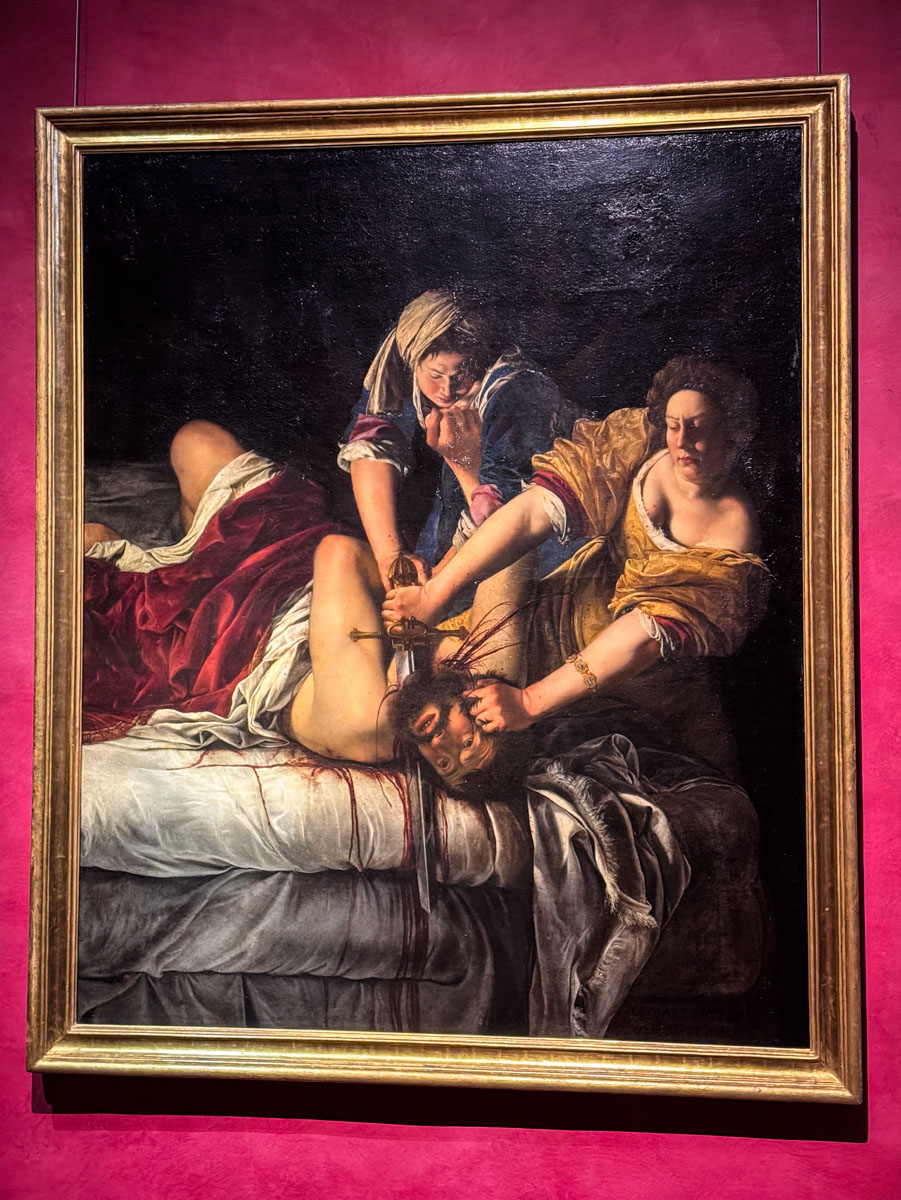
    Nearby, Giuditta e Oloferne pushes this realism even further. Here the dark background heightens the drama, pulling the figures into sharp relief. The scene is intimate and brutal, illuminated by a single, merciless beam of light that exposes both the violence of the act and the psychological tension between the figures. Caravaggio’s genius lies in the way he makes you feel the weight of the moment, the moral complexity, the raw humanity beneath the biblical story. Standing before these works, you sense how radically he broke with tradition, opening a path that would redefine European painting for centuries.

    Seeing Raphael and Caravaggio in close succession highlights how the Renaissance gradually opened the way to new forms of realism and emotional intensity. This is where the Italian word “umanesimo” — humanism — feels particularly relevant. The Renaissance was built on the belief that human experience, emotion, and intellect deserved to be at the center of artistic creation, and the Uffizi’s layout reflects that philosophy.

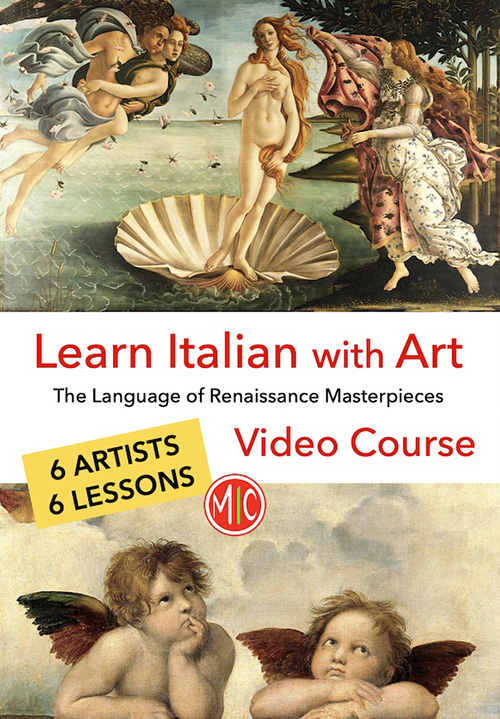
    Learn Italian with Art

    Passionate about art? You might enjoy our book and video course Learn Italian with Art – The Language of Renaissance Masterpieces, where we analyze six works from Italian Renaissance masters. A different way to improve your Italian, for late beginners and beyond.

    Learn more and watch sample videos on our Website.

    Practical Information for Your Visit

    Tickets

    The Uffizi Gallery is extremely popular, and many unofficial websites sell overpriced “priority” tickets or tours that look like the only option. To avoid this, always book through the official Gallerie degli Uffizi website:

    👉 Official tickets: https://www.uffizi.it/biglietti

    This is the only site that offers standard prices and timed entry without extra fees.

    What you’ll find on the official site

    • Free entry on the first Sunday of the month (very crowded)
    • Timed-entry tickets for the Uffizi
    • Combined passes (Uffizi + Pitti Palace + Boboli Gardens)
    • Reduced tickets for EU visitors aged 18–25

    Duration

    A focused visit takes about two to three hours, but spending half a day allows you to explore at a comfortable pace and revisit the rooms that interest you most.

    Best Times

    Weekday mornings and late afternoons tend to be quieter. The low season (November to February) offers a more relaxed experience.

    Accessibility

    The museum provides accessible routes and elevators. It’s a good idea to check the official website for updated information.

    Audio Guides

    Given the number of important works, an audio guide or a guided tour can help you navigate the collection without feeling overwhelmed.

    A Pause with a View

    The rooftop café offers a terrace overlooking Florence — a pleasant break and a good opportunity to take in the city from above.

    A Brief Historical Note

    The Uffizi began as a practical project rather than a museum. In 1560, Cosimo I de’ Medici commissioned Giorgio Vasari to design a new administrative complex for Florence — the uffizi, or “offices”. The long, narrow courtyard between the two wings was intentionally aligned with the river to create a sense of openness in a dense medieval city. Over time, the upper floor became a private gallery where the Medici displayed portraits, ancient statues, and the works of contemporary Florentine artists.

    When the Medici dynasty ended, their last heir, Anna Maria Luisa de’ Medici, signed the Patto di Famiglia, ensuring that the family’s artistic collections would remain in Florence “for the ornament of the State, for the utility of the Public, and to attract the curiosity of Foreigners”. This gesture transformed the Uffizi from a private treasure house into a public institution.

    A visit to the Uffizi is an opportunity to see some of the most influential works of Western art in their original context. When you finally step back into the streets of Florence, the experience lingers in a way that is difficult to articulate. Perhaps it is a color, a gesture, or a face that stays with you; perhaps it is the realization that the Renaissance is not a distant chapter in a textbook but a living conversation that continues each time someone stands before a painting and truly looks.

    At the Uffizi Gallery, there is a lot more that will catch your eye, of course. Masaccio, Beato Angelico, Piero della Francesca, Mantegna, Tiziano, Tintoretto, Paolo Veronese; a stunning collection of self-portraits; Rembrandt and other Dutch and Flemish masters; a room devoted to Painting by Candlelight.

    Tell me about your expectations and experience. Buona visita!

    Diana
    Related Videos from our Series Learn Italian with Art

  • Luoghi d'Italia

    Arena di Verona: The Most Italian Place on Earth

    Reading Time: 6 minutes
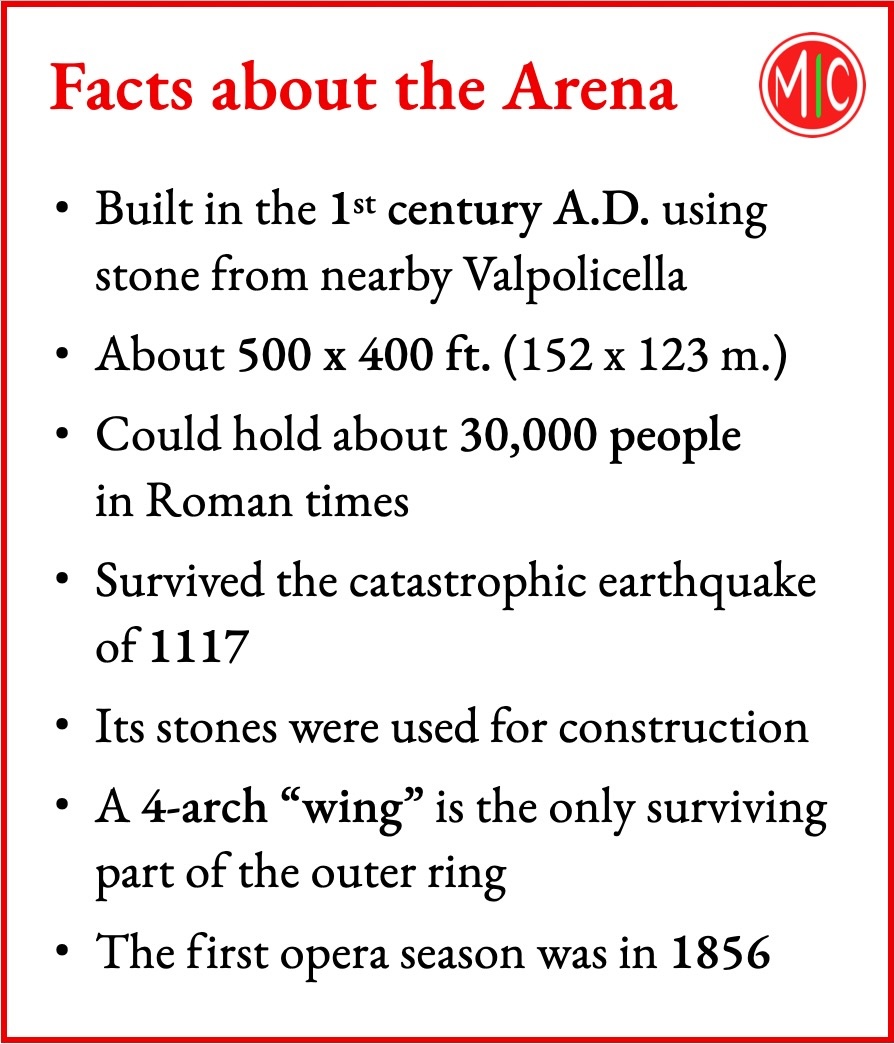
    Facts about Arena di Verona

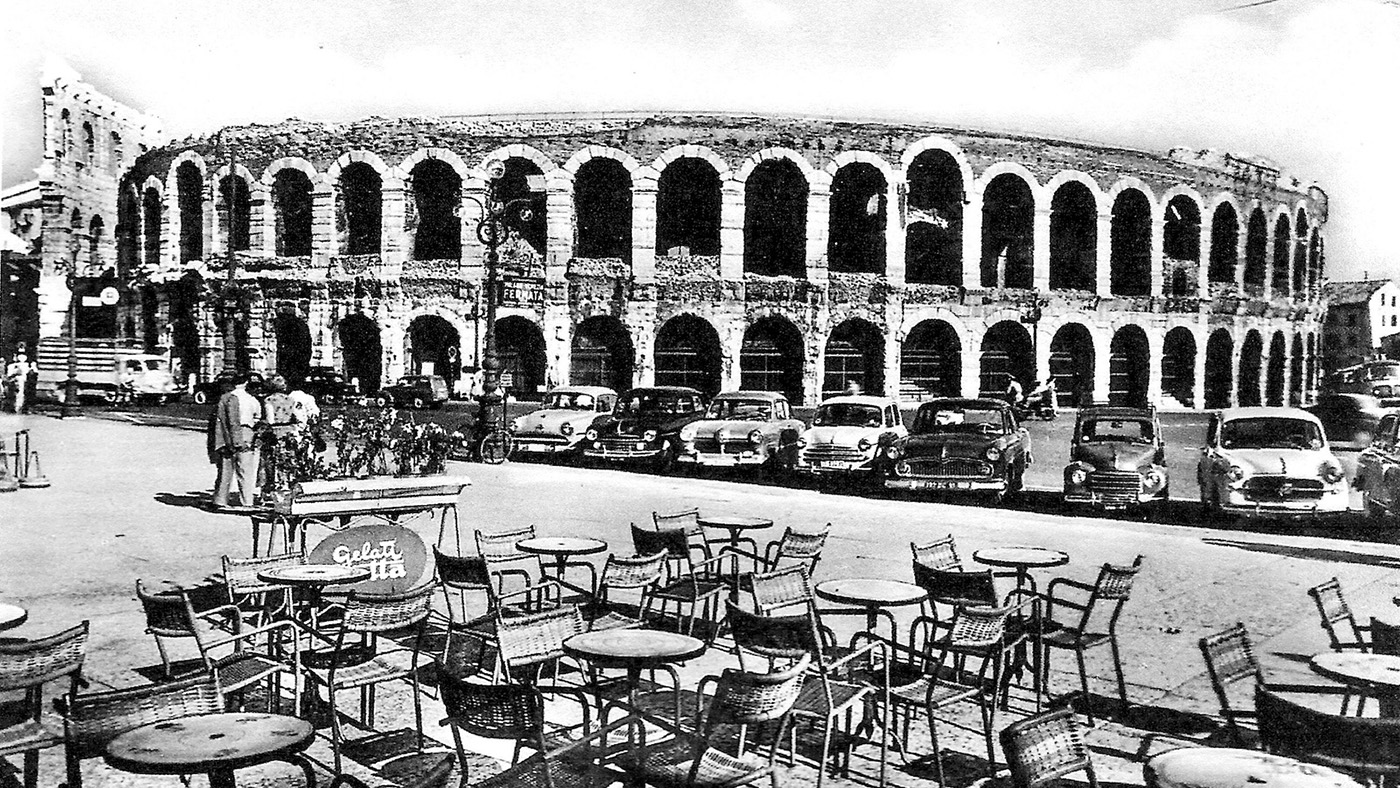
    I was born and raised in Verona, and I spent most of my adult life here. It’s a small city with a big history and an even bigger landmark to remind us of it: the Arena, a 2,000-year-old amphitheater, one of the best-preserved Roman buildings in the world. The Arena withstood time, fires and earthquakes, and is still standing today on our largest square, Piazza Bra, next to the City Hall. I remember a time when cars could circle the Arena like a roundabout, and I never thought much of it: it was standing there as it had always been, smog-stained and massive.

    Imagine my surprise when I discovered that the Arena di Verona had become The Most Italian Place on Earth™. Yes, that’s a trademark. We have a trademarked Roman monument now.

    What Does “Italian” Even Mean Here?

    The Arena di Verona Foundation, the institution that manages the amphitheater and the events organized inside of it, registered the trademark in 2023. It sounds bold, poetic, and slightly bizarre — which, to be fair, is already quite Italian. All in all, it has a nice ring to it, but I couldn’t help but wonder about the reasons behind this decision, and what they meant by Italian.

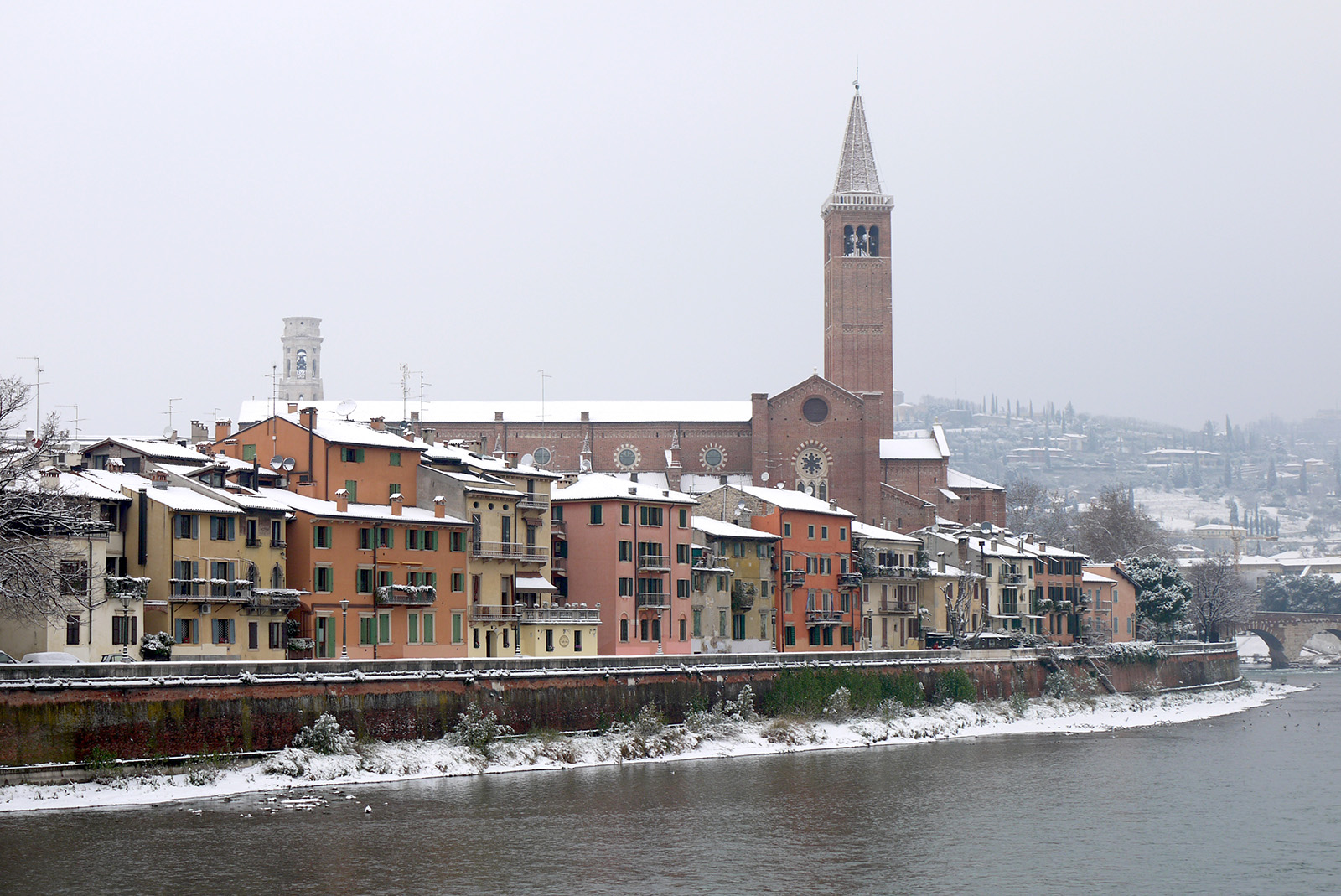
    Verona a few winters ago

    Verona has never struck me as stereotypically Italian. We’re in the north, between the fog of the Po Valley and the German‑speaking mountains of Trentino‑Alto Adige. Winters can be dull and gray, summers are humid, and we even have snow every now and then. Not exactly the postcard Italy of lemon trees and turquoise skies.

    The people of Verona don’t really fit the stereotype either, and never looked particularly Italian to me. I never thought of myself as very Italian! Many of us are reserved and suspicious, not at all warm and cheery like real Italians are supposed to be. We only open up with old friends — or after a Spritz or two.

    If Verona isn’t stereotypically Italian, why would the Arena claim that title? What makes it so Italian? Short answer: ancient Rome and opera. The Arena is where they collide.

    Which is more Italian, the Arena or the Colosseum?

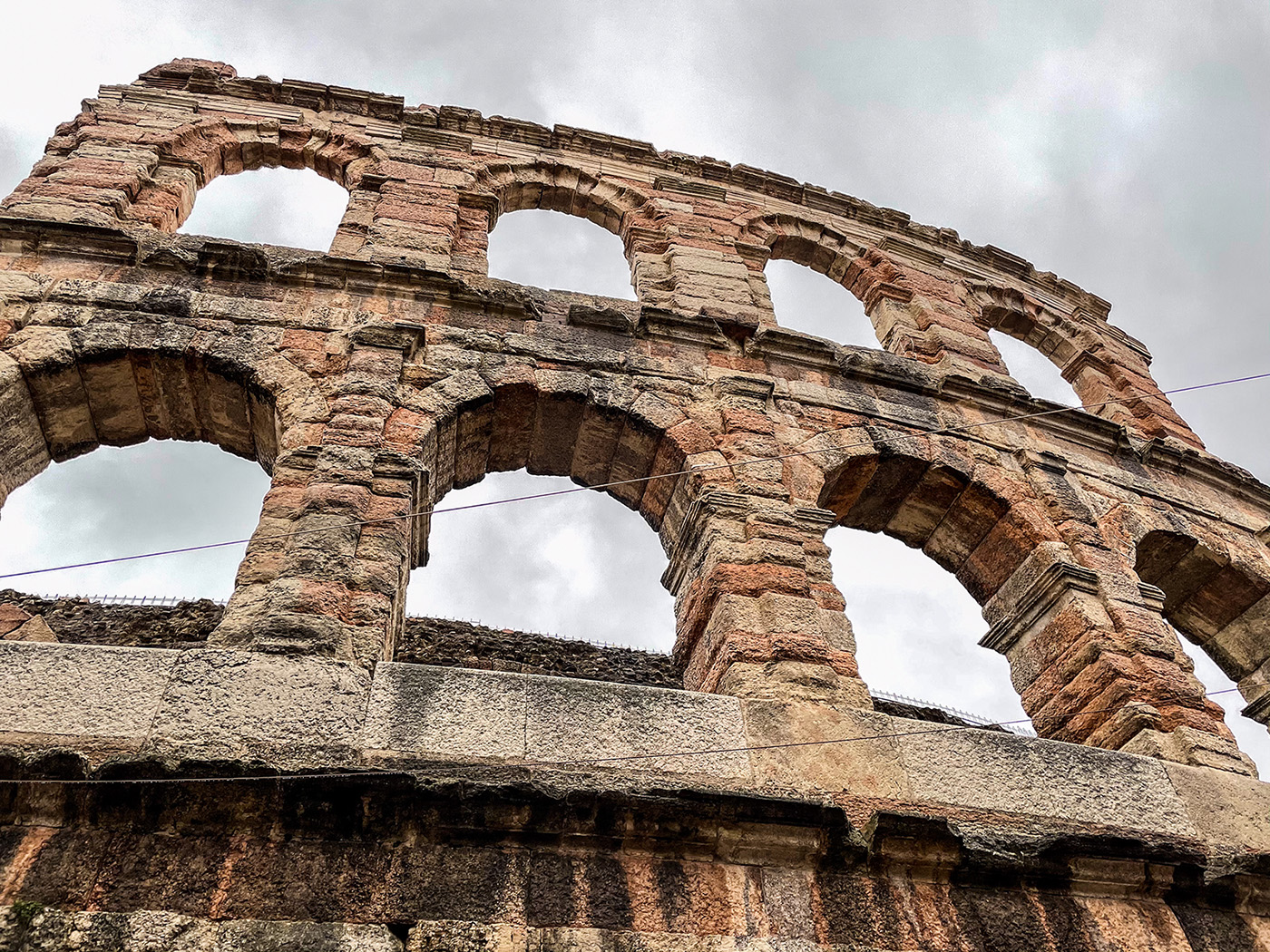
    The Arena is essentially a scaled-down Colosseum, but with some crucial differences. It’s built from local red ammonitic limestone rather than Rome’s travertine, giving it a warmer, rosier glow at sunset. It’s smaller, more intimate, and — crucially — it’s still alive.

    Where the Colosseum is a ruin, the Arena is a venue. Where the Colosseum is a symbol, the Arena is a habit. Where the Colosseum is history, the Arena is experience. This is where the “Italian” part begins to make sense.

    Verona's Arena, historical photo
    When Piazza Bra was open to car traffic: historical photo of the Arena di Verona

    Opera: Italy’s Emotional Engine

    If ancient Rome gave the Arena its body, opera gave it its soul. In the summer, the Arena di Verona opera season fills the amphitheater with up to 10,000 people every night — locals, tourists, opera lovers, opera skeptics dragged along by opera lovers — all waiting for the lights to go down. Cushions appear on the stone steps, the orchestra tunes, candles flicker, and the magic begins.

    Opera is the only sport where Italians cheer for heartbreak, and the Arena is its stadium. Opera was never meant for the elite: it was a popular form of entertainment. This is where Verdi and Puccini feel less like musical legends and more like friends and relatives. Where even people who claim to “hate opera” end up shedding a tear during the most compelling arias. If there is a place where Italy performs its own identity — loudly, dramatically, unapologetically — it’s here.

    For learners of Italian, a night at the opera is a linguistic gift, when words like amore, notte, cuore, vendetta stretch across the amphitheater in long, generous vowels.

    Why Trademark “The Most Italian Place on Earth™”?

    Because Italy is a brand, and the Arena di Verona is its logo.

    The trademark is not about nationalism; it’s about storytelling. Verona needed a hook — something that captured the Arena’s unique blend of history, emotion, and spectacle. “The Most Italian Place on Earth™” is a provocation, a wink, a promise. It says: If you want to understand something about Italy, come sit on these stones for a night. And honestly? They’re not wrong.

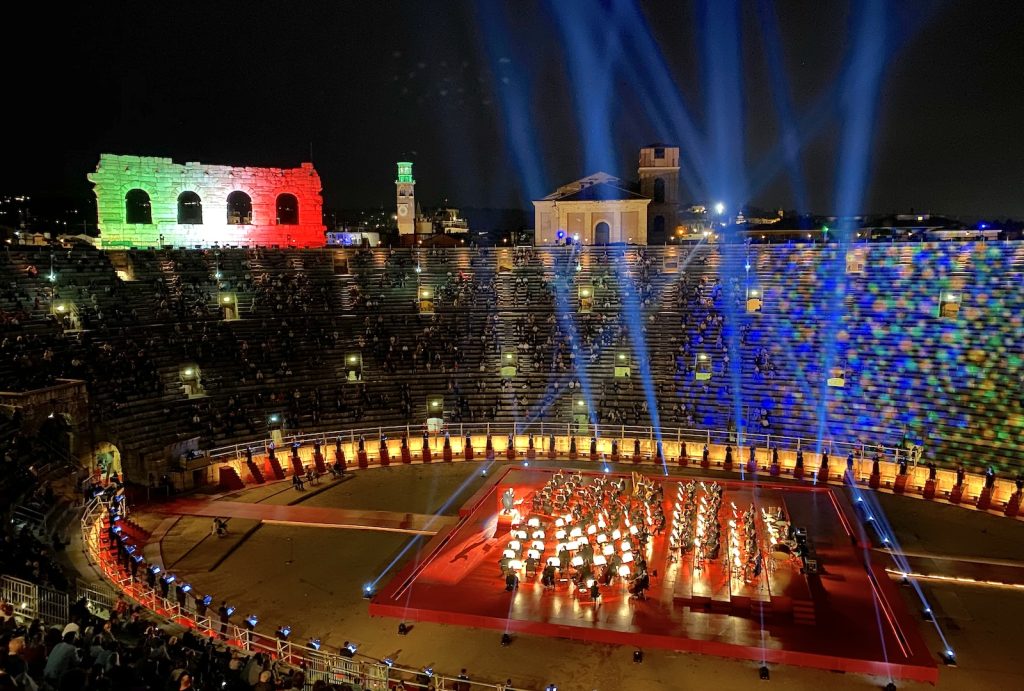
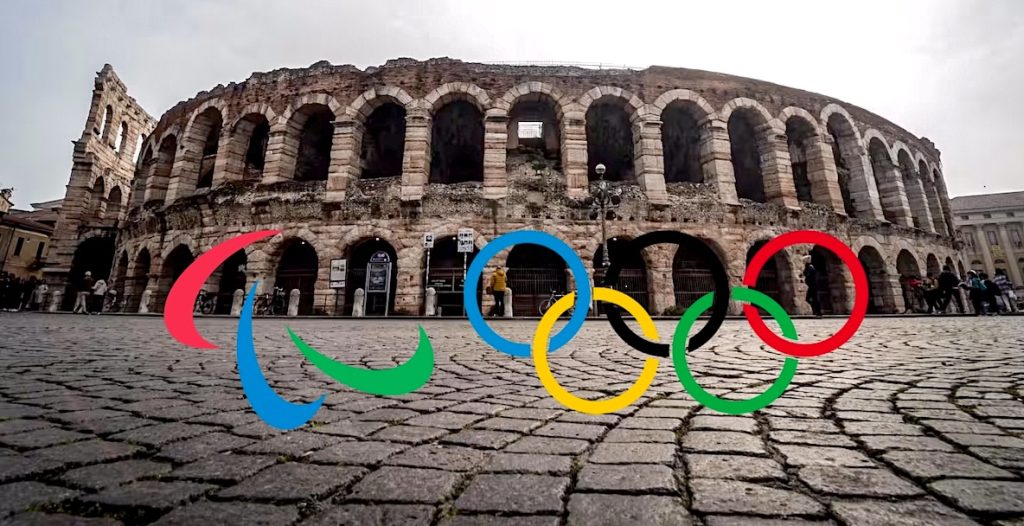
    The Arena recently hosted the closing ceremony of the 2026 Winter Olympics and the opening ceremony of the Paralympics. Look back on these events in this post.

    A Guide to the Arena di Verona: Practical Tips for Visitors

    Even the most poetic amphitheater requires logistics. Here’s what you need to know if you are planning a night at the Arena:

    Best time to visit the Arena di Verona: the opera season goes from June to September, with approximately four shows every week. Check the updated calendar on the official website. Other events, including major pop and rock concerts, take place throughout the year, except for the coldest months.

    The “wing” of the Arena

    Where to sit: once upon a time, people with tickets for the stone steps would queue for hours to get a decent spot, but now all seats are numbered, and several sectors include padded seats. Remember: central sectors are great if you want to see the entire stage and all the choreography, but the acoustics is much better on the sides. There are no amplifiers at the opera, so it will all depend on how loud the singers are.

    The gradinata — the stone steps — is the most authentic (and least forgiving) option, while the platea offers more comfortable seats. Here, a poltrona will feel luxurious compared to the ancient limestone, and a poltronissima will guarantee a more central view of the stage. Your ticket will list a settore, fila, and posto, plus the ingresso (entrance) you should use to enter. And whatever you choose, don’t forget the most important word of all: cuscino (cushion). Bring one or rent one from the Red Cross staff if you opt for the stone steps (Gradinata numerata, Sectors 4, 5 and 6).

    What to bring: Water, a light jacket, an umbrella for that fickle summer weather.

    What to expect: long evenings, scorching heat and/or dramatic weather, and an earworm or two.

    If you are learning Italian, the Arena is a listening lab disguised as a monument. Before the show you will hear people muttering Che caldo! (It’s so hot!) or politely squeezing past exchanging Permesso (Excuse me) and Prego, passi pure (Please, go on). Once seated, someone invariably announces Si vede benissimo da qui! (You can see very well from here), even when it isn’t true. During the interval it becomes a chorus of Andiamo a prendere qualcosa? (Shall we go get something?) and C’è una fila lunghissima. (there’s a very long queue). And when the final note fades, the whole crowd spills into Piazza Bra whispering Che serata! (What a night!), as if they’ve all shared the same dream.

    Couldn’t find a ticket for your favorite show? Listen from outside! Go near the Arena’s ala (wing, the only remaining part of the outer circle) for a free musical experience.

    You can also just visit the monument during the day: it’s open Tuesday to Sunday from 9 am to 7 pm, except on opera/concert days. Check the calendar on this page. The ticket is 12 euro.

    Best spritz near the Arena: locals avoid the outdoor bars and restaurants in Piazza Bra. Look just a little further and walk to Via Roma, in front of the Teatro Filarmonico, or to Via Oberdan. Central bars are always packed, so just stand outside, if you can: it’s a totally Italian thing to do.

    So… Is the Arena di Verona Really the Most Italian Place on Earth™?

    After a lifetime of walking past it, I think I finally understand the trademark.

    It’s not about geography or stereotypes, it’s about layers — of history, of emotion, of people, of language. The Arena is one of the few places where you can hear three Italians at once: the musical Italian of opera, the everyday Italian of the crowd, and the soft Veneto inflections of Verona.

    It’s about a place that has been applauded for twenty centuries and still isn’t tired. It’s about the moment when thousands of strangers fall silent together, waiting for the first note. If Italy has a heartbeat, it echoes inside the Arena di Verona.

    Diana

  • Luoghi d'Italia

    Milano-Cortina 2026: Look Back on the Italian Winter Olympics

    Reading Time: 5 minutes
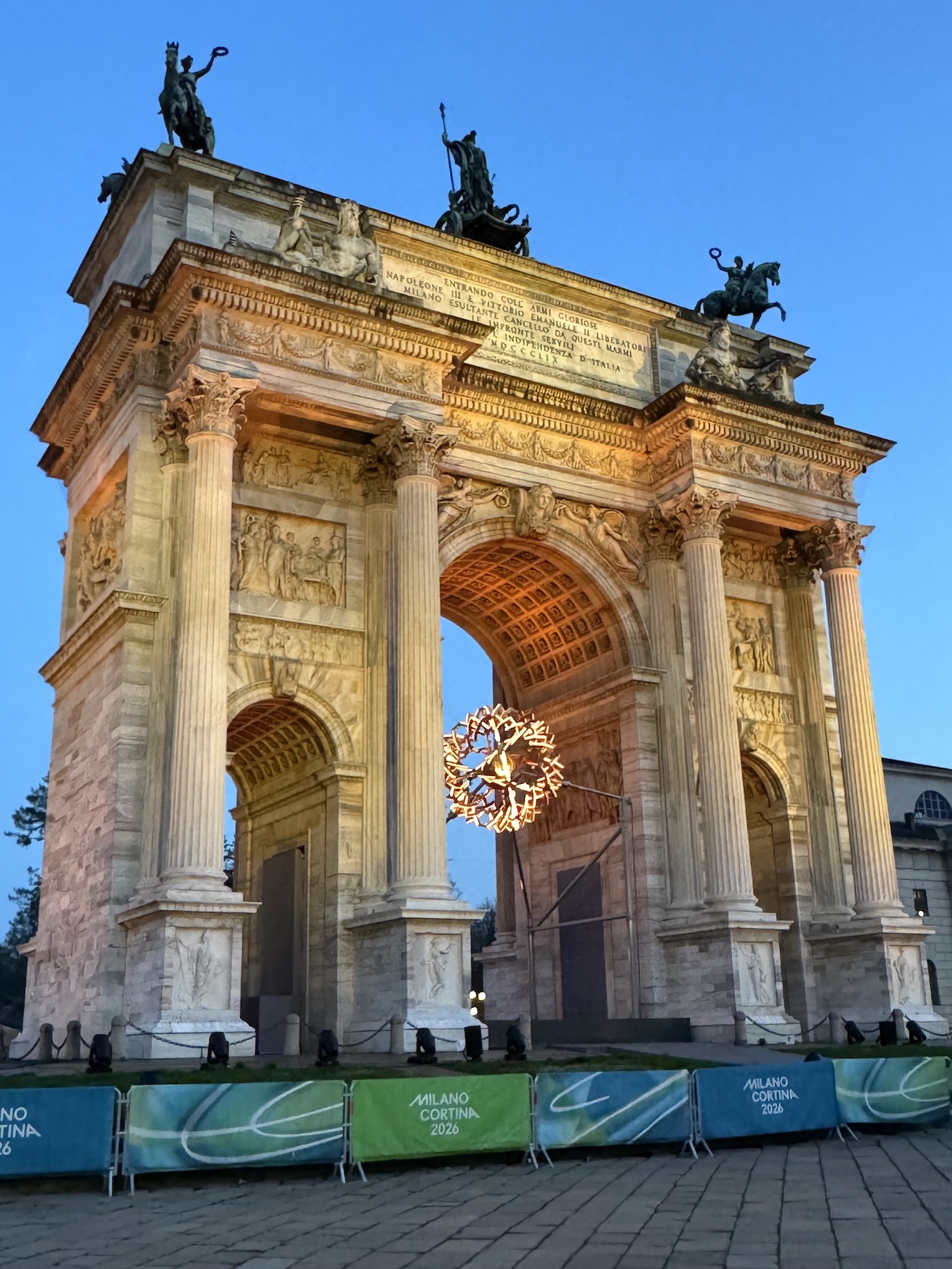
    Arco della Pace in Milan

    Sports events are a great opportunity to discover places you may have never seen before, or see the ones you already know from a different angle. The Giro d’Italia, one of the most important cycling races in the world, is a notable example. The 2026 Winter Olympics, hosted across several locations in northern Italy, showcased not only some of our most beautiful mountain resorts, but also one of the most impressive and best preserved Roman monuments in Italy. Which is not in Rome.

    This year, the Olympics were back to Italy… but where exactly? Discover the venues of Milano-Cortina 2026 and look back on the Italian Winter Olympics.

    The first polycentric Olympics

    A febbraio, occhi puntati sull’Italia: this February, all eyes were on Italy! The 2026 Winter Olympics were held from 6 to 22 February in three regions of northern Italy: Lombardia, Veneto, and Trentino Alto-Adige. Fourteen different venues hosted i primi giochi olimpici diffusi, the first Olympic Games to adopt a polycentric approach, spreading events across multiple locations over 22,000 square kilometers.

    The venues of Milano-Cortina 2026

    The key venues of this edition of the Winter Olympics were Milano and Cortina, of course. Milan, the capital of Lombardy, was by far the biggest city among this year’s Olympic venues, and hosted the opening ceremony and most ice sports events. It did not host the closing ceremony, though: this took place in Verona, a much smaller city in a different region, which also hosted the Paralympics opening ceremony on 6 March, 2026.

    Unlike Milan, which featured for the first time as an Olympic venue, the mountain town of Cortina d’Ampezzo, in Veneto, was not new to this kind of events. Cortina had already hosted the Winter Olympics in 1956, the first Olympic event to be held in an Italian city.

    We went back seventy years in this special content for intermediate and advanced learners of Italian: Olimpiadi di ieri e di oggi: Cortina 1956-2026.

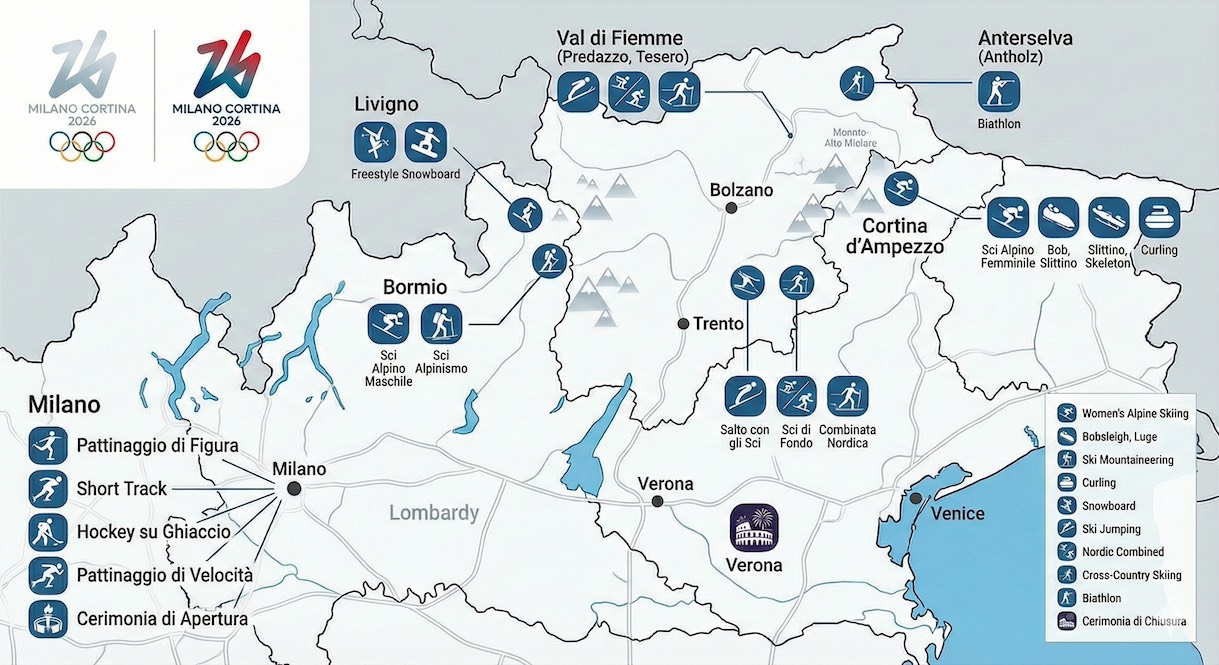
    Map of the Milano-Cortina 2026 Winter Olympics

    Mountain lovers know Cortina as an upscale tourist resort in the Dolomites, but this was just one of the spectacular venues of the 2026 Winter Olympics: Bormio and Livigno, in Lombardy’s Valtellina, hosted the main alpine skiing events; Predazzo and Tesero, in Trentino’s Val di Fiemme, hosted ski jumping and cross-country skiing competitions; and Anterselva, in Alto-Adige, hosted biathlon events.

    Were the 2026 Olympics a logistical nightmare?

    As an article on the New York Times pointed out, the cross-country nature of the 2026 Winter Olympics could very well turn out to be a logistical nightmare, due to long distances, narrow roads, complex connections, and the heavy snowfall that affected Cortina and other mountain locations.

    While at first snow cannons and even helicopters were being used to bring in snow to the bare slopes of the Alps and Prealps, closer to the opening ceremony intensive snow storms and fog created even more difficulties. Traveling around northern Italy to follow the various competitions required some planning, but local infrastructure was improved and new tunnels were completed just before the Games. All things considered, it is safe to say that everything went pretty smoothly in the end.

    The Olympic flame crossed all 20 Italian regions

    2026 Winter Olympics torch relay
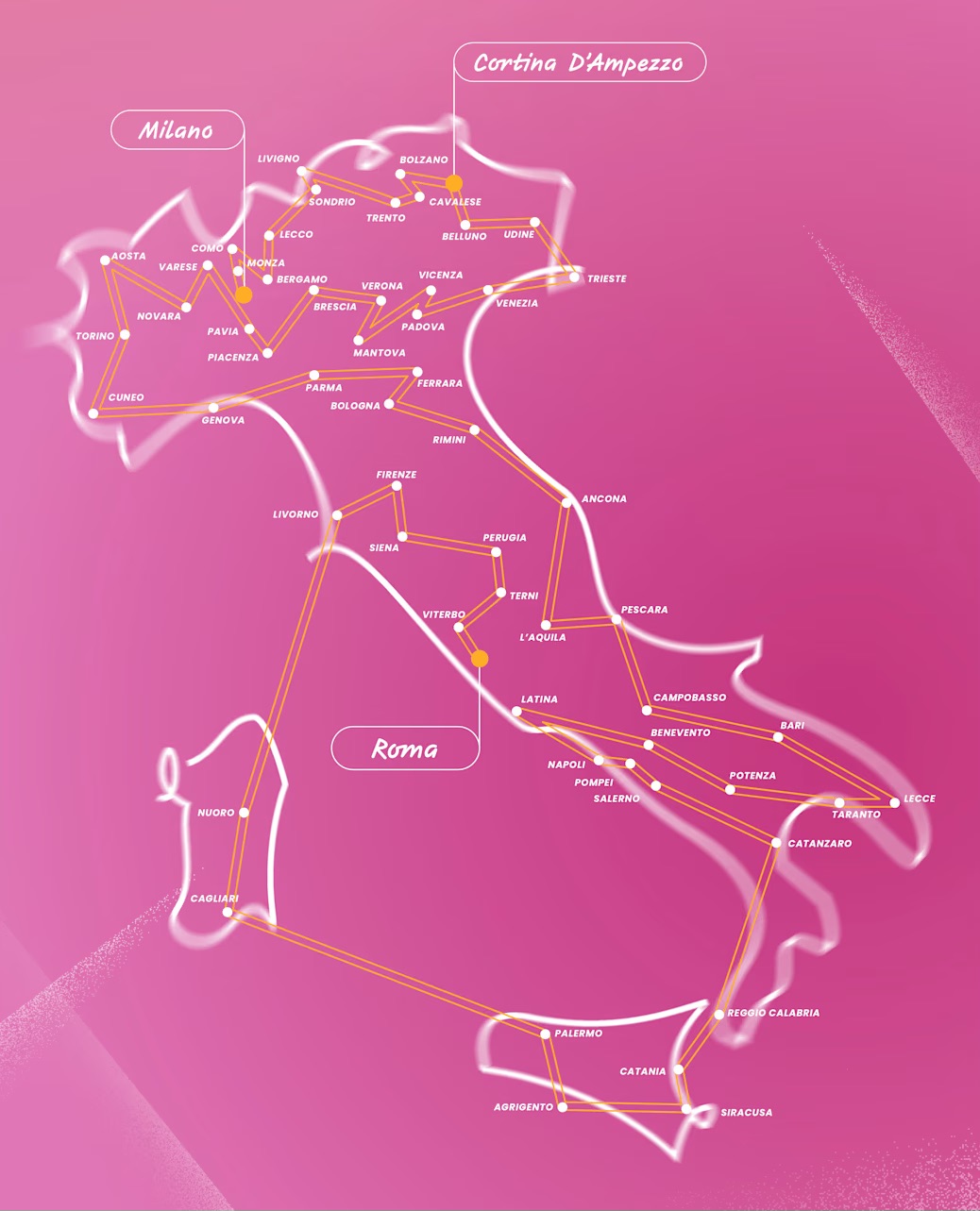
    The 2026 Winter Olympics torch relay

    Not just northern Italy: the torch relay for the 2026 Winter Olympics – il viaggio della fiamma olimpica – touched all 20 Italian regions and 110 provinces, and some stops were truly unique. Relive this amazing journey on the official website.

    The Olympic flame left Olympia on 26 November, 2025. After travelling across Greece, the flame left Athens and arrived in Rome on 4 December. From here, it went up to Florence, travelled by sea to the islands of Sardinia and Sicily, and moved back up through the peninsula, arriving in Turin on 11 January, 2026. Torino was the last Italian city to host the Olympic Games in 2006, fifty years after Cortina 1956.

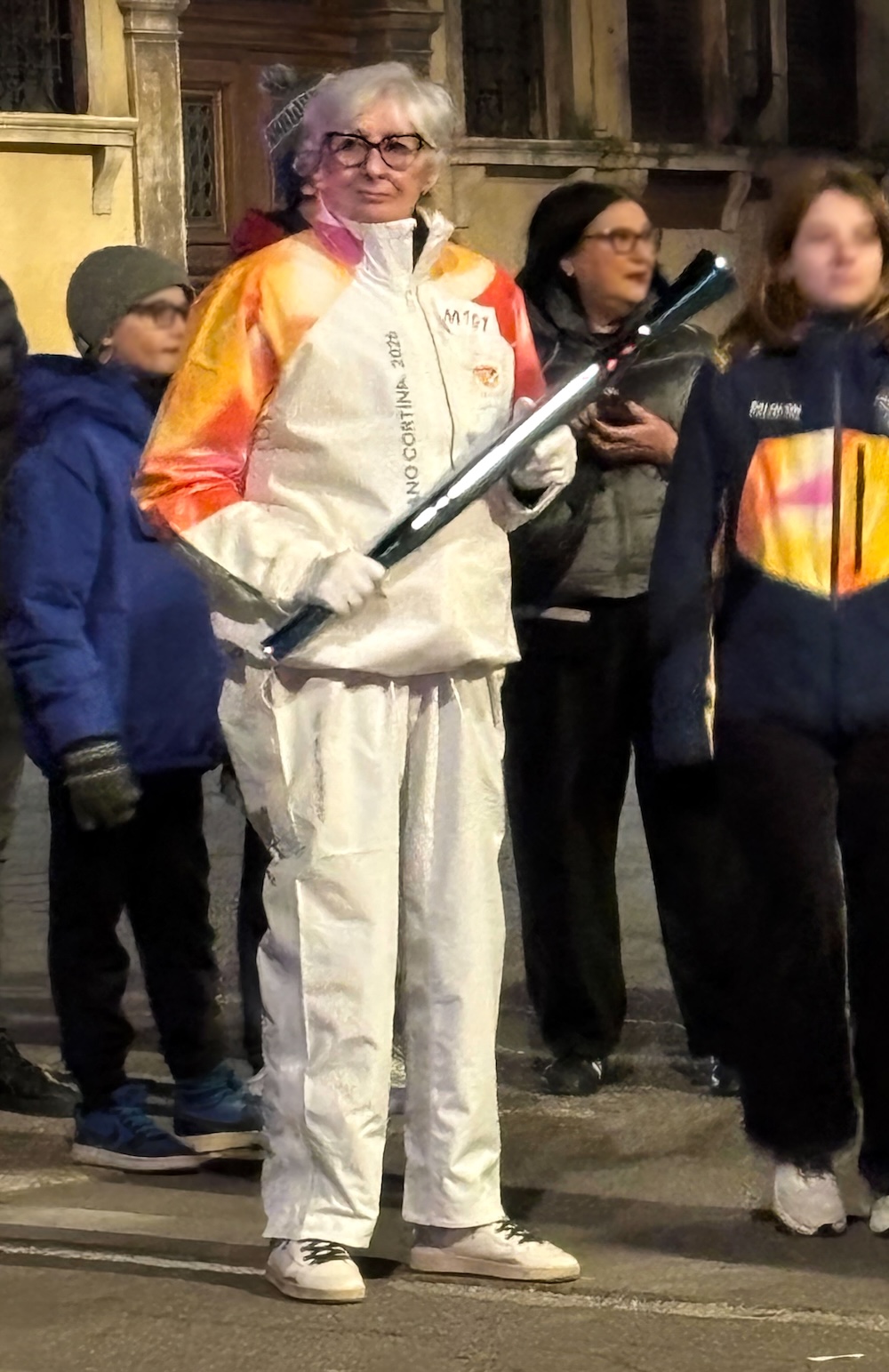
    Sara Simeoni waiting for the Olympic flame in Verona
    Sporting legend Sara Simeoni in Verona

    From Turin, the Olympic flame travelled across northern Italy, reaching Verona on 18 January. On the 22nd it was on a gondola in Venice, making a historic passage down the Grand Canal. After a stop in Cortina d’Ampezzo, the torch reached its final destination, the San Siro Stadium in Milan, just before the opening ceremony– la cerimonia di apertura – on 6 February, 2026. ESA astronaut Luca Parmitano was one of the torch bearers on the last stop of the Olympic flame. Spaziale!

    When the Olympic flame crossed the historic centre of Verona, the entire city gathered along the river Adige to witness the event. The flame was passed from one athlete or celebrity to the next, until it finally reached Sara Simeoni, the legendary high jumper who twice set a world record and won a gold medal at the Moscow Olympics in 1980. Born in the province of Verona, she is considered one of the best Italian female athletes of all time.

    The closing ceremony may have been the most spectacular event of the 2026 Winter Olympics

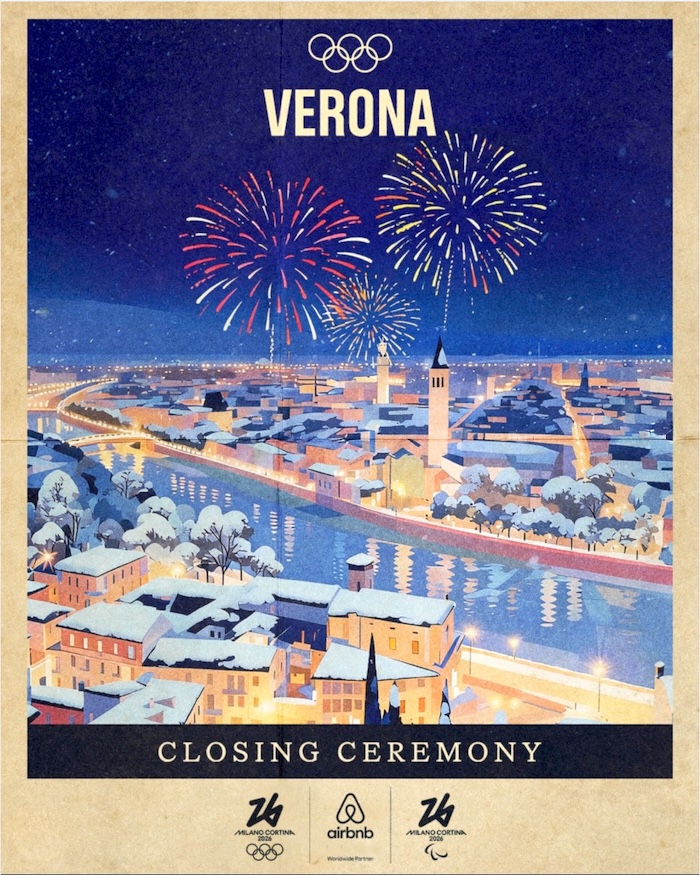
    Verona Olympic venue 2026

    The 2026 Winter Olympics opened in one of the largest stadiums in Europe, built over a hundred years ago in 1925. This was already quite impressive, but the closing ceremony – la cerimonia di chiusura – took place in a much older and more scenic venue: the 2,000-year old Arena, Verona’s Roman amphitheater.

    The Milano-Cortina 2026 Closing Ceremony, themed Beauty in Action, combined art, technology, and tradition on the backdrop of the Arena, featuring opera, dance, music, and design, connecting mountains to cities and culminating in an immersive celebration of sports and Italian culture. Star dancer Roberto Bolle appeared alongside sports icons like Carolina Kostner, Deborah Compagnoni, Francesco Totti, Bebe Vio, and Jannik Sinner.

    The closing ceremony took place on 22 February from 8 pm CET, and was broadcast worldwide. You can watch it on YouTube on the official Olympics channel.

    Did you come to Italy during the Olympics?

    Despite the official narrative celebrating Milano-Cortina 2026 as a flawlessly executed triumph, the reality was a little more nuanced. Italy genuinely earned much of the international praise it received: the atmosphere was warm and vibrant, the volunteers were widely admired, and the country showcased its landscapes and cultural flair with unmistakable style. Many athletes and visitors left with the impression of a welcoming, well‑run event.

    At the same time, not everything unfolded as smoothly as the authorities suggested. Several venues were completed at the last minute, budgets swelled beyond early projections, and some mountain areas struggled with congestion and accommodation pressure. Environmental concerns also resurfaced. Italy delivered a successful Olympics, just not an effortless one.

    Did you experience the Italian Winter Olympics firsthand? How did it go? Write a comment below!

    Diana

    Related Videos on our YouTube Channel (in Italian)

  • Luoghi d'Italia

    Visitiamo insieme la biblioteca più antica del mondo

    Reading Time: 5 minutes

    Oltre 1500 anni di storia

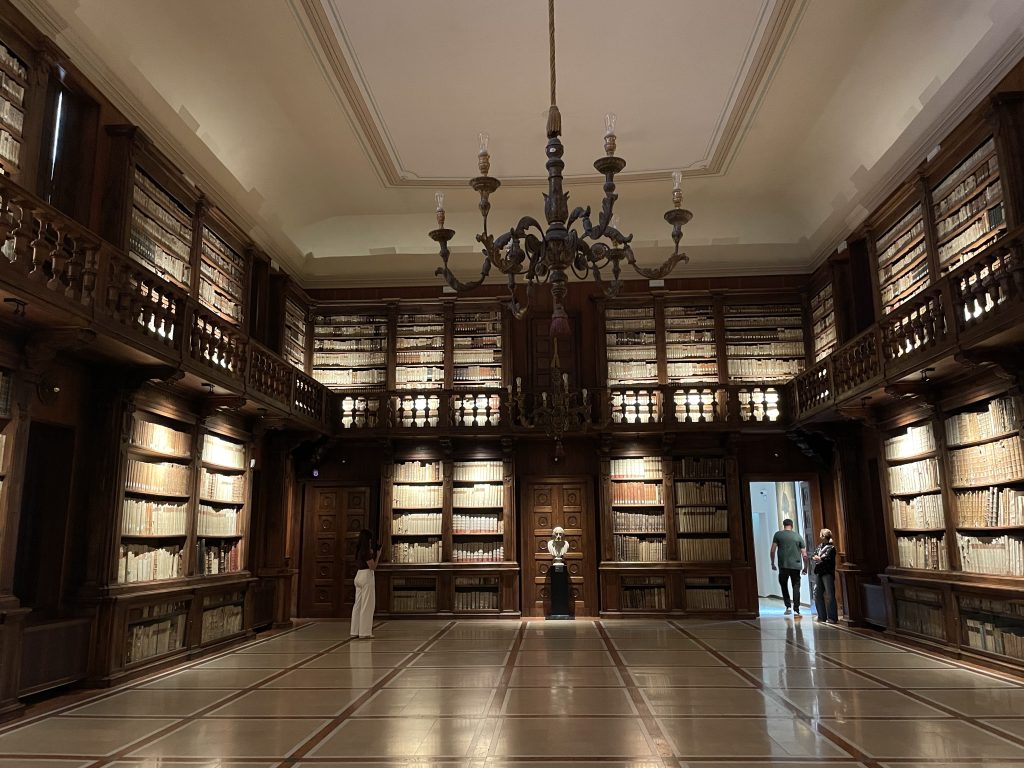
    Lo sapevi? La biblioteca più antica del mondo che non ha mai interrotto la sua attività si trova in Italia, e conserva uno dei primissimi documenti in lingua italiana.

    La Biblioteca Capitolare di Verona, fondata oltre 1500 anni fa, ferve ancora oggi di attività, mostre, eventi pubblici e privati e brulica di visitatori, da illustri accademici a turisti e curiosi. Basta comprare un biglietto da 7 euro per vederla con i propri occhi e trovarsi faccia a faccia con dei manoscritti antichissimi. Non puoi andarci subito? Non importa, oggi ho preso un biglietto e ci sono andata io per te!

  • Luoghi d'Italia

    Il balcone di Giulietta a Verona: vero o falso?

    Reading Time: 4 minutes

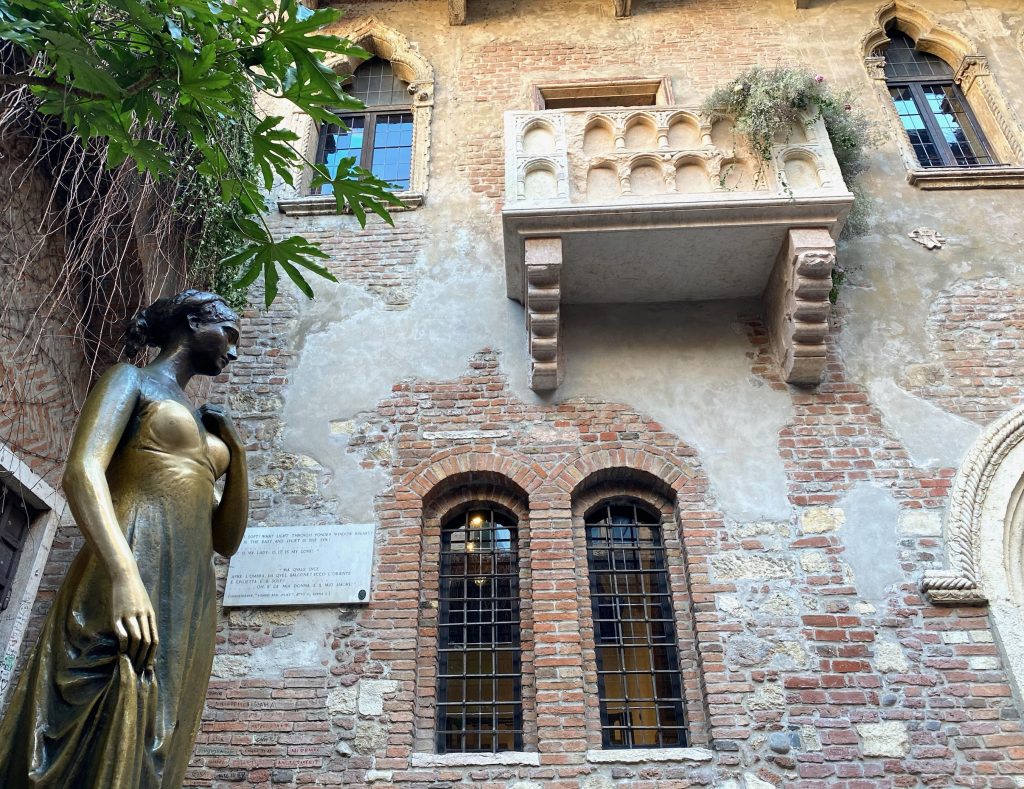
    La casa di Giulietta a Verona è uno dei luoghi più amati dai turisti, che fanno lunghe code per entrare nel famoso cortile, vedere la statua di Giulietta e alzare lo sguardo verso il leggendario balcone dei due innamorati immortalati da William Shakespeare. Ma è proprio il balcone da cui Giulietta si è affacciata per parlare con il suo Romeo? Questa è davvero la sua casa? Montecchi e Capuleti erano veramente due famiglie veronesi?

  • Luoghi d'Italia

    Cremona: dove nascono i violini – The Birthplace of the Violin

    Reading Time: 4 minutes

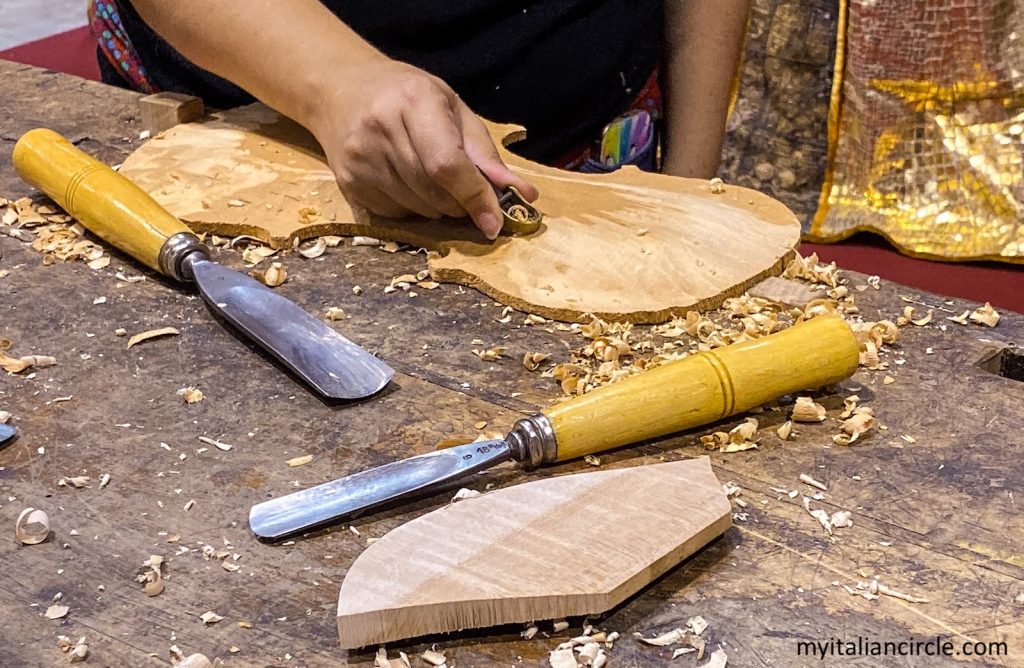
    Carissimi, oggi voglio accompagnarvi in un’altra cittadina italiana al di fuori dei circuiti turistici, una meta imperdibile per tutti gli amanti della musica classica e non solo. Vi porterò dove nascono i violini.

    Stradivari, Guarneri, Amati

    Come si costruisce un violino? Vi siete mai posti questa domanda? La risposta la trovate a Cremona, una cittadina lombarda nel cuore della Pianura Padana, dove l’arte della liuteria ha conosciuto il massimo splendore tra il Seicento e il Settecento.

  • Luoghi d'Italia

    Qual è la piazza più grande (e più bella) d’Italia?

    Reading Time: 4 minutes

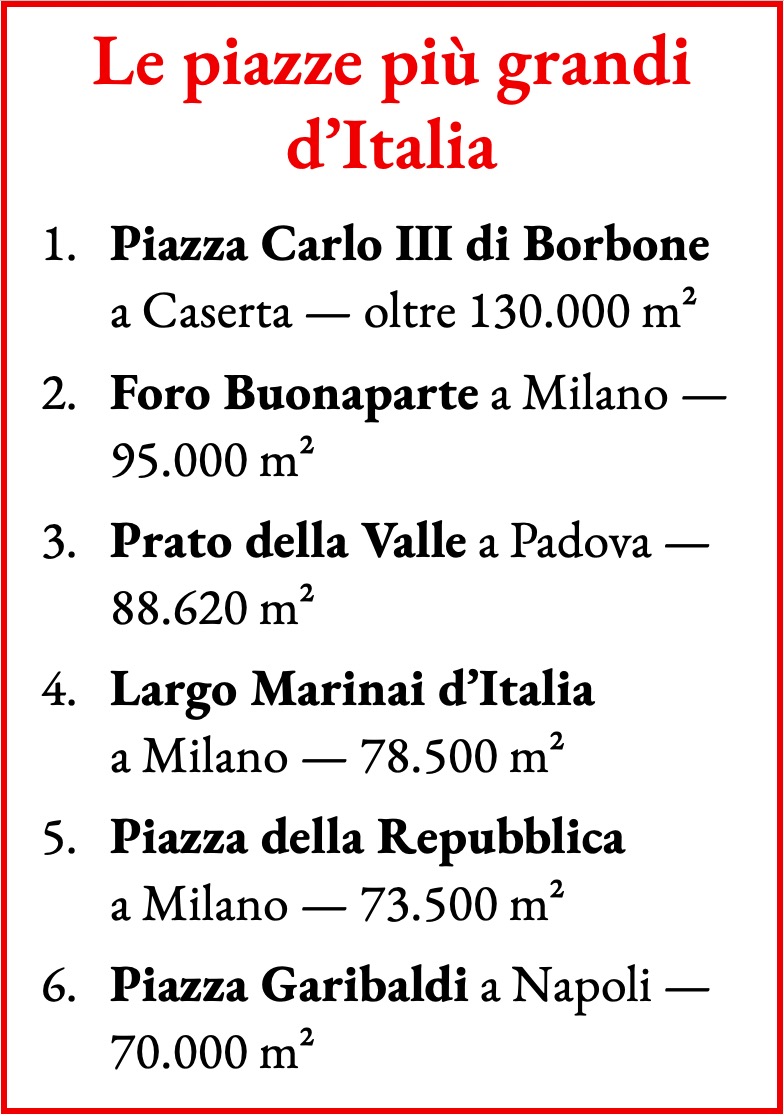
    Qual è la piazza più grande d’Italia? In quale città si trova? C’è piazza San Marco a Venezia, naturalmente; Prato della Valle a Padova, piazza Bra a Verona e piazza Duomo a Milano; a Roma ci sono piazze grandissime, e così a Napoli e a Torino; molte di queste però sono in realtà grandi incroci trafficati, oppure dei giardini.

    In Italia la piazza è il luogo d’incontro per eccellenza, una di quelle cose che mancano tanto agli italiani che vivono all’estero, insieme al suono delle campane. La piazza è il luogo in cui lo sguardo spazia, l’orizzonte si apre, la città respira: deve essere pedonale, senza automobili strombazzanti e motorini rombanti, deve essere sgombra e aperta. Oggi voglio parlarvi di una cittadina poco nota che ospita una delle piazze più grandi e più belle d’Italia, una piazza come Dio comanda!

    La piazza in cui andiamo a passeggiare oggi si trova in una cittadina dell’Emilia-Romagna: Carpi, in provincia di Modena. Chi ci è stato alzi la mano! Nessuno? Lo sapevo!

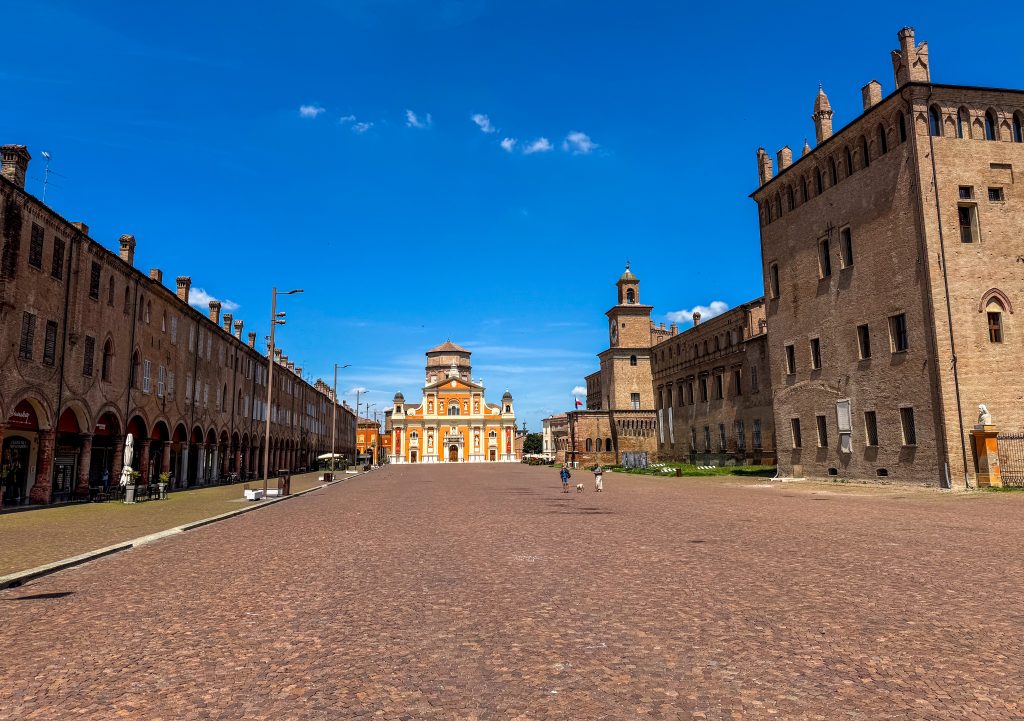
    Piazza dei Martiri a Carpi

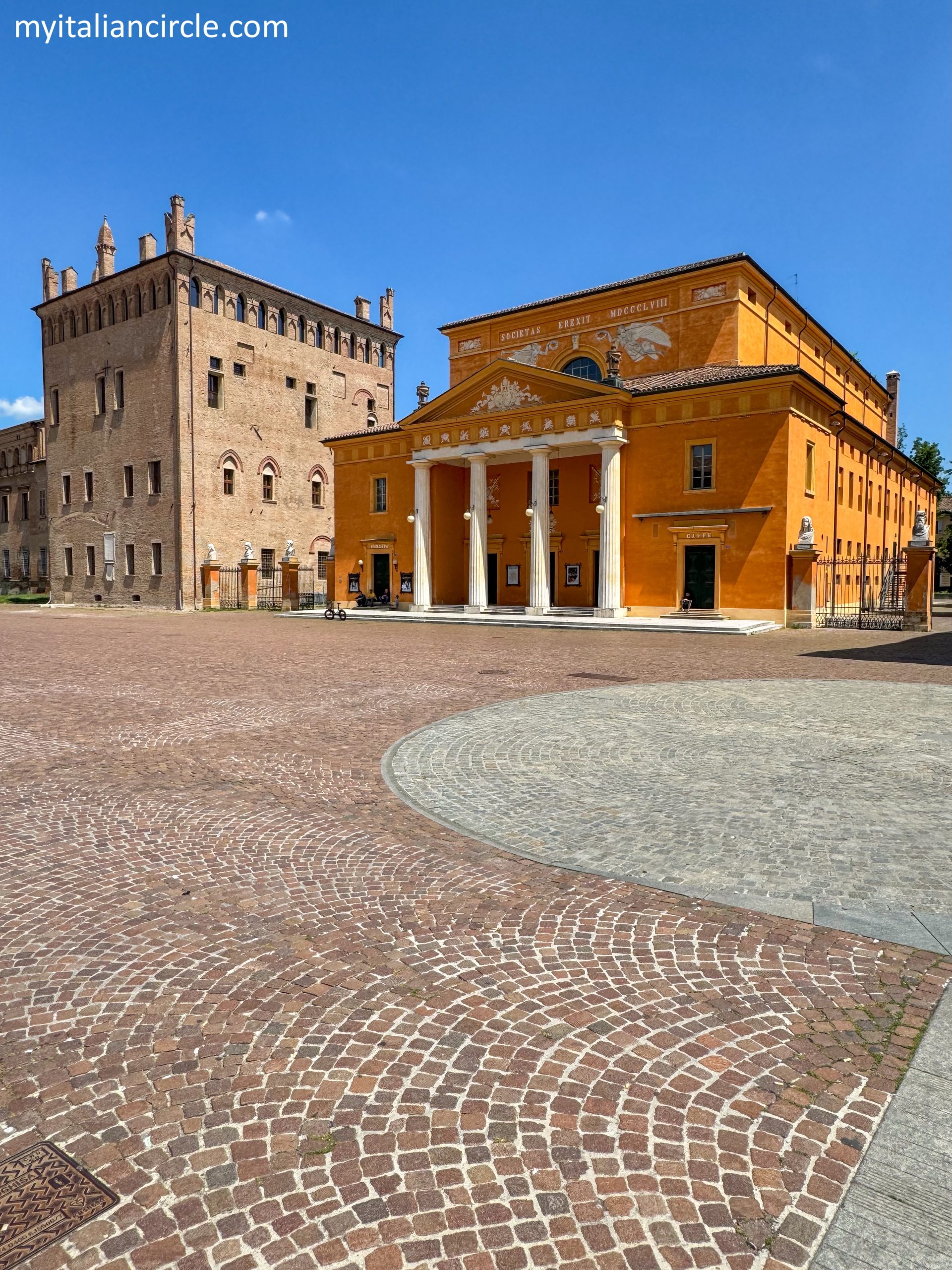
    Piazza dei Martiri, Teatro Comunale di Carpi

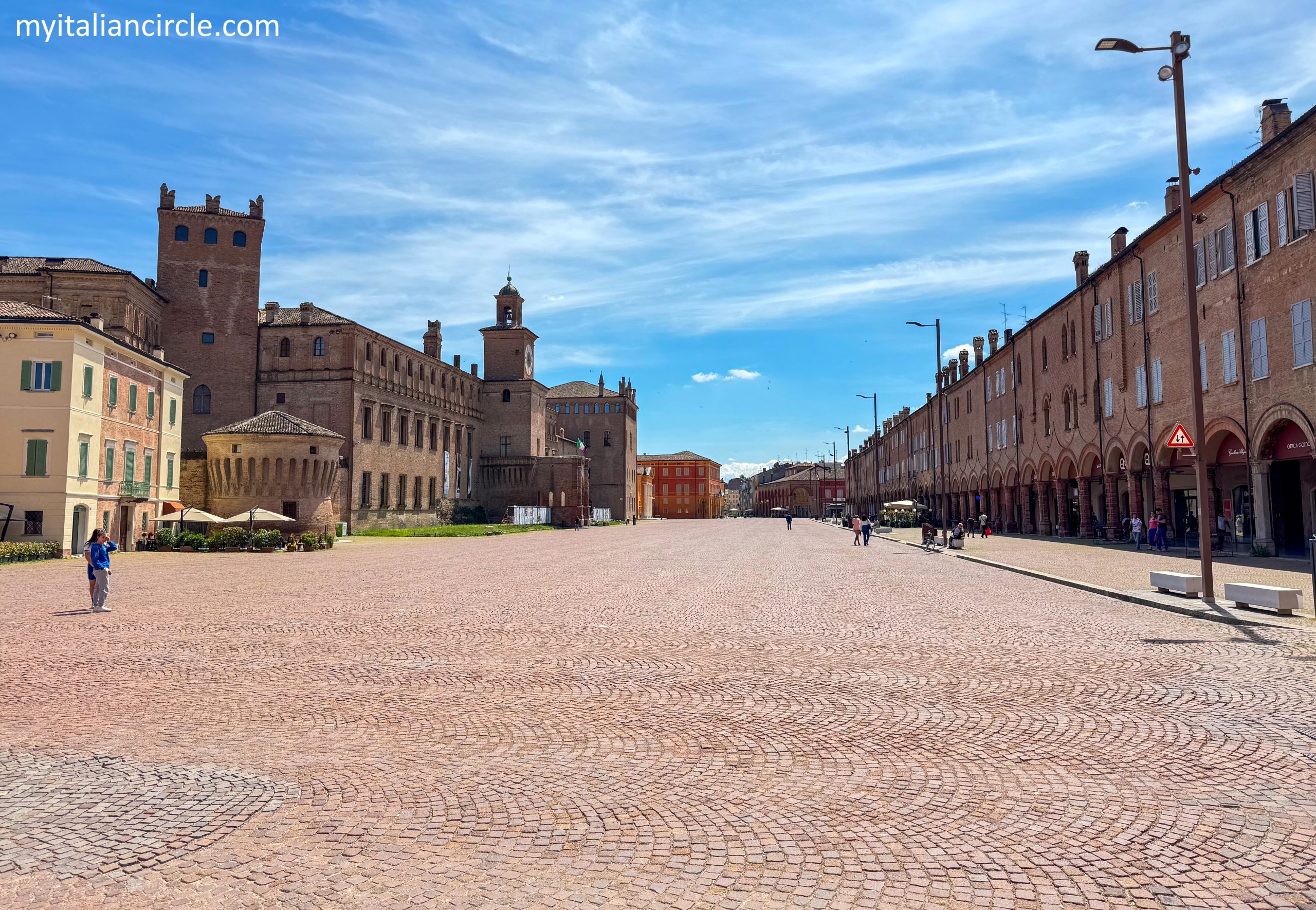
    Piazza dei Martiri a Carpi è grande, grandissima, più di sedicimila metri quadrati: per fotografarla tutta servono almeno tre o quattro scatti. Non male per una cittadina di soli settantamila abitanti! In questa piazza tutto ci dice Emilia: la pavimentazione di porfido rosso, i colori caldi e squillanti della cattedrale barocca e del Teatro Comunale, gli edifici di mattoni, i lunghissimi portici.

    Osservate i cubetti della pavimentazione: sono i famosi sampietrini di Roma? No! Questi cubetti di porfido rosso sono chiamati bolognini, proprio perché erano utilizzati anticamente nella città di Bologna, a pochi chilometri da qui, e in tante altre città dell’Italia settentrionale.

    Perché si chiama così?

    Piazza dei Martiri ha oggi più di cinquecento anni di storia. Per lungo tempo, dopo l’unità d’Italia, fu chiamata piazza Vittorio Emanuele, re d’Italia. Cambiò nome dopo la seconda guerra mondiale: i martiri che oggi danno il nome alla piazza sono le sedici persone che i fascisti uccisero il 16 agosto 1944 per rappresaglia.

    Un castello, una chiesa, un teatro

    Quale edificio tra quelli che circondano piazza dei Martiri a Carpi cattura di più il nostro sguardo? C’è il castello dei Pio, con la sua torre rotonda che ricorda il castello estense di Ferrara: risale all’XI secolo. C’è il Duomo di Carpi, con una facciata che definirei… sfacciata! La sua costruzione iniziò nel 1514, ma il suo aspetto attuale risale al secolo successivo, in piena epoca barocca, e ora esibisce un colore arancione rosato visibile anche nella nebbia più fitta (e da queste parti di nebbia se ne intendono). La chiesa ha subito gravi danni nel terremoto che ha colpito l’Emilia nel 2012, ma è stata ricostruita in tempi record.

    Piazza dei Martiri, il castello dei Pio e i portici

    L’edificio che mi ha colpito di più però è senz’altro il Teatro Comunale, un palazzone ottocentesco, anche questo molto sfacciato. Lo vedete in fondo alla piazza in questa immagine e in primo piano nella foto precedente, dipinto di un’arancione vivissimo, che fa allegria solo a vederlo, con il suo bel frontone neoclassico.

    Sorprese sotto i portici

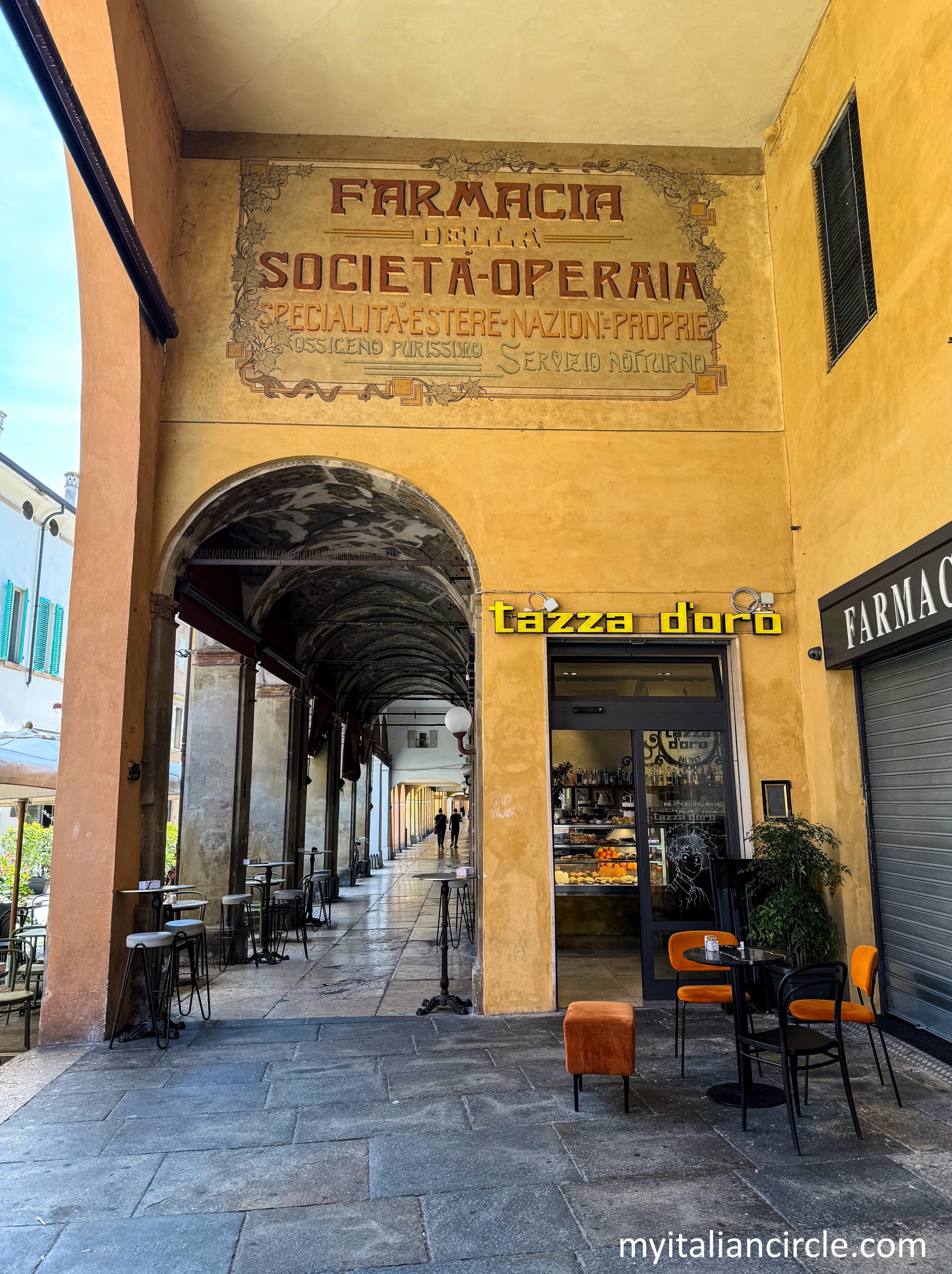
    Piazza dei Martiri, Portico Lungo

    La capitale indiscussa dei portici è Bologna, sicuramente lo sapete già, ma di portici ce ne sono tanti in tutta l’Emilia e oltre, e Carpi non fa eccezione. Il Portico Lungo copre tutta la lunghezza della piazza e permette ai visitatori di ripararsi dalla pioggia o dal sole cocente: per chi ha la pelle delicata come me è una mano santa! Poi ci sono delle piccole sorprese sparse qua e là, come questa scritta un po’ liberty della Farmacia della Società Operaia. E infine non ho potuto fare a meno di notare che le sedie del bar Tazza d’oro (che bel nome!) sono rivestite di velluto arancione, in tinta con tutta la piazza: un tocco di classe!

    I consigli di Genoveffa

    Quando è preferibile visitare questi luoghi? Senz’altro a primavera, magari in una bella giornata come quella in cui ho scattato queste fotografie, ma se non avete paura del freddo queste zone hanno un grande fascino anche d’inverno, quando la nebbia aleggia sulla campagna. Potrete riscaldarvi facilmente con il cibo meraviglioso di queste terre, gnocco fritto e salumi, tortelli verdi con l’aceto balsamico o maccheroni al pettine, il tutto annaffiato di Lambrusco, quello buono, prodotto proprio qui in provincia di Modena. Dove si mangiano queste bontà? Nel mio ristorante preferito, la Trattoria Bar Cantone, un posto unico, semplice, tipicissimo, la quintessenza dell’Emilia! Ma non andateci di domenica, perché è sempre strapieno. E mi raccomando, non ditelo a nessuno!

    Avete mai visitato questa zona d’Italia? Cosa ne pensate? Scrivetemi, mi raccomando!

    A presto,

    Genoveffa

    Glossario

    • trafficato: congested, busy
    • spaziare: to stretch, to extend, from spazio, space
    • pedonale: pedestrian
    • strombazzante: honking, tooting
    • sgombro: empty, unobstructed
    • come Dio comanda: by the book
    • alzare la mano: to raise one’s hand
    • porfido: porphyry
    • squillante: bright, vivid
    • cubetto: small cube
    • martire: martyr
    • estense: of the Este family
    • facciata: façade
    • sfacciato: cheeky, insolent
    • frontone: pediment
    • cocente: literally, cooking; scorching
    • una mano santa: lifeline, remedy
    • velluto: velvet
    • in tinta: matching (of colour)
    • aleggiare: to hover, to linger
    • gnocco fritto: dough squares fried in lard
    • maccheroni al pettine: short pasta made with a comb-like tool; also called garganelli
    • strapieno: bursting, full
  • Luoghi d'Italia

    Non è la solita Toscana – Tuscany off the beaten track

    Reading Time: 3 minutes

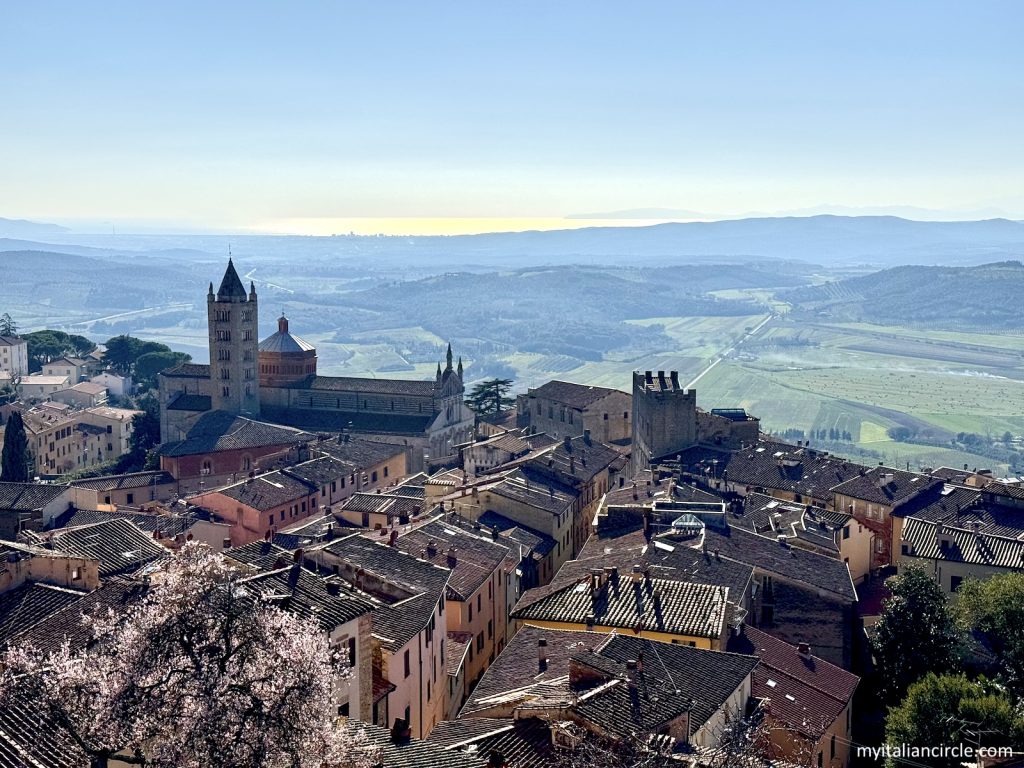
    Carissimi! Sono tornata da una breve vacanza semplicemente ME-RA-VI-GLIO-SA, e ora che ho avuto tempo di riordinare le foto voglio parlarvene subito! Sono stata in Toscana, ma non nei soliti posti dove vanno sempre tutti. Lo so che la Toscana la conoscete, è una delle regioni più visitate d’Italia: ma scommetto che non siete mai stati, per esempio… a Radicondoli! Ecco, già il nome di questo paesello è fuori dall’ordinario. E pensate che se volete trasferirvi qui, il comune vi paga metà dell’affitto per tre anni. Sono poco più di 900 abitanti e vogliono diventare mille – è un bellissimo posto, pensateci!

  • Luoghi d'Italia

    Il borgo più bello d’Italia

    Reading Time: 2 minutes

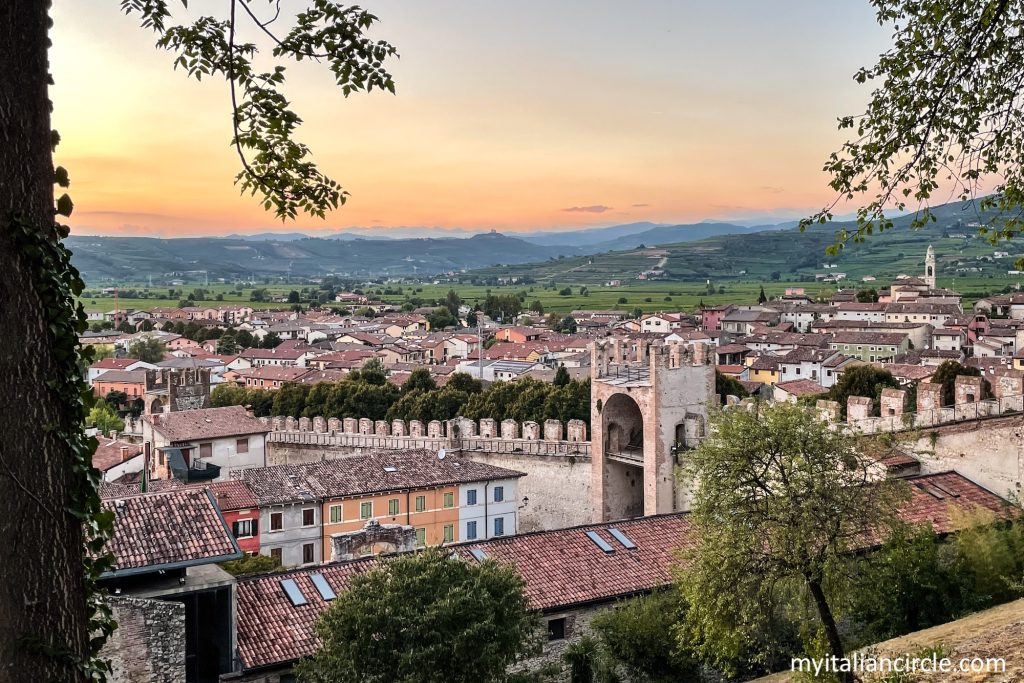
    Una cittadina fortificata tra i vigneti del Veneto

    Carissimi, oggi voglio parlarvi di una località italiana che forse non conoscete, anche se – udite udite! – un paio d’anni fa è stata eletta addirittura “borgo più bello d’Italia”.

    Innanzitutto, cosa vuol dire borgo? Il borgo è un centro abitato, una cittadina, un paese, o anche un quartiere di una città: a Verona molti quartieri si chiamano borghi, ma questo ve lo racconterò un’altra volta. In latino però voleva dire castello fortificato, e in questo caso è proprio così: si tratta di una cittadina murata, cioè circondata da mura tutto intorno, con ben ventiquattro torri e un meraviglioso castello medievale che domina il paese, in cima alla collina.