• Luoghi d'Italia

    Arena di Verona: The Most Italian Place on Earth™

    Reading Time: 6 minutes
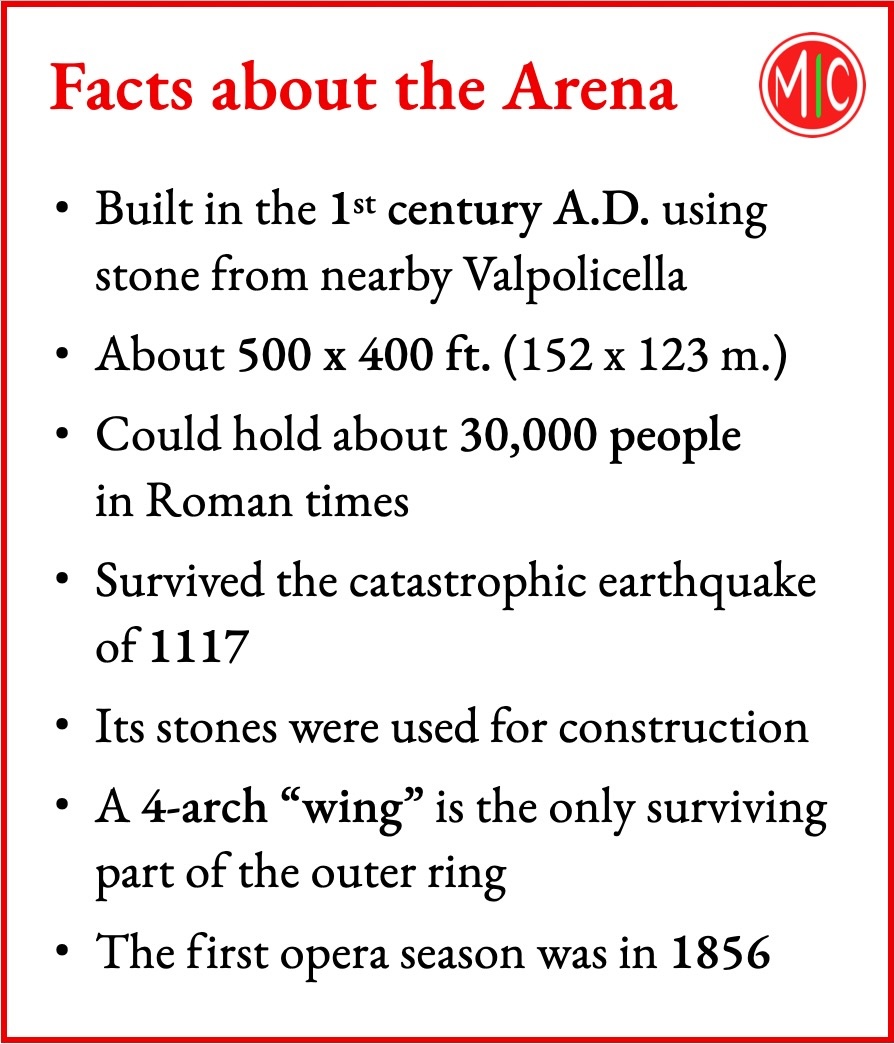
    Facts about Arena di Verona

    I was born and raised in Verona, and I spent most of my adult life here. It’s a small city with a big history and an even bigger landmark to remind us of it: the Arena, a 2,000-year-old amphitheater, one of the best-preserved Roman buildings in the world. The Arena withstood time, fires and earthquakes, and is still standing today on our largest square, Piazza Bra, next to the City Hall. I remember a time when cars could circle the Arena like a roundabout, and I never thought much of it: it was standing there as it had always been, smog-stained and massive.

    Imagine my surprise when I discovered that the Arena di Verona had become The Most Italian Place on Earth™. Yes, that’s a trademark. We have a trademarked Roman monument now.

    What Does “Italian” Even Mean Here?

    The Arena di Verona Foundation, the institution that manages the amphitheater and the events organized inside of it, registered the trademark in 2023. It sounds bold, poetic, and slightly bizarre — which, to be fair, is already quite Italian. All in all, it has a nice ring to it, but I couldn’t help but wonder about the reasons behind this decision, and what they meant by Italian.

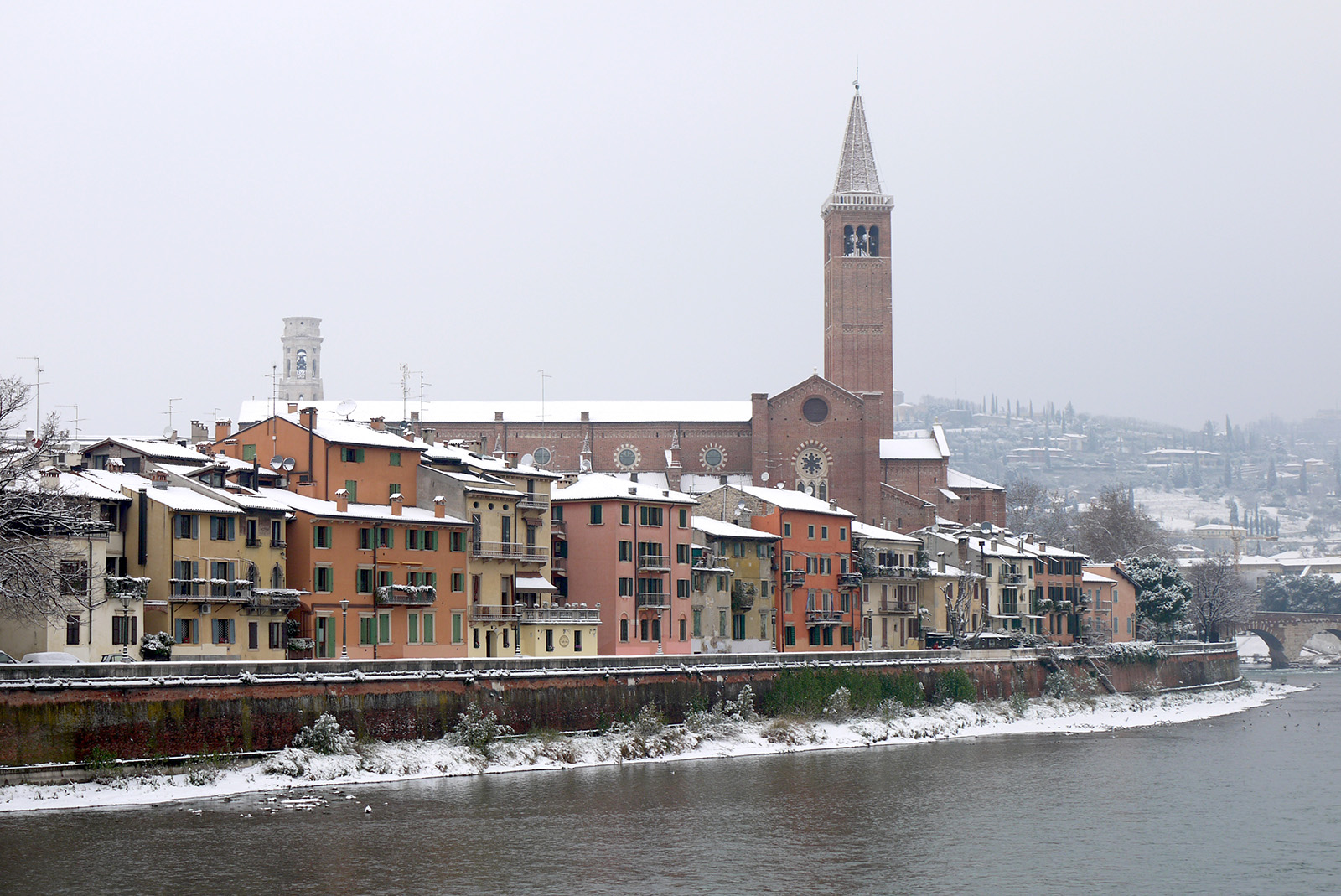
    Verona a few winters ago

    Verona has never struck me as stereotypically Italian. We’re in the north, between the fog of the Po Valley and the German‑speaking mountains of Trentino‑Alto Adige. Winters can be dull and gray, summers are humid, and we even have snow every now and then. Not exactly the postcard Italy of lemon trees and turquoise skies.

    The people of Verona don’t really fit the stereotype either, and never looked particularly Italian to me. I never thought of myself as very Italian! Many of us are reserved and suspicious, not at all warm and cheery like real Italians are supposed to be. We only open up with old friends — or after a Spritz or two.

    If Verona isn’t stereotypically Italian, why would the Arena claim that title? What makes it so Italian? Short answer: ancient Rome and opera. The Arena is where they collide.

    Which is more Italian, the Arena or the Colosseum?

    The Arena is essentially a scaled-down Colosseum, but with some crucial differences. It’s built from local red ammonitic limestone rather than Rome’s travertine, giving it a warmer, rosier glow at sunset. It’s smaller, more intimate, and — crucially — it’s still alive.

    Where the Colosseum is a ruin, the Arena is a venue. Where the Colosseum is a symbol, the Arena is a habit. Where the Colosseum is history, the Arena is experience. This is where the “Italian” part begins to make sense.

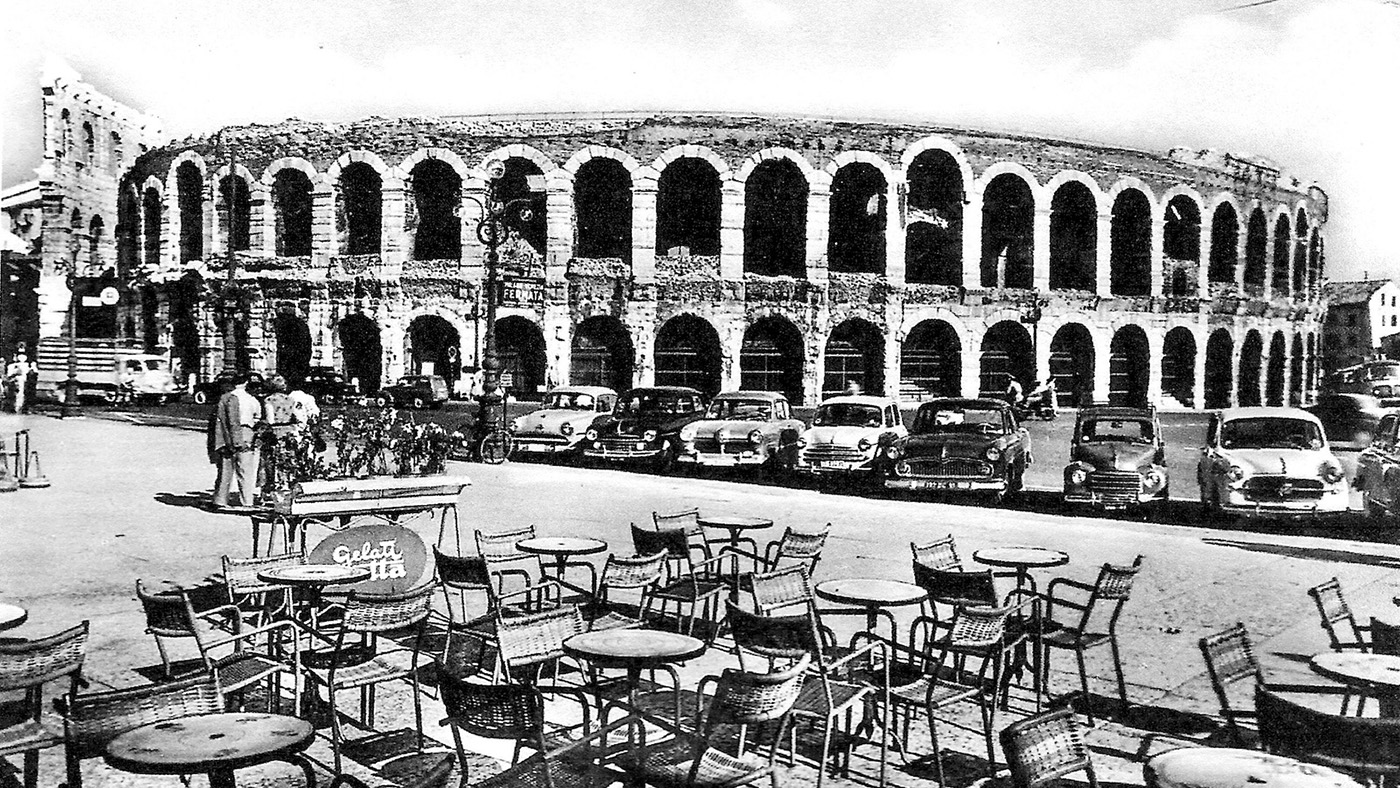
    Verona's Arena, historical photo
    When Piazza Bra was open to car traffic: historical photo of the Arena di Verona

    Opera: Italy’s Emotional Engine

    If ancient Rome gave the Arena its body, opera gave it its soul. In the summer, the Arena di Verona opera season fills the amphitheater with up to 10,000 people every night — locals, tourists, opera lovers, opera skeptics dragged along by opera lovers — all waiting for the lights to go down. Cushions appear on the stone steps, the orchestra tunes, candles flicker, and the magic begins.

    Opera is the only sport where Italians cheer for heartbreak, and the Arena is its stadium. Opera was never meant for the elite: it was a popular form of entertainment. This is where Verdi and Puccini feel less like musical legends and more like friends and relatives. Where even people who claim to “hate opera” end up shedding a tear during the most compelling arias. If there is a place where Italy performs its own identity — loudly, dramatically, unapologetically — it’s here.

    For learners of Italian, a night at the opera is a linguistic gift, when words like amore, notte, cuore, vendetta stretch across the amphitheater in long, generous vowels.

    Why Trademark “The Most Italian Place on Earth™”?

    Because Italy is a brand, and the Arena di Verona is its logo.

    The trademark is not about nationalism; it’s about storytelling. Verona needed a hook — something that captured the Arena’s unique blend of history, emotion, and spectacle. “The Most Italian Place on Earth™” is a provocation, a wink, a promise. It says: If you want to understand something about Italy, come sit on these stones for a night. And honestly? They’re not wrong.

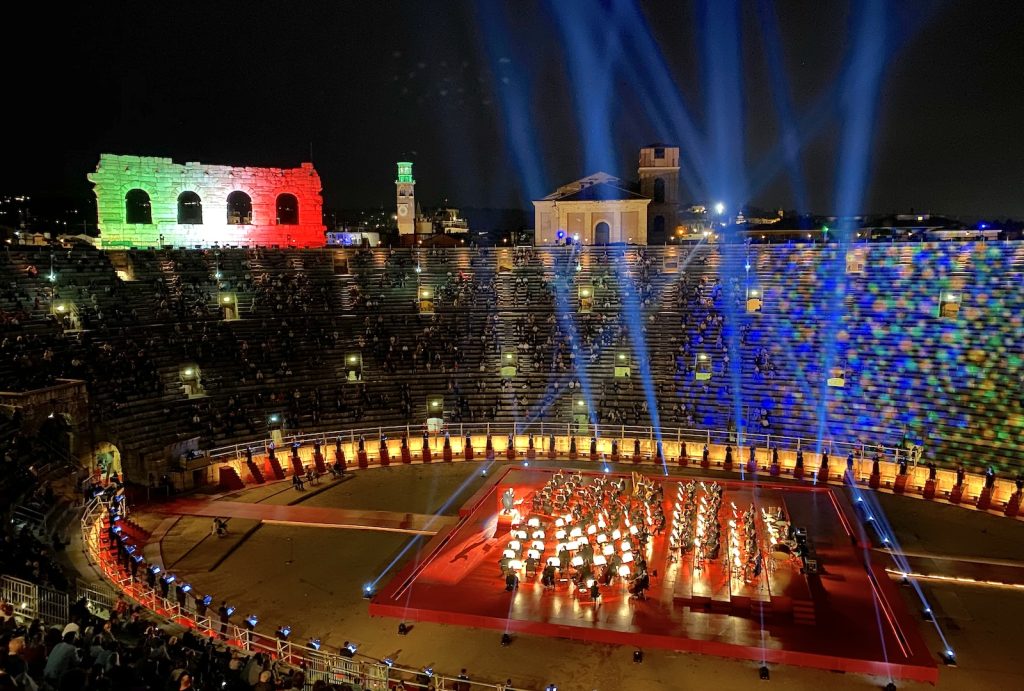
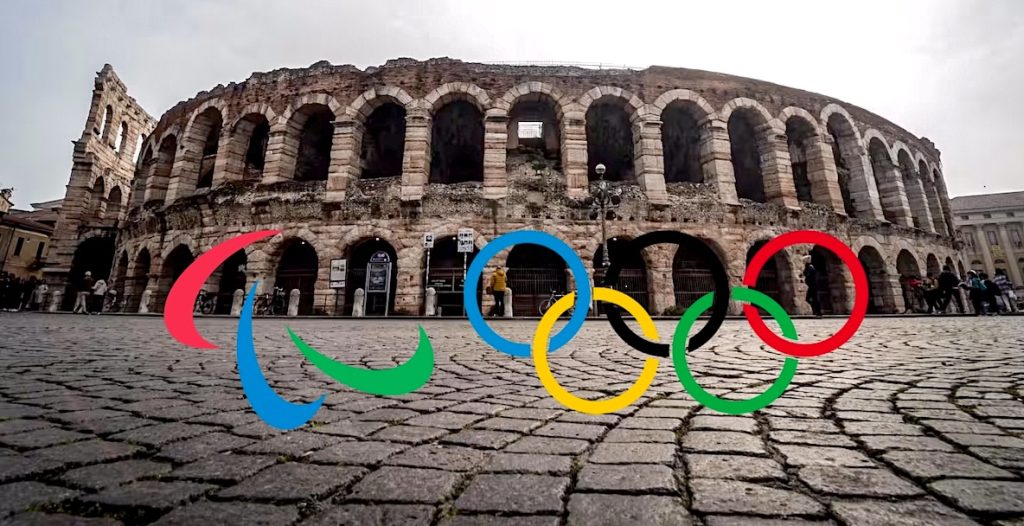
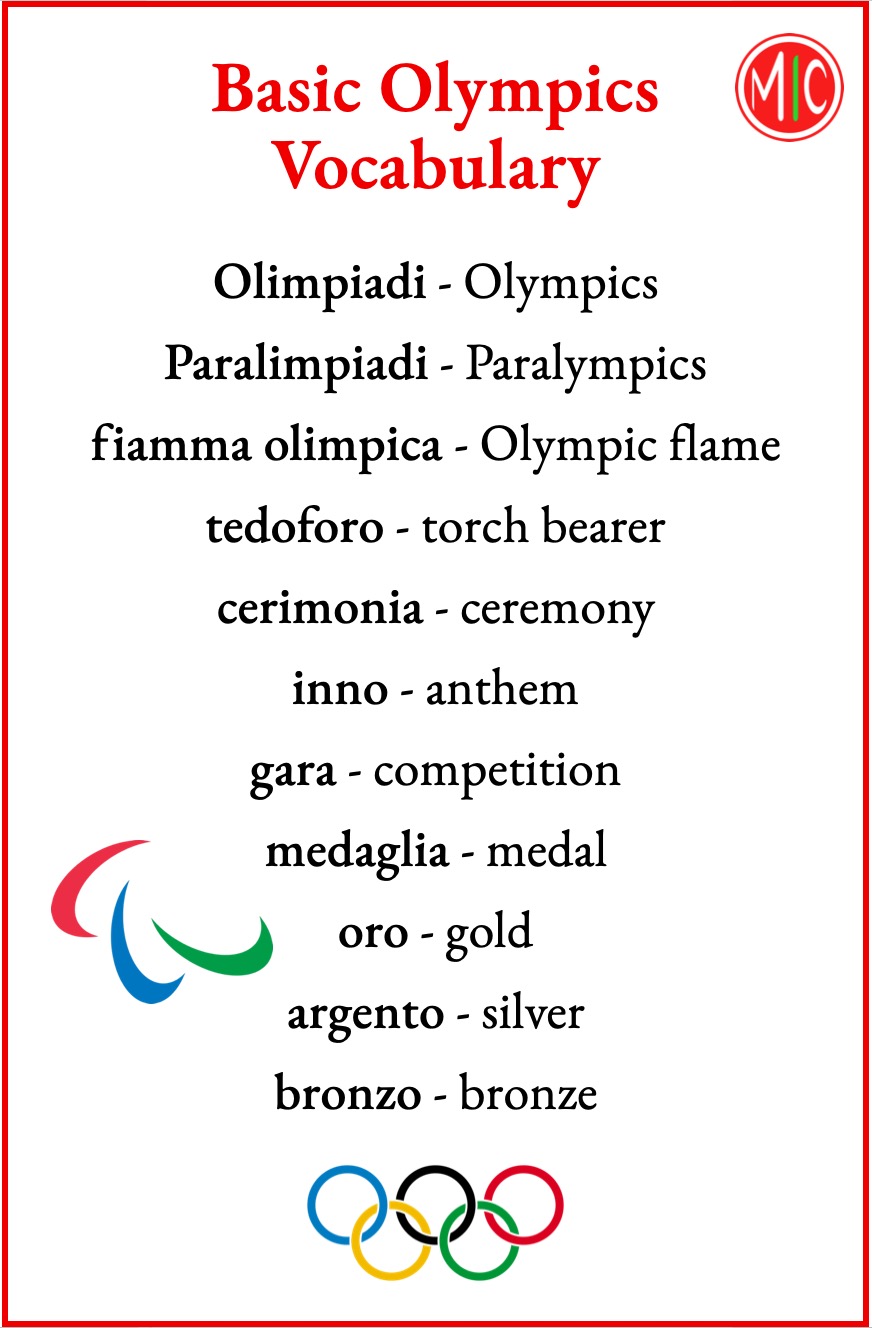
    The Arena recently hosted the closing ceremony of the 2026 Winter Olympics and the opening ceremony of the Paralympics. Look back on these events in this post.

    A Guide to the Arena di Verona: Practical Tips for Visitors

    Even the most poetic amphitheater requires logistics. Here’s what you need to know if you are planning a night at the Arena:

    Best time to visit the Arena di Verona: the opera season goes from June to September, with approximately four shows every week. Check the updated calendar on the official website. Other events, including major pop and rock concerts, take place throughout the year, except for the coldest months.

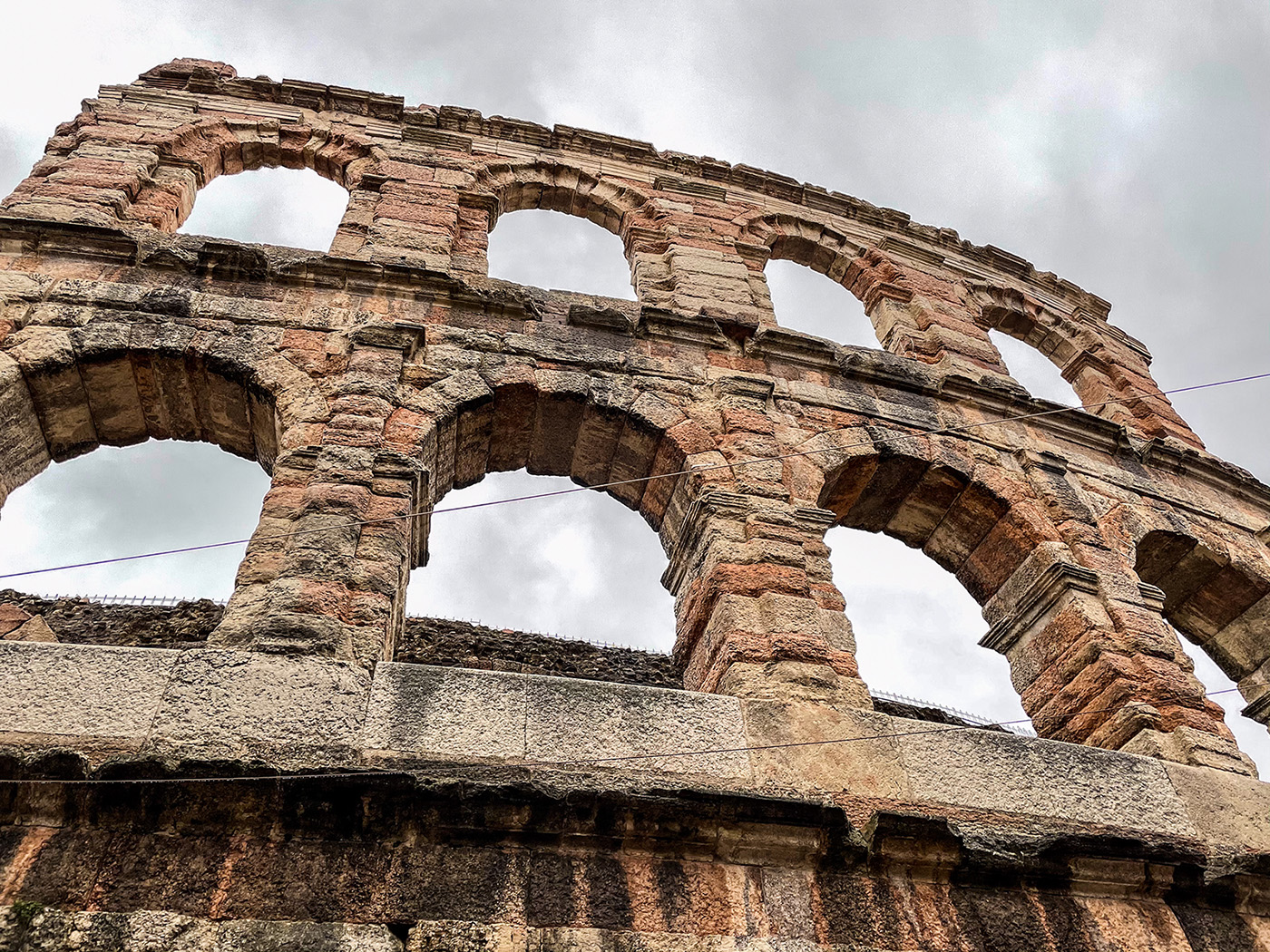
    The “wing” of the Arena

    Where to sit: once upon a time, people with tickets for the stone steps would queue for hours to get a decent spot, but now all seats are numbered, and several sectors include padded seats. Remember: central sectors are great if you want to see the entire stage and all the choreography, but the acoustics is much better on the sides. There are no amplifiers at the opera, so it will all depend on how loud the singers are.

    The gradinata — the stone steps — is the most authentic (and least forgiving) option, while the platea offers more comfortable seats. Here, a poltrona will feel luxurious compared to the ancient limestone, and a poltronissima will guarantee a more central view of the stage. Your ticket will list a settore, fila, and posto, plus the ingresso (entrance) you should use to enter. And whatever you choose, don’t forget the most important word of all: cuscino (cushion). Bring one or rent one from the Red Cross staff if you opt for the stone steps (Gradinata numerata, Sectors 4, 5 and 6).

    What to bring: Water, a light jacket, an umbrella for that fickle summer weather.

    What to expect: long evenings, scorching heat and/or dramatic weather, and an earworm or two.

    If you are learning Italian, the Arena is a listening lab disguised as a monument. Before the show you will hear people muttering Che caldo! (It’s so hot!) or politely squeezing past exchanging Permesso (Excuse me) and Prego, passi pure (Please, go on). Once seated, someone invariably announces Si vede benissimo da qui! (You can see very well from here), even when it isn’t true. During the interval it becomes a chorus of Andiamo a prendere qualcosa? (Shall we go get something?) and C’è una fila lunghissima. (there’s a very long queue). And when the final note fades, the whole crowd spills into Piazza Bra whispering Che serata! (What a night!), as if they’ve all shared the same dream.

    Couldn’t find a ticket for your favorite show? Listen from outside! Go near the Arena’s ala (wing, the only remaining part of the outer circle) for a free musical experience.

    You can also just visit the monument during the day: it’s open Tuesday to Sunday from 9 am to 7 pm, except on opera/concert days. Check the calendar on this page. The ticket is 12 euro.

    Best spritz near the Arena: locals avoid the outdoor bars and restaurants in Piazza Bra. Look just a little further and walk to Via Roma, in front of the Teatro Filarmonico, or to Via Oberdan. Central bars are always packed, so just stand outside, if you can: it’s a totally Italian thing to do.

    So… Is the Arena di Verona Really the Most Italian Place on Earth™?

    After a lifetime of walking past it, I think I finally understand the trademark.

    It’s not about geography or stereotypes, it’s about layers — of history, of emotion, of people, of language. The Arena is one of the few places where you can hear three Italians at once: the musical Italian of opera, the everyday Italian of the crowd, and the soft Veneto inflections of Verona.

    It’s about a place that has been applauded for twenty centuries and still isn’t tired. It’s about the moment when thousands of strangers fall silent together, waiting for the first note. If Italy has a heartbeat, it echoes inside the Arena di Verona.

    Diana

  • Luoghi d'Italia

    Milano-Cortina 2026: Look Back on the Italian Winter Olympics

    Reading Time: 5 minutes
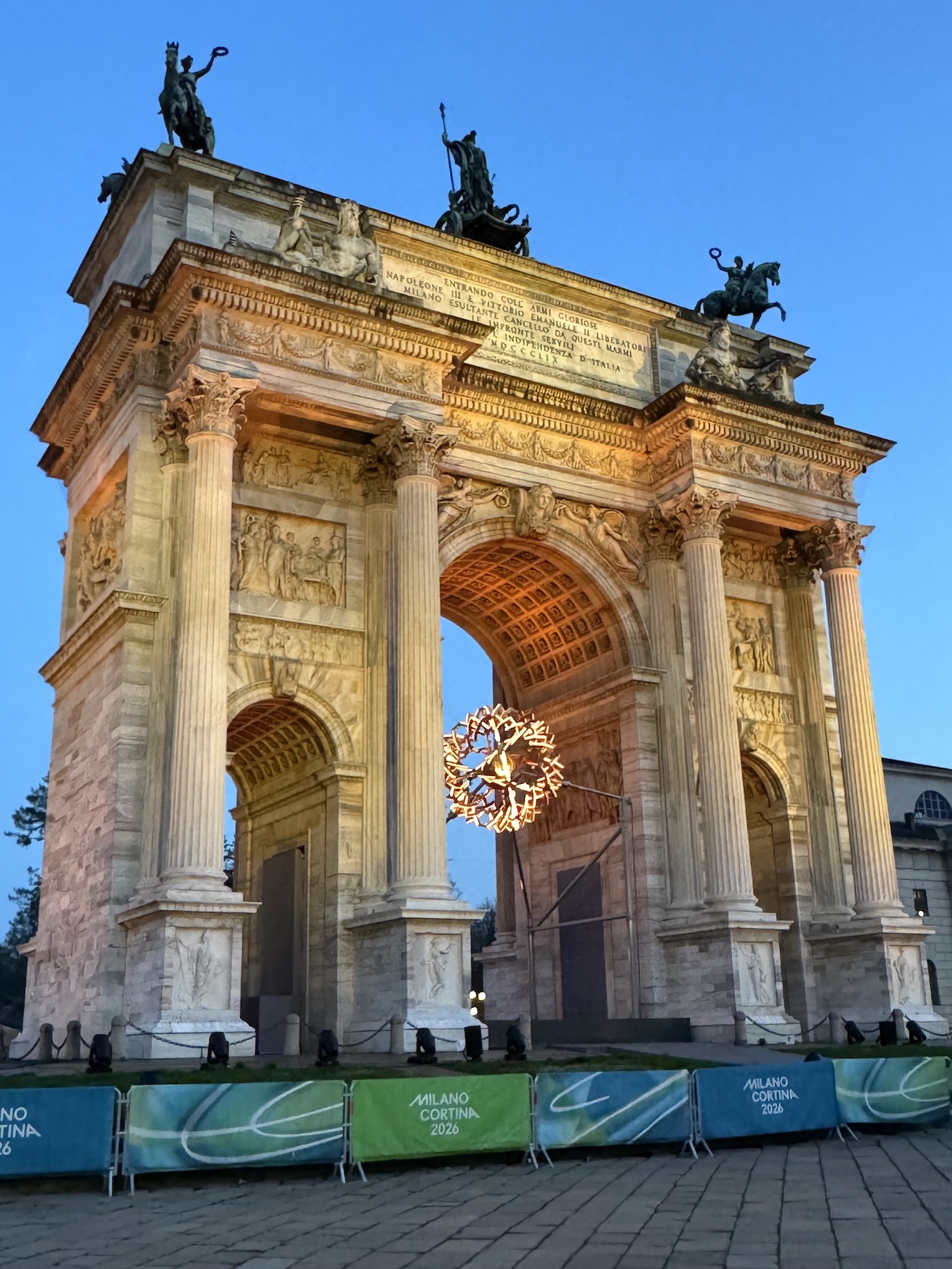
    Arco della Pace in Milan

    Sports events are a great opportunity to discover places you may have never seen before, or see the ones you already know from a different angle. The Giro d’Italia, one of the most important cycling races in the world, is a notable example. The 2026 Winter Olympics, hosted across several locations in northern Italy, showcased not only some of our most beautiful mountain resorts, but also one of the most impressive and best preserved Roman monuments in Italy. Which is not in Rome.

    This year, the Olympics were back to Italy… but where exactly? Discover the venues of Milano-Cortina 2026 and look back on the Italian Winter Olympics.

    The first polycentric Olympics

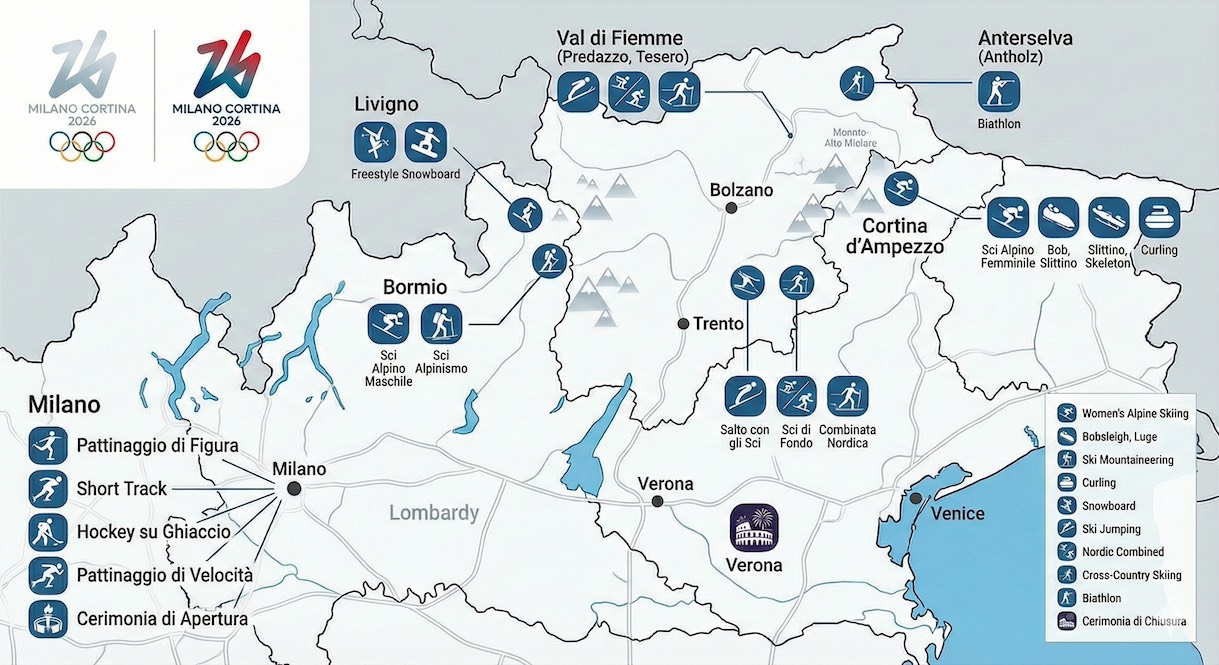
    A febbraio, occhi puntati sull’Italia: this February, all eyes were on Italy! The 2026 Winter Olympics were held from 6 to 22 February in three regions of northern Italy: Lombardia, Veneto, and Trentino Alto-Adige. Fourteen different venues hosted i primi giochi olimpici diffusi, the first Olympic Games to adopt a polycentric approach, spreading events across multiple locations over 22,000 square kilometers.

    The venues of Milano-Cortina 2026

    The key venues of this edition of the Winter Olympics were Milano and Cortina, of course. Milan, the capital of Lombardy, was by far the biggest city among this year’s Olympic venues, and hosted the opening ceremony and most ice sports events. It did not host the closing ceremony, though: this took place in Verona, a much smaller city in a different region, which also hosted the Paralympics opening ceremony on 6 March, 2026.

    Unlike Milan, which featured for the first time as an Olympic venue, the mountain town of Cortina d’Ampezzo, in Veneto, was not new to this kind of events. Cortina had already hosted the Winter Olympics in 1956, the first Olympic event to be held in an Italian city.

    We went back seventy years in this special content for intermediate and advanced learners of Italian: Olimpiadi di ieri e di oggi: Cortina 1956-2026.

    Map of the Milano-Cortina 2026 Winter Olympics

    Mountain lovers know Cortina as an upscale tourist resort in the Dolomites, but this was just one of the spectacular venues of the 2026 Winter Olympics: Bormio and Livigno, in Lombardy’s Valtellina, hosted the main alpine skiing events; Predazzo and Tesero, in Trentino’s Val di Fiemme, hosted ski jumping and cross-country skiing competitions; and Anterselva, in Alto-Adige, hosted biathlon events.

    Were the 2026 Olympics a logistical nightmare?

    As an article on the New York Times pointed out, the cross-country nature of the 2026 Winter Olympics could very well turn out to be a logistical nightmare, due to long distances, narrow roads, complex connections, and the heavy snowfall that affected Cortina and other mountain locations.

    While at first snow cannons and even helicopters were being used to bring in snow to the bare slopes of the Alps and Prealps, closer to the opening ceremony intensive snow storms and fog created even more difficulties. Traveling around northern Italy to follow the various competitions required some planning, but local infrastructure was improved and new tunnels were completed just before the Games. All things considered, it is safe to say that everything went pretty smoothly in the end.

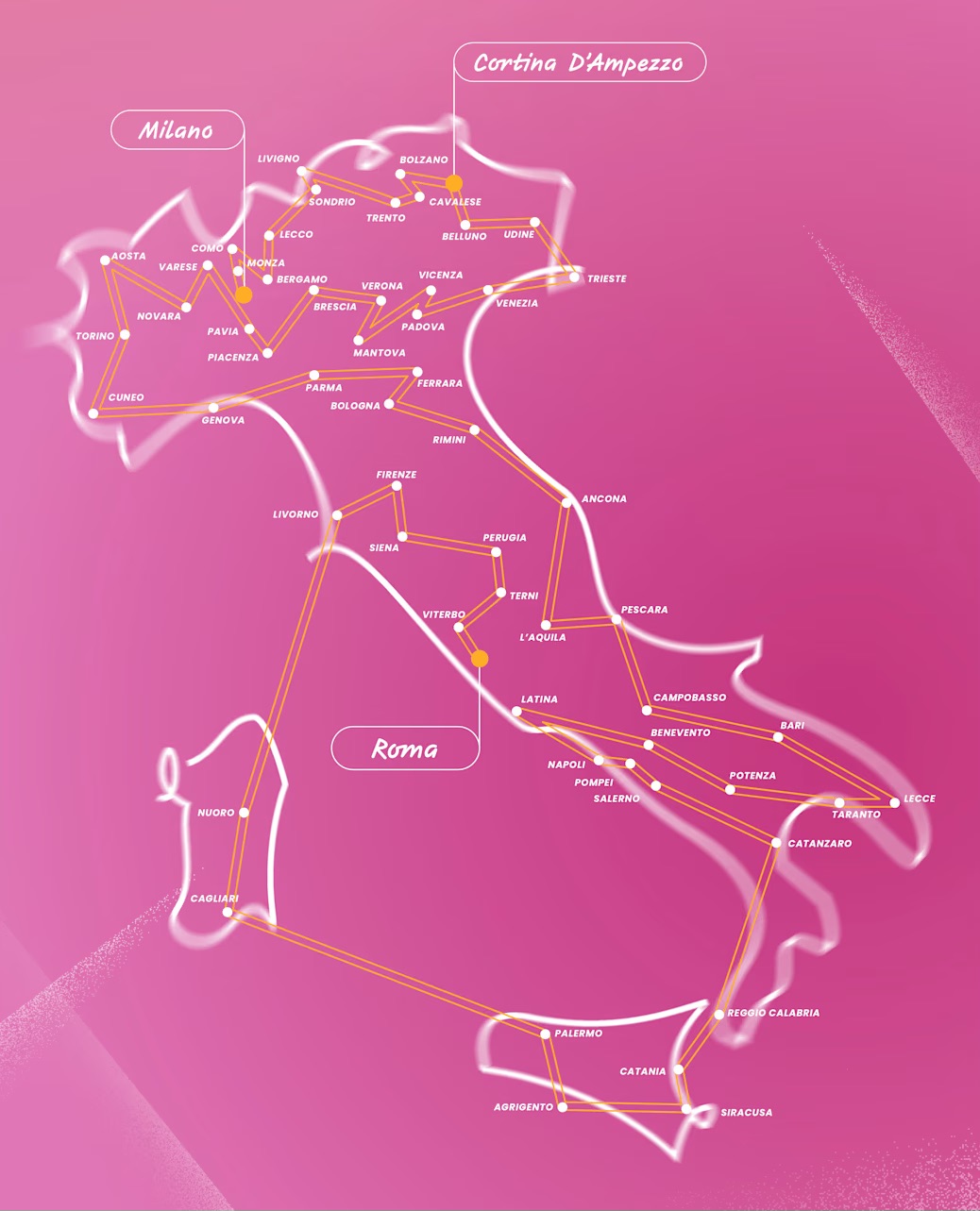
    The Olympic flame crossed all 20 Italian regions

    2026 Winter Olympics torch relay
    The 2026 Winter Olympics torch relay

    Not just northern Italy: the torch relay for the 2026 Winter Olympics – il viaggio della fiamma olimpica – touched all 20 Italian regions and 110 provinces, and some stops were truly unique. Relive this amazing journey on the official website.

    The Olympic flame left Olympia on 26 November, 2025. After travelling across Greece, the flame left Athens and arrived in Rome on 4 December. From here, it went up to Florence, travelled by sea to the islands of Sardinia and Sicily, and moved back up through the peninsula, arriving in Turin on 11 January, 2026. Torino was the last Italian city to host the Olympic Games in 2006, fifty years after Cortina 1956.

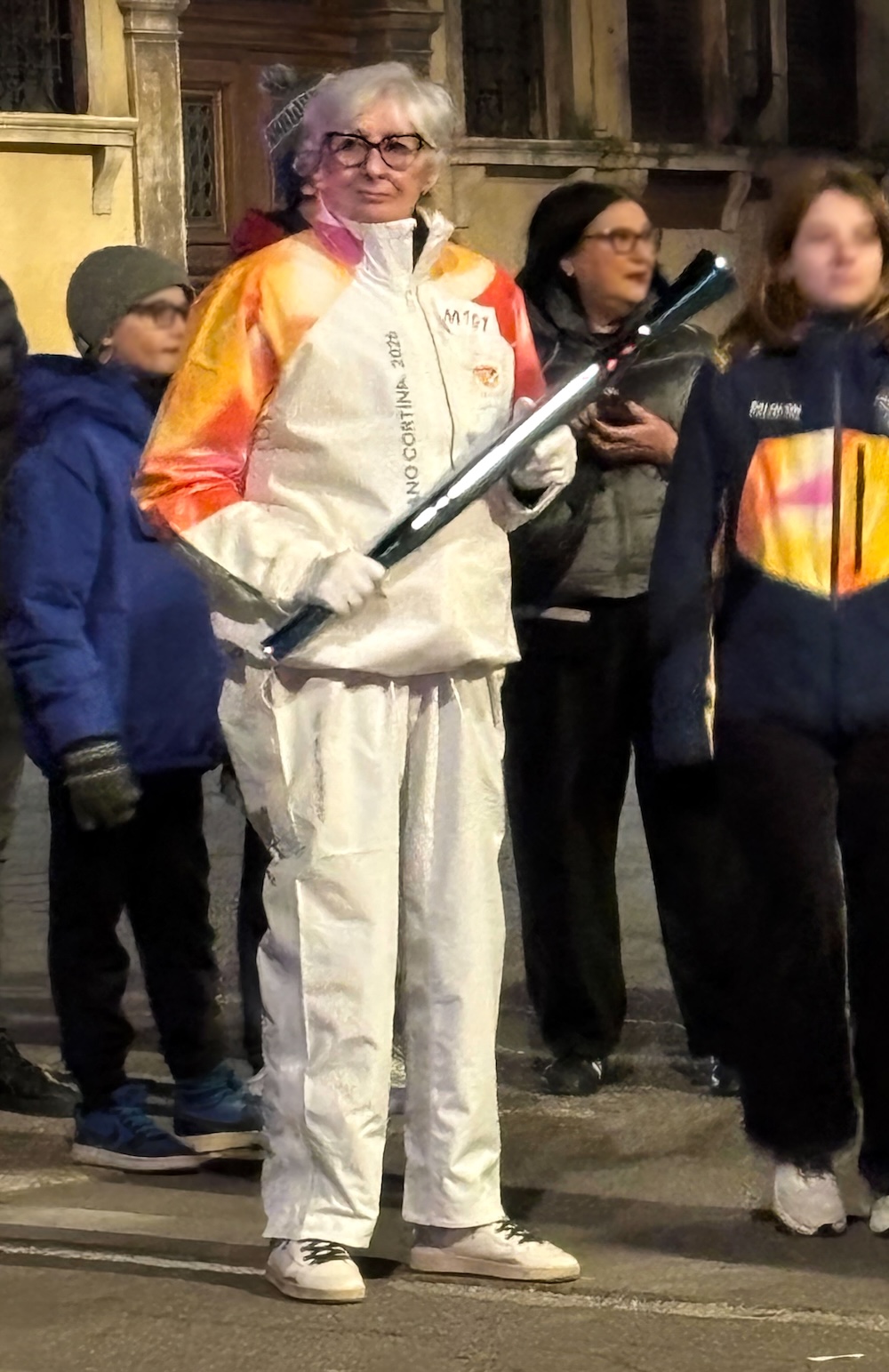
    Sara Simeoni waiting for the Olympic flame in Verona
    Sporting legend Sara Simeoni in Verona

    From Turin, the Olympic flame travelled across northern Italy, reaching Verona on 18 January. On the 22nd it was on a gondola in Venice, making a historic passage down the Grand Canal. After a stop in Cortina d’Ampezzo, the torch reached its final destination, the San Siro Stadium in Milan, just before the opening ceremony– la cerimonia di apertura – on 6 February, 2026. ESA astronaut Luca Parmitano was one of the torch bearers on the last stop of the Olympic flame. Spaziale!

    When the Olympic flame crossed the historic centre of Verona, the entire city gathered along the river Adige to witness the event. The flame was passed from one athlete or celebrity to the next, until it finally reached Sara Simeoni, the legendary high jumper who twice set a world record and won a gold medal at the Moscow Olympics in 1980. Born in the province of Verona, she is considered one of the best Italian female athletes of all time.

    The closing ceremony may have been the most spectacular event of the 2026 Winter Olympics

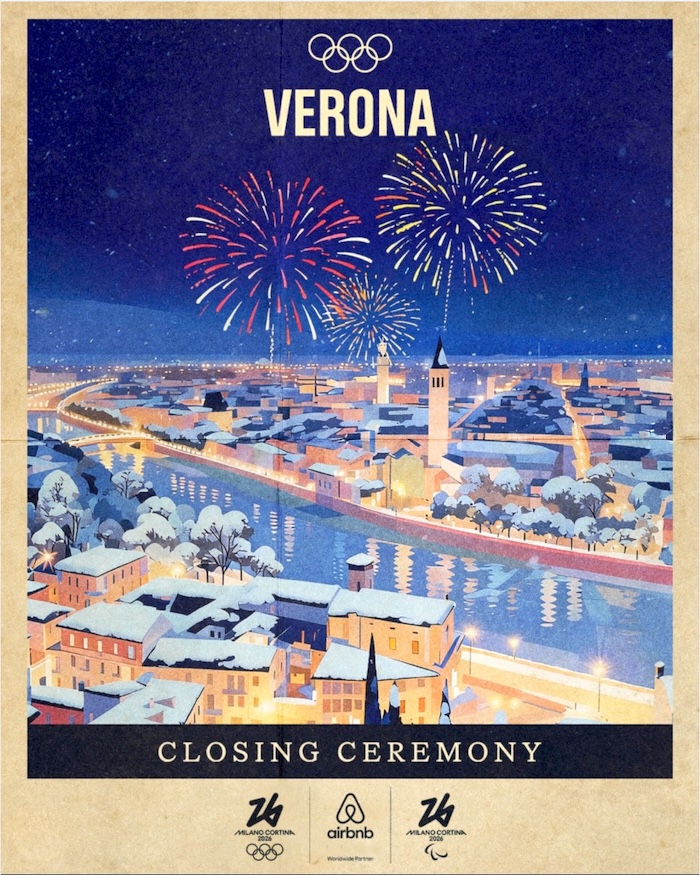
    Verona Olympic venue 2026

    The 2026 Winter Olympics opened in one of the largest stadiums in Europe, built over a hundred years ago in 1925. This was already quite impressive, but the closing ceremony – la cerimonia di chiusura – took place in a much older and more scenic venue: the 2,000-year old Arena, Verona’s Roman amphitheater.

    The Milano-Cortina 2026 Closing Ceremony, themed Beauty in Action, combined art, technology, and tradition on the backdrop of the Arena, featuring opera, dance, music, and design, connecting mountains to cities and culminating in an immersive celebration of sports and Italian culture. Star dancer Roberto Bolle appeared alongside sports icons like Carolina Kostner, Deborah Compagnoni, Francesco Totti, Bebe Vio, and Jannik Sinner.

    The closing ceremony took place on 22 February from 8 pm CET, and was broadcast worldwide. You can watch it on YouTube on the official Olympics channel.

    Did you come to Italy during the Olympics?

    Despite the official narrative celebrating Milano-Cortina 2026 as a flawlessly executed triumph, the reality was a little more nuanced. Italy genuinely earned much of the international praise it received: the atmosphere was warm and vibrant, the volunteers were widely admired, and the country showcased its landscapes and cultural flair with unmistakable style. Many athletes and visitors left with the impression of a welcoming, well‑run event.

    At the same time, not everything unfolded as smoothly as the authorities suggested. Several venues were completed at the last minute, budgets swelled beyond early projections, and some mountain areas struggled with congestion and accommodation pressure. Environmental concerns also resurfaced. Italy delivered a successful Olympics, just not an effortless one.

    Did you experience the Italian Winter Olympics firsthand? How did it go? Write a comment below!

    Diana

    Related Videos on our YouTube Channel (in Italian)

  • Cultura e società - Learn Italian

    How to Wish a Merry Christmas in Italian

    Reading Time: 5 minutes

    So… you are spending the holiday season in Italy, and your Italian friends have invited you over on Christmas Day. You are thrilled at the idea, but you are feeling a bit anxious because you can’t tell the difference between panettone and pandoro, and you are not sure how to wish a Merry Christmas to your friend’s parents in a polite way. Then there is the matter of New Year’s Eve, when a flood of good wishes is exchanged even with strangers, and lots of toasts are made. How to join the conversation?

    Buon Natale e felice anno nuovo!

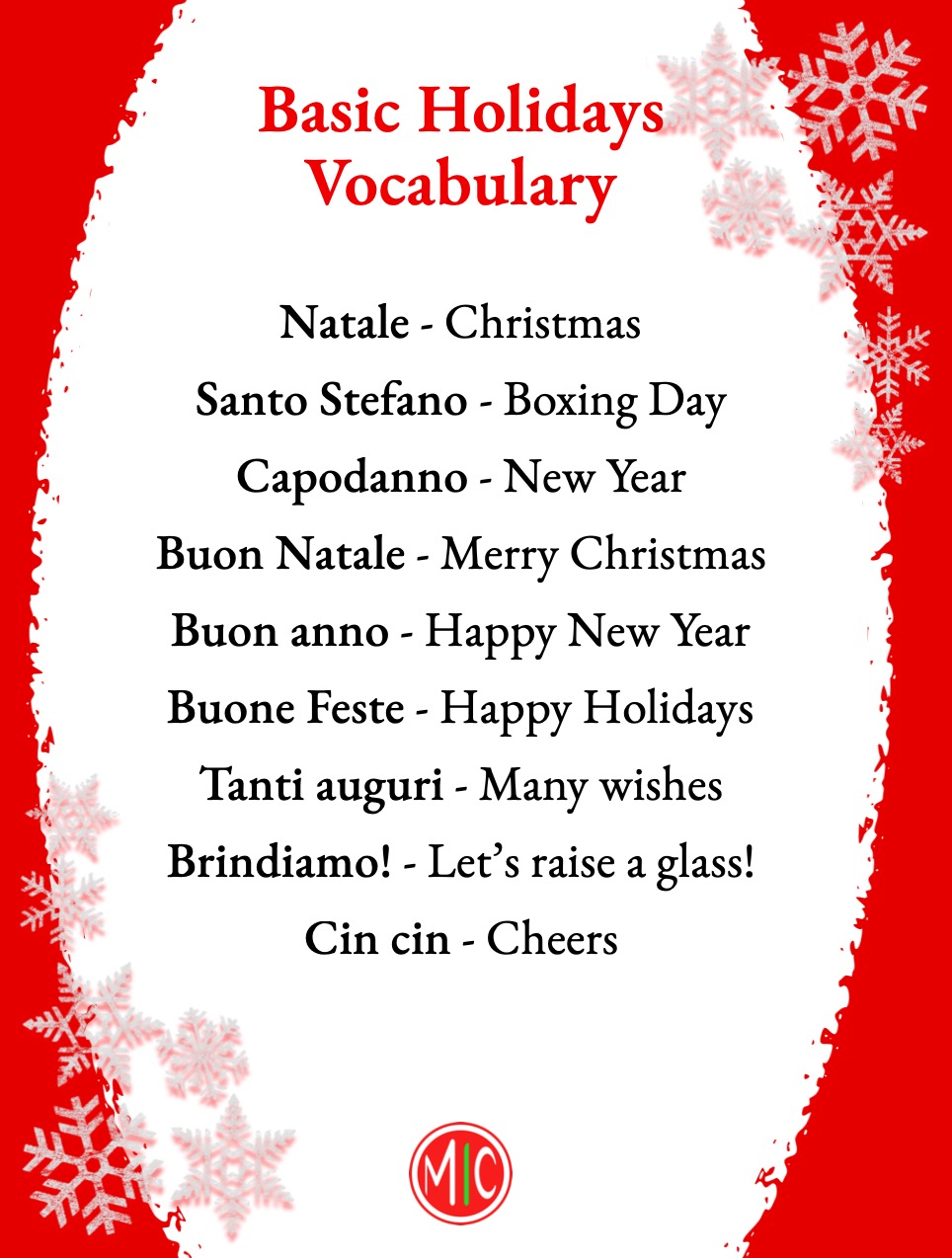
    Let’s start with wishes – in Italian, auguri. This simple word can be used in various situations, including on a birthday or other anniversaries. Tanti auguri is a a step further: many wishes. If you want to overdo it, you can say Tantissimi auguri!

    Most Italians are raised Catholic and celebrate Christmas with family, even those who do not go to church at all or only go on Easter and Christmas. Buon Natale (Merry Christmas) is a wish that anyone will welcome and return, but throughout the holiday season you can also use a more generic Buone Feste (happy holidays).

    Here’s a nice wish for a friend and their family:

    • Buone Feste a te e alla tua famiglia.

    If you don’t know the person very well, use the polite form:

    • Buone Feste a Lei e alla Sua famiglia.

    Fast forward to New Year’s Eve: la vigilia di Capodanno. It is usually celebrated with a big dinner – il cenone – and lots of toasts – brindisi – as the clock strikes midnight. Then you can say:

    • Buon anno! or Felice anno nuovo! – Happy New Year!
    • Buona fine e buon inizio! – Happy endings and happy beginnings!

    Tanti auguri works great here, too. Cin cin (cheers) is mandatory during a toast, to be said as you clink your glasses together and look at the other person in the eye. What to do if you don’t drink? Remember that toasting with water is considered bad luck, so you may want to fill your glass with wine anyway, just for show.

    As an aside, do not believe those who claim that simple words like auguri, cin cin, grazie and prego should not be used. We say them all the time and they can go a long way! It’s great to have a large vocabulary at hand, but do not feel compelled to use long, convoluted sentences.

    Il Natale in Italia

    Some Italian families celebrate on Christmas Eve – la vigilia di Natale, while others have a big Christmas lunch – il pranzo di Natale, and some do both. Some go to Mass on Christmas Eve – la Messa di Natale, and may have a glass of wine and a slice of pandoro with fellow parishioners afterwards.

    What do we eat on Christmas? Traditions vary widely throughout the peninsula, but Christmas lunch is usually very rich and features a lot of meat. Tortellini in brodo, lasagne or another kind of pasta are a staple, followed by lesso or bollito (boiled meat with various sauces), arrosto (roast), abbacchio (roast lamb), or cappone ripieno (stuffed capon). Not quite vegetarian friendly!

    Pandoro o panettone?

    After lunch, the dilemma is: pandoro o panettone? Or maybe another traditional Christmas cake? Pandoro hails from Verona, in Veneto, while panettone originated in Milan. Both are very popular all over Italy, with new fillings and variants created every year, but there are alternatives. In the South, a huge variety of traditional desserts is made, including struffoli, mostaccioli, cartellate, torrone and many others. 

    I regali di Natale – Christmas presents – are a big part of the celebration, and not just for children. They can be opened after dinner on Christmas Eve, on the morning of Christmas day or after lunch. They are brought by Babbo Natale (Santa Claus), of course, who puts them under each family’s Christmas tree – l’albero di Natale. L’albero e gli addobbi natalizi (Christmas decorations) are usually put up on December 8th, which is a public holiday: l’Immacolata Concezione di Maria. Many families also prepare a nativity scene, il presepe, with figurines of Giuseppe, Maria, il bue, l’asinello, le pecore e i pastori. Il Bambin Gesù, baby Jesus, is put in the manger at midnight on Christmas Eve. I Re Magi, the Three Wise Men, arrive on January 6th, il giorno dell’Epifania, when all festivities end: L’Epifania tutte le feste porta via.

    A Christmas tradition that is fading away with the older generations is la tombola, a board game similar to bingo which originated in Naples three centuries ago. For some families, though, giocare a tombola is still a popular afternoon activity to spend more time together after lunch.

    The day after Christmas is called Santo Stefano – Boxing Day. It’s also a public holiday in Italy, and may be spent visiting relatives, going to the mountains, or just chilling out. 

    Cosa fai a Capodanno?

    As the new year approaches, the same question resounds everywhere: Cosa fai a Capodanno? What are you doing on New Year’s Eve? And the second most common question is Cosa ti metti? What will you wear? Whatever your answer may be, make sure to wear something red for good luck!

    Most people will spend New Year’s Eve at dinners and parties, usually with friends. Festeggiamo la fine dell’anno e l’inizio dell’anno nuovo, we celebrate the end of the year and the beginning of the new one. Brindiamo all’anno nuovo, we raise a glass to the new year, e speriamo che sia migliore del precedente, and we hope it will be better than the last one. Around midnight we eat cotechino e lenticchie: pork sausage and lentils. The latter are said to bring money because they look like tiny coins.

    Festeggiamo il Natale insieme

    Let’s put all this together and celebrate Christmas the Italian way! Marta invites Janet to spend Christmas together. Their exchange may go like this:

    Marta: Cosa fai a Natale? Vieni a pranzo da noi?

    Janet: Molto volentieri, grazie.

    On Christmas, Janet arrives at Marta’s house. She brings a bottle of wine, a foolproof gift.

    Janet: Buon Natale! Ho portato una bottiglia di vino.

    Marta: Che gentile! Vieni, ti presento mio marito e i miei genitori.

    Janet: Piacere! Grazie dell’invito. Che bella casa!

    Marta: Ti piacciono gli addobbi? Li ho presi ai mercatini di Natale.

    Janet: Mi piacciono molto. Quest’albero di Natale è meraviglioso!

    After a light aperitivo, the Christmas lunch begins with homemade tortellini.

    Marta: Andiamo a tavola! È pronto.

    Janet: Che bella tavola!

    Marta: Ecco i tortellini. Li abbiamo fatti in casa.

    Janet: Sono buonissimi, complimenti!

    Marta: Ti piace il lesso con la mostarda?

    Janet: Non l’ho mai mangiato, ma lo assaggio volentieri.

    Marta: Preferisci il pandoro o il panettone?

    Janet: Per me una fetta di pandoro, grazie.

    Marta: Brindiamo! Buon Natale a tutti!

    Janet: Cin cin! Tanti auguri!

    Marta: E ora apriamo i regali di Natale. Questo è per te!

    Janet: Grazie, non dovevi. È bellissimo!

    Marta: È solo un pensierino. Giochiamo a tombola?

    Janet: Certo!

    We hope you will now feel ready for your Italian Christmas.

    Auguriamo a voi e alle vostre famiglie Buone Feste e un felice Natale! We wish you and your loved ones Happy Holidays and a Merry Christmas.

    Anna & Diana

    Related videos:

  • Cultura e società

    Dalle olive all’olio: come si produce l’oro verde d’Italia

    Reading Time: 5 minutes

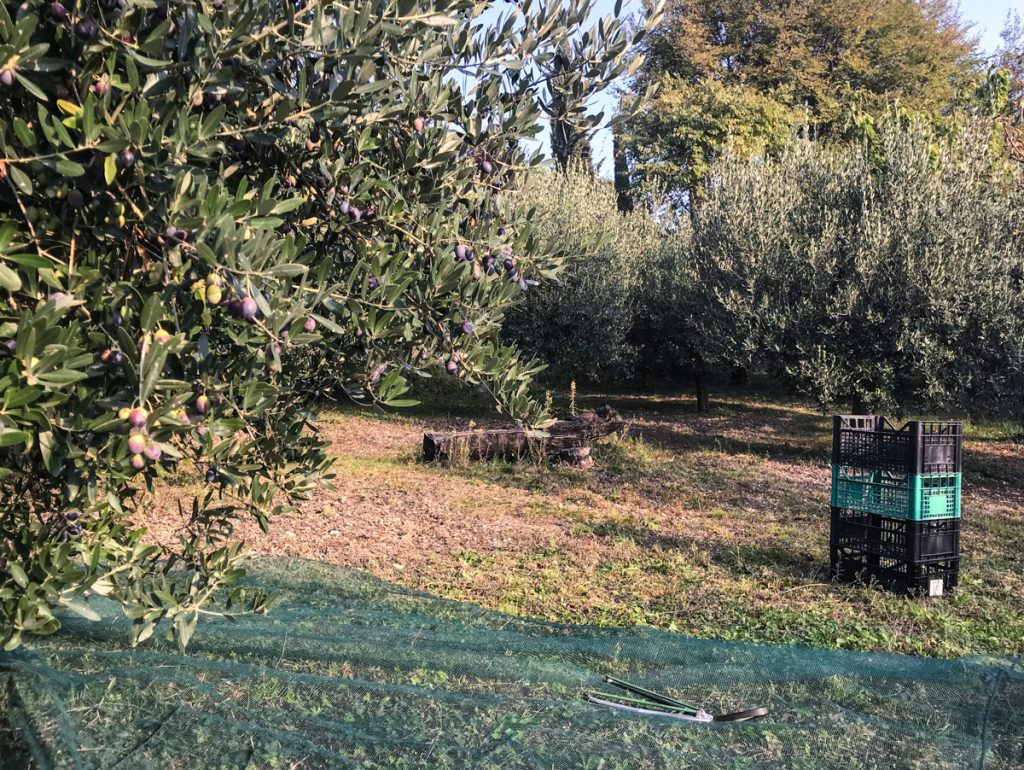
    Dentro l’oliveto

    Oliveto durante la raccolta

    È ottobre: negli oliveti di tutta Italia comincia la raccolta delle olive, che in alcune zone dura fino a dicembre inoltrato. Dalle distese immense di olivi in Toscana e Puglia agli appezzamenti familiari o addirittura ai giardini, dalla mattina alla sera ferve l’attività nel tentativo di raccogliere le preziose olive nel minor tempo possibile. Una volta staccati dagli alberi, questi frutti delicati devono essere portati al frantoio al più presto, idealmente entro uno o due giorni, per diventare olio extravergine della massima qualità.

    Come nascono le olive

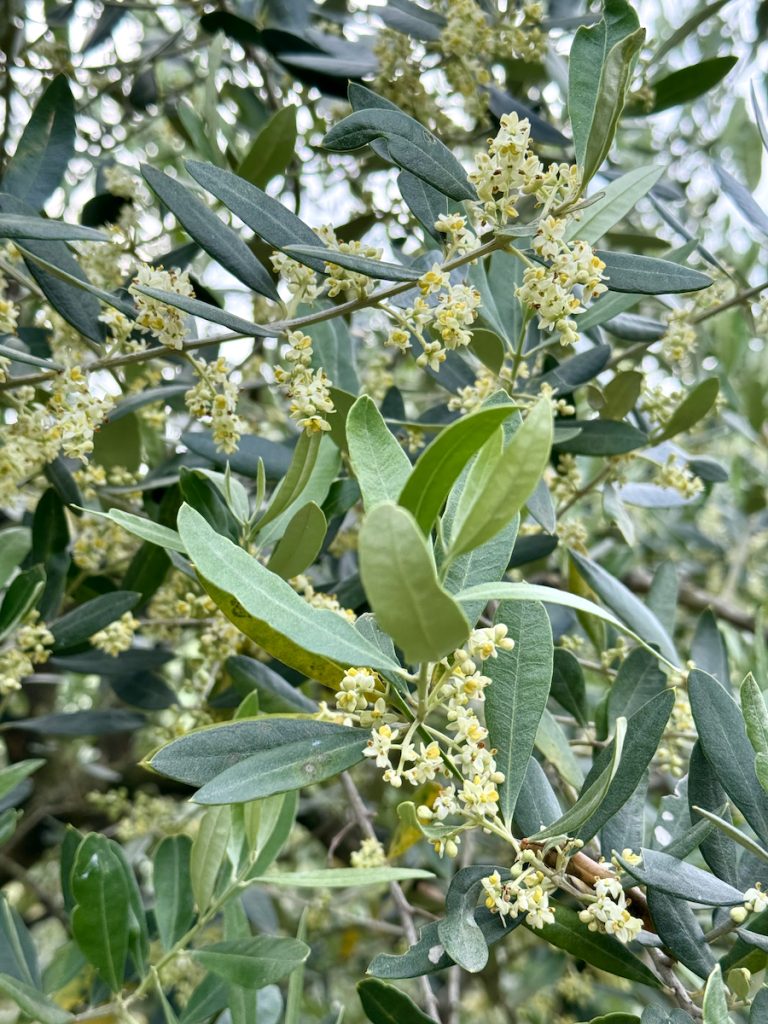
    Fiori di olivo
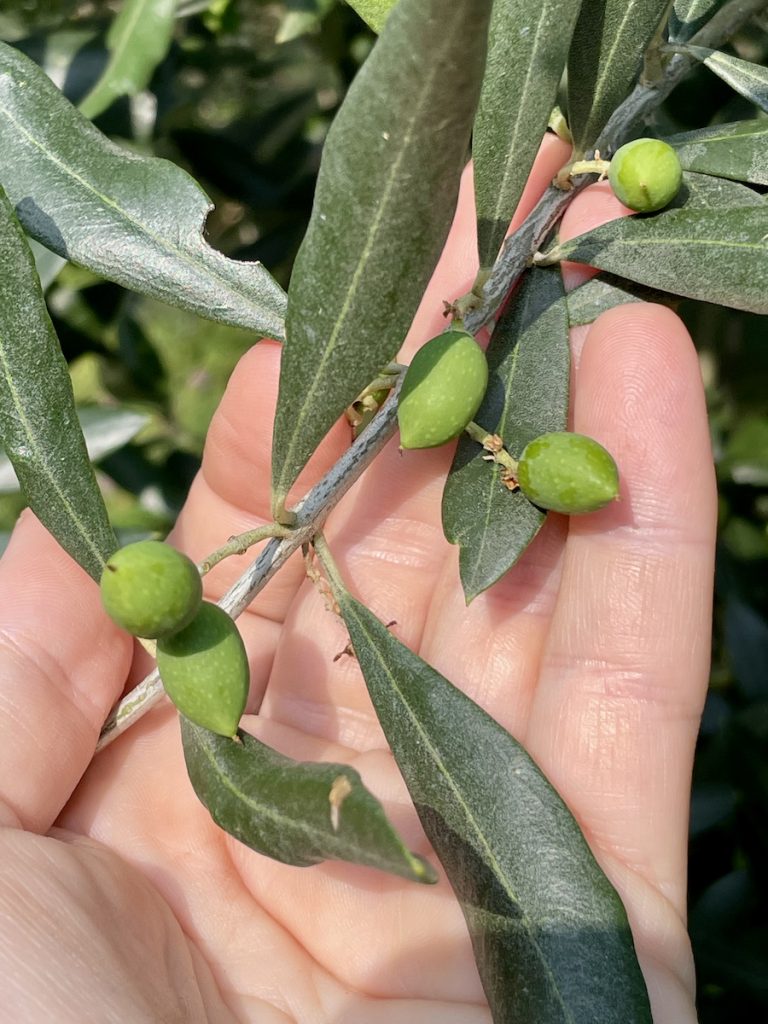
    Le piccole olivine

    Questo viaggio inizia diversi mesi prima, all’inizio di giugno, quando gli olivi sono in fiore. Avete mai visto dei fiori di olivo? Eccoli qui a sinistra: sono dei piccoli grappoli di fiorellini bianchi. L’impollinazione dell’olivo è anemofila, cioè avviene grazie al vento. Se il tempo è clemente, ben presto i fiori diventano piccole olivine. L’allegagione, cioè la trasformazione del fiore in frutto, è piuttosto difficoltosa nell’olivo: solo l’1-4% dei fiori riescono a diventare olive.

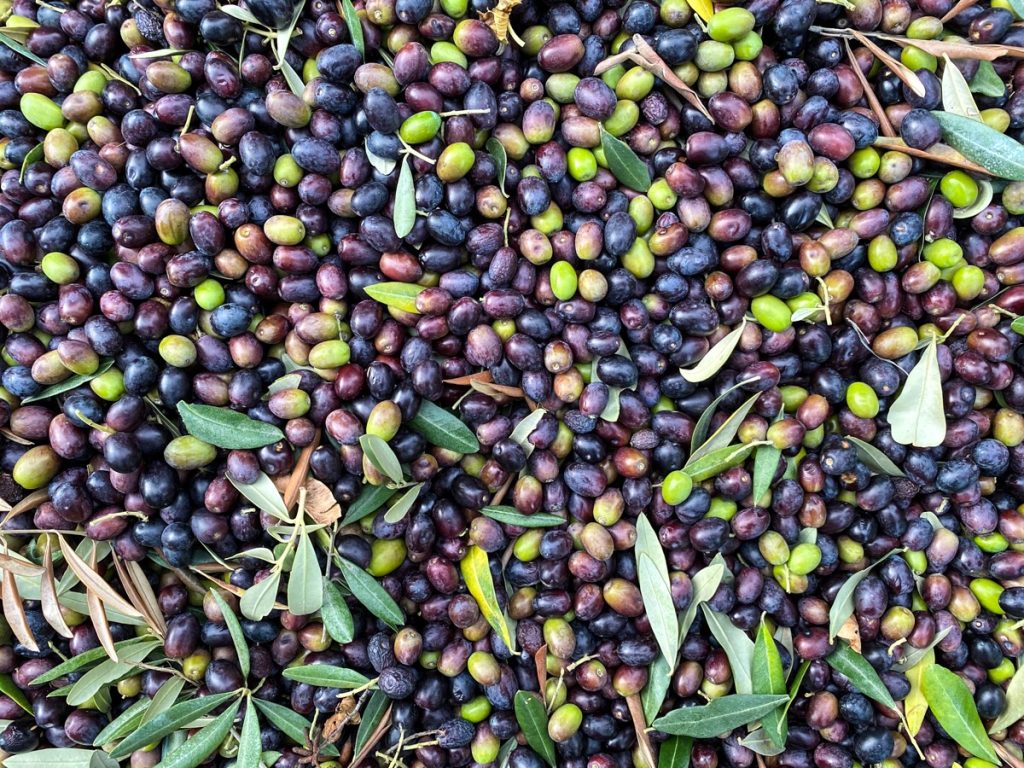
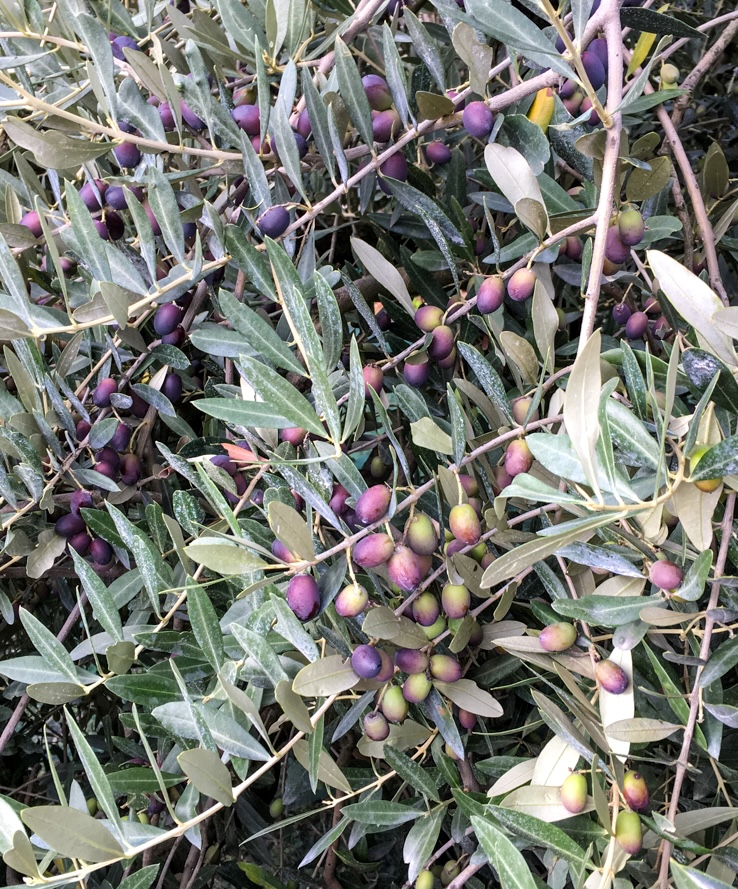
    Nel corso dell’estate, le olive si ingrossano e maturano, sempre che lo consentano la siccità, avversità meteorologiche sempre più frequenti come la grandine e la moltitudine di insetti che vivono negli oliveti. Se tutto va bene, a settembre le olive iniziano a cambiare colore: da verdi diventano giallastre, poi viola e infine, piano piano, nere.

    Le olive sono tutte uguali?

    Olive mature

    Naturalmente no, le olive non sono tutte uguali: ne esistono tantissime varietà diverse, chiamate cultivar. Ci sono le olive da tavola, chiamate anche olive da mensa, meno adatte alla produzione di olio, che in genere vengono raccolte e consumate verdi, come l’Ascolana Tenera, la Bella di Cerignola, la Nocellara del Belice; e poi ci sono le varietà coltivate specificamente per produrre l’olio. In totale, esistono in Italia più di cinquecento varietà di olive diverse, e tante altre si coltivano nel mondo. Ogni varietà ha un grado di maturazione ideale diverso: per produrre l’olio perfetto, alcune olive vanno raccolte completamente nere, altre non appena virano al violetto.

    L’olivo si coltiva soltanto in Italia meridionale?

    L’olivo è una pianta mediterranea che ama il sole e il caldo: sono particolarmente famosi i grandi oliveti pugliesi, con i loro alberi millenari, che negli ultimi anni sono stati decimati dalla famigerata Xylella. L’olivo però si coltiva in quasi tutta Italia, anche al nord dove tradizionalmente si usavano altri grassi per cucinare, come il burro e lo strutto. A causa del cambiamento climatico, oggi troviamo oliveti ad altitudini sempre più alte, anche oltre 600 metri sul livello del mare. Ci sono poi zone dal microclima particolarmente favorevole, come la riviera ligure o il lago di Garda, dove si coltivano varietà locali. In Liguria si producono le famose olive Taggiasche, dal paesino di Taggia, in provincia di Imperia; nel Veneto c’è la cultivar Grignano, originaria di Verona, con cui si produce un olio particolarmente amaro e fruttato; in Toscana si coltiva soprattutto il Leccino, diffuso anche più a nord perché resistente al freddo.

    Ma bando alle ciance: le olive sono mature, è ora di portarle al frantoio!

    Cosa succede al frantoio

    Il frantoio è il luogo in cui si frangono (cioè si frantumano, si macinano) le olive per produrre l’olio. Può essere enorme, su scala industriale, di medie dimensioni oppure piccolo, familiare. Nelle zone di produzione dell’olio ci sono frantoi un po’ dappertutto, in ogni paese. Chiunque può portare le proprie olive al frantoio, anche chi ha solo qualche olivo in giardino!

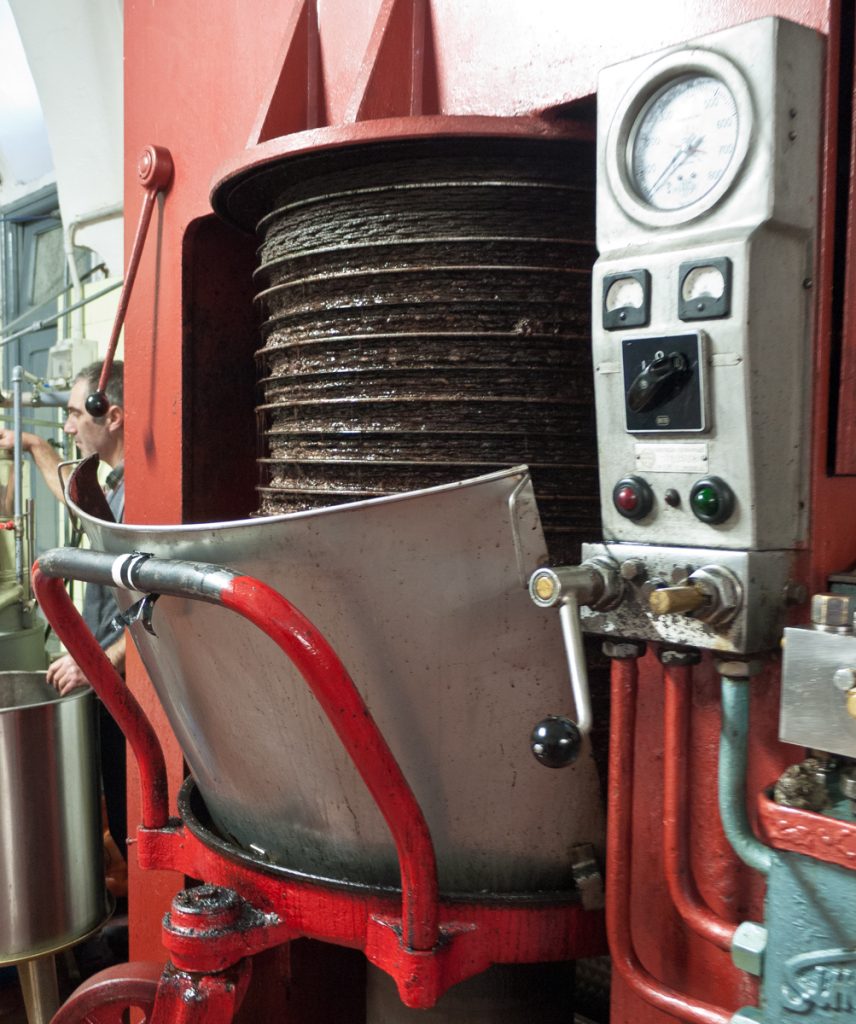
    Come si “spremono” le olive? Prima di tutto si macinano; una volta si usavano delle grandi mole in pietra. Poi la pasta di olive così ottenuta si spalmava sui fiscoli, dei dischi di fibre vegetali intrecciate. Qui a destra potete vedere una pila di fiscoli all’interno di un torchio, la macchina che applicando una forte pressione fa uscire l’olio dalla pasta di olive.

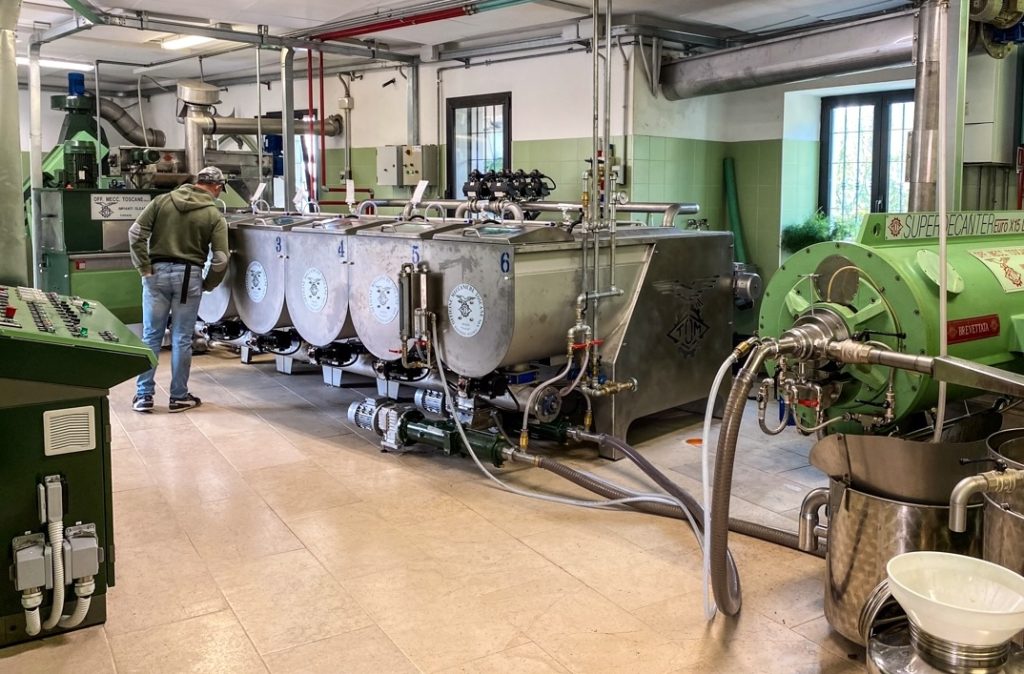
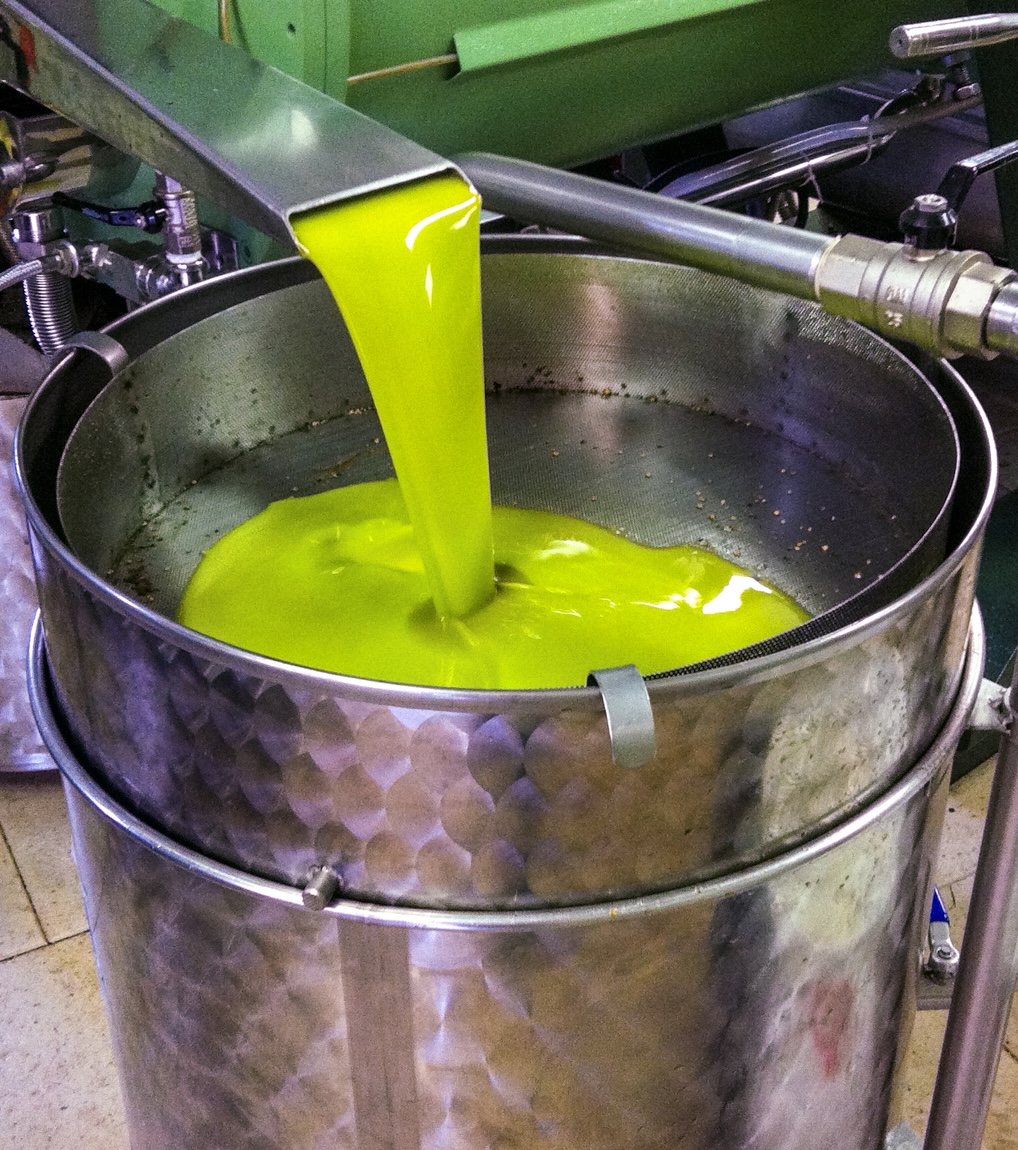
    Alcuni frantoi “storici” usano ancora le mole e i fiscoli, ma nei frantoi più moderni si utilizza una tecnica diversa, in cui le olive vengono trasformate in olio in un processo continuo, senza mai esporle all’aria. Le olive vengono immesse in una macchina in cui vengono automaticamente lavate, private delle foglie che possono essere cadute durante la raccolta e macinate. La pasta di olive viene quindi mescolata lentamente in una gramola per favorire la separazione dell’olio dall’acqua, e infine si estrae l’olio per decantazione: l’olio, più leggero dell’acqua, sale in superficie. Un’ultima fase di filtrazione elimina i frammenti di nocciolo eventualmente rimasti, et voilà: abbiamo il nostro olio extravergine di oliva.

    A questo punto, se si tratta del nostro olio, lo porteremo a casa in contenitori di plastica o di acciaio, e poi lo imbottiglieremo al più presto. Dopo qualche giorno potremo cominciare a gustare il nostro oro verde: sarà amaro e piccante all’inizio, e poi sempre più fruttato e complesso con il passare del tempo.

    Quanto costa l’olio d’oliva?

    L’olio extravergine di oliva italiano è sempre più costoso. Le avversità e l’incertezza del clima rendono più difficile la coltivazione; la raccolta delle olive è lunga e faticosa, soprattutto nei terreni aspri e scoscesi che caratterizzano buona parte d’Italia; la frangitura e l’imbottigliamento hanno un costo non indifferente.

    Produrre l’olio non è come fare il vino: la resa dell’oliva è molto bassa, in media intorno al 10%. Questo significa che se portiamo 100 chilogrammi di olive al frantoio, con una spesa media di 20 euro circa, otterremo poco più di 10 litri d’olio. Aggiungendo il costo del tappo e della bottiglia, ogni litro d’olio ci costerà almeno 3 euro, senza considerare il tempo e le risorse necessarie per curare l’oliveto, potare gli olivi, fare i trattamenti fitosanitari, raccogliere le olive e imbottigliare l’olio. Non deve sorprendere, quindi, se il prezzo previsto per un buon olio extravergine di oliva prodotto quest’anno in Italia è di 12-14 euro al litro.

    Spero che vi sia piaciuto questo viaggio nell’oliveto insieme a me. Voi cosa ne pensate? Vi piace l’olio extravergine italiano, o scegliete alternative più economiche? Scrivetemi!

    Alla prossima,

    Diana

    Glossario

    • dicembre inoltrato: late December
    • appezzamento: plot of land, field
    • staccare: to detach, to pick
    • frantoio: oil mill
    • in fiore: blossoming
    • grappolo: bunch, cluster
    • impollinazione: pollination
    • clemente: clement, mild
    • allegagione: fruit set
    • maturare: to ripen
    • siccità: drought
    • grandine: hail
    • mensa: kitchen table
    • virare: to change color
    • millenario: thousand-year old
    • decimare: to decimate, to wipe out
    • microclima: microclimate
    • fruttato: fruity
    • bando alle ciance: enough talking
    • frangere: to break; commonly said of waves: le onde si frangono sugli scogli
    • spremere: to squeeze
    • mola: millstone
    • spalmare: to spread
    • pila: stack
    • decantazione: settling
    • nocciolo: pit, bone
    • imbottigliare: to bottle
    • piccante: spicy, hot
    • scosceso: steep
    • resa: yield
    • fitosanitario: phytosanitary, related to plant health