So… you are spending the holiday season in Italy, and your Italian friends have invited you over on Christmas Day. You are thrilled at the idea, but you are feeling a bit anxious because you can’t tell the difference between panettone and pandoro, and you are not sure how to wish a Merry Christmas to your friend’s parents in a polite way. Then there is the matter of New Year’s Eve, when a flood of good wishes is exchanged even with strangers, and lots of toasts are made. How to join the conversation?
Buon Natale e felice anno nuovo!
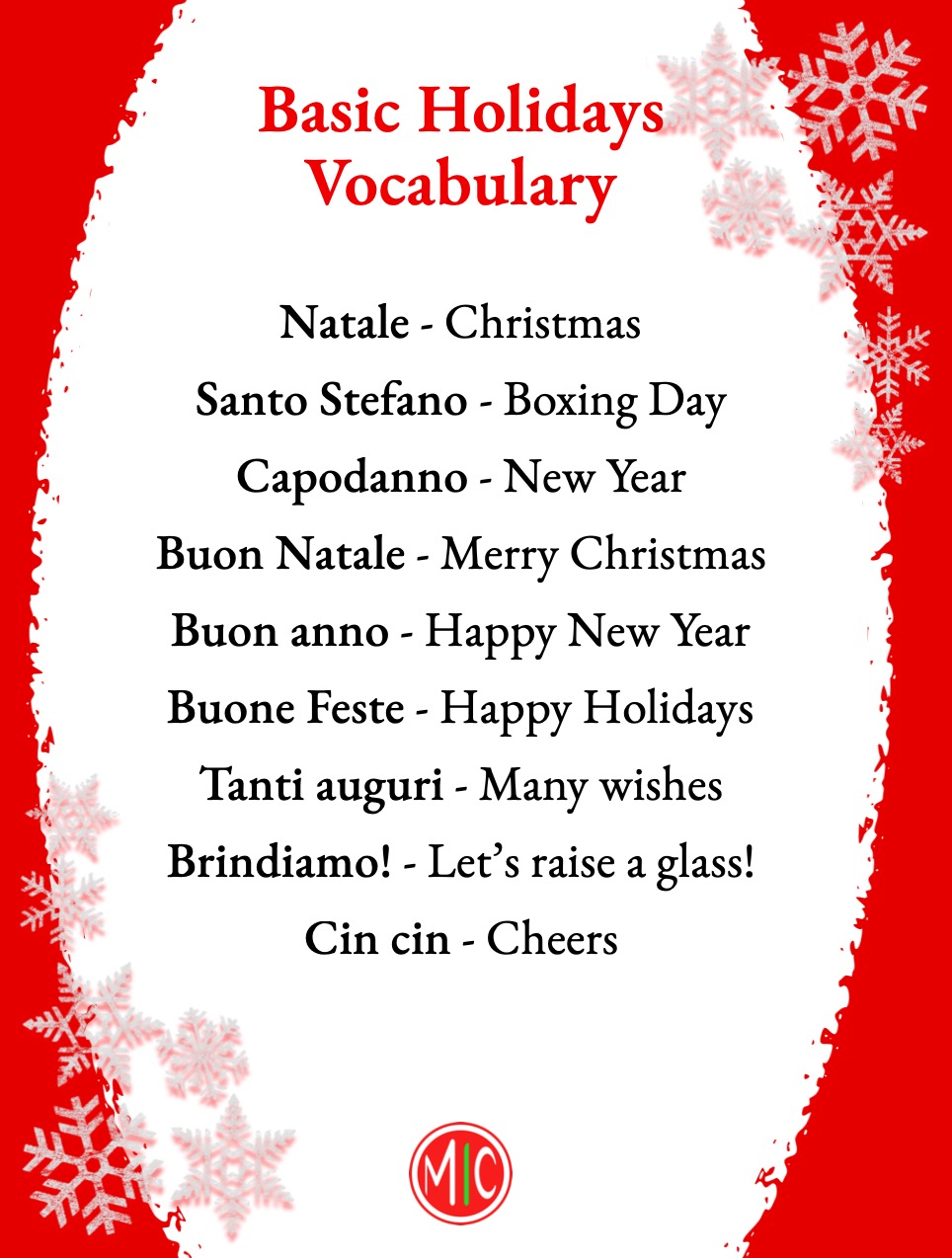
Let’s start with wishes – in Italian, auguri.This simple word can be used in various situations, including on a birthday or other anniversaries. Tanti auguri is a a step further: many wishes. If you want to overdo it, you can say Tantissimi auguri!
Most Italians are raised Catholic and celebrate Christmas with family, even those who do not go to church at all or only go on Easter and Christmas. Buon Natale (Merry Christmas) is a wish that anyone will welcome and return, but throughout the holiday season you can also use a more generic Buone Feste (happy holidays).
Here’s a nice wish for a friend and their family:
Buone Feste a te e alla tua famiglia.
If you don’t know the person very well, use the polite form:
Buone Feste a Lei e alla Sua famiglia.
Fast forward to New Year’s Eve: la vigilia di Capodanno. It is usually celebrated with a big dinner – il cenone – and lots of toasts – brindisi – as the clock strikes midnight. Then you can say:
Buon anno! or Felice anno nuovo! – Happy New Year!
Buona fine e buon inizio! – Happy endings and happy beginnings!
Tanti auguri works great here, too. Cin cin (cheers) is mandatory during a toast, to be said as you clink your glasses together and look at the other person in the eye. What to do if you don’t drink? Remember that toasting with water is considered bad luck, so you may want to fill your glass with wine anyway, just for show.
As an aside, do not believe those who claim that simple words like auguri, cin cin, grazie and prego should not be used. We say them all the time and they can go a long way! It’s great to have a large vocabulary at hand, but do not feel compelled to use long, convoluted sentences.
Il Natale in Italia
Some Italian families celebrate on Christmas Eve – la vigilia di Natale, while others have a big Christmas lunch – il pranzo di Natale, and some do both. Some go to Mass on Christmas Eve – la Messa di Natale, and may have a glass of wine and a slice of pandoro with fellow parishioners afterwards.
What do we eat on Christmas? Traditions vary widely throughout the peninsula, but Christmas lunch is usually very rich and features a lot of meat. Tortellini in brodo, lasagne or another kind of pasta are a staple, followed by lesso or bollito (boiled meat with various sauces), arrosto (roast), abbacchio (roast lamb), or cappone ripieno (stuffed capon). Not quite vegetarian friendly!
Pandoro o panettone?
After lunch, the dilemma is: pandoro o panettone?Or maybe another traditional Christmas cake? Pandoro hails from Verona, in Veneto, while panettone originated in Milan. Both are very popular all over Italy, with new fillings and variants created every year, but there are alternatives. In the South, a huge variety of traditional desserts is made, including struffoli, mostaccioli, cartellate, torrone and many others.
I regali di Natale – Christmas presents – are a big part of the celebration, and not just for children. They can be opened after dinner on Christmas Eve, on the morning of Christmas day or after lunch. They are brought by Babbo Natale (Santa Claus), of course, who puts them under each family’s Christmas tree – l’albero di Natale. L’albero e gli addobbi natalizi (Christmas decorations) are usually put up on December 8th, which is a public holiday: l’Immacolata Concezione di Maria. Many families also prepare a nativity scene, il presepe, with figurines of Giuseppe, Maria, il bue, l’asinello, le pecore e i pastori.Il Bambin Gesù, baby Jesus, is put in the manger at midnight on Christmas Eve. I Re Magi, the Three Wise Men, arrive on January 6th, il giorno dell’Epifania, when all festivities end: L’Epifania tutte le feste porta via.
A Christmas tradition that is fading away with the older generations is la tombola, a board game similar to bingo which originated in Naples three centuries ago. For some families, though, giocare a tombola is still a popular afternoon activity to spend more time together after lunch.
The day after Christmas is called Santo Stefano – Boxing Day. It’s also a public holiday in Italy, and may be spent visiting relatives, going to the mountains, or just chilling out.
Cosa fai a Capodanno?
As the new year approaches, the same question resounds everywhere: Cosa fai a Capodanno? What are you doing on New Year’s Eve? And the second most common question is Cosa ti metti? What will you wear? Whatever your answer may be, make sure to wear something red for good luck!
Most people will spend New Year’s Eve at dinners and parties, usually with friends. Festeggiamo la fine dell’anno e l’inizio dell’anno nuovo, we celebrate the end of the year and the beginning of the new one. Brindiamo all’anno nuovo, we raise a glass to the new year, e speriamo che sia migliore del precedente, and we hope it will be better than the last one. Around midnight we eat cotechino e lenticchie: pork sausage and lentils. The latter are said to bring money because they look like tiny coins.
Festeggiamo il Natale insieme
Let’s put all this together and celebrate Christmas the Italian way! Marta invites Janet to spend Christmas together. Their exchange may go like this:
Marta: Cosa fai a Natale? Vieni a pranzo da noi?
Janet: Molto volentieri, grazie.
On Christmas, Janet arrives at Marta’s house. She brings a bottle of wine, a foolproof gift.
Janet: Buon Natale! Ho portato una bottiglia di vino.
Marta: Che gentile! Vieni, ti presento mio marito e i miei genitori.
Janet: Piacere! Grazie dell’invito. Che bella casa!
Marta: Ti piacciono gli addobbi? Li ho presi ai mercatini di Natale.
Janet: Mi piacciono molto. Quest’albero di Natale è meraviglioso!
After a light aperitivo, the Christmas lunch begins with homemade tortellini.
Marta: Andiamo a tavola! È pronto.
Janet: Che bella tavola!
Marta: Ecco i tortellini. Li abbiamo fatti in casa.
Janet: Sono buonissimi, complimenti!
Marta: Ti piace il lesso con la mostarda?
Janet: Non l’ho mai mangiato, ma lo assaggio volentieri.
Marta: Preferisci il pandoro o il panettone?
Janet: Per me una fetta di pandoro, grazie.
Marta: Brindiamo! Buon Natale a tutti!
Janet: Cin cin! Tanti auguri!
Marta: E ora apriamo i regali di Natale. Questo è per te!
Janet: Grazie, non dovevi. È bellissimo!
Marta: È solo un pensierino. Giochiamo a tombola?
Janet: Certo!
We hope you will now feel ready for your Italian Christmas.
Auguriamo a voi e alle vostre famiglie Buone Feste e un felice Natale! We wish you and your loved ones Happy Holidays and a Merry Christmas.
If you love watching movies, you may also enjoy spotting motifs: little things – objects, concepts, design elements – that the filmmaker has added to enrich the film’s message, setting, or feeling or maybe just for fun. Many of these motifs, recurring in post-war Italian films, are examples of italianità – characteristically Italian things. Recognizing them will help you get a feel for the culture.
As I write the cineracconti (photo-stories) for my blog, I go frame by frame, making screenshots along the way. By slow, attentive viewing, I spot motifs that might otherwise fly by, perhaps to be noticed on a second – or third or fourth – encounter.
When you’re familiar with the motifs that crop up in Italian films, you’ll be alert to their coded meanings and you’ll also get it when the filmmaker uses them for comic effect.
Below, I share some motifs that have caught my eye in the post-war Italian films that I love. I hope that, once aware of these, you’ll have a deeper understanding of the films and you’ll get an idea of how to watch movies more attentively so as to get a better understanding of the filmmaker’s intent and, ultimately, to take more pleasure in what you’re seeing. Note: spoiler alert!
The sight, smell, or flavor of oranges is bound to make an appearance in films set in Sicily or in the South.
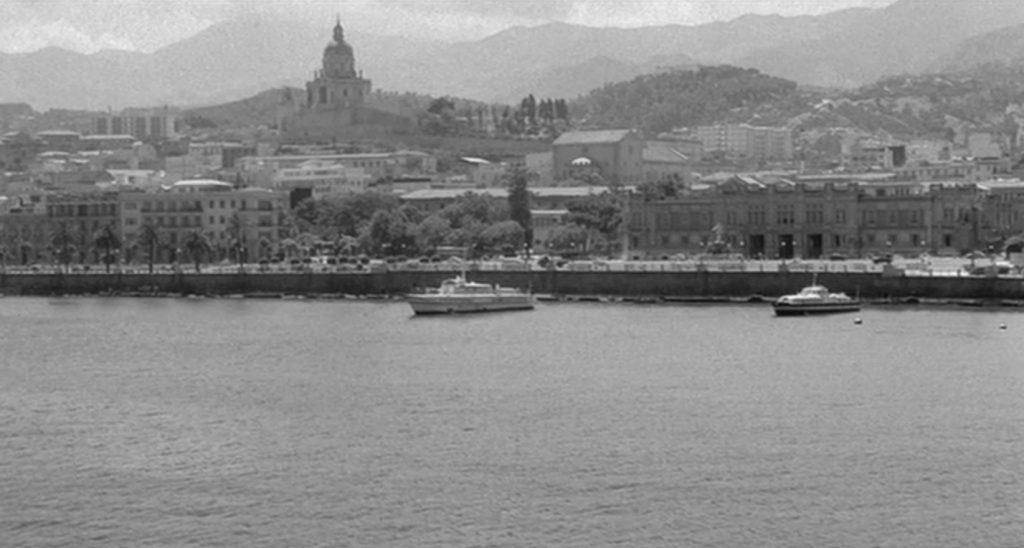
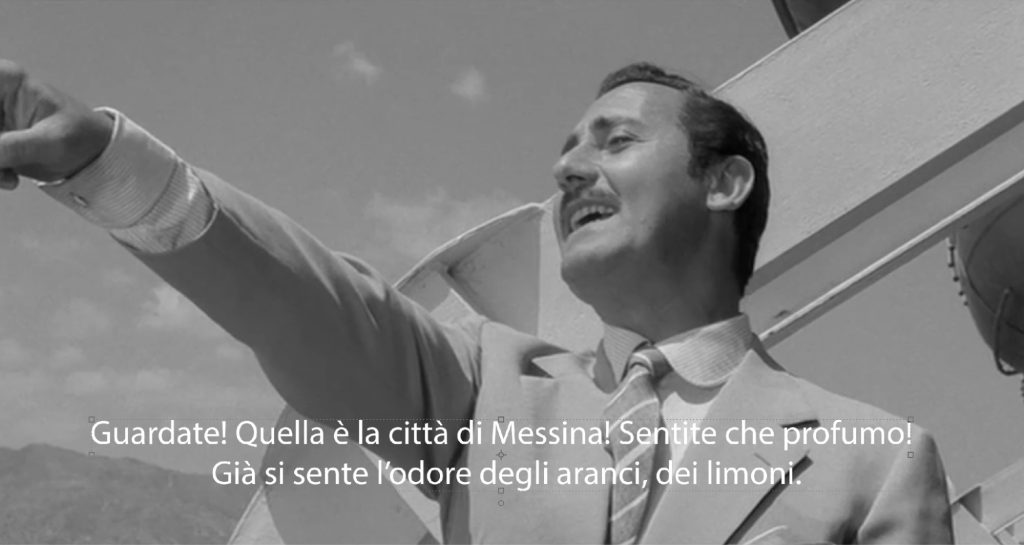
In Mafioso,Nino (Alberto Sordi) is headed to his Sicilian hometown, along with his wife and children, who’ve never left northern Italy. As their ferry approaches Sicily, he shares his excitement.
Mafioso (Alberto Lattuada, 1962)
“Look! That’s the city of Messina! Smell that fragrance! You can already smell the fragrance of oranges, of lemons.”
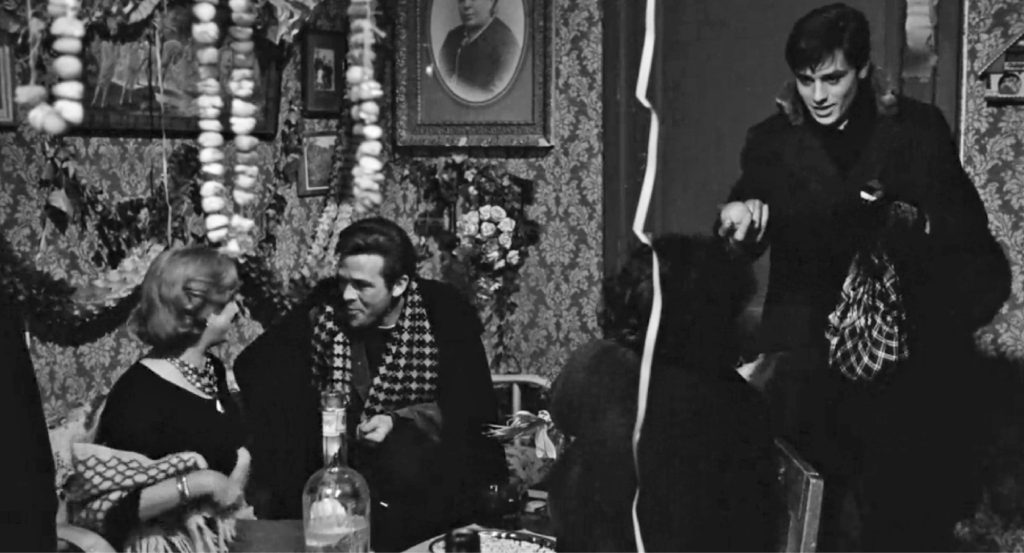
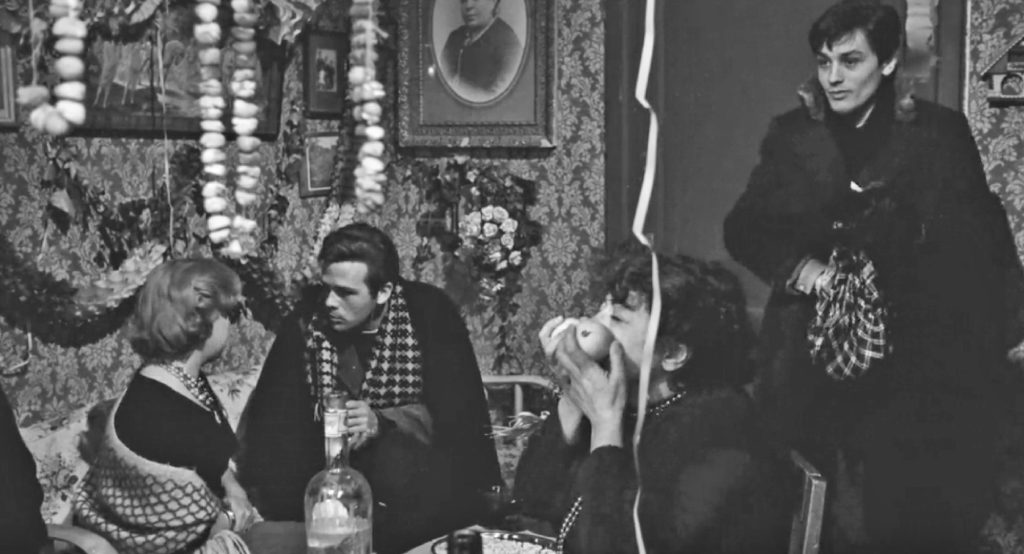
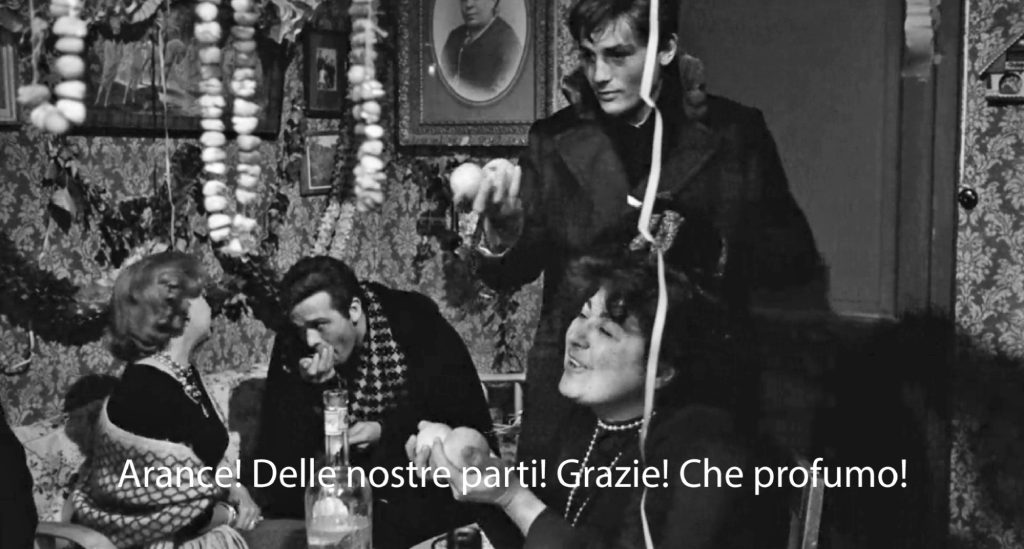
In Rocco e i suoi fratelli, the Parondi brothers come north to Milan. Their first stop is a party, and they have brought oranges with them!
Rocco e i suoi fratelli / Rocco and his Brothers (Luchino Visconti, 1960)
A party guest who also hails from the South is delighted. She exclaims, “Oranges! From our region! Thank you! What a fragrance!”
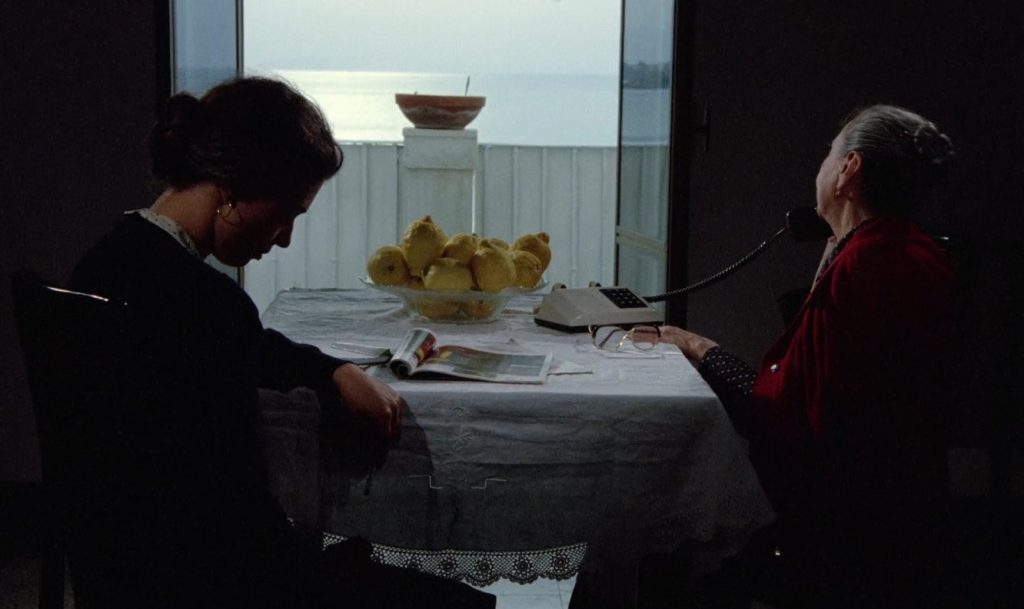
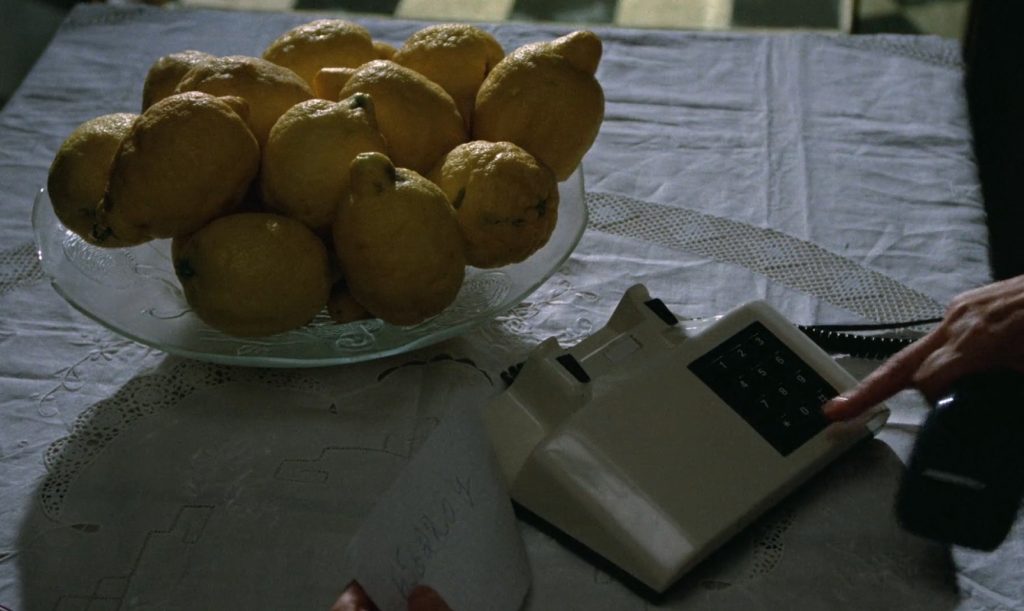
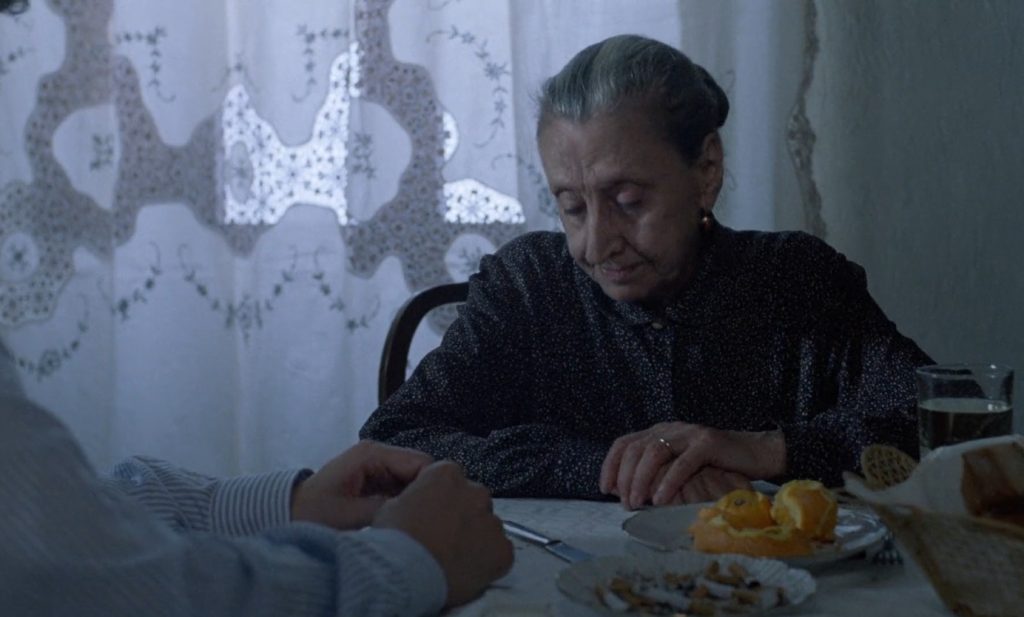
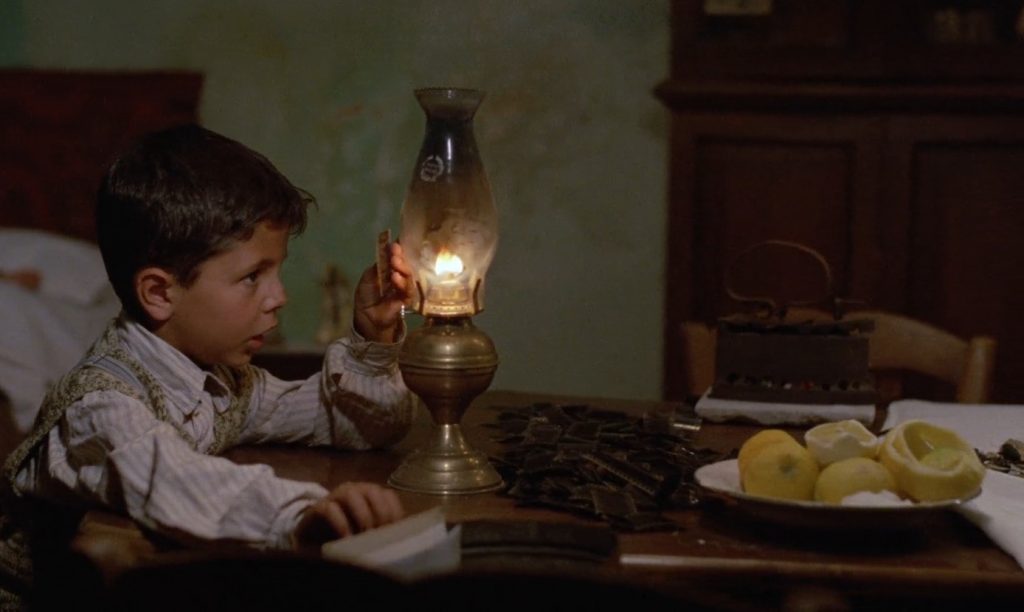
These citrus fruits are so iconic for Sicily that they appear throughout Nuovo Cinema Paradiso as a symbol of being away from home and of coming home.
Nuovo Cinema Paradiso / Cinema Paradiso (Giuseppe Tornatore, 1988)
In an early scene, light floods in on a plate of lemons in front of two figures: Toto’s mother when young and when old. In the final scene, after Toto returns as an adult to visit his mother, a partially eaten orange sits between them on the table, as light filters in through lace curtains.
Nuovo Cinema Paradiso
In a pan between little Toto and his mother across the table, a bowl of lemons links them.
Making the sign of the cross
Naturally, the church plays a big role in the lives of Italians, and so we have the motif of people making the sign of the cross.
In I fidanzati, Giovanni (Carlo Cabrini) enters a church and automatically makes the sign of the cross, using the hand in which he holds his newspaper.
I fidanzati (Ermanno Olmi, 1963)
In Ladri di biciclette, director De Sica emphasizes how compulsive this gesture is for Italians (as well as for many Catholics worldwide).
Ladri di biciclette / Bicycle Thieves (Vittorio De Sica, 1948)
In a mad rush, church volunteers chase Antonio (Lamberto Maggiorani) through the chapel. But they interrupt their frantic pursuit to kneel and make the sign of the cross. Antonio’s little son Bruno (Enzo Staiola), also rushing, likewise stops, kneels, and blesses himself before hurrying on.
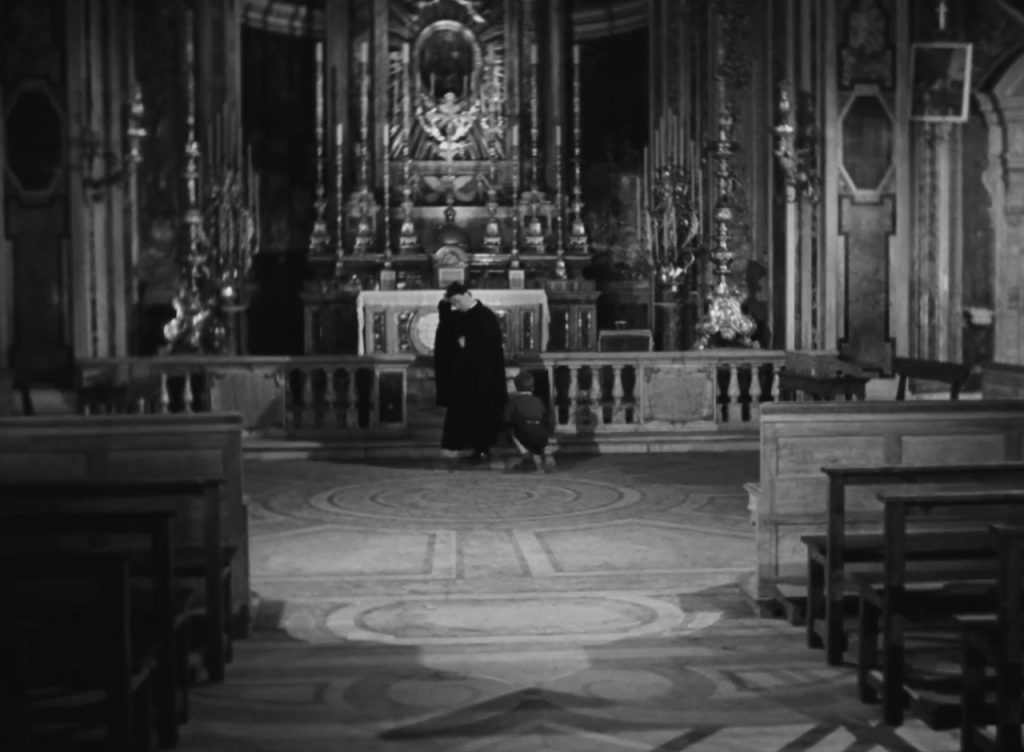
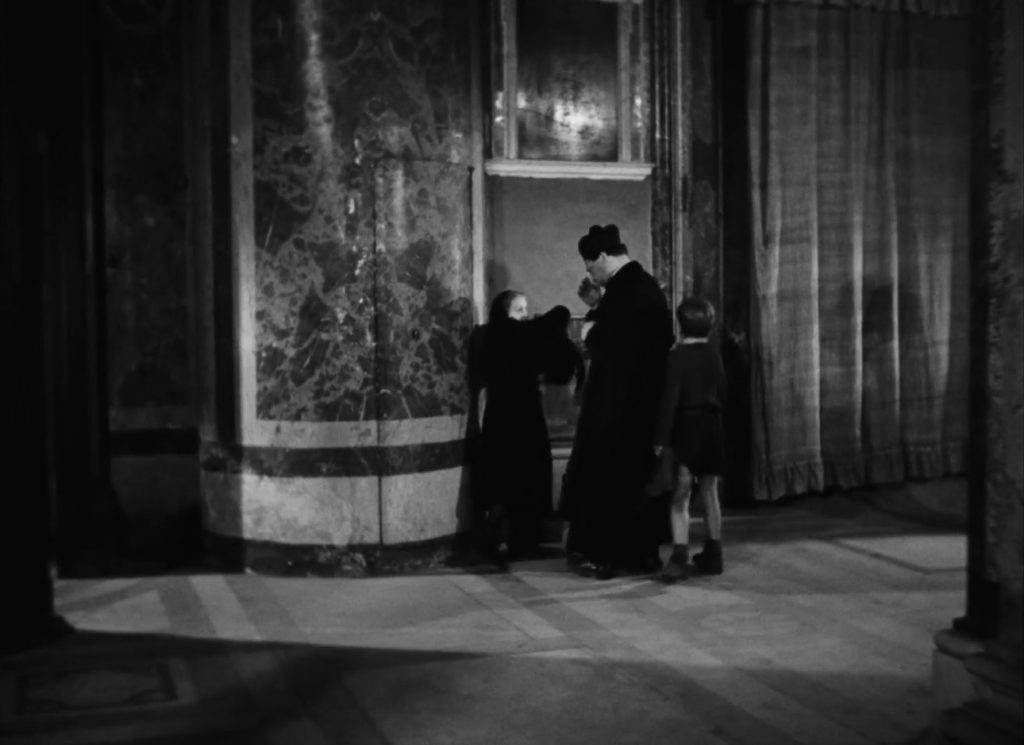
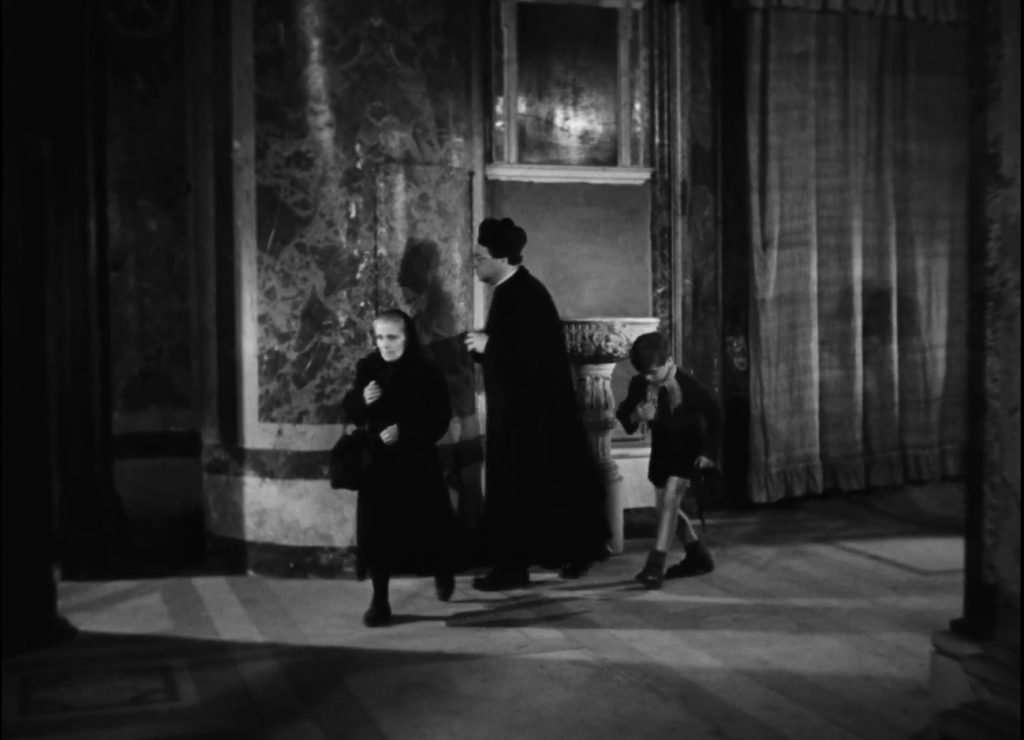
Similarly, in Roma città aperta, Don Pietro (Aldo Fabrizi) and Marcello (Vito Annicchiarico), before they leave the church, kneel at the altar and then dip their hands in holy water and cross themselves.
Roma città aperta / Rome, Open City (Roberto Rossellini, 1945)
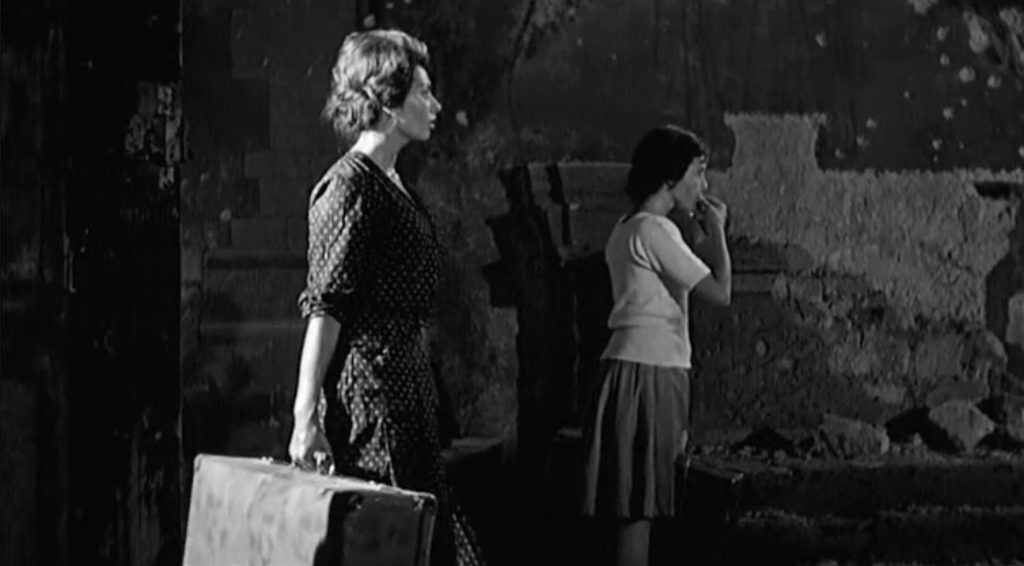
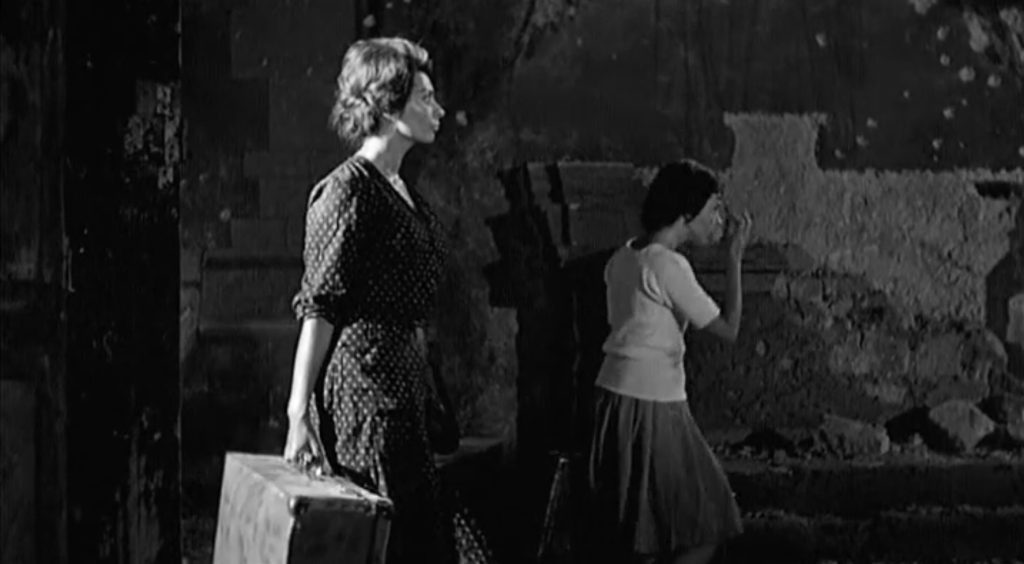
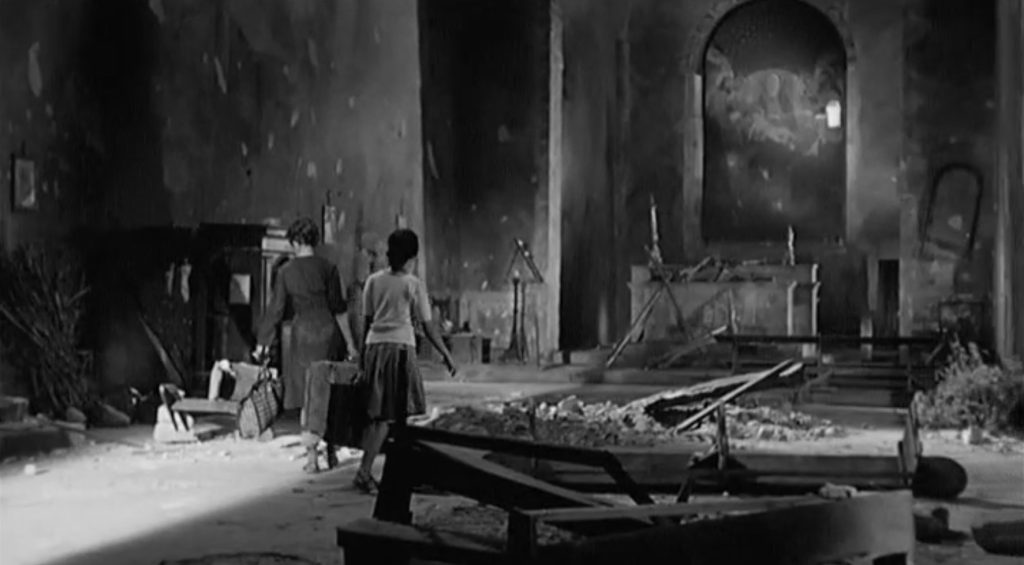
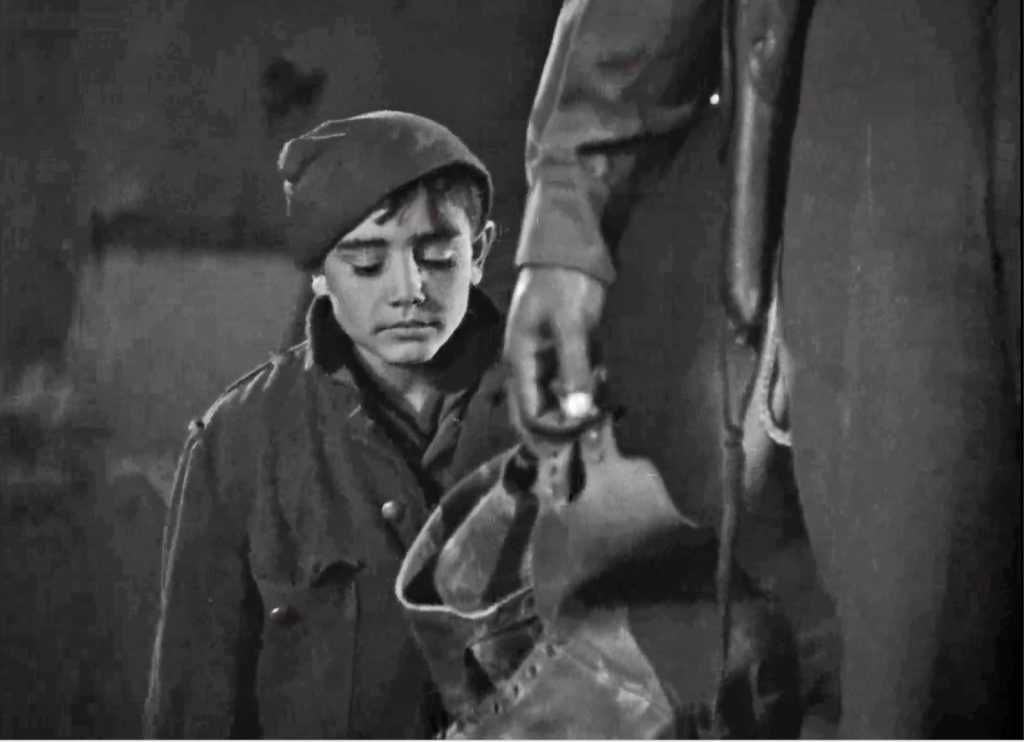
In La ciociara, Cesira (Sophia Loren) brings her daughter Rosetta (Eleonora Brown) to the countryside to avoid the Allied bombing in Rome. As the war nears its end, they make their way back home. Stopping in a bombed-out church, the religious Rosetta spits out her gum, genuflects, and blesses herself, though even the altar has been reduced to rubble. (Cesira doesn’t bother.)
La ciociara / Two Women (Vittorio De Sica, 1960)
Commedia all’italiana director Mario Monicelli uses this gesture for a comic moment. In Risate di Gioia, madcap actress Gioia (Anna Magnani) dips her hand into the holy water and then wets Umberto’s (Totò) with her own, to save him the trouble of dipping. With this water, they each make the sign of the cross.
Risate di Gioia / The Passionate Thief (Mario Monicelli, 1960)
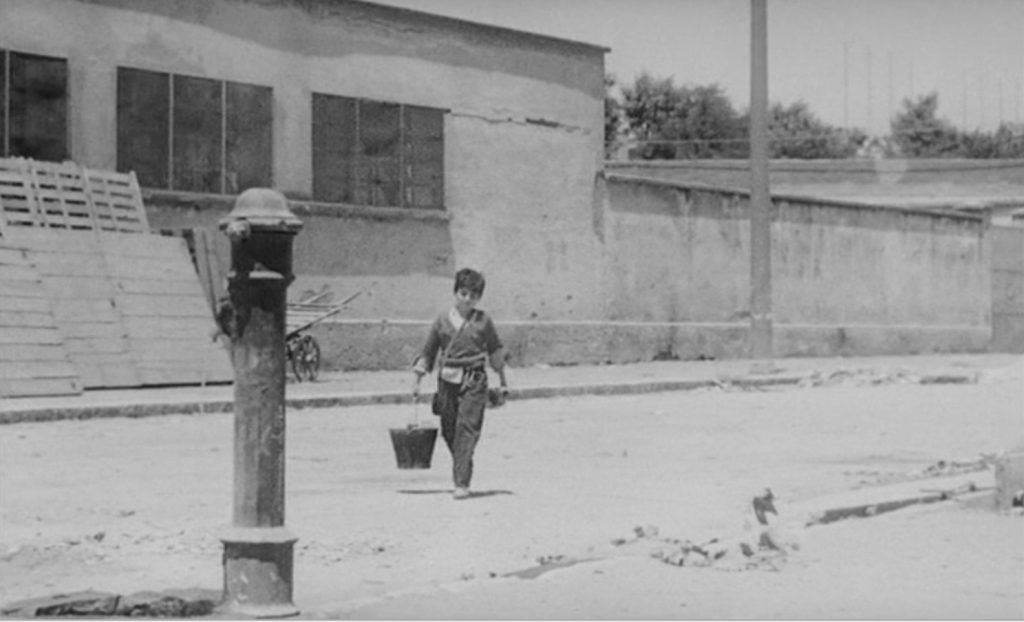
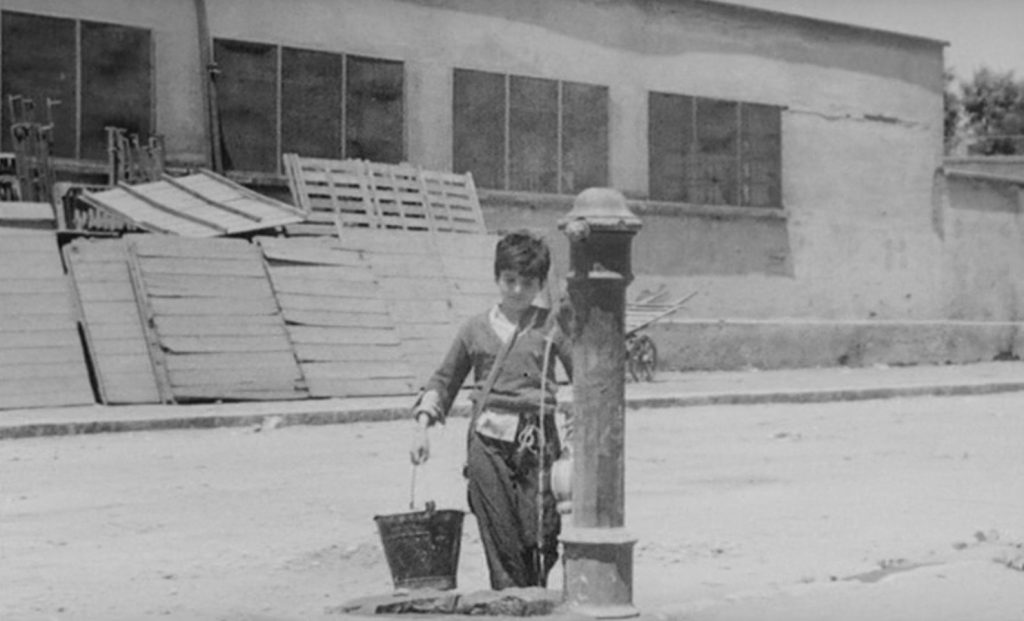
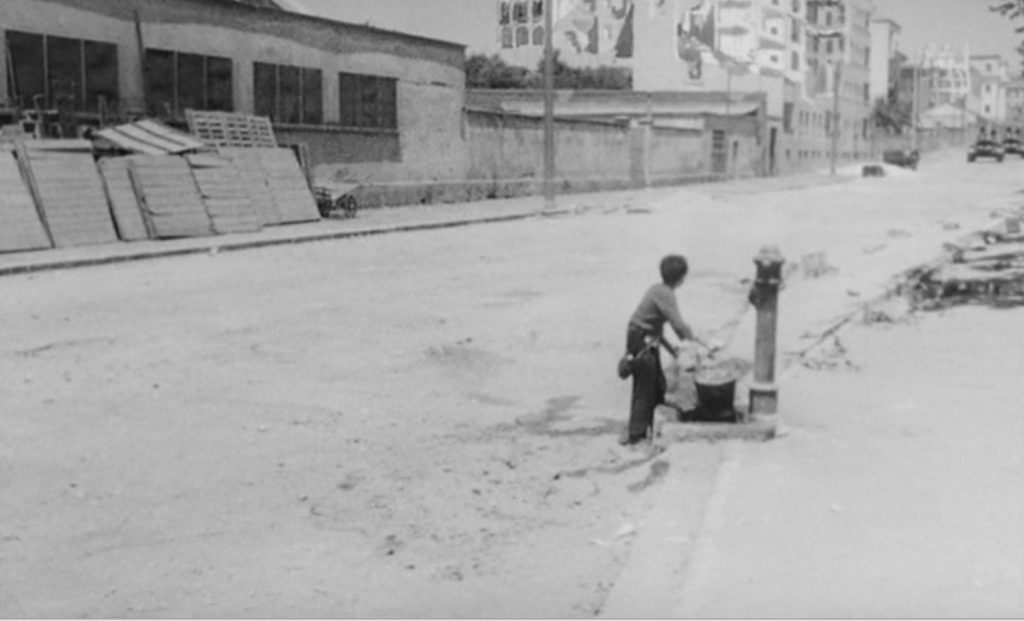
Communal Water Fountains – Fontanelle pubbliche
The source of water for Italy’s villages – and even some urban neighborhoods – is the communal fountain, which provides a frequent setting for film storytelling.
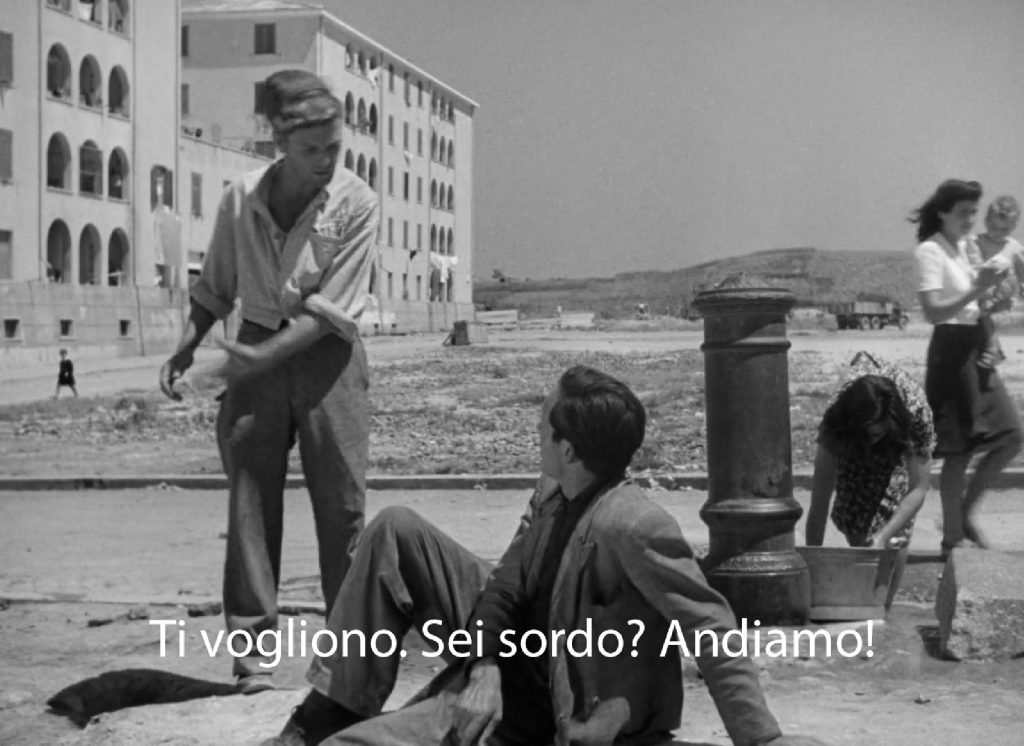
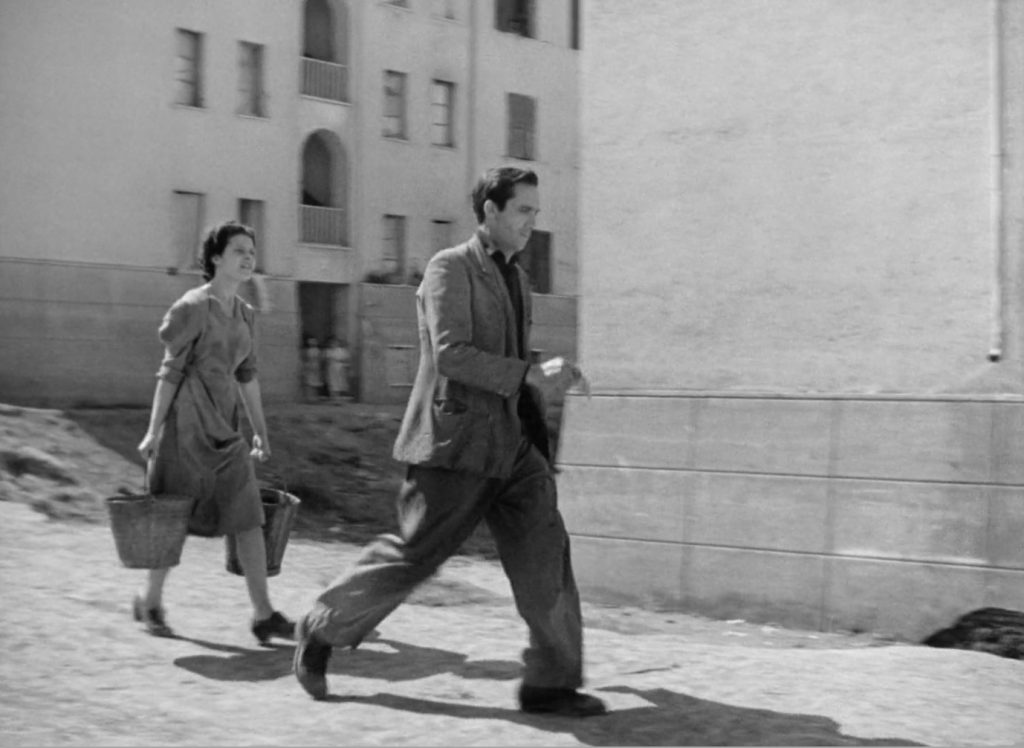
Two fountains appear in the opening of Ladri di biciclette. First, we see Antonio, lounging next to a water fountain outside the employment office. His name is called for a job and he doesn’t notice, so his friend comes to find him. (“They want you. Are you deaf? Let’s go!”) Behind him, a woman kneels at the fountain, collecting water for her family. Next we see Antonio’s wife, Maria (Lianella Carell), who’s also collecting water at a communal pump.
Ladri di biciclette / Bicycle Thieves (Vittorio De Sica, 1948)
Antonio and Maria walk home, but he’s too agitated to notice that she’s struggling with the heavy buckets.
Ladri di biciclette
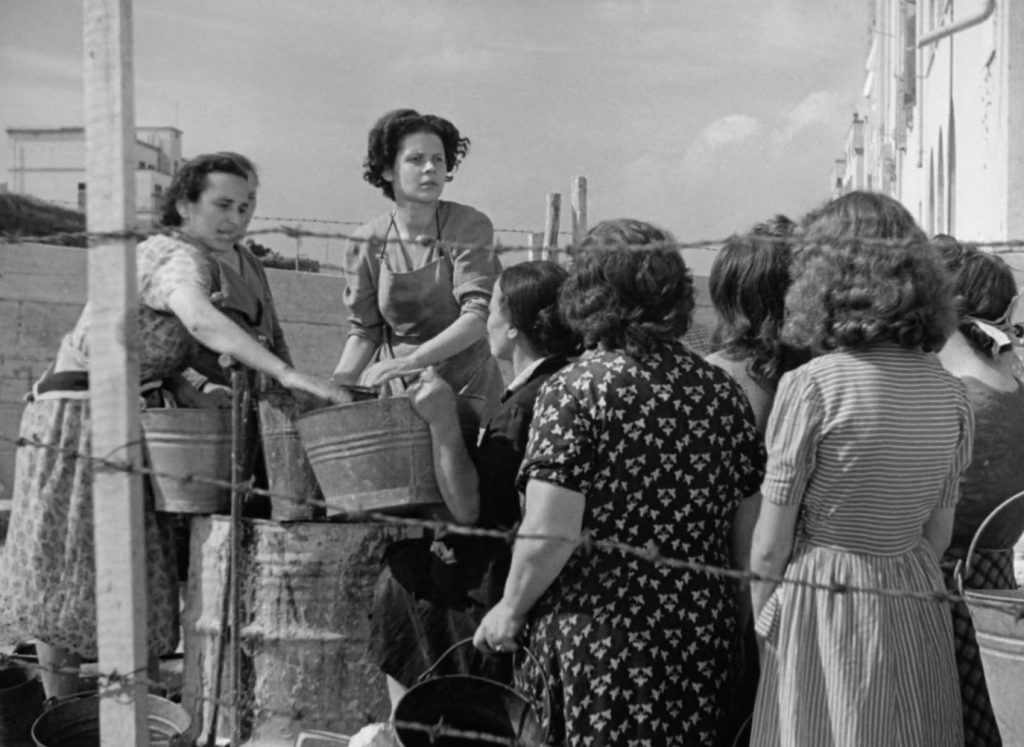
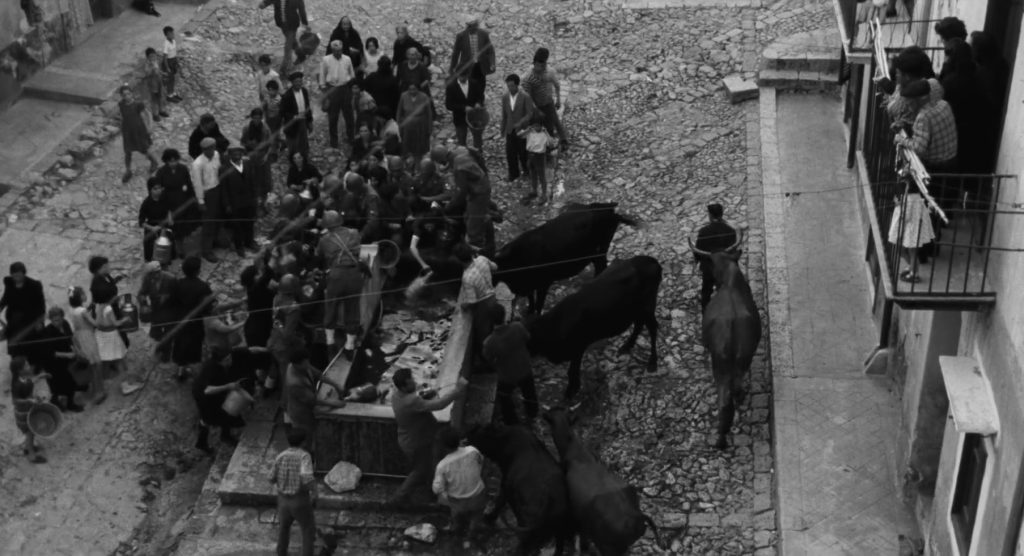
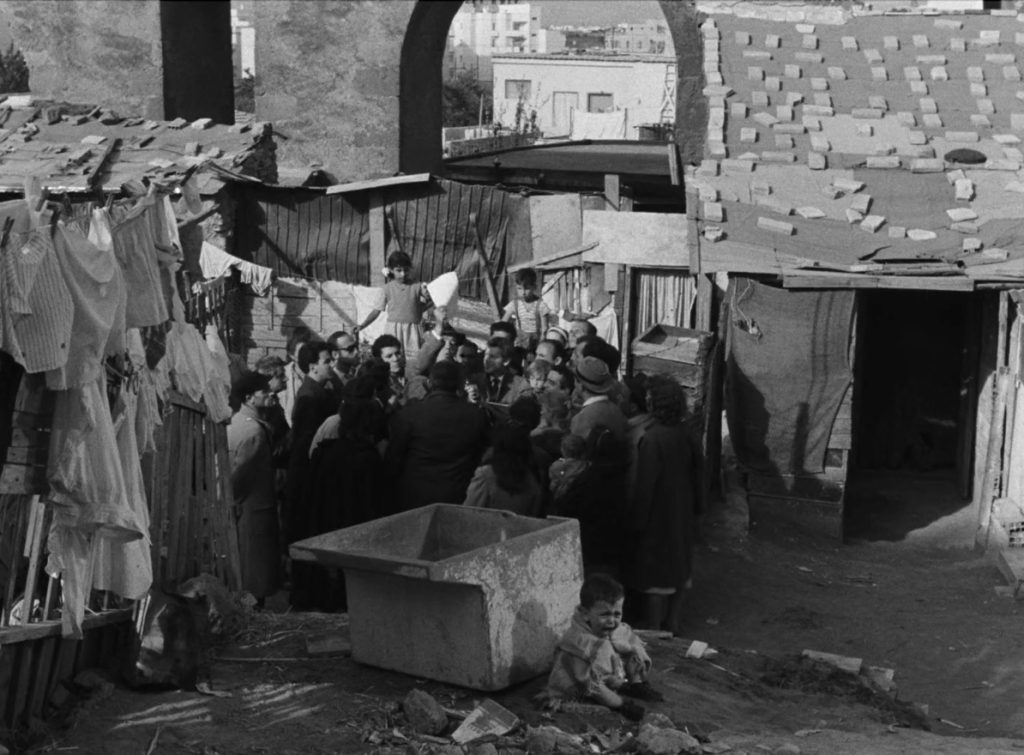
In Salvatore Giuliano, the military has imposed a curfew. Given just one hour to collect water and groceries, the villagers crowd around the town water pump.
Salvatore Giuliano (Francesco Rosi, 1962)
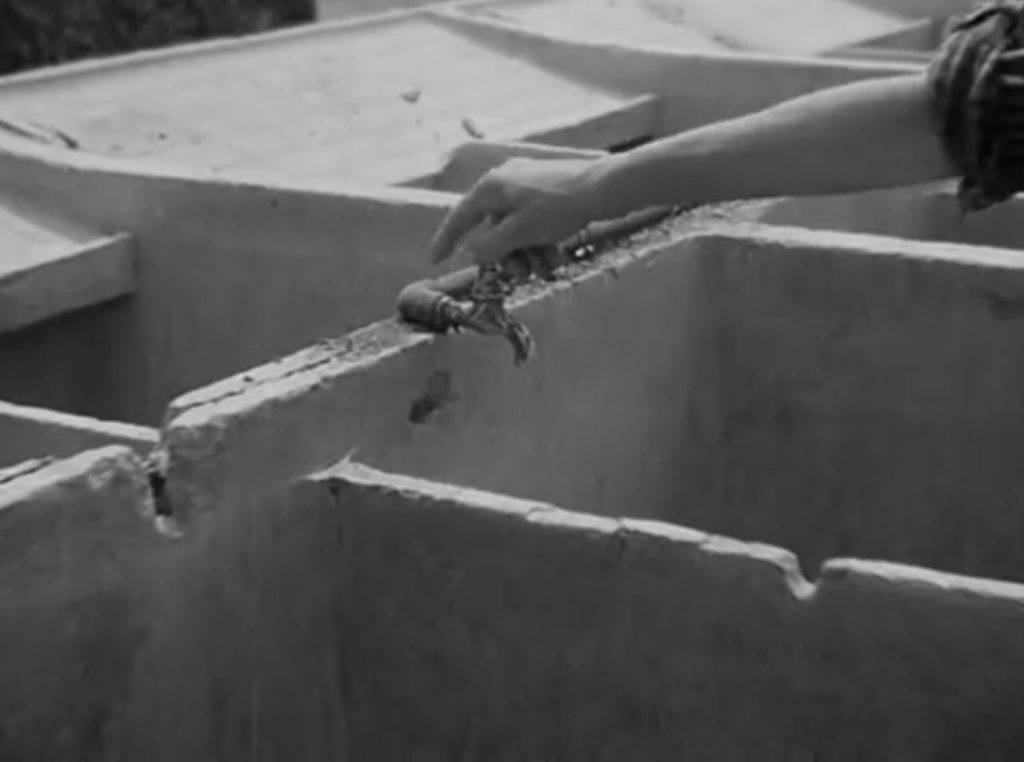
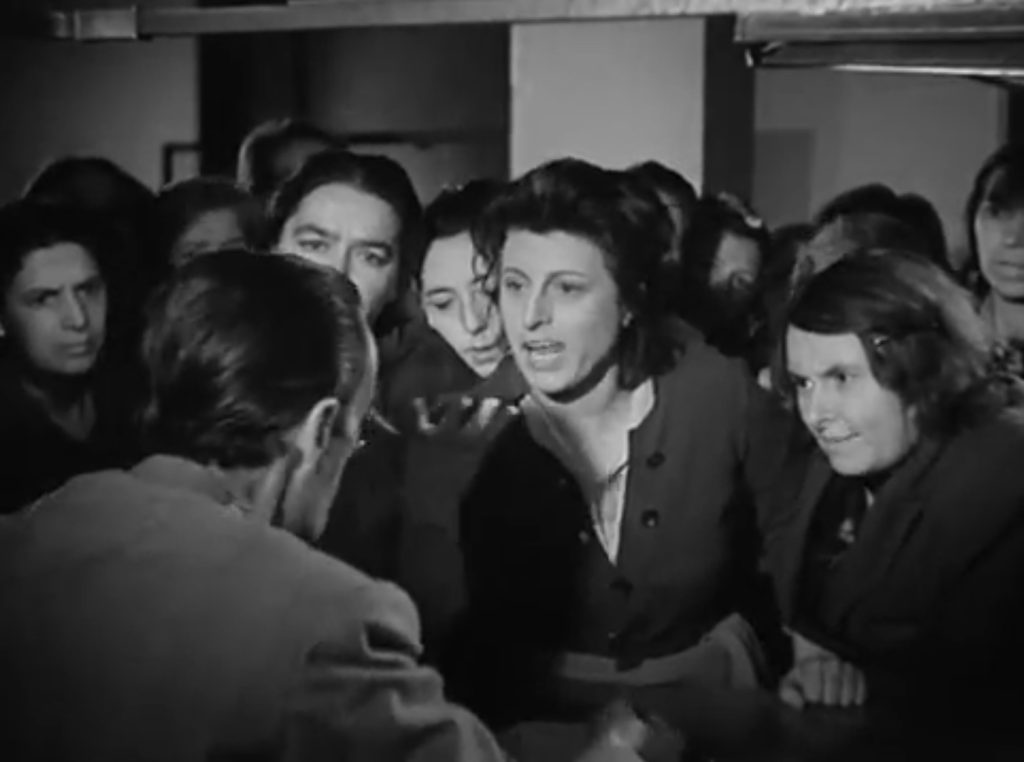
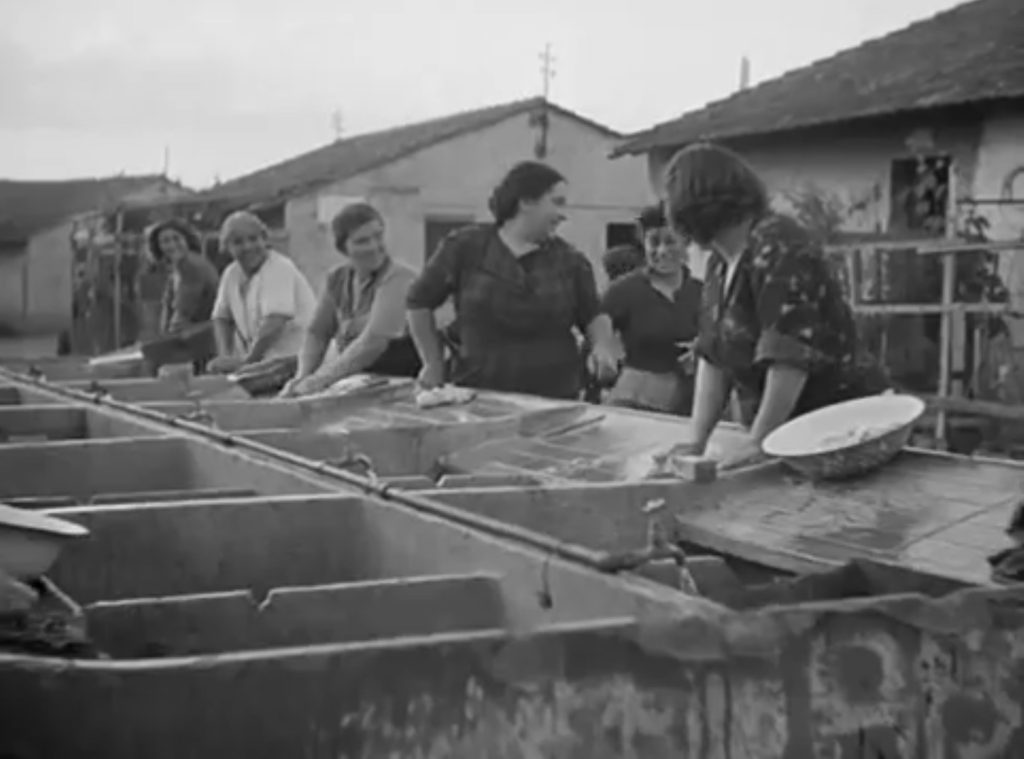
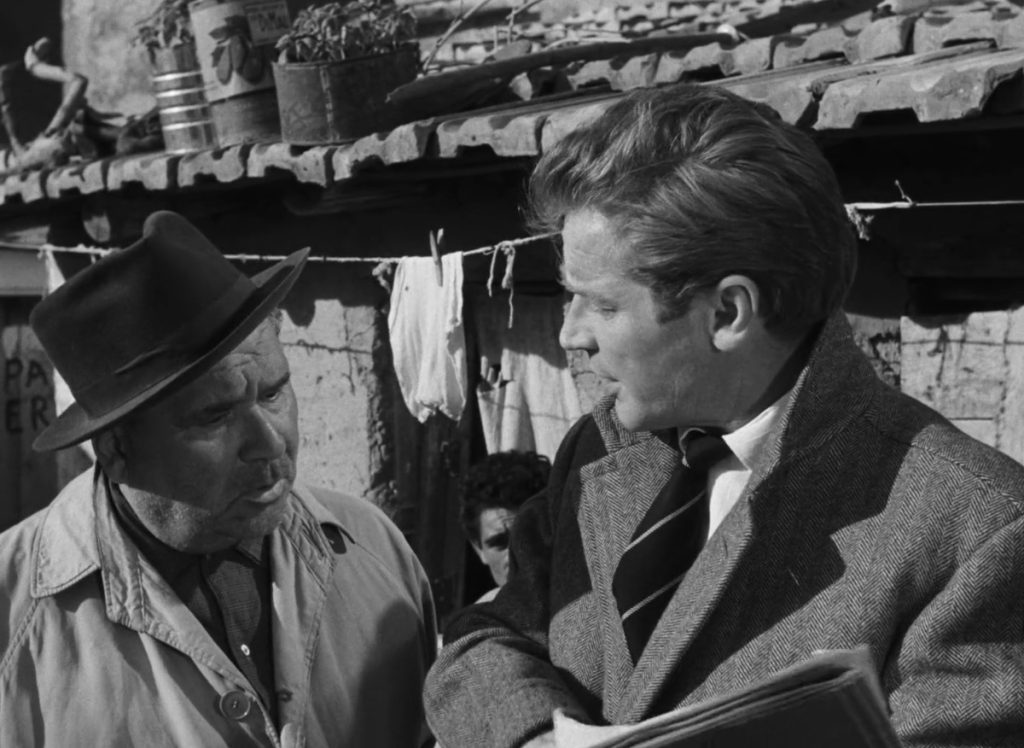
In L’onorevole Angelina, the persistent lack of water in Rome’s Pietralata neighborhood is critical to the story. Angelina (Anna Magnani) rallies the other neighborhood women to protest to the local government. Their campaign is successful, the water is fixed, and the women embark on further political action to improve their lives.
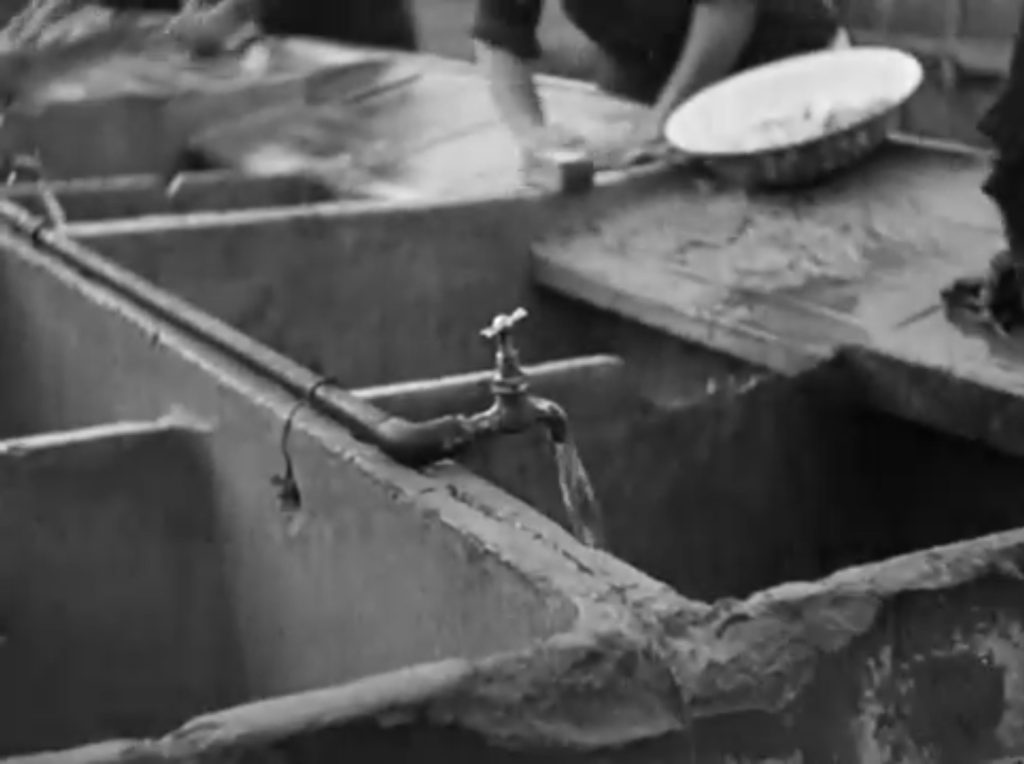
In this final image of women washing clothes together, we see the essential place of the communal water sinks in the life of the community.
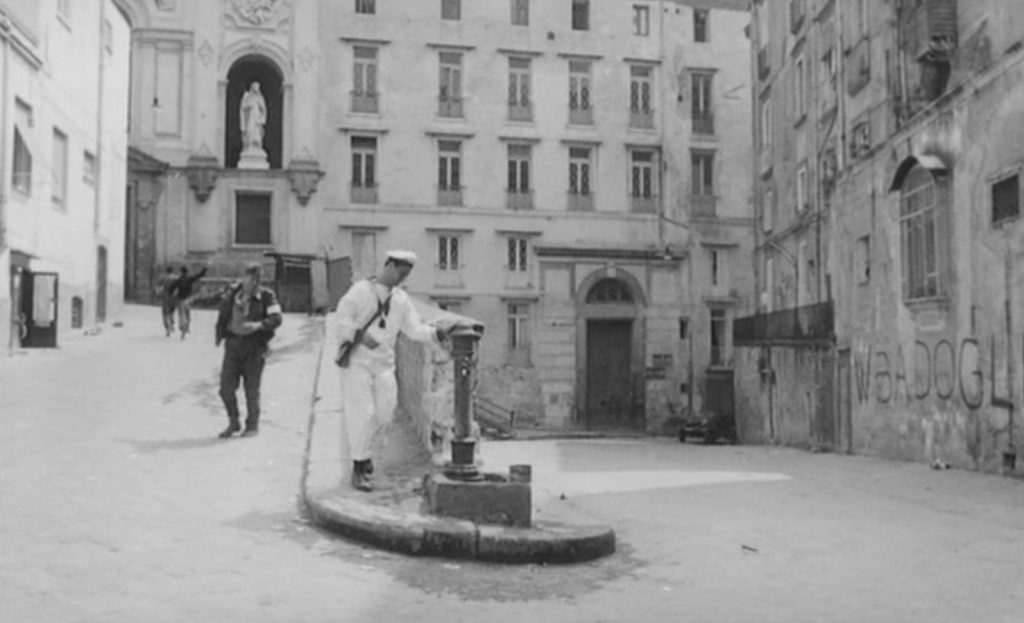
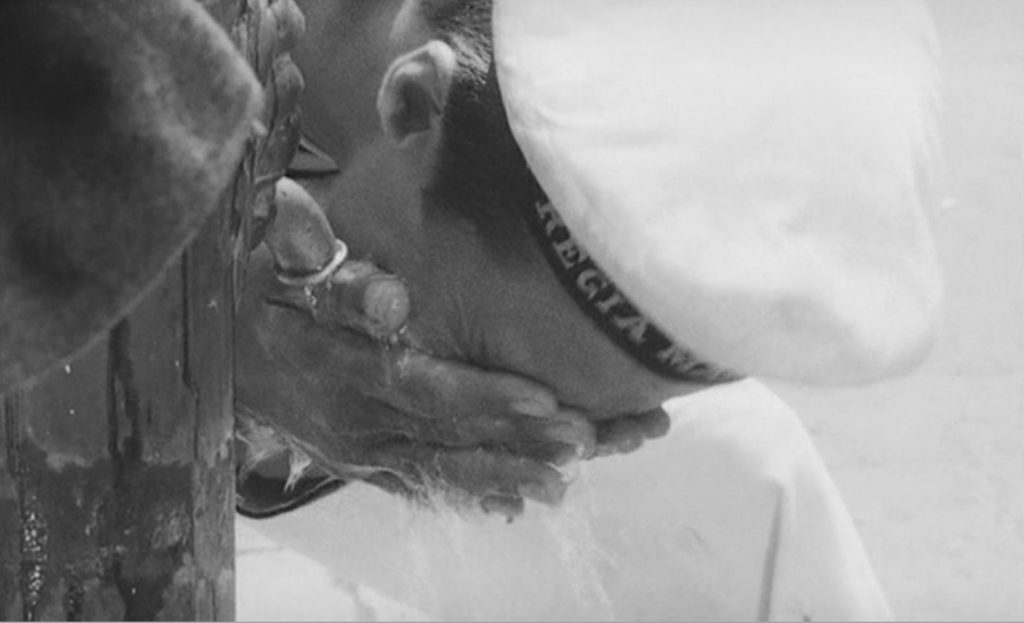
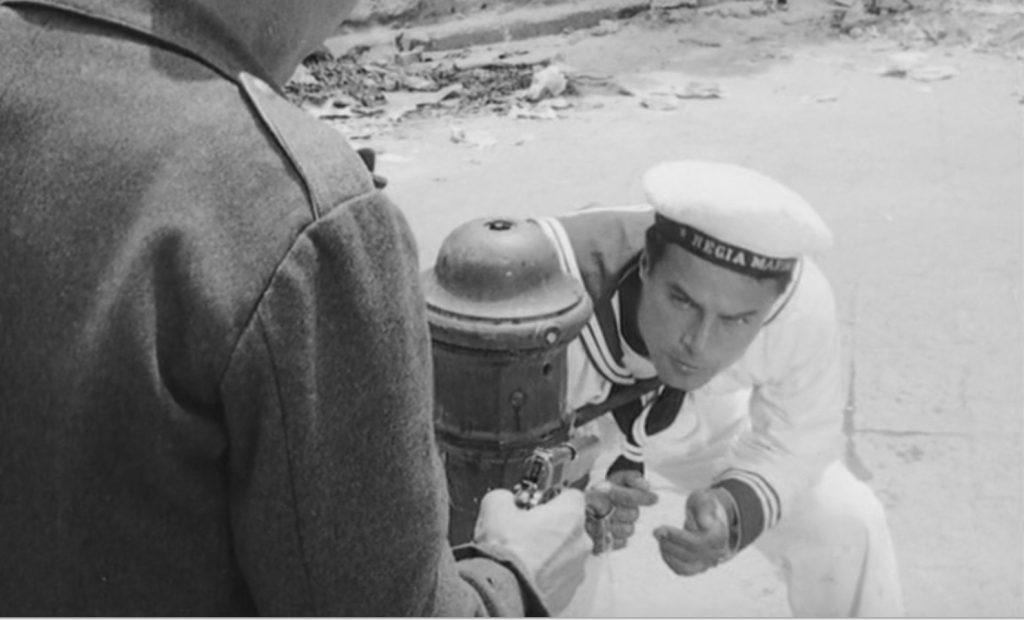
In Le quattro giornate di Napoli, filmmaker Nanni Loy placed key scenes at water fountains. In the first, a sailor – based on a real person – celebrates the end of the war with a German soldier. They ride a bike together to a fountain, where the sailor washes his face.
Le quattro giornate di Napoli / The Four Days of Naples (Nanni Loy, 1962)
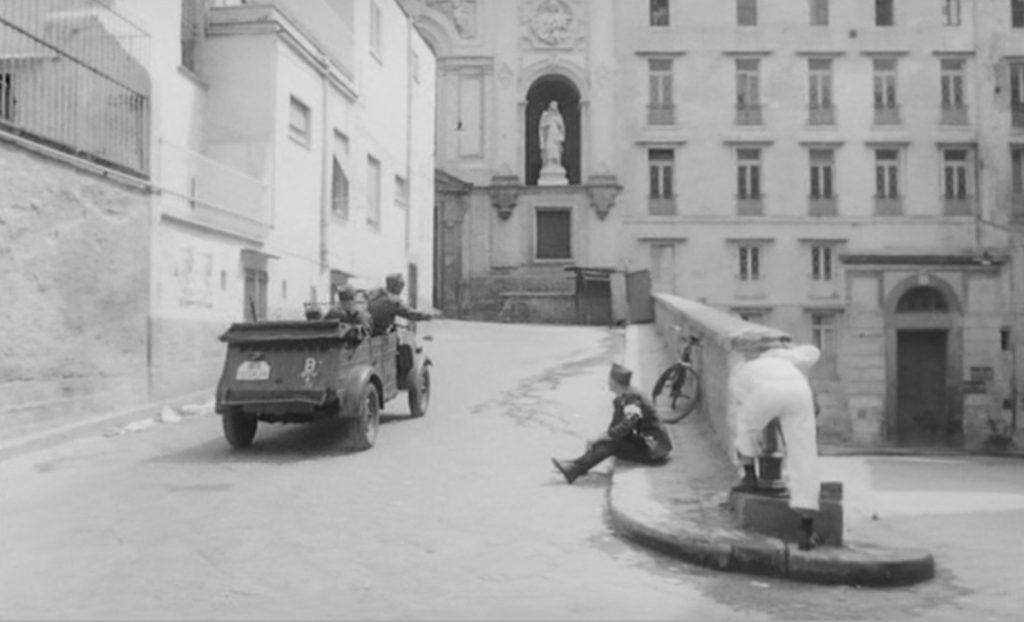
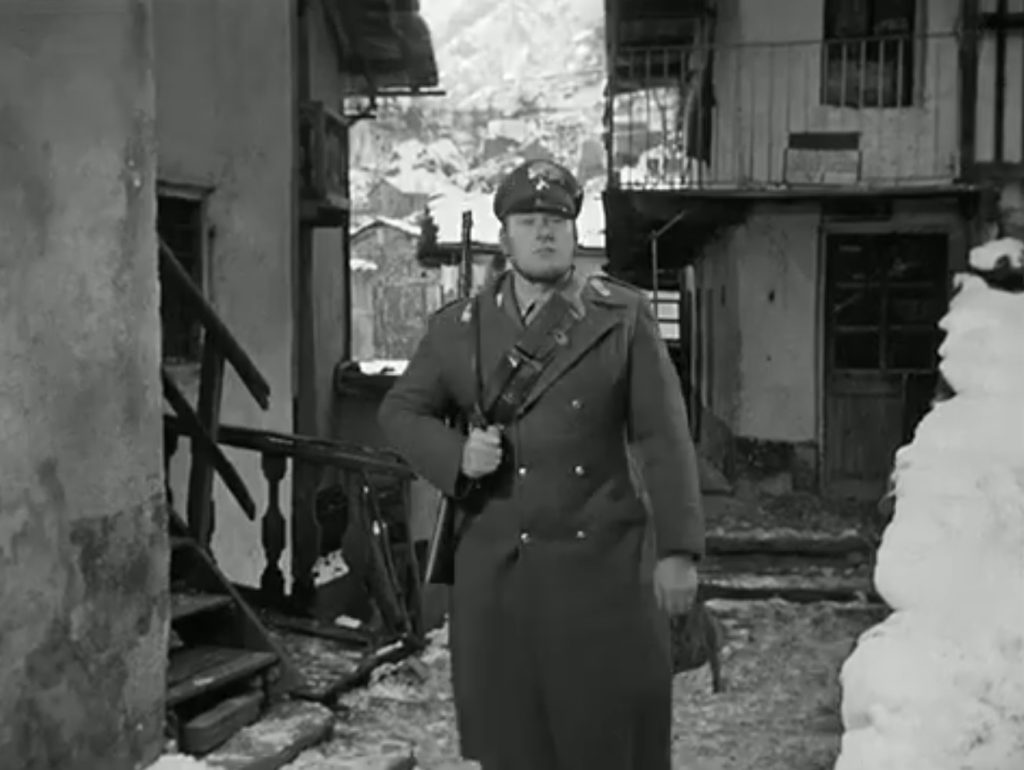
But, while he is washing, a German military vehicle drives by; the war is not over. When the sailor looks up, he sees the barrel of a gun; he is a prisoner of war.
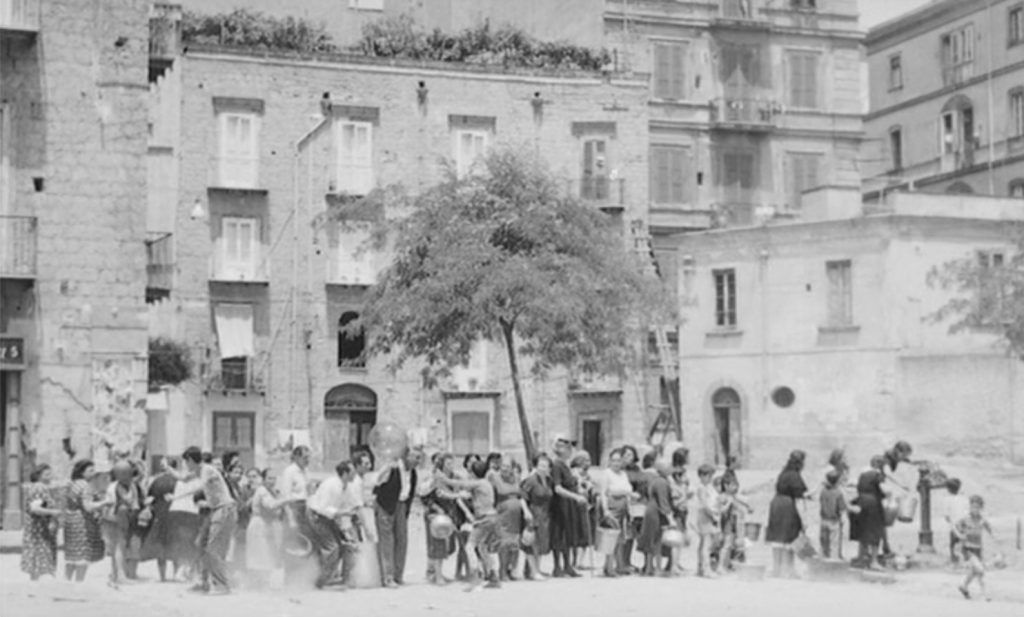
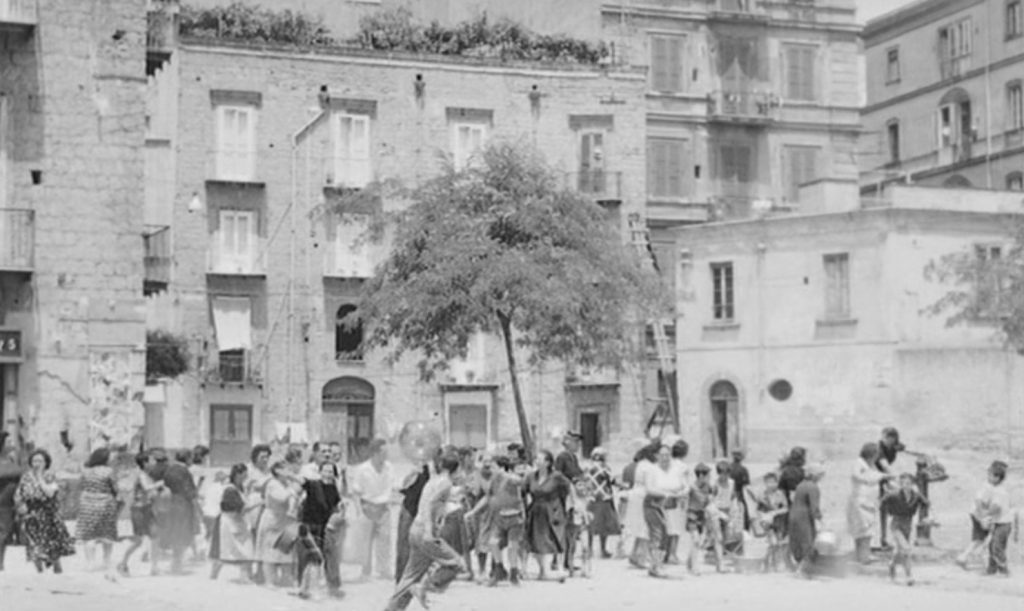
In another neighborhood of now-occupied Naples, the women are warned that the Germans are rounding up men to send to labor camps. “The Germans want to pick up all the males and take them to Germany.”
Le quattro giornate di Napoli
Word spreads to the communal fountain, where people scatter. The camera remains focused on Maria (Lea Massari), carrying her bucket: we first meet this important character at the fountain.
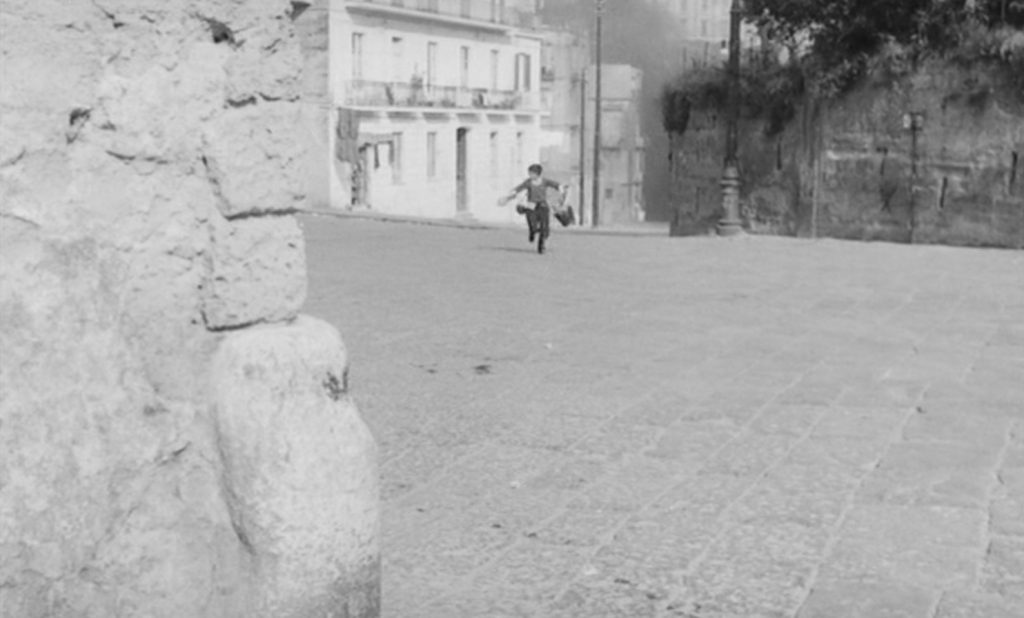
Another character spotted at a water fountain is Gennaro (Domenico Formato), based on the 11-year-old resistance hero Gennaro Capuozzo. He’s come to fill his bucket.
Le quattro giornate di Napoli
When Gennaro sees the German jeeps coming, he runs away, beginning an adventure that will end in tragedy.
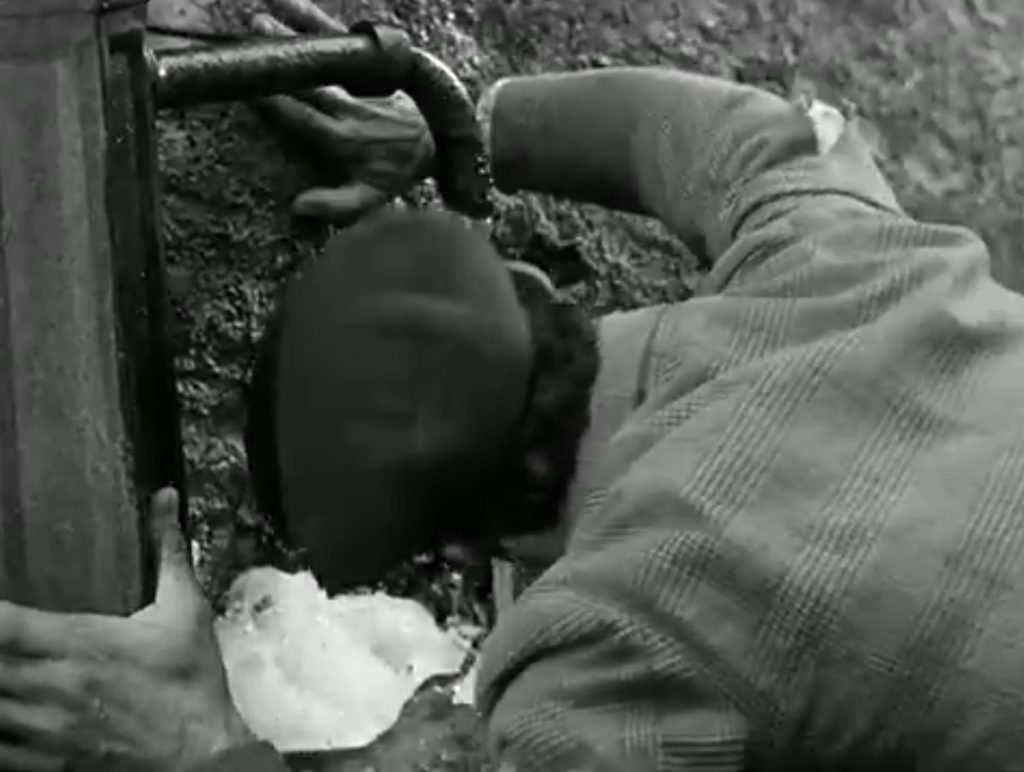
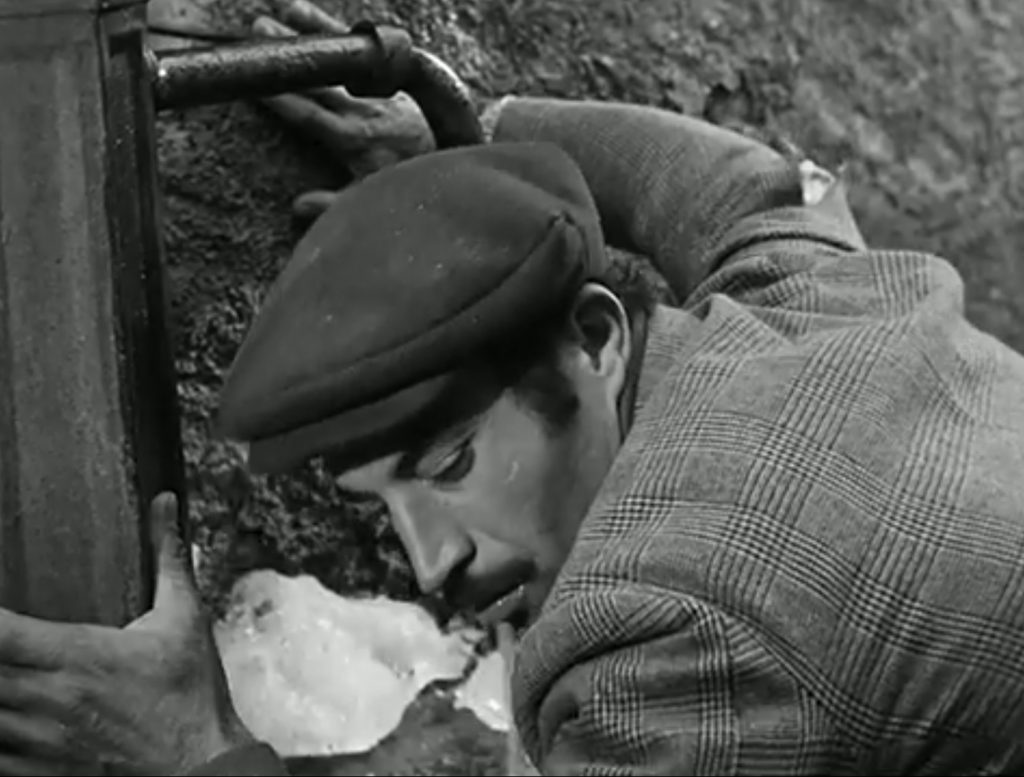
In Il cammino della speranza, when the criminal Vanni (Franco Navarra) spots a Carabiniere, he hides his face in a nearby water fountain. The officer keeps on walking.
Il cammino della speranza / The Path of Hope (Pietro Germi, 1950)
Living in Caves
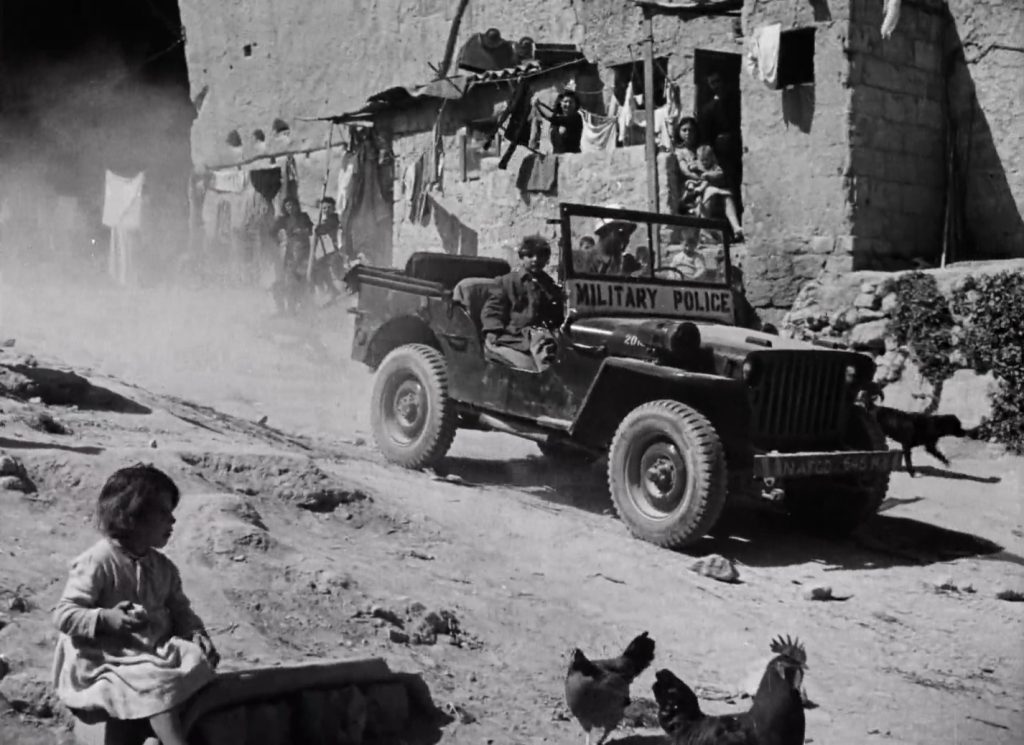
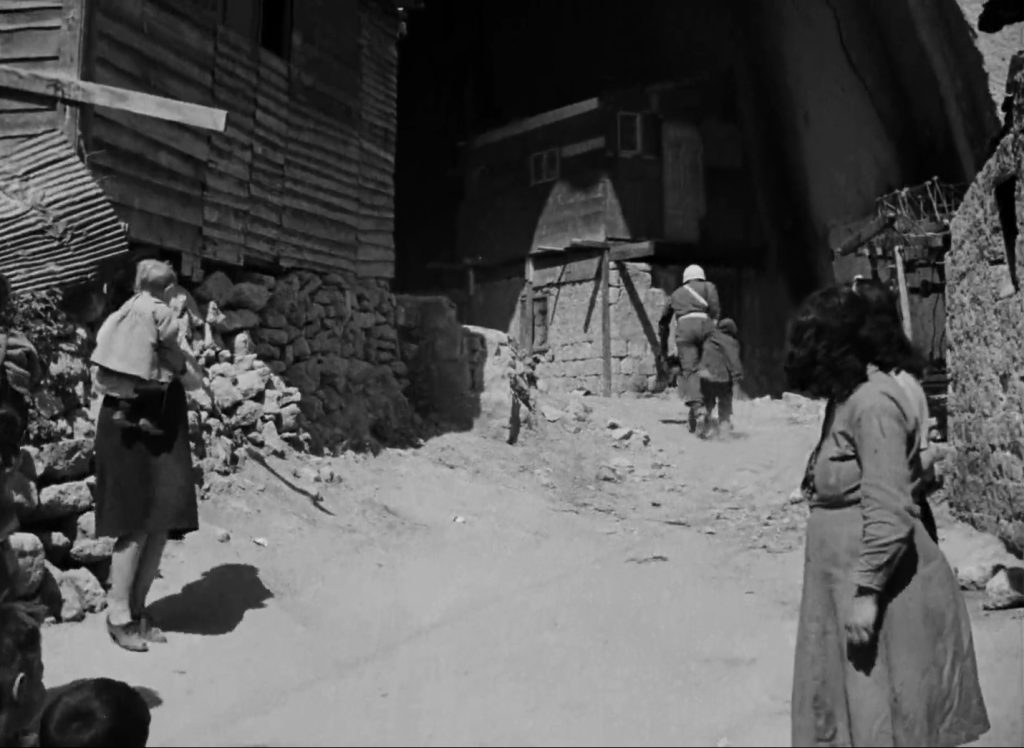
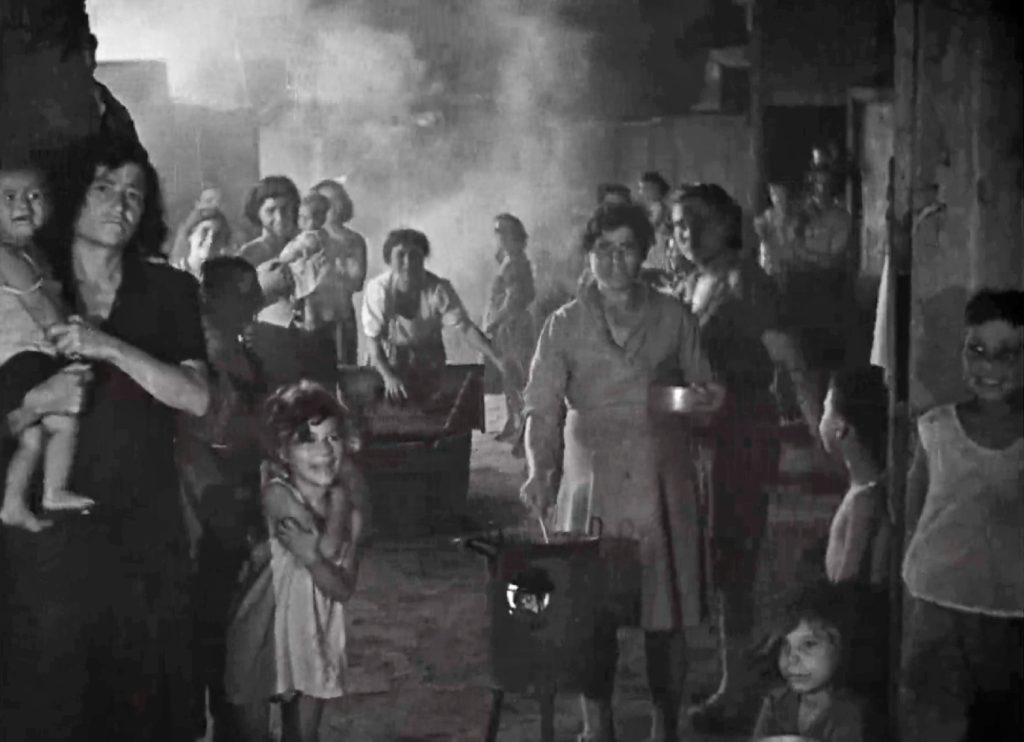
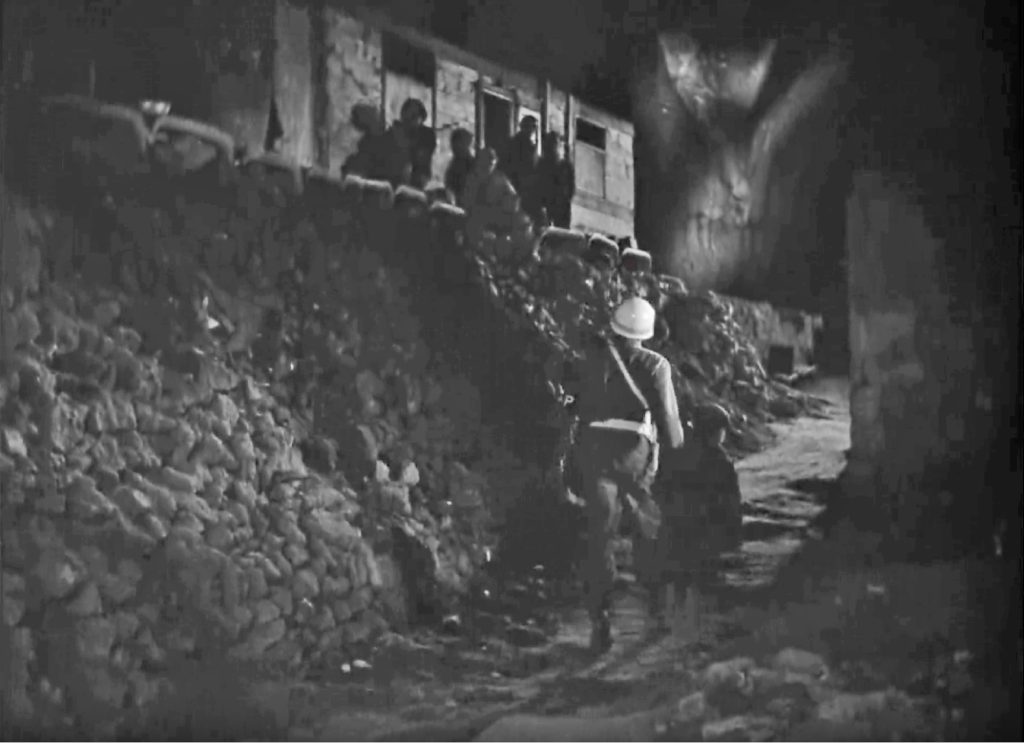
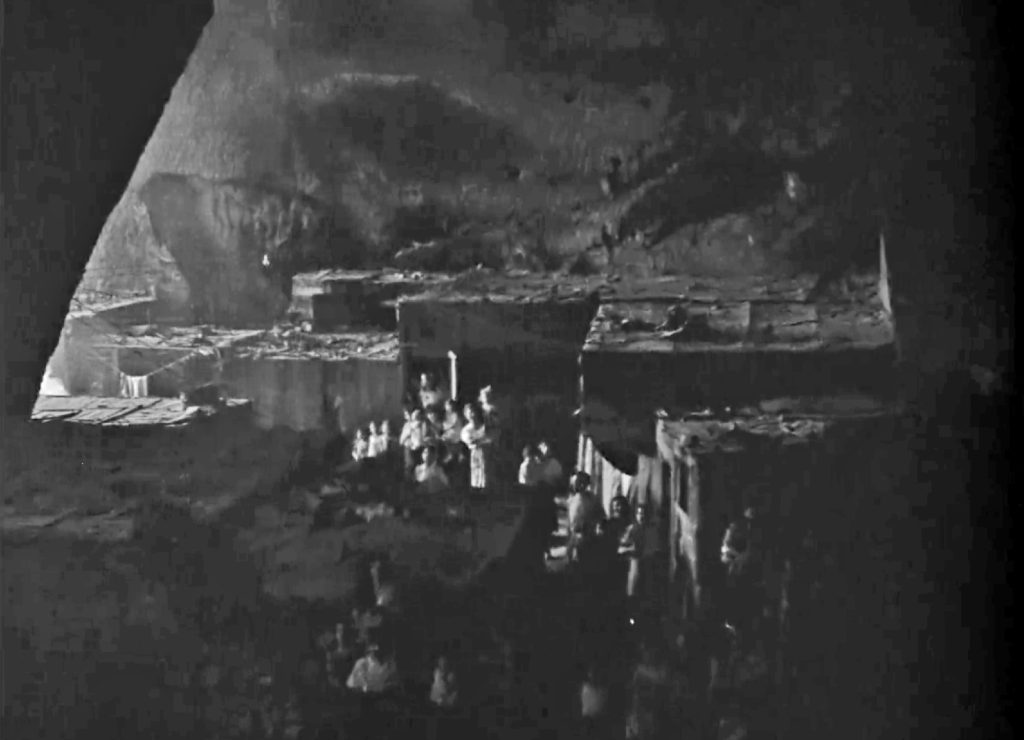
During World War II – and in the years before and after – the poorest of the poor in Italy lived in caves. This motif has produced some powerful scenes.
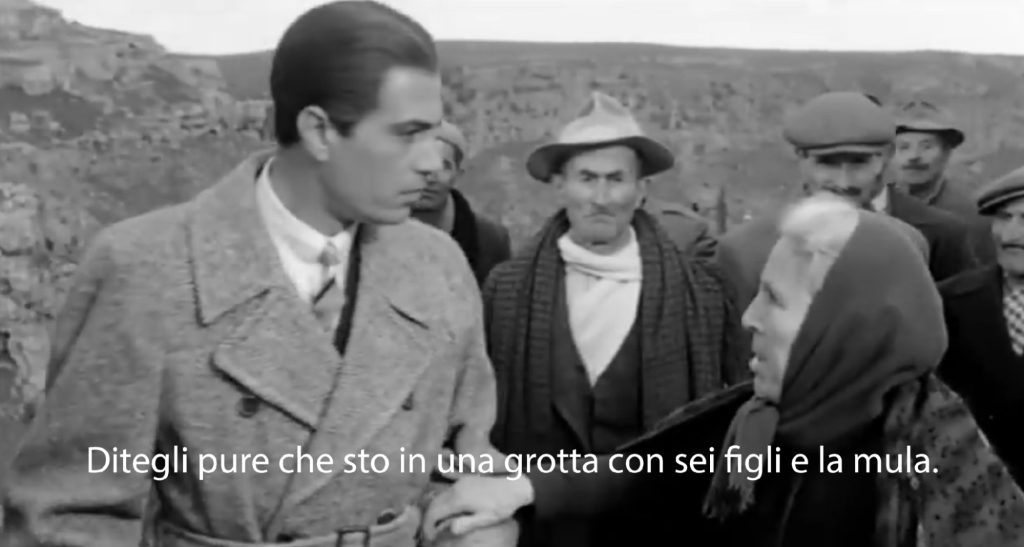
In Gli anni ruggenti, Omero (Nino Manfredi), a visitor to a town in Puglia, is mistaken for a Fascist inspector and so is wined and dined by the local officials. In this scene, he’s besieged with requests by the impoverished residents. One old woman has this message for Mussolini: “Tell him I’m in a cave with six children and a donkey.”
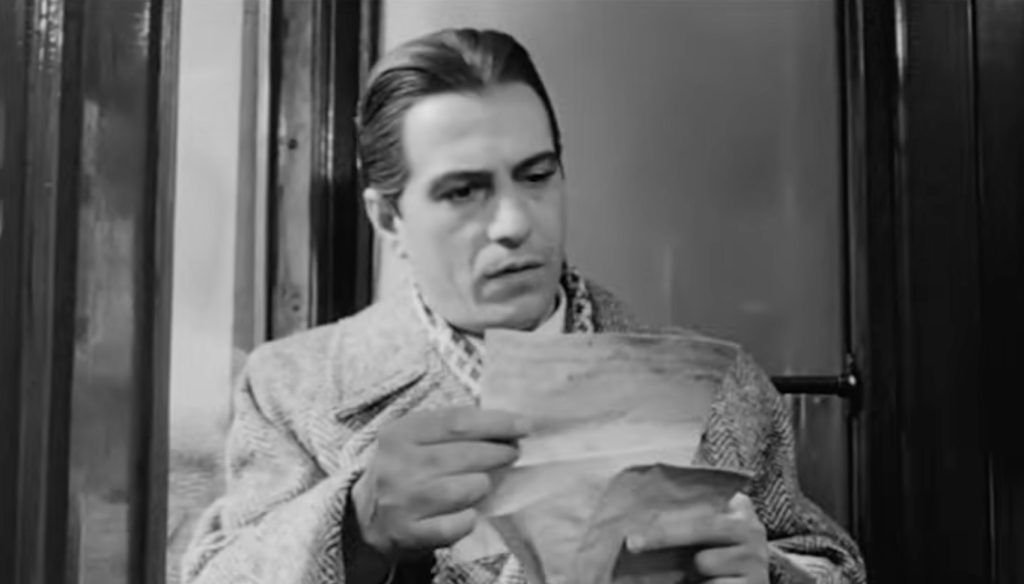
Gli anni ruggenti / Roaring Years (Luigi Zampa, 1962)
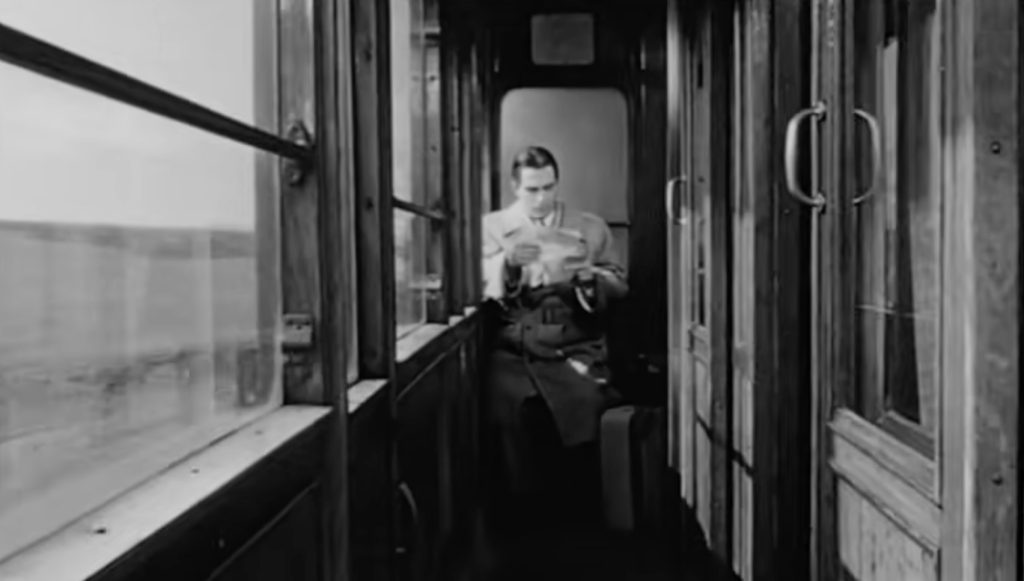
On the train, heading home, Omero reads a letter that a villager has slipped him: a simple plea to Mussolini from a cave dweller for a window. It’s clear to the viewer that no one – and certainly not il Duce – is going to do anything to help these people.
Gli anni ruggenti
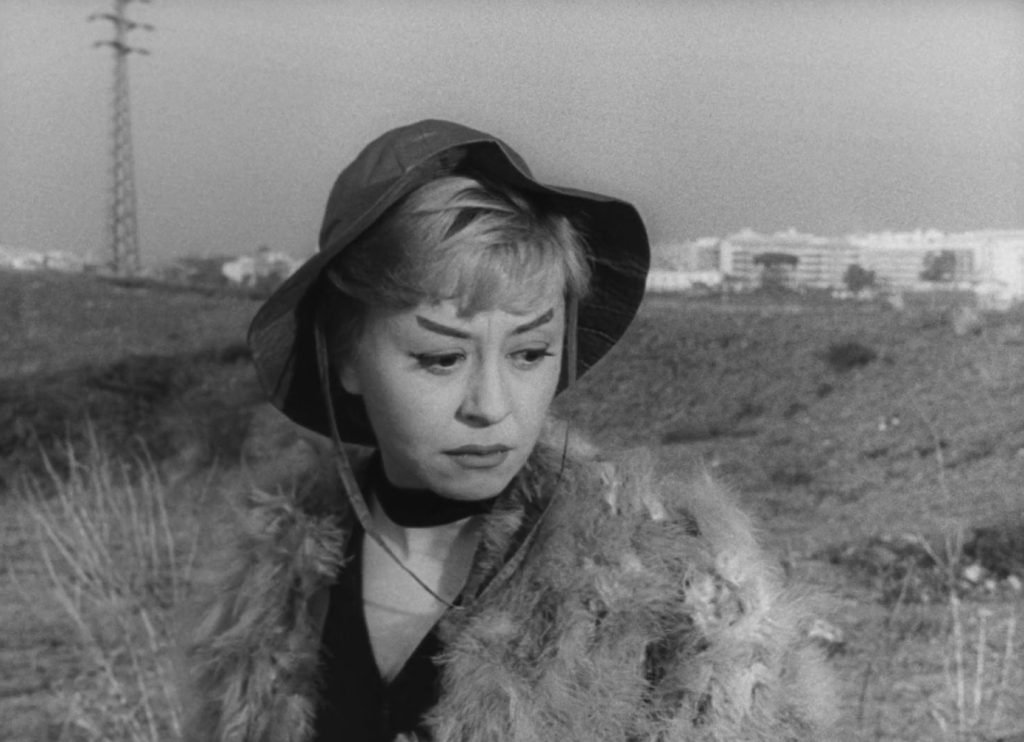
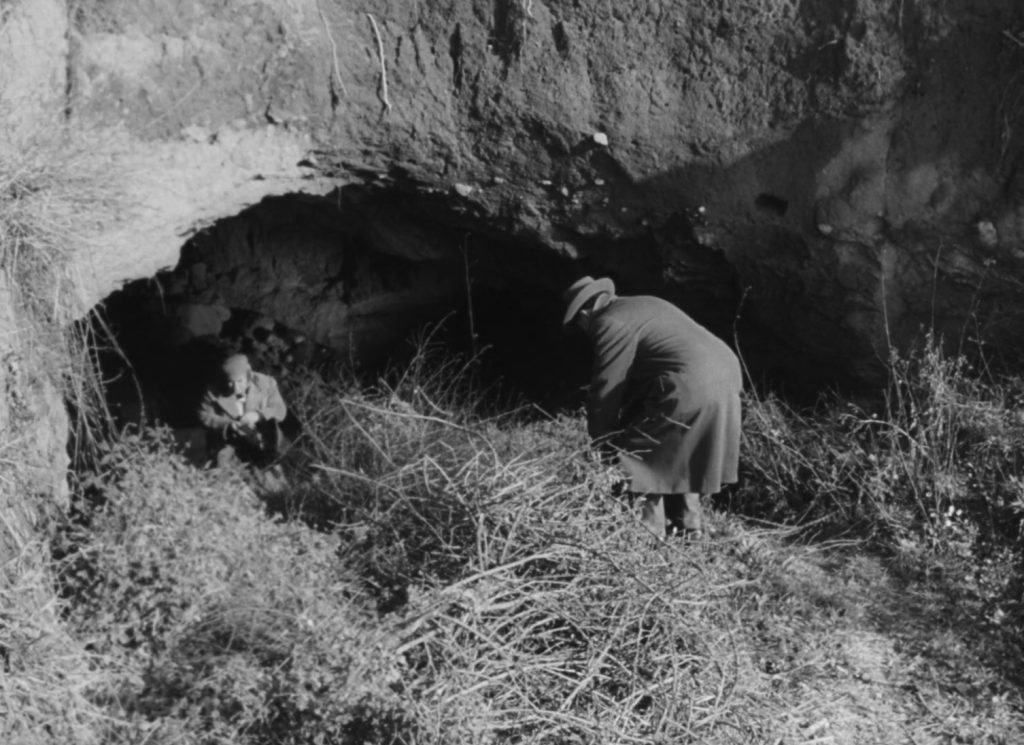
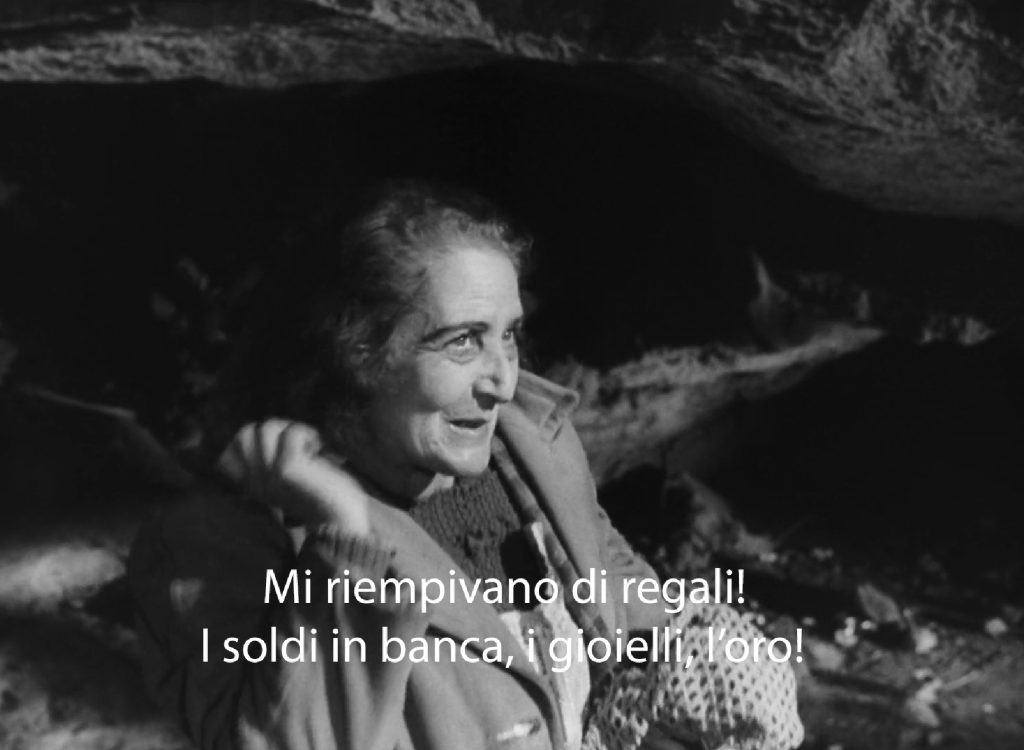
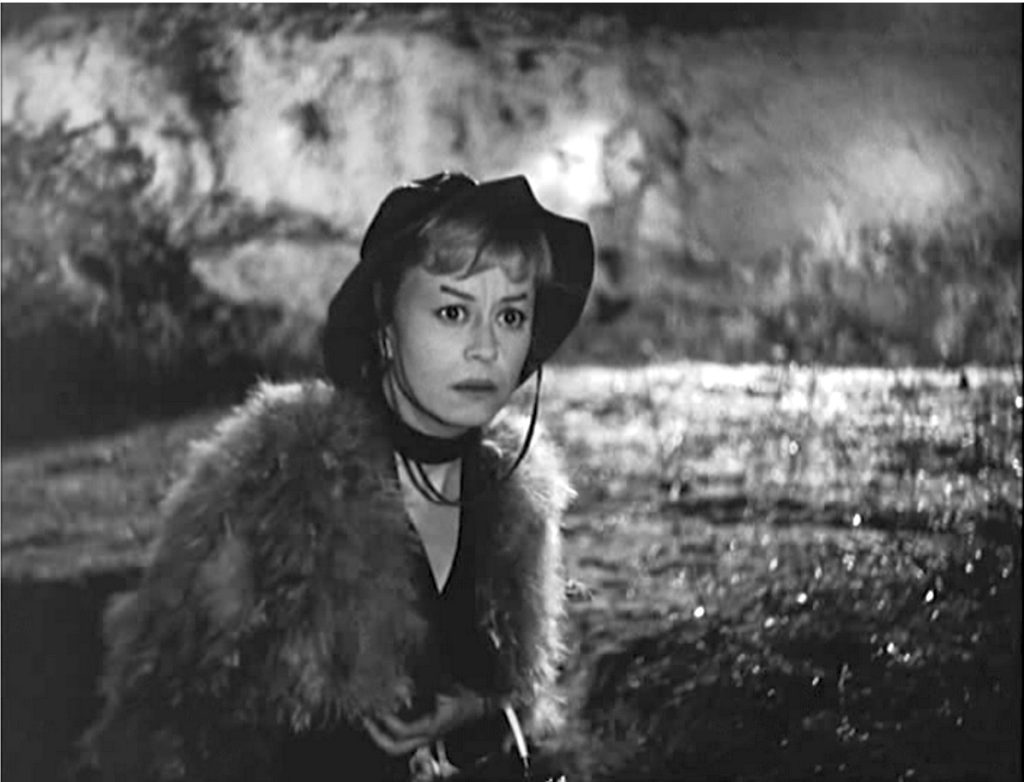
In Le notti di Cabiria, the streetwalker Cabiria (Giulietta Masina) accompanies a good samaritan bringing food to people living in caves. Cabiria is shocked to see an old friend: Bomba, once a prosperous streetwalker: “They’d shower me with gifts, money in the bank, jewelry!”
Le Notti Di Cabiria / Nights Of Cabiria (Federico Fellini, 1957)
Cabiria, seeing what her own future may be, begins a desperate effort to turn her life around.
In the second episode of Paisà, American soldier Joe (Dots Johnson) catches a street urchin who’s stolen his boots. He forces the boy to take him home so that he can get the boots back. What he learns is that the boy, whose parents are dead, is living in a vast cave thronged with families. Horrified, Joe leaves without taking the boots.
Paisà / Paisan (Roberto Rossellini, 1946)
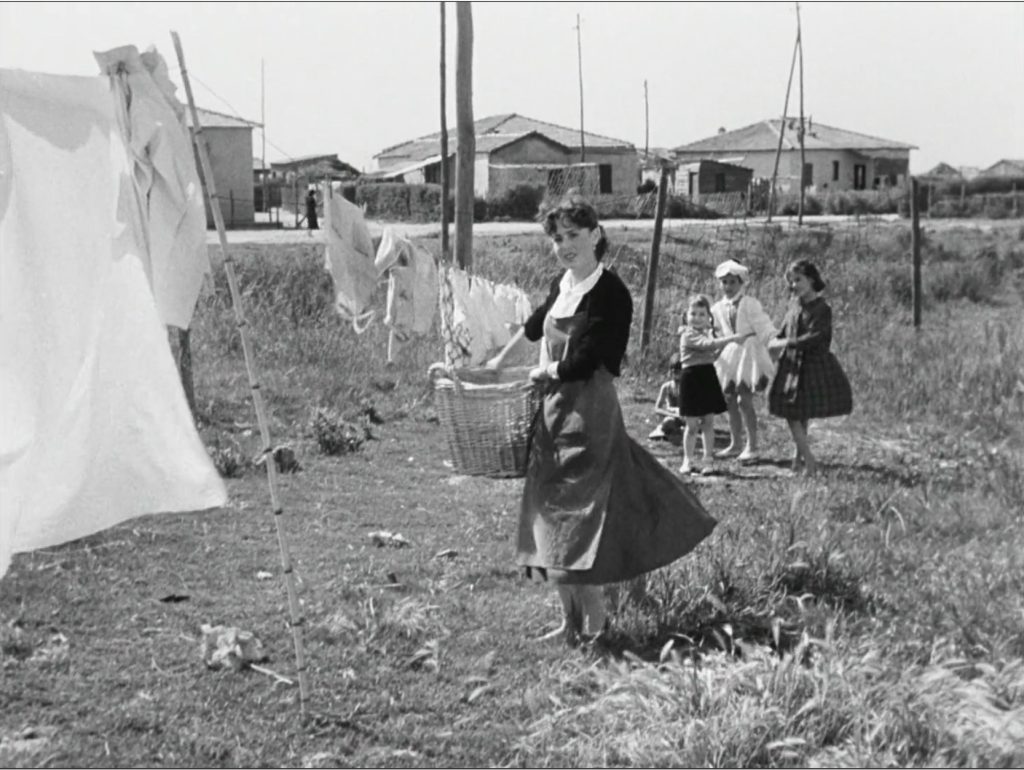
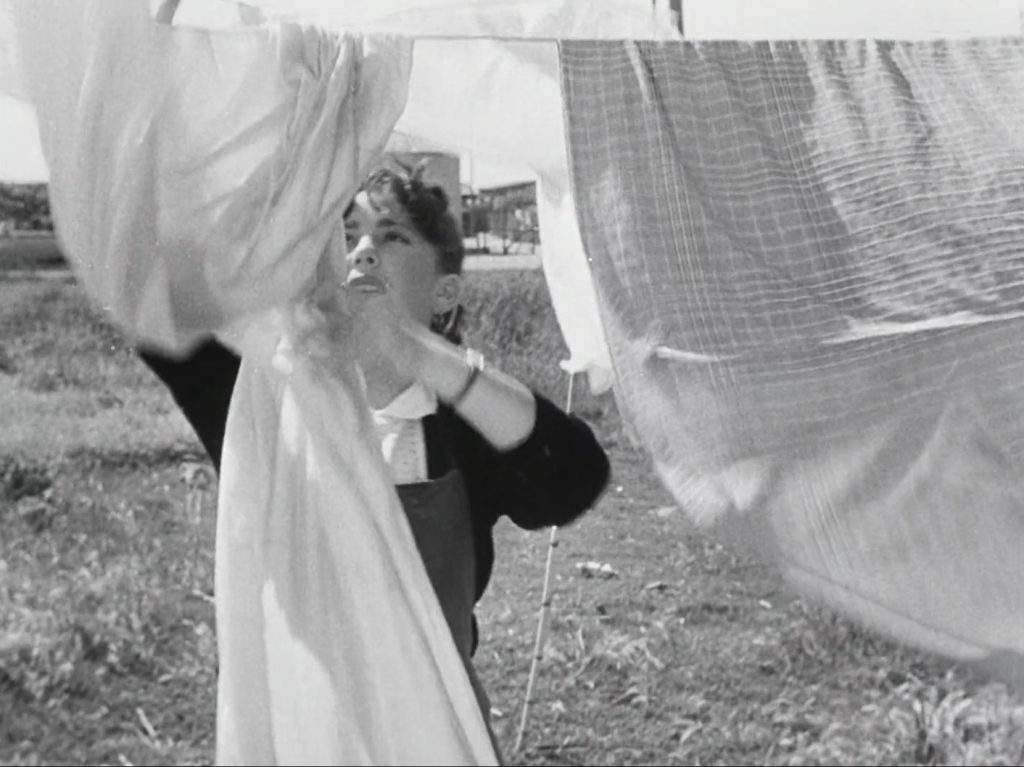
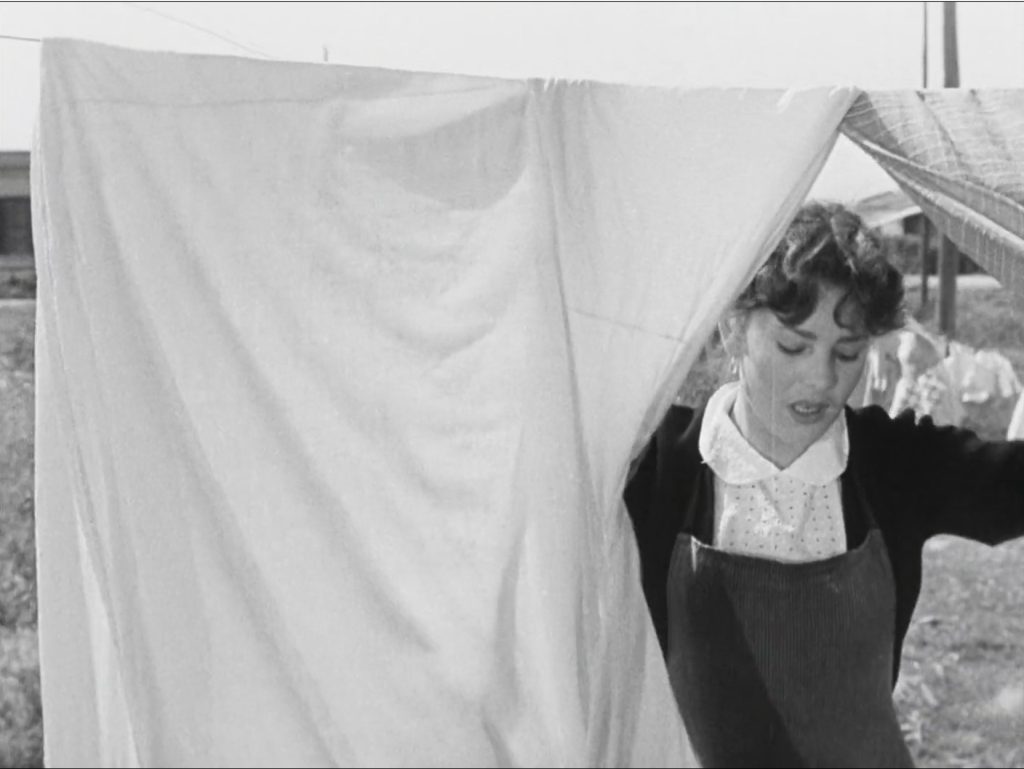
Clotheslines – I panni stesi
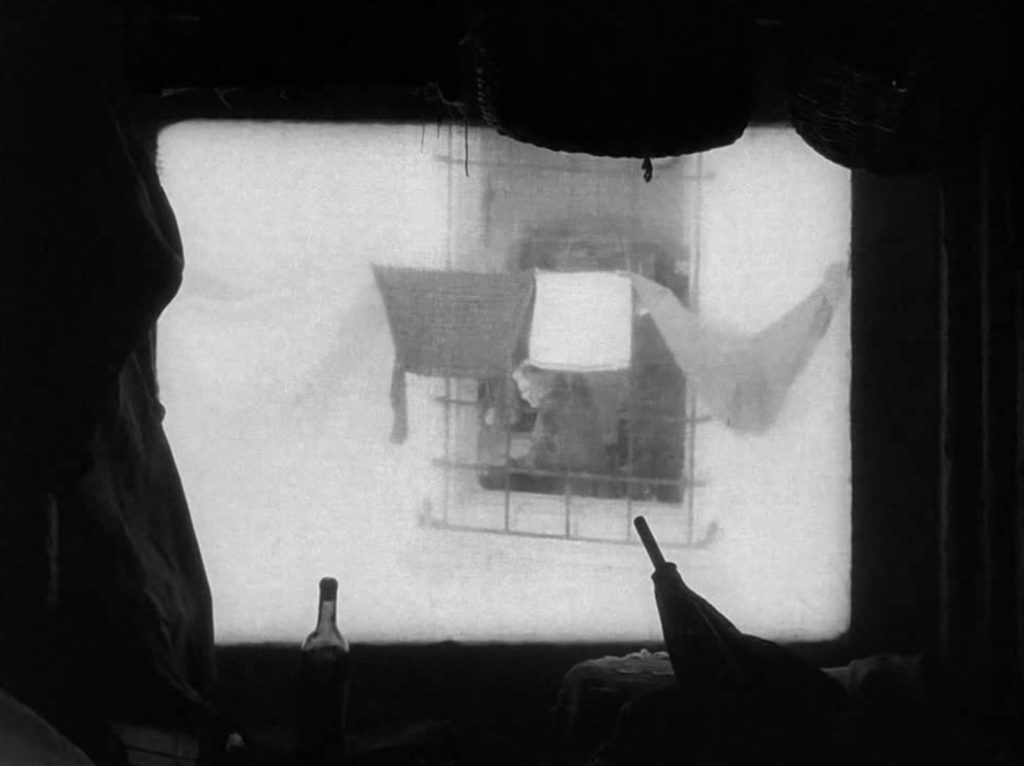
In Il bidone, about a group of scam artists, the ragged clothes hanging from clotheslines let us know that the swindlers have targeted the very poor.
Il bidone (Federico Fellini, 1955)
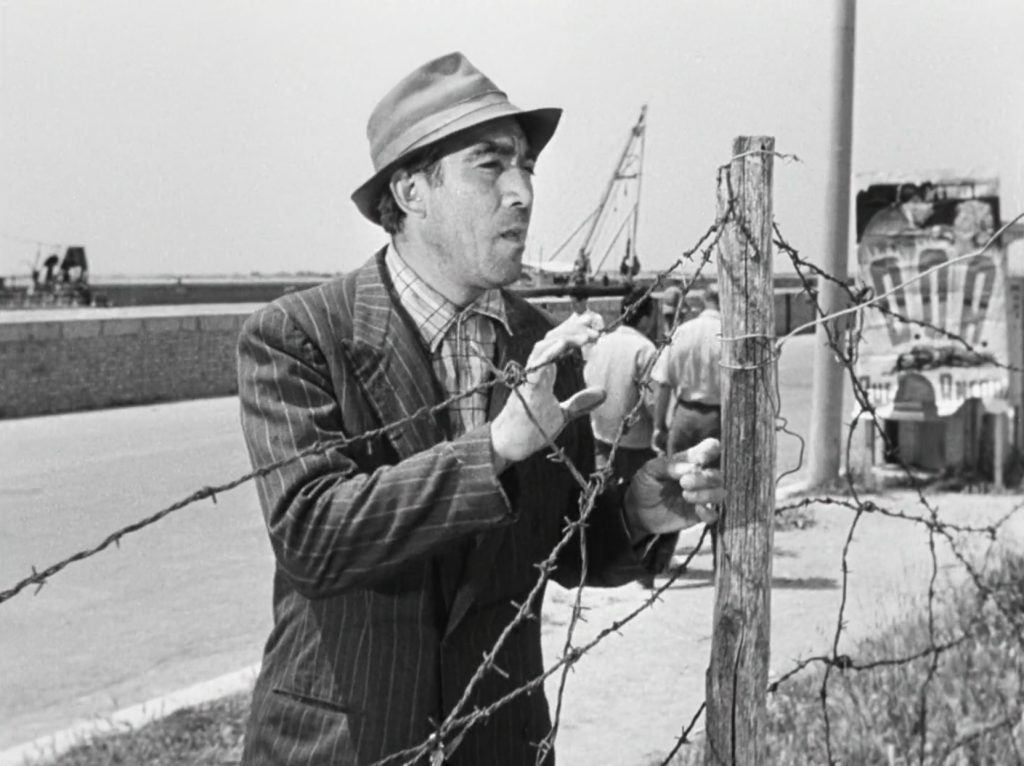
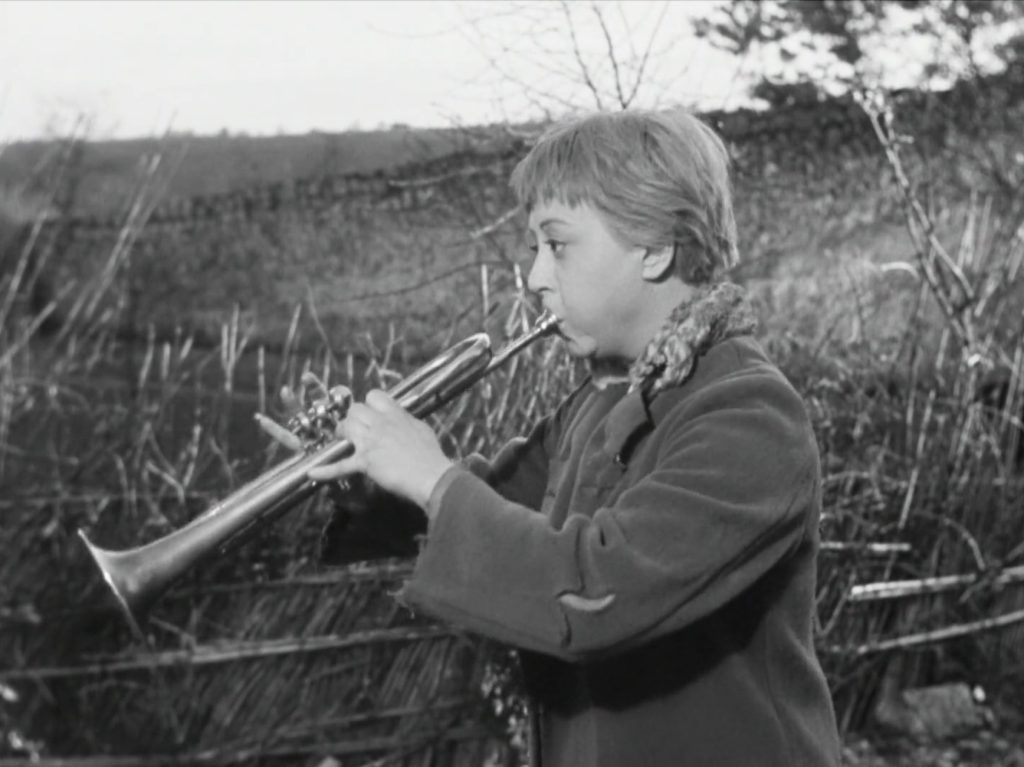
In La strada,a young woman hanging fresh laundry on a line catches the attention of the heartless Zampanò (Anthony Quinn). He hears her singing a song that he knows.
The woman tells him that Gelsomina (Giulietta Masina), whom he had mistreated and finally abandoned, has died. For the first time in the film, Zampanò shows emotion.
La Strada
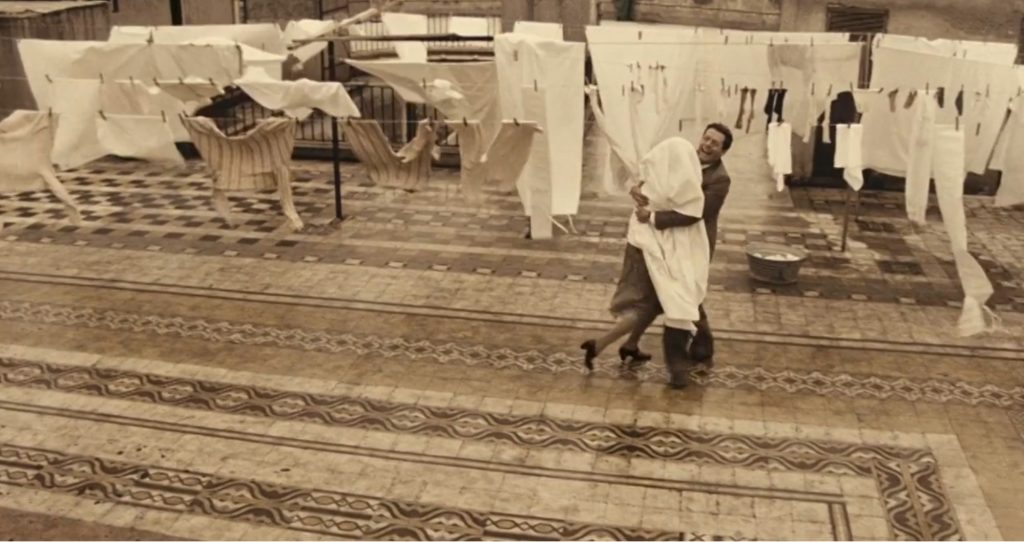
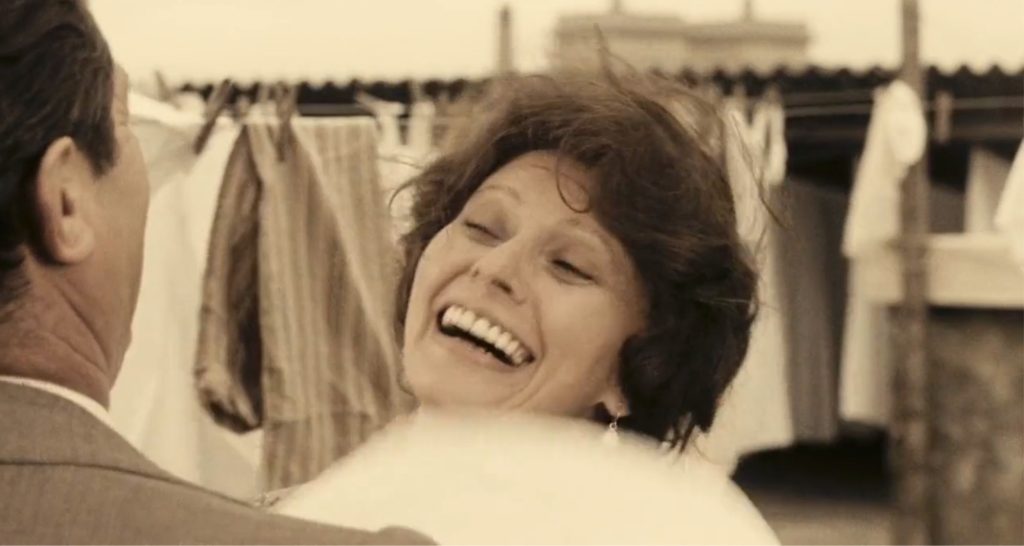
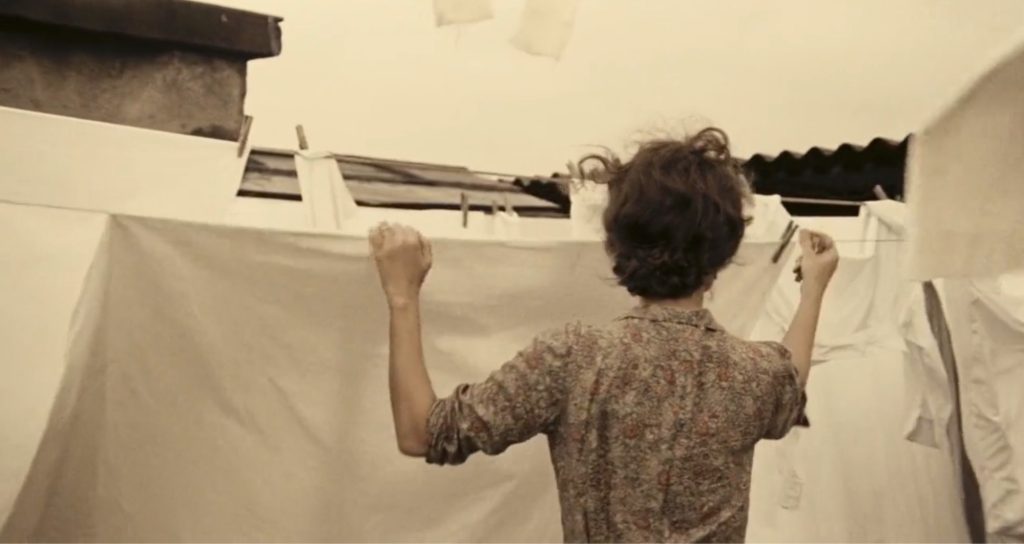
A beautiful use of the clothes-on-the-line motif appears in Una giornata particolare, a wartime story made much later. Antonietta (Sophia Loren) is a beleaguered housewife, with six spoiled children and a brutish Fascist husband. Her neighbor Gabriele (Marcello Mastroianni) is a homosexual radio announcer, about to be sent off to internal exile. They meet by accident.
Una giornata particolare / A Special Day (Ettore Scola, 1977)
Antonietta, accompanied by Gabriele, brings her basket up to the roof to take the sheets and clothes off the line. As we witness the pair’s interactions, we hear Fascist announcements from a rally with Hitler and Mussolini in the background. The lovely white sheets loft in the breeze as the neighbors enjoy a brief moment of abandon in troubled times.
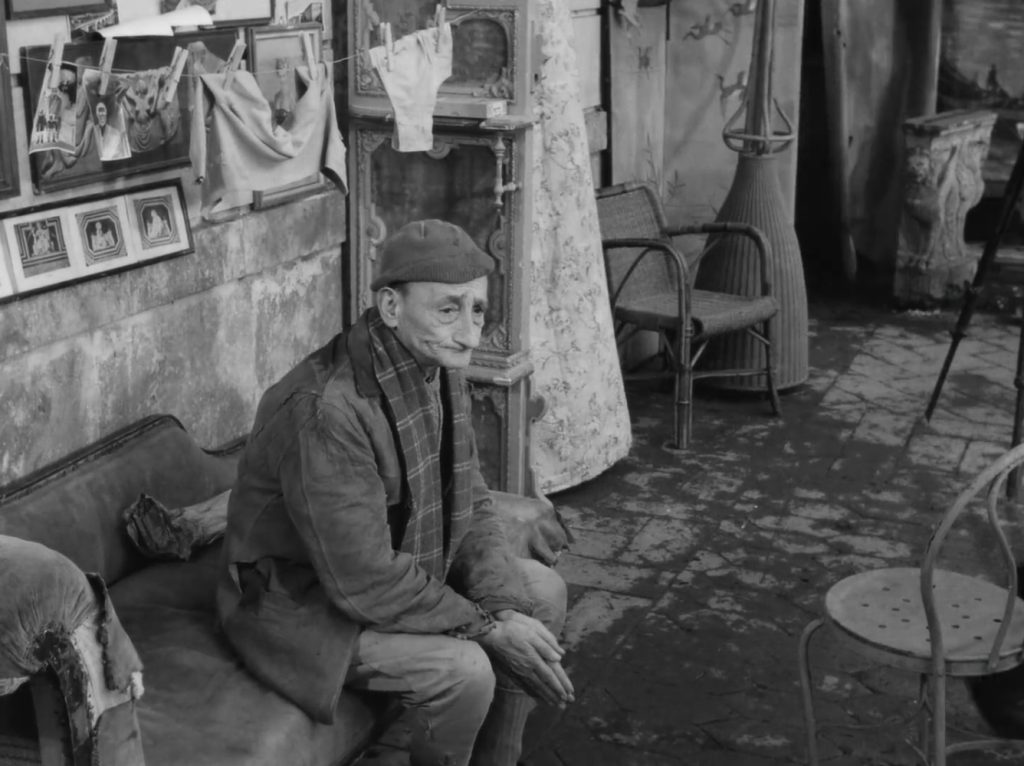
Once a motif is established, it’s ripe for comedy. Director Mario Monicelli plays with the clothesline motif in his commedia all’italiana I soliti ignoti, about a group of bumblers planning a bank heist.First, we see a photographer’s studio where photos and underwear are hung side by side to dry on a line. Later, as the robbers plan their heist, the film they have shot of the point of entry is useless because it’s covered by washing on a line.
I soliti ignoti / Big Deal on Madonna Street (Mario Monicelli, 1958)
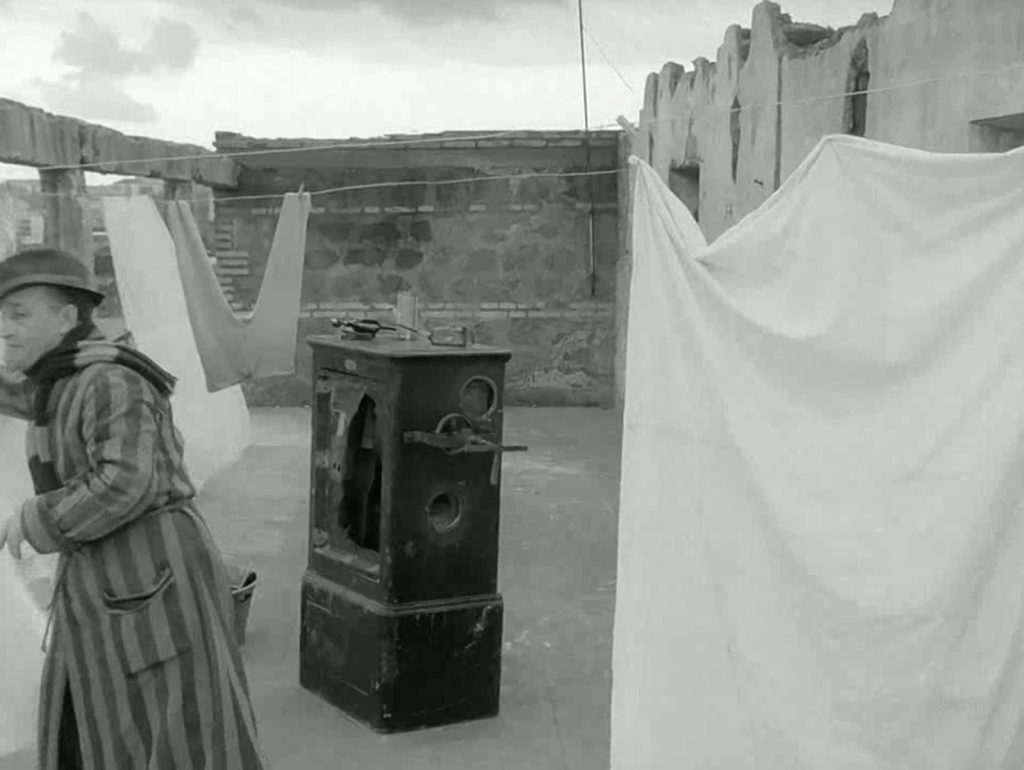
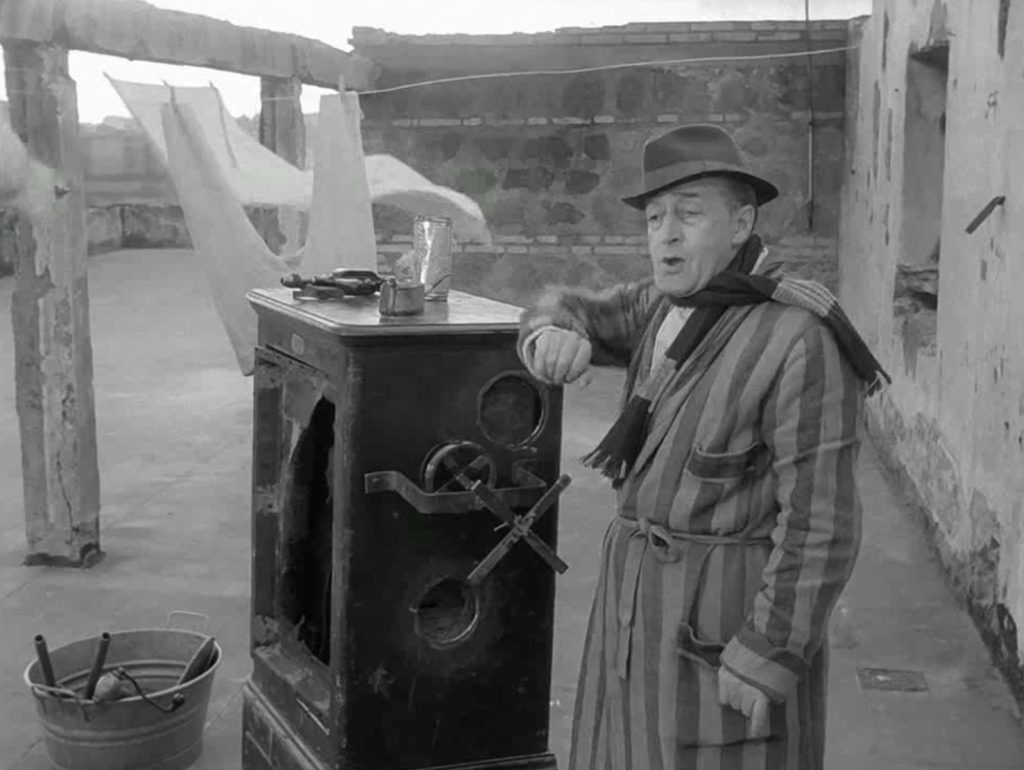
Finally, the thieves consult Dante (Totò), an expert, who gives them a lesson on safecracking up on the roof, surrounded by hanging laundry.
I soliti ignoti
Outdoor Dancing
Reflecting a culture of sidewalk cafes and piazza life, Italian films often feature a scene of people dancing outdoors. As with the other motifs, the filmmaker may use this one as a device to say something about the characters or the situation or perhaps just as a moment of light relief for the viewer.
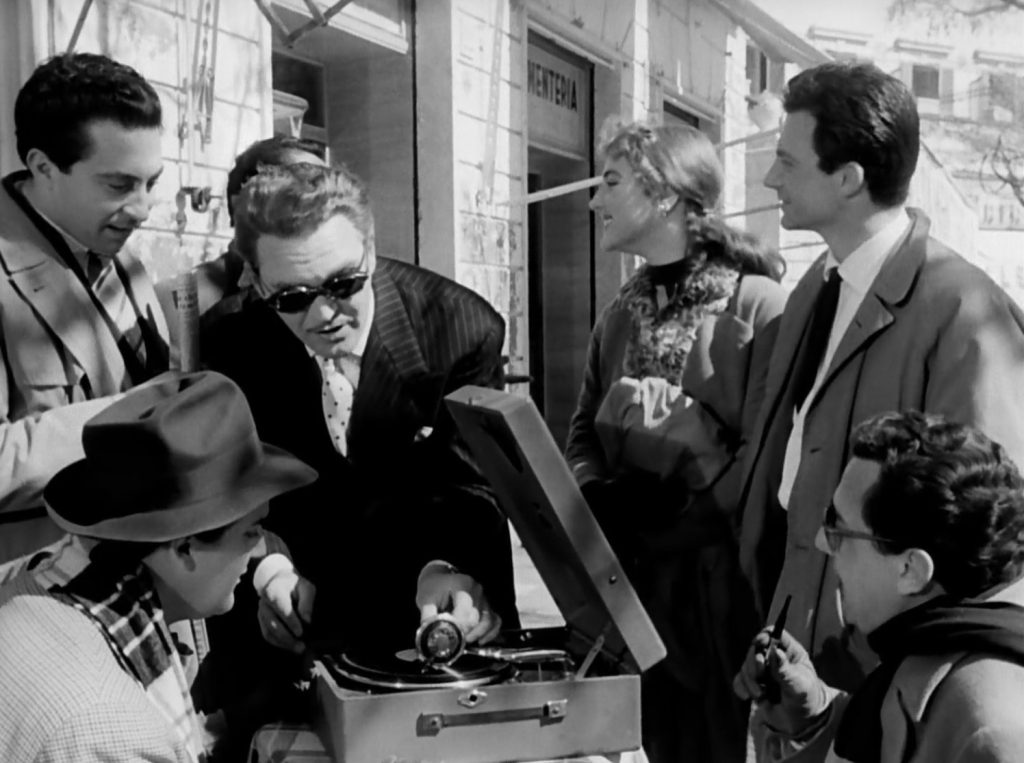
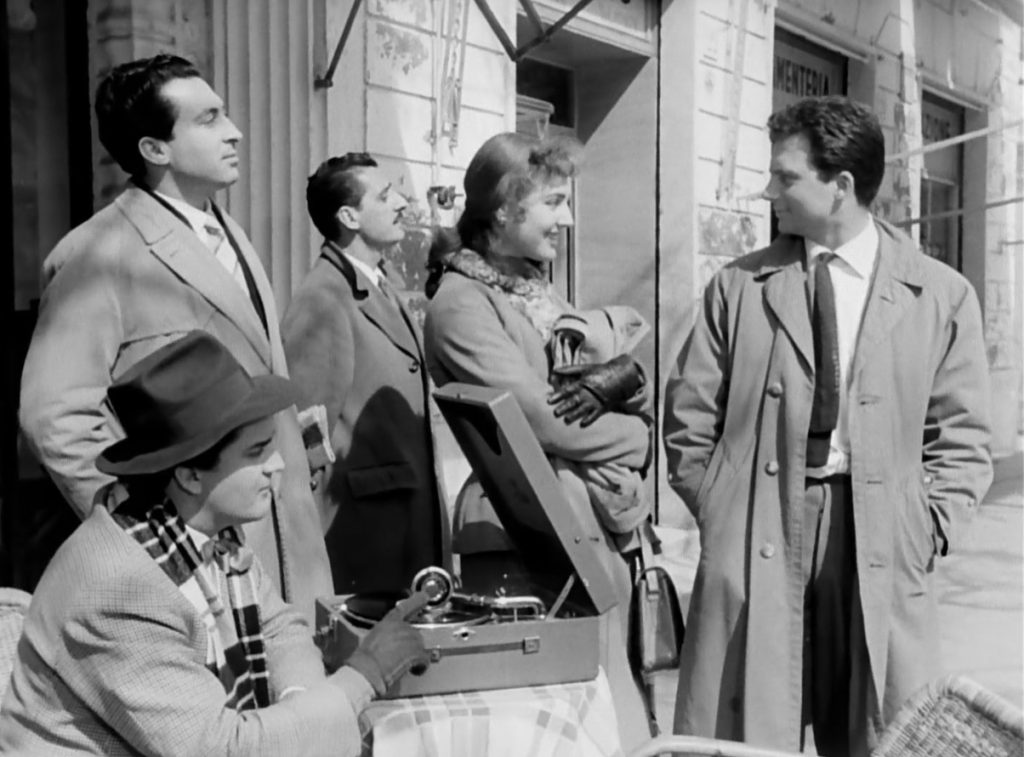
In I vitelloni, Fausto (Franco Fabrizi) sets up his record player for a mambo.
I vitelloni (Federico Fellini, 1953)
But the event doesn’t go as quite as intended: Fausto and Alberto (Alberto Sordi) end up as the only ones dancing.
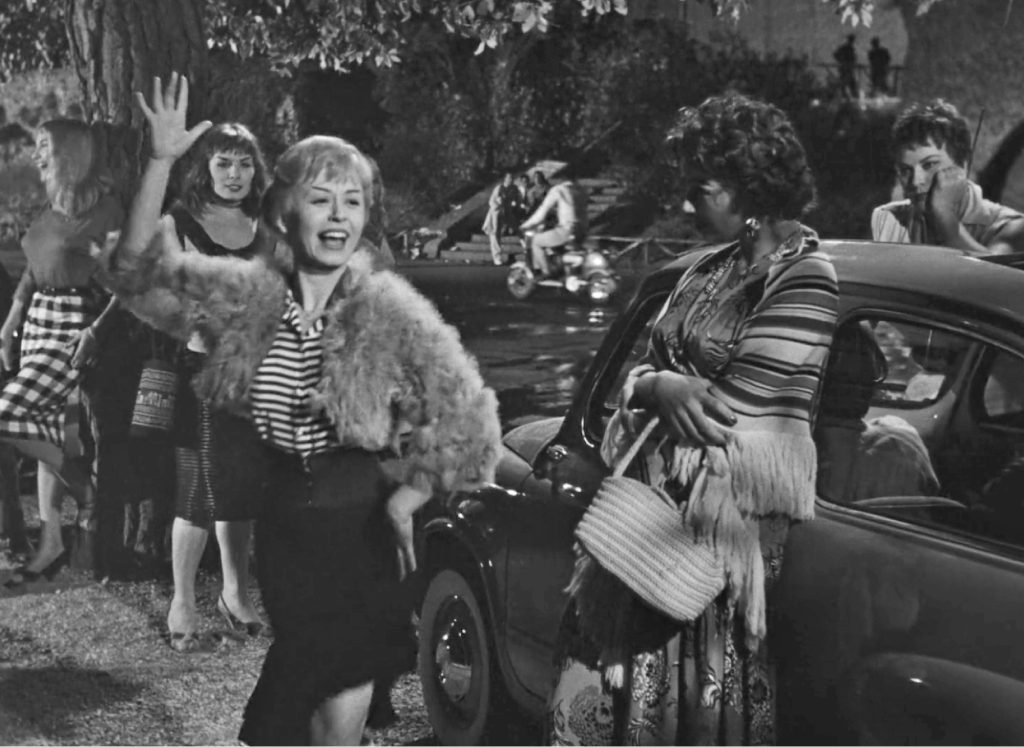
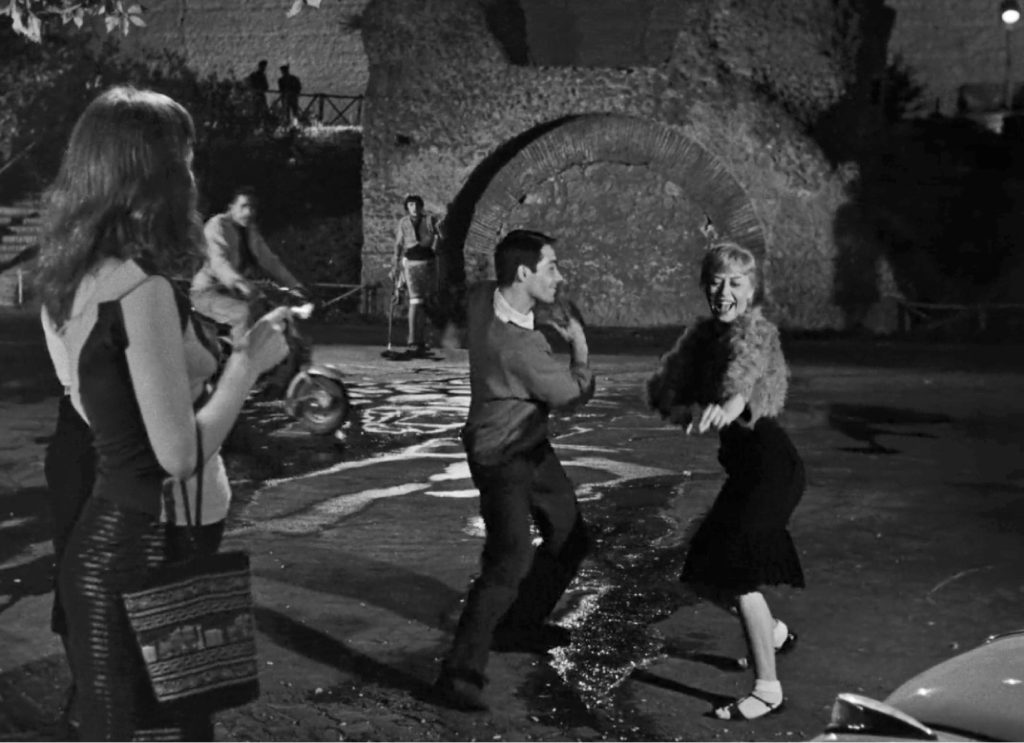
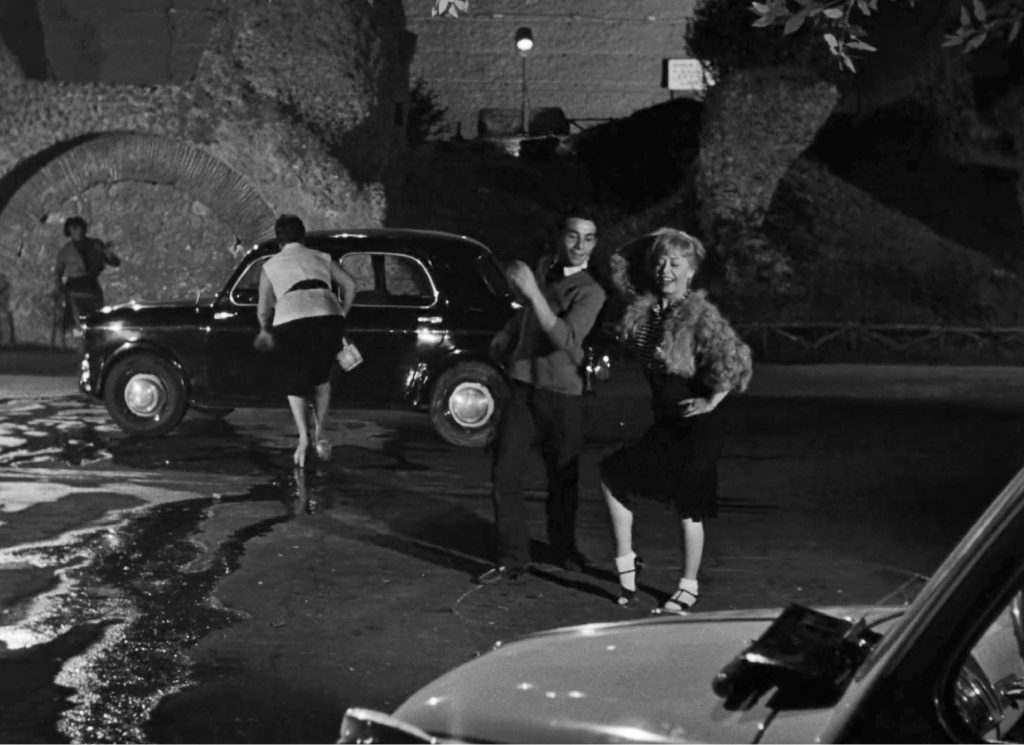
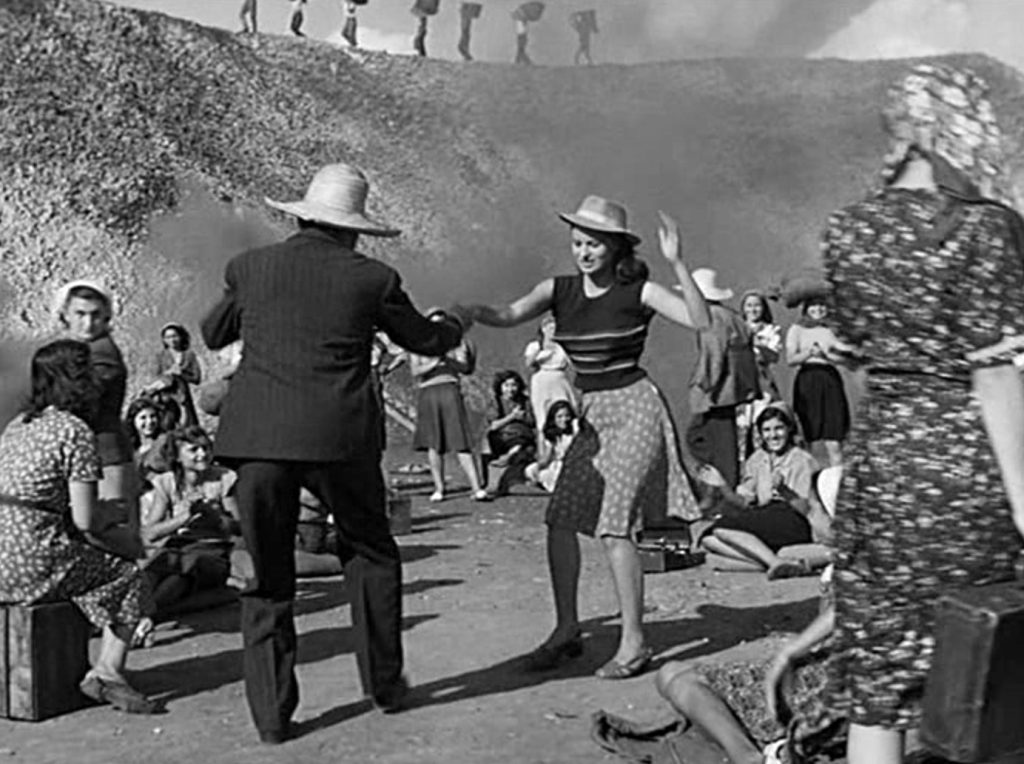
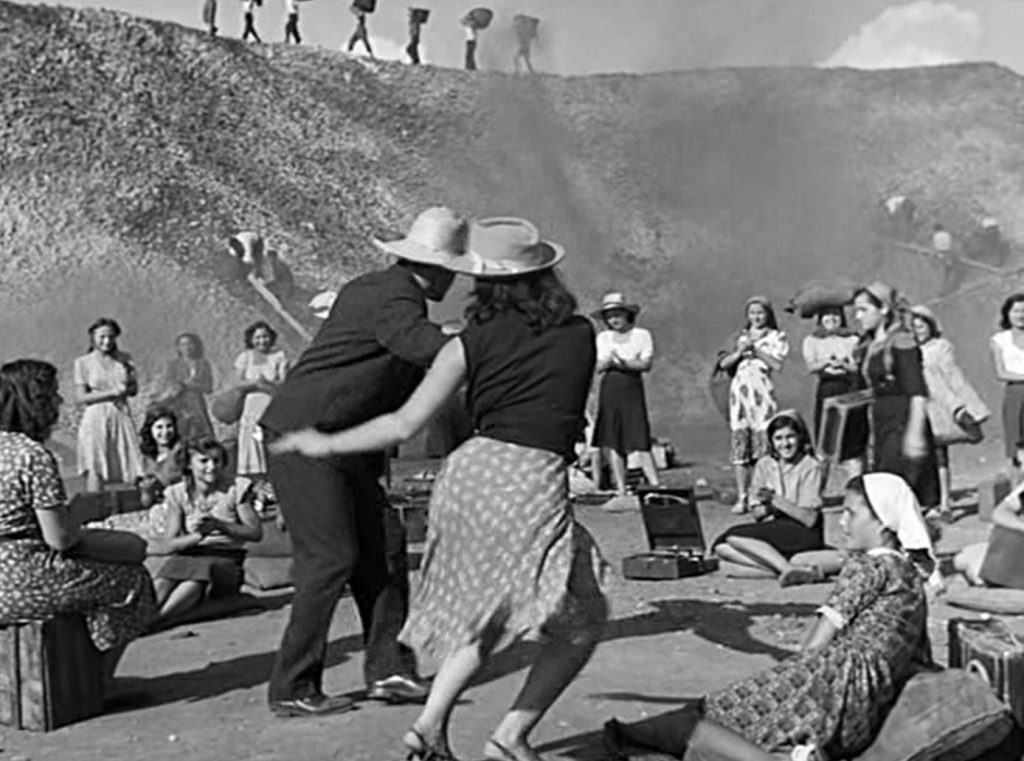
In an iconic scene from Le notti di Cabiria, streetwalker Cabiria dances a carefree mambo with one of the pimps, to music from a record player. In the third image, note that Cabiria’s friend walks away for a moment to meet a potential client who’s pulled up in a car.
Le notti di Cabiria
This scene of the ordinary – and communal – life of the streetwalkers is one of the few carefree moments of the film.
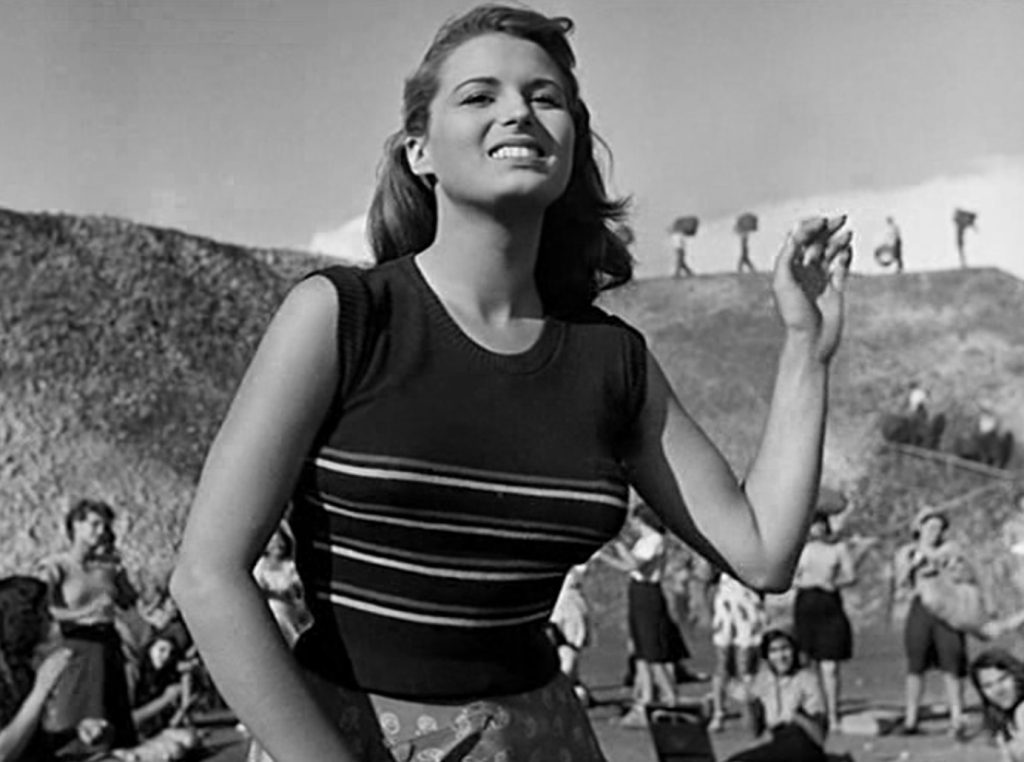
In the neorealist melodrama Riso amaro, director De Santis, in a tribute to American pop culture, shoots his star, Silvana Mangano, dancing to boogie-woogie music on her portable record player.
Riso amaro / Bitter Rice (Giuseppe De Santis, 1949)
This scene also stirs up a little sensuality, not much seen in neorealist films.
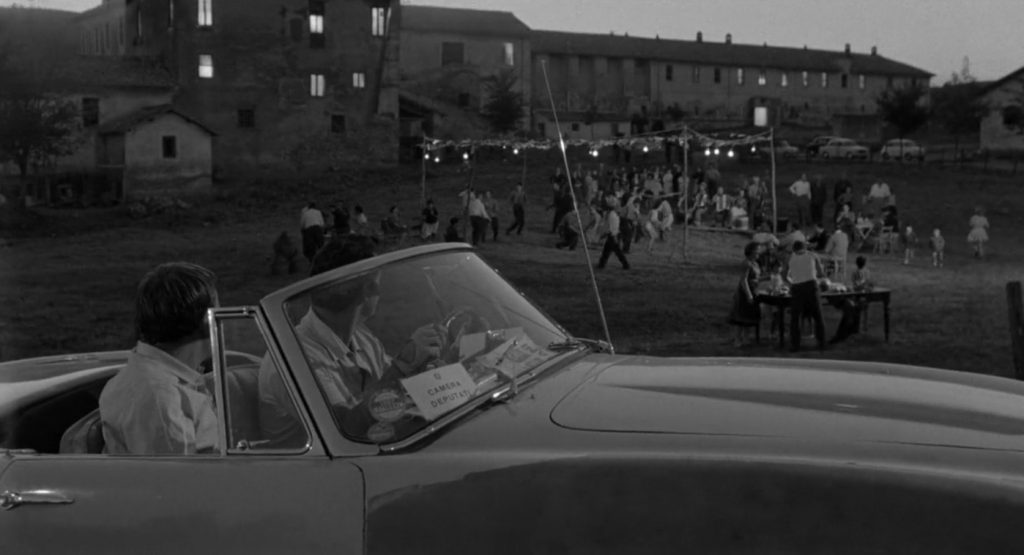
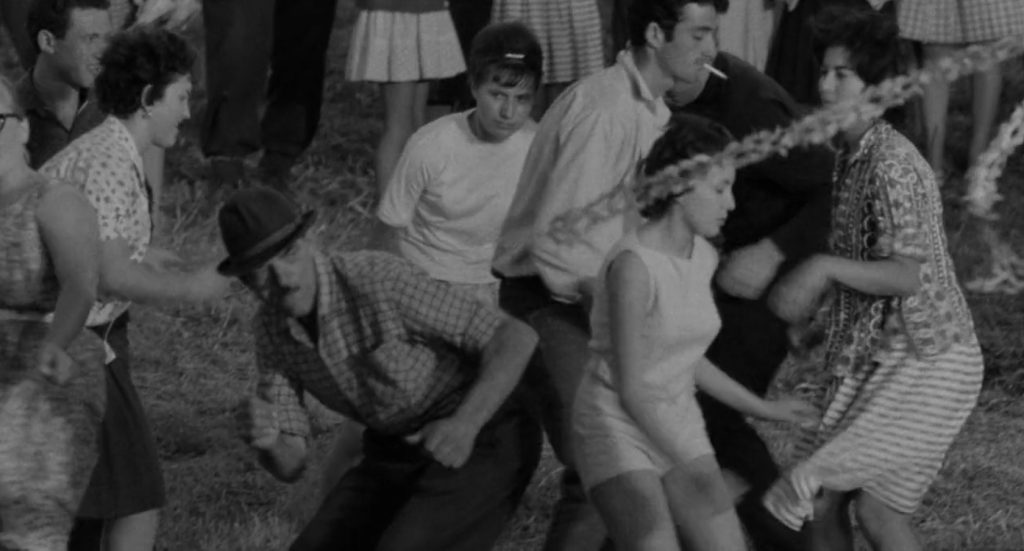
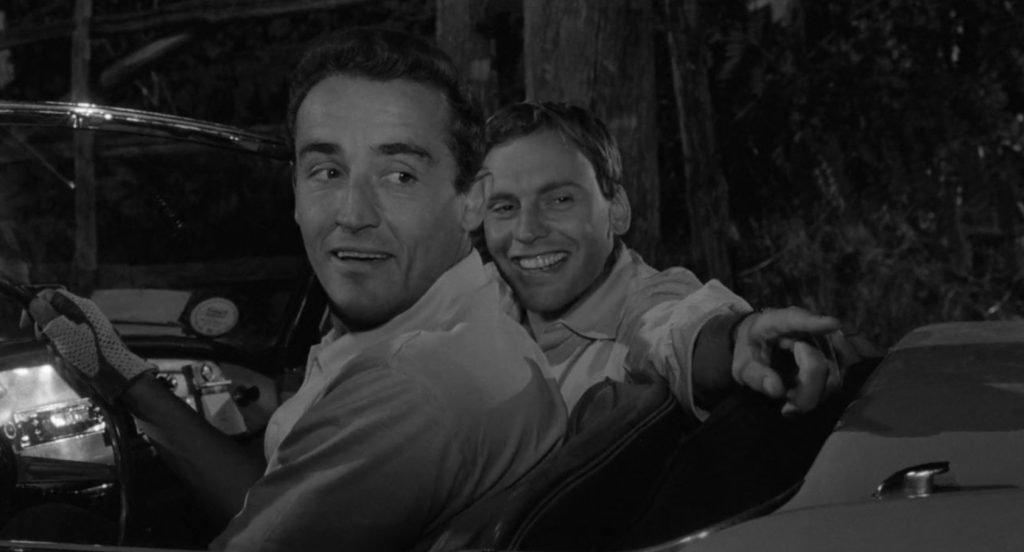
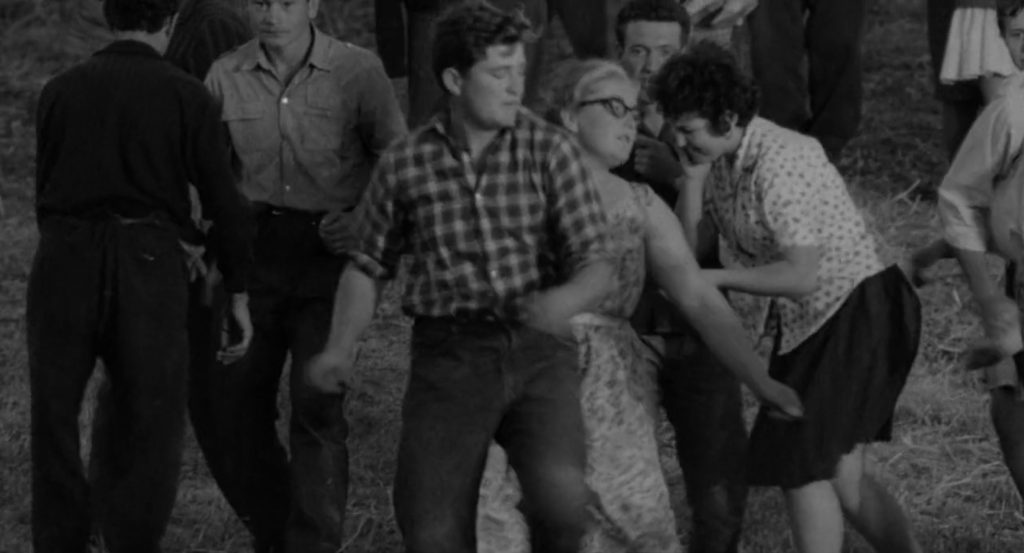
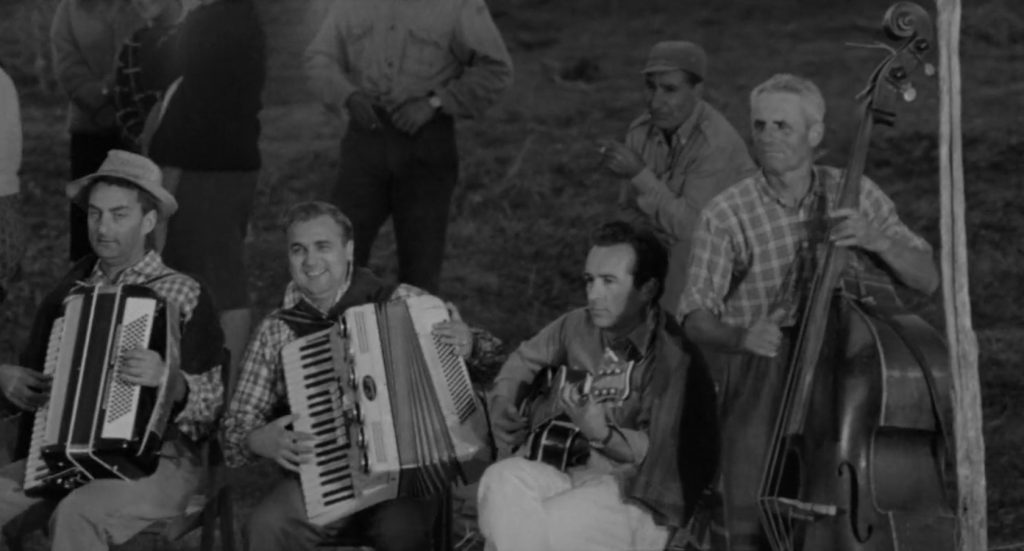
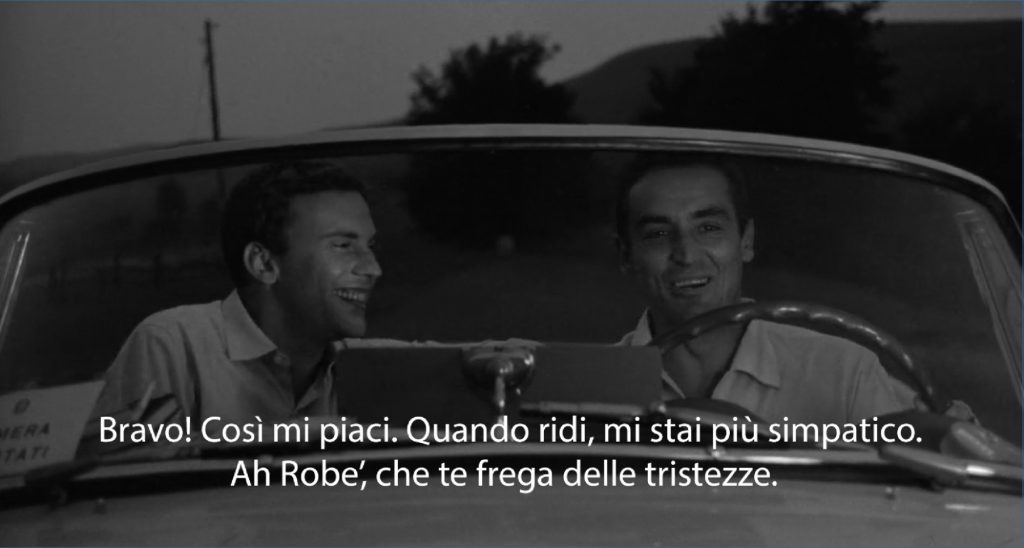
In Il sorpasso, carefree Bruno (Vittorio Gassman) and serious Roberto (Jean-Louis Trintignant), on a road trip, drive by a meadow where country folk are dancing. They make fun of some of the characters.
Il sorpasso (Dino Risi, 1962)
This sets up the tenderest line in the film. Delighted that Roberto is finally letting go, Bruno tells him: “Well done! I like you like that. When you laugh, I like you more. Oh, Robe’, to hell with sadness.”
Train Farewells
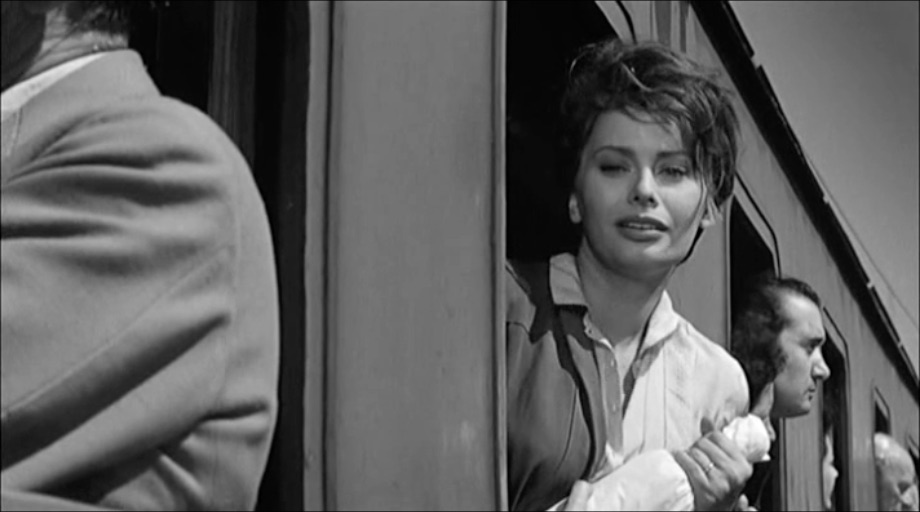
It seems people are always leaving in Italian films. In post-war films, that is usually – though not always – by train.
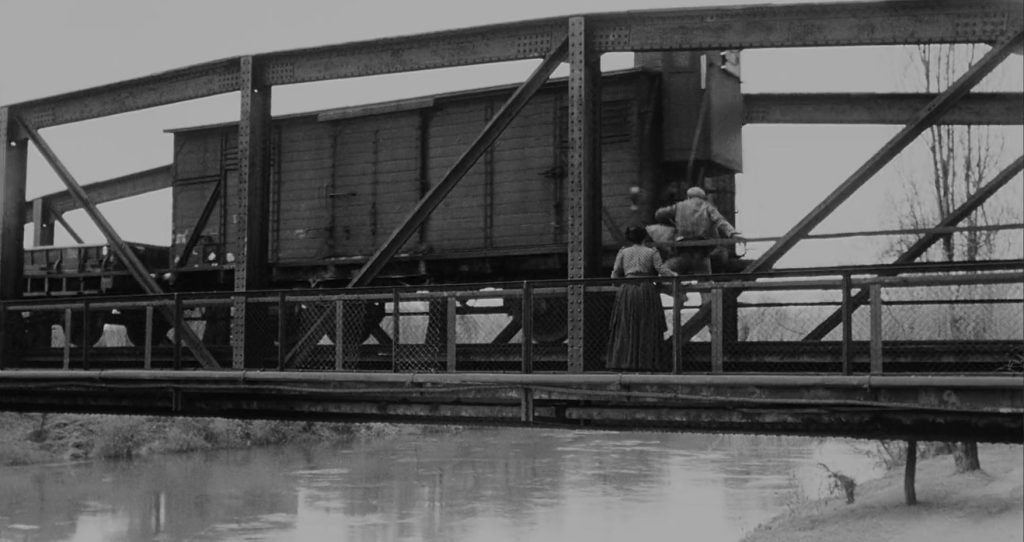
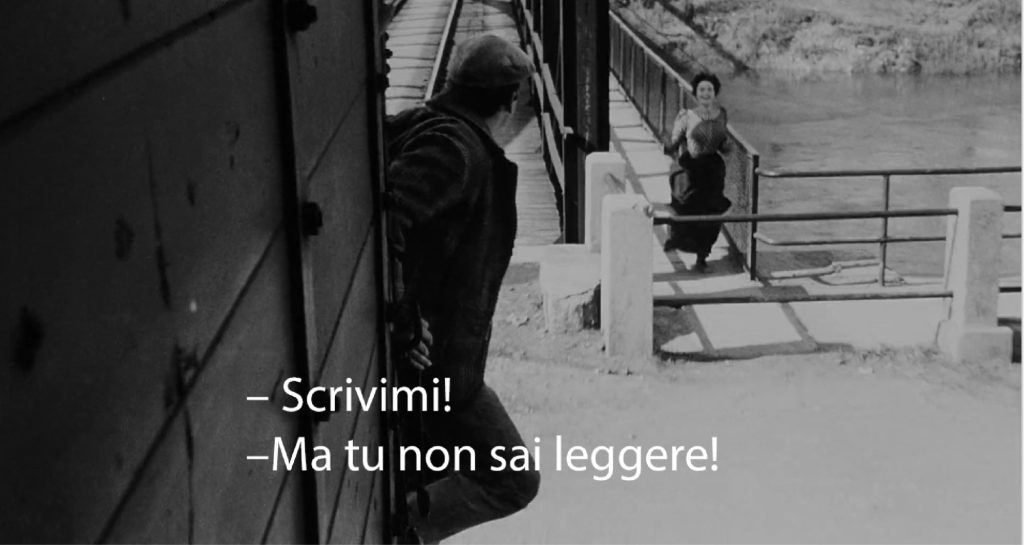
Near the end ofI compagni, Raoul (Renato Salvatori) leaves town before he can be arrested for attacking a police officer during a textile strike.
I compagni (Mario Monicelli, 1963)
As the train roars away, Adelle (Gabriella Giorgelli) seems finally to declare her love for him: “Write to me!” He replies: “But you don’t know how to read!”
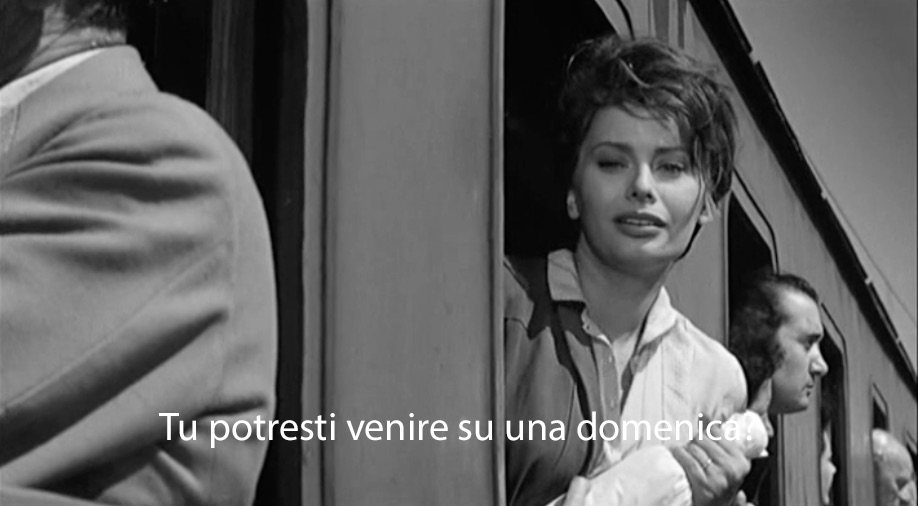
In the World War II film La ciociara, Cesira has decided to leave Rome for the countryside to protect her daughter from the Allied bombing. She asks Giovanni (Raf Vallone), a married family friend, to take care of her shop while she’s gone. He agrees, but makes it clear that, in return, she must have sex with him.
La ciociara
She’s offended at the time, but when he comes to see her off, she asks, “Maybe you could come up some Sunday?”
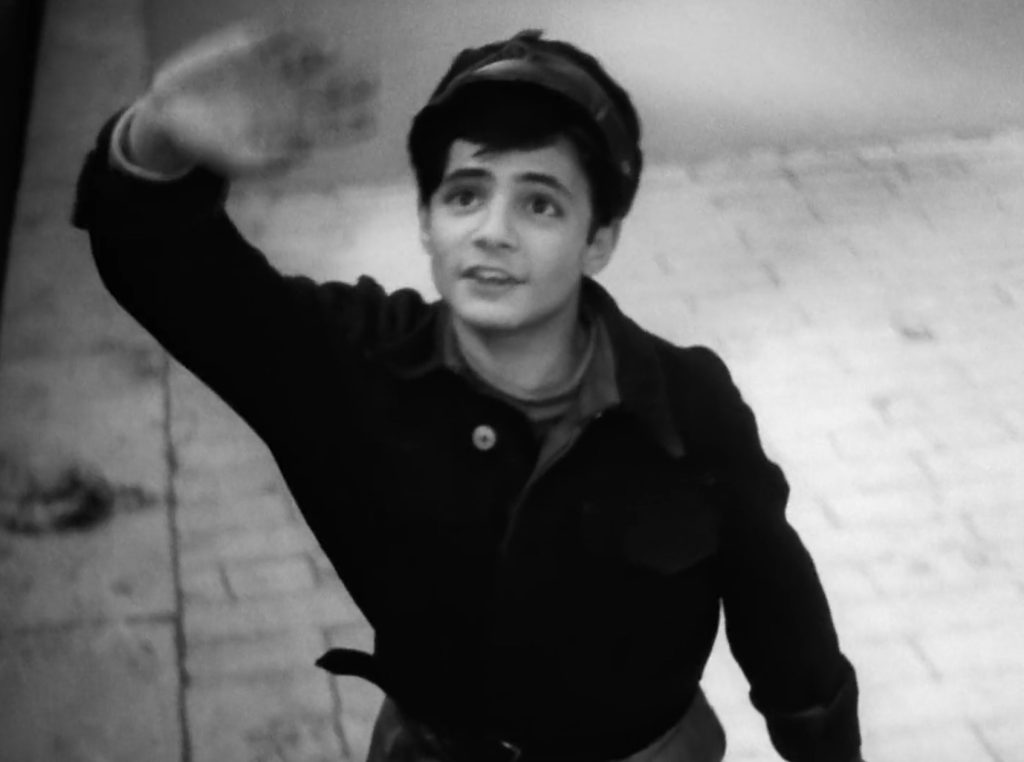
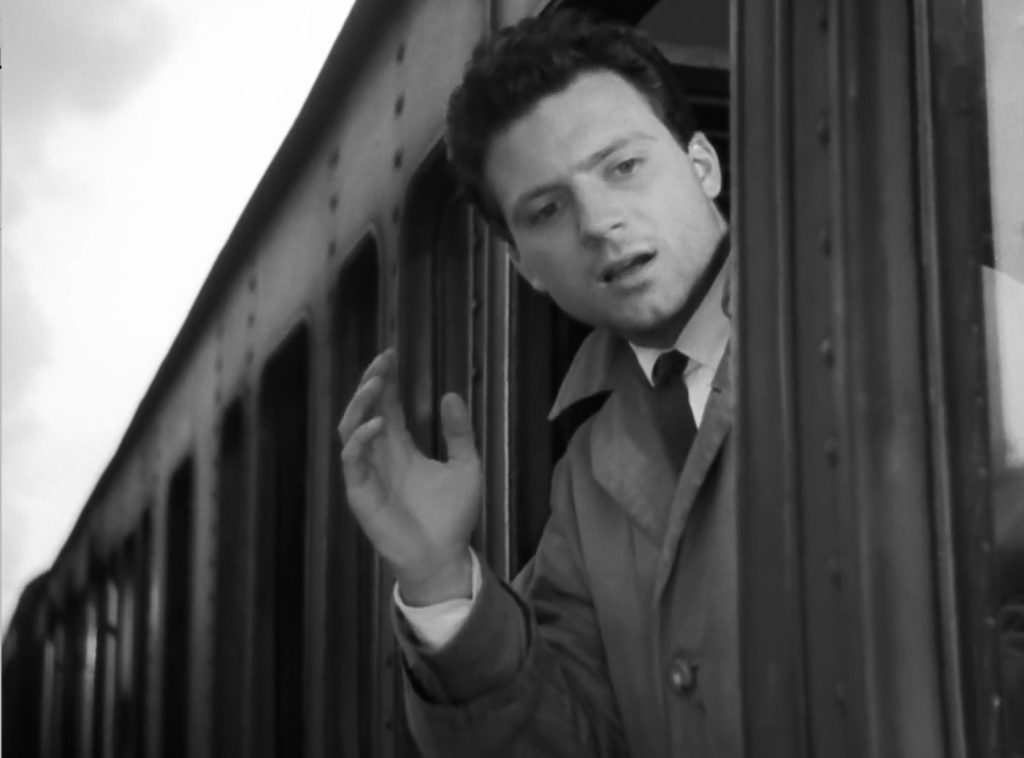
In I vitelloni, when Moraldo (Franco Interlenghi) finally decides to leave home, railroad worker Guido (Guido Martufi) sees him as he boards the train, and asks where he’s going, what’s he going to do, doesn’t he like their home town?
I vitelloni (Federico Fellini, 1953)
Moraldo doesn’t have any answers for Guido – or for himself.
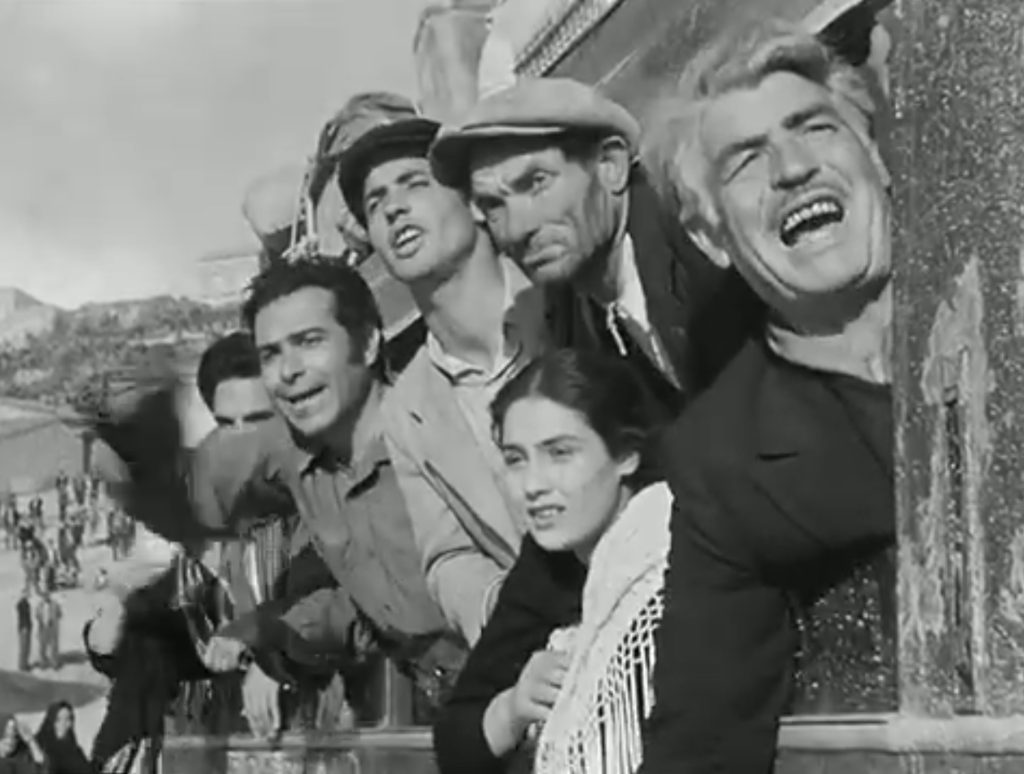
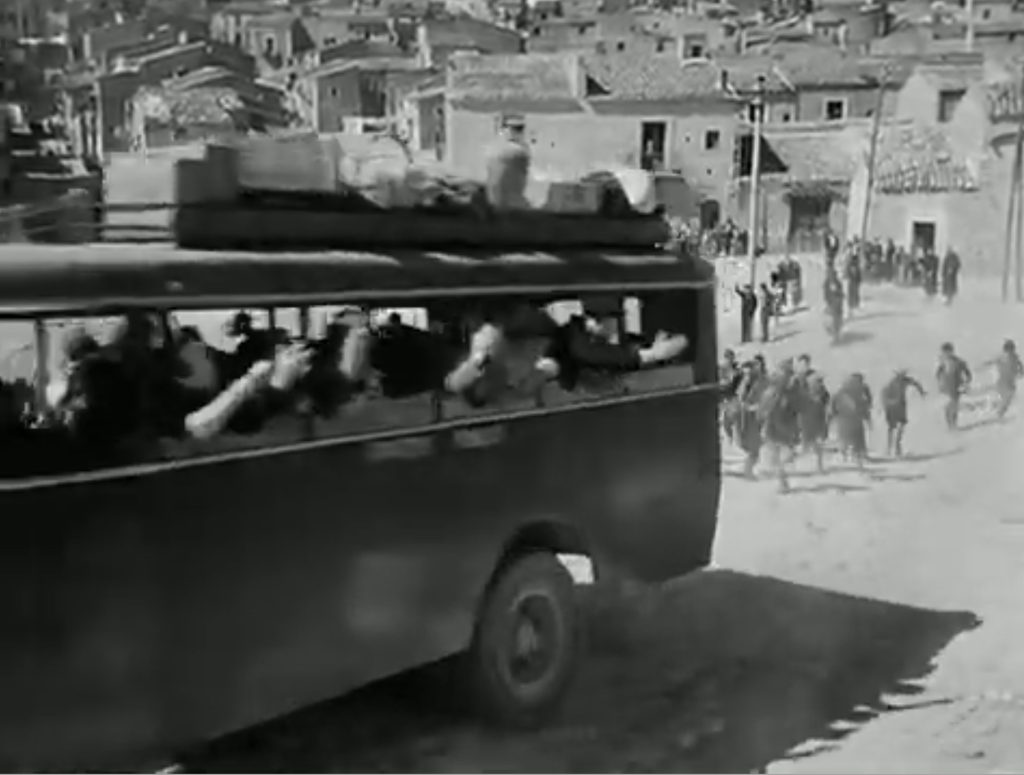
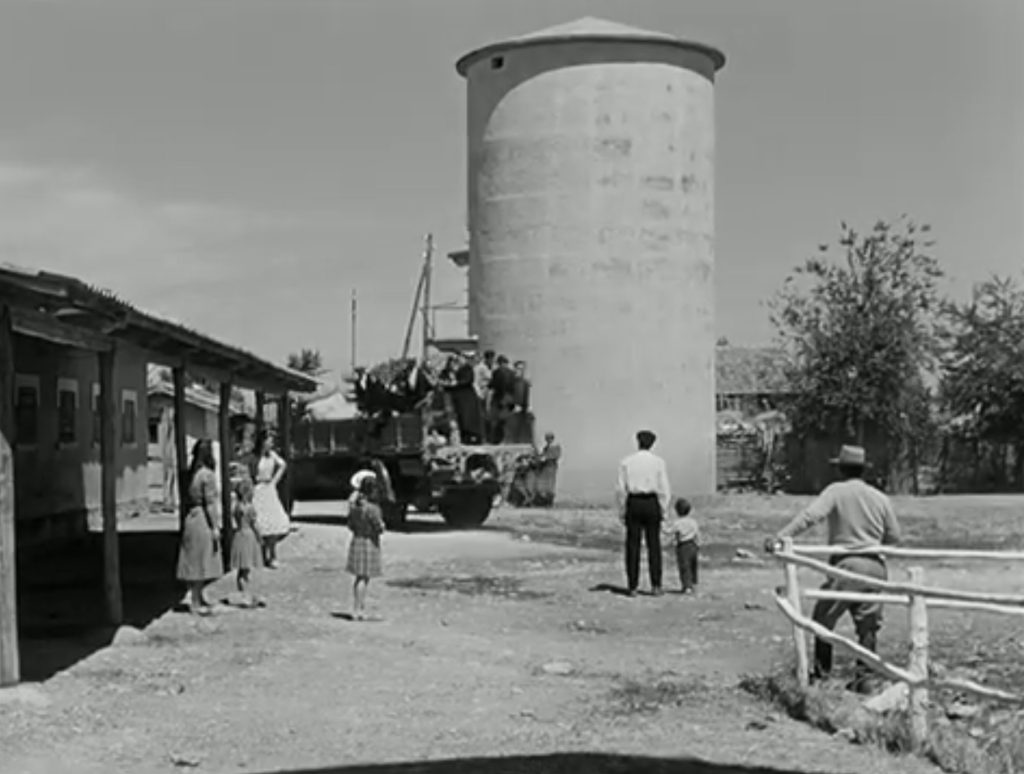
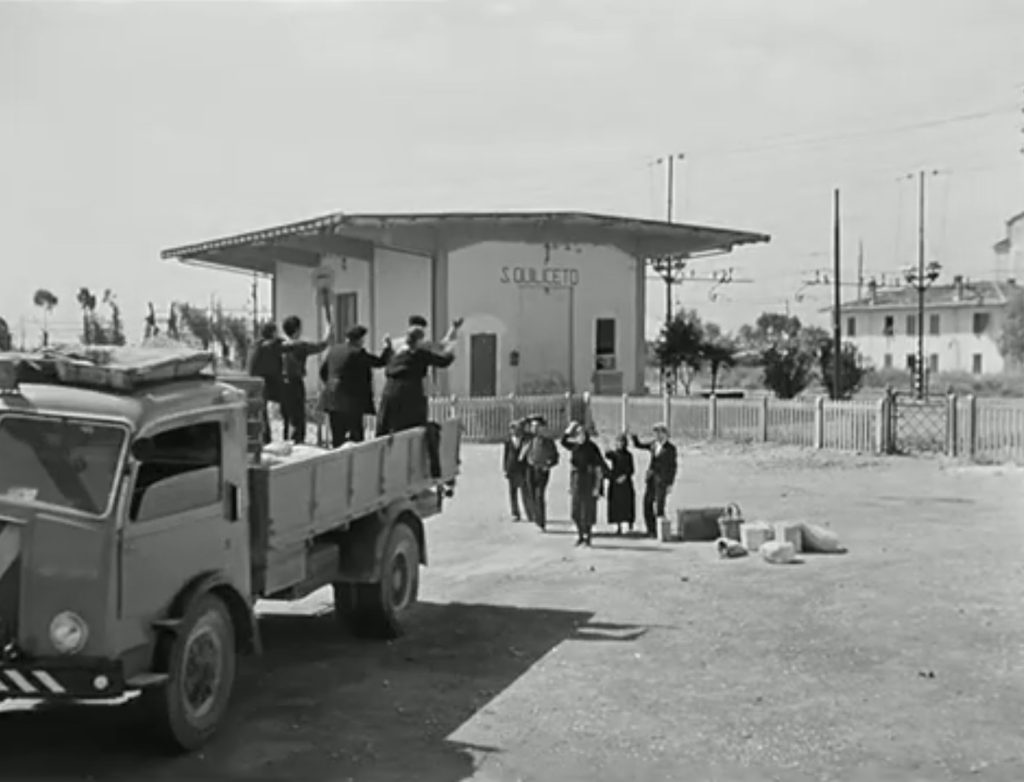
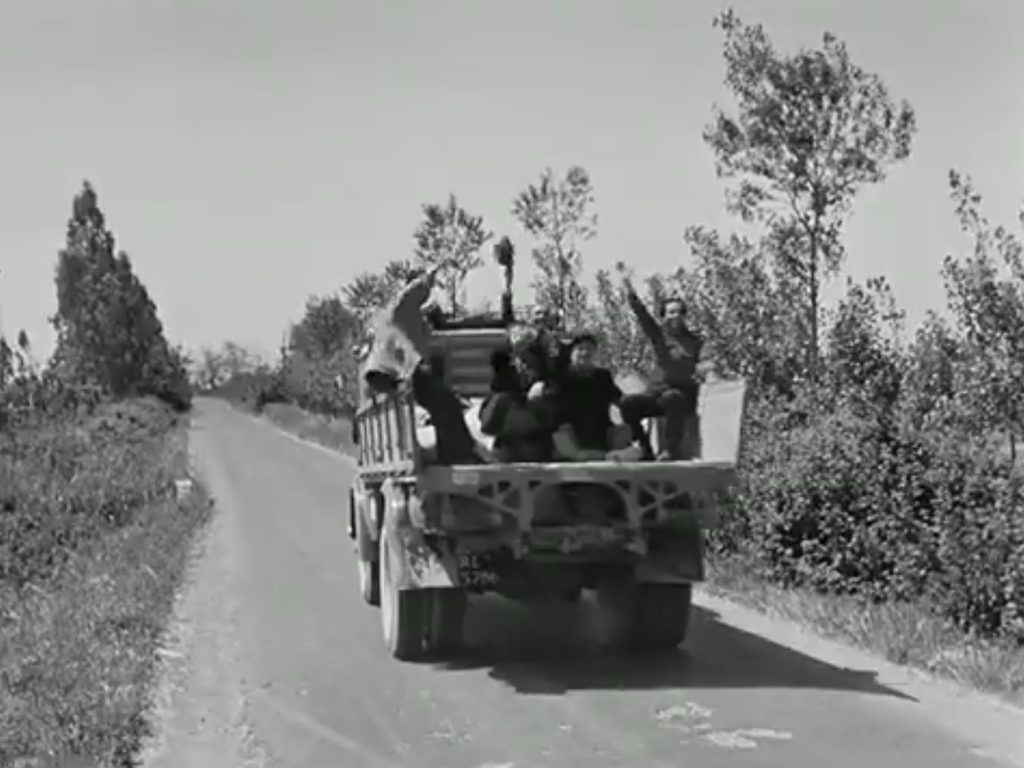
In order to survive, the sulfur miners of Il cammino della speranzadecide to emigrate to France. They embark on a series of journeys by train, bus, and truck, which sets up a succession of goodbyes throughout the film.
Il cammino della speranza
I hope that you’ve enjoyed this glimpse into some of the motifs that we encounter in post-war Italian films – and that these images and descriptions will inspire you to watch the films, attentive to the italianità that enriches their stories.
We’ve written cineracconti (photo-stories) about most of the films represented above, which include dialogue, scene description, and cultural notes side by side in Italian and English. We hope you’ll subscribe to the blog and enjoy reading these wonderful film stories.
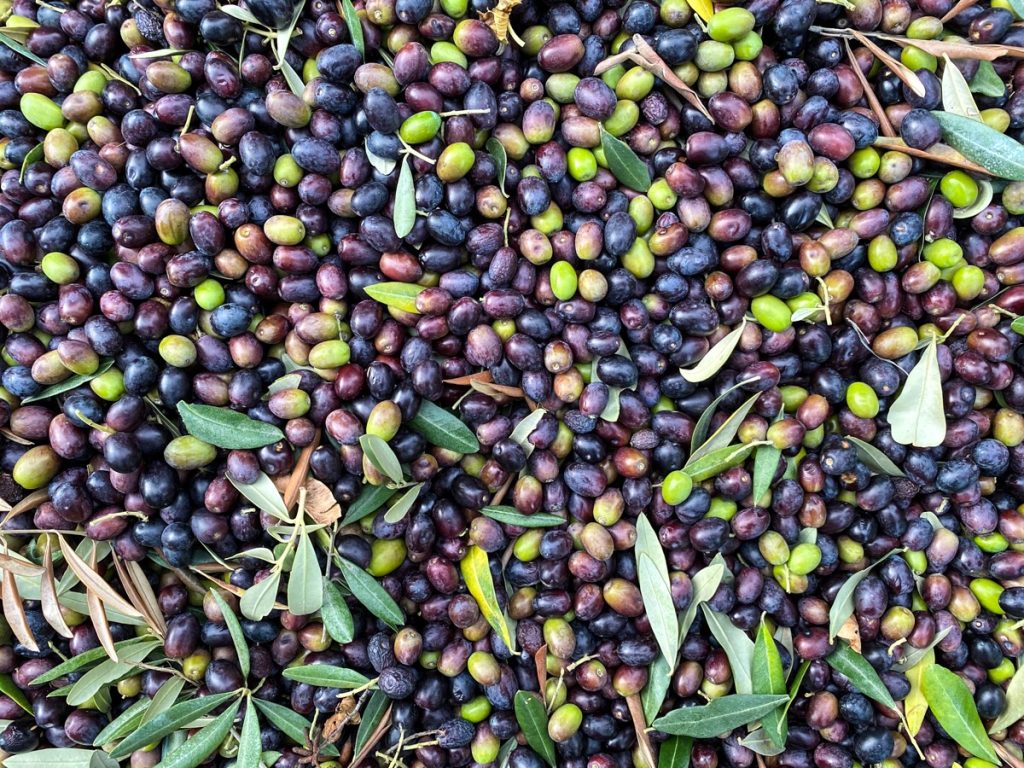
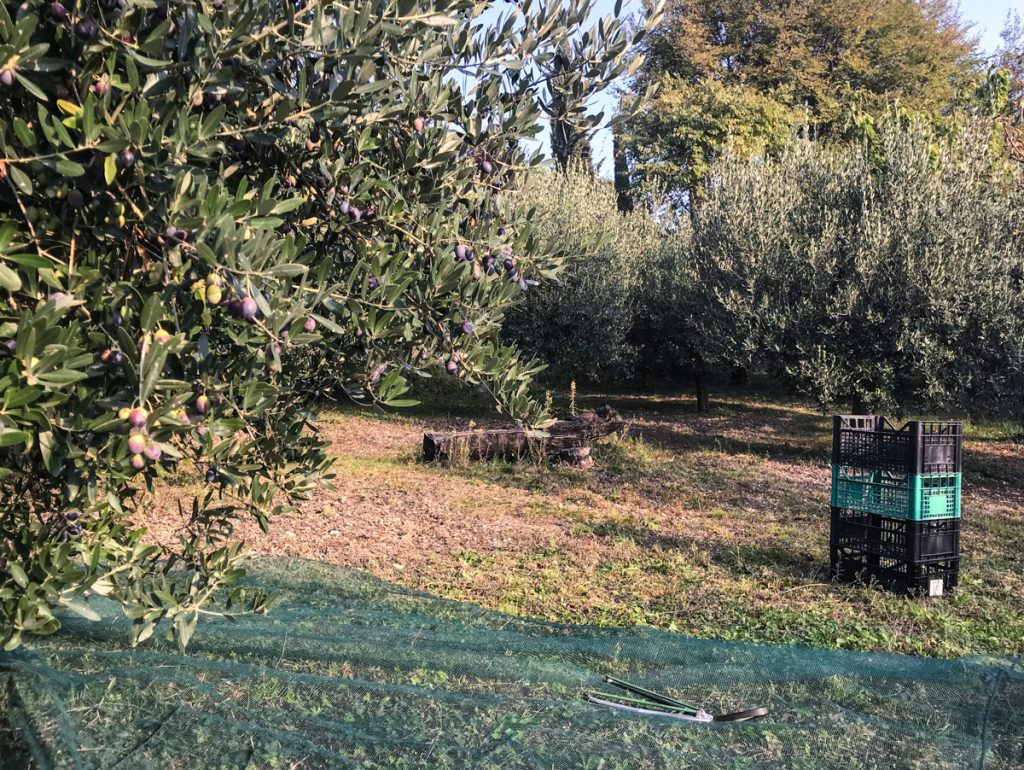
È ottobre: negli oliveti di tutta Italia comincia la raccolta delle olive, che in alcune zone dura fino a dicembre inoltrato. Dalle distese immense di olivi in Toscana e Puglia agli appezzamenti familiari o addirittura ai giardini, dalla mattina alla sera ferve l’attività nel tentativo di raccogliere le preziose olive nel minor tempo possibile. Una volta staccati dagli alberi, questi frutti delicati devono essere portati al frantoio al più presto, idealmente entro uno o due giorni, per diventare olio extravergine della massima qualità.
Come nascono le olive
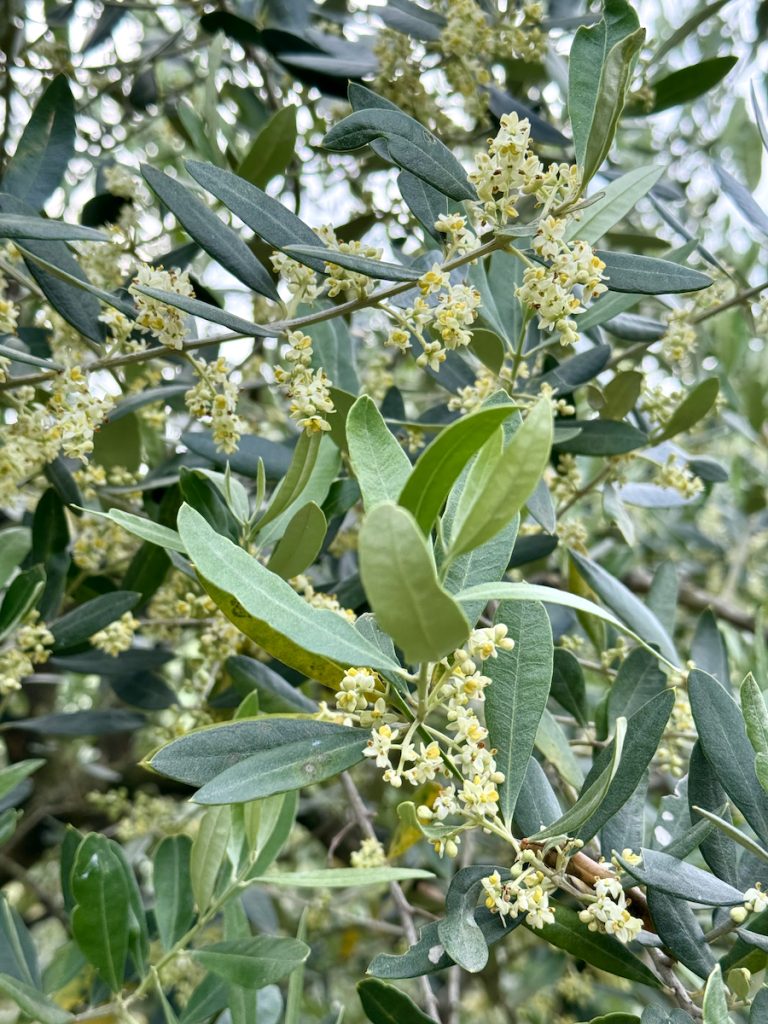
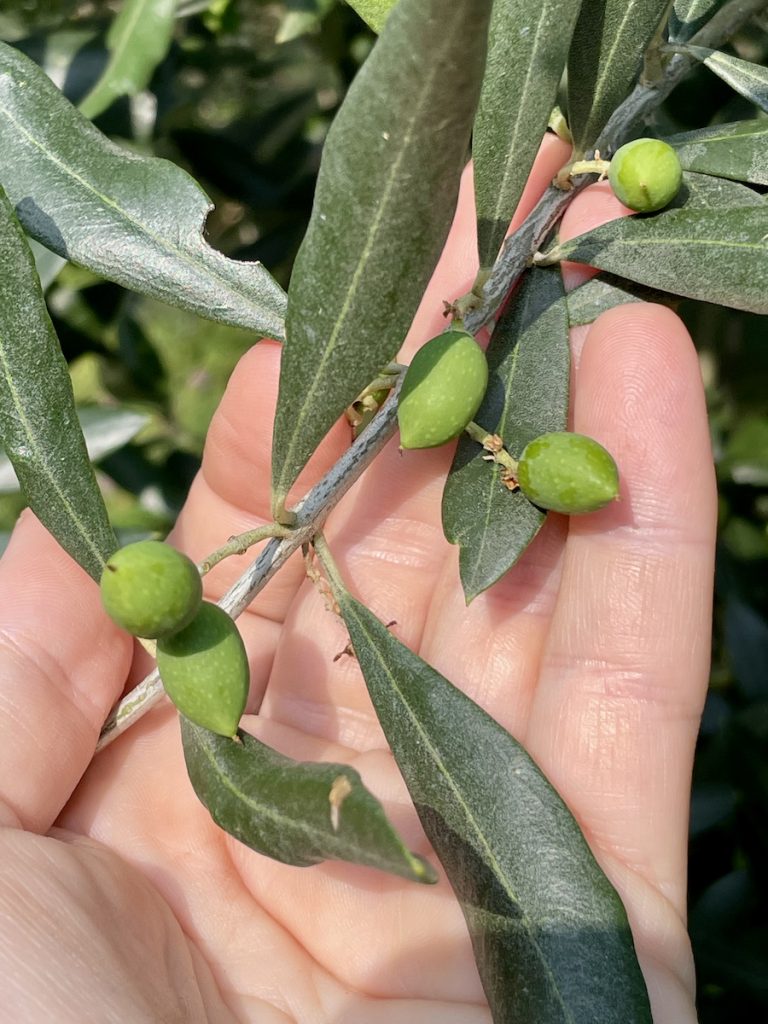
Questo viaggio inizia diversi mesi prima, all’inizio di giugno, quando gli olivi sono in fiore. Avete mai visto dei fiori di olivo? Eccoli qui a sinistra: sono dei piccoli grappoli di fiorellini bianchi. L’impollinazione dell’olivo è anemofila, cioè avviene grazie al vento. Se il tempo è clemente, ben presto i fiori diventano piccole olivine. L’allegagione, cioè la trasformazione del fiore in frutto, è piuttosto difficoltosa nell’olivo: solo l’1-4% dei fiori riescono a diventare olive.
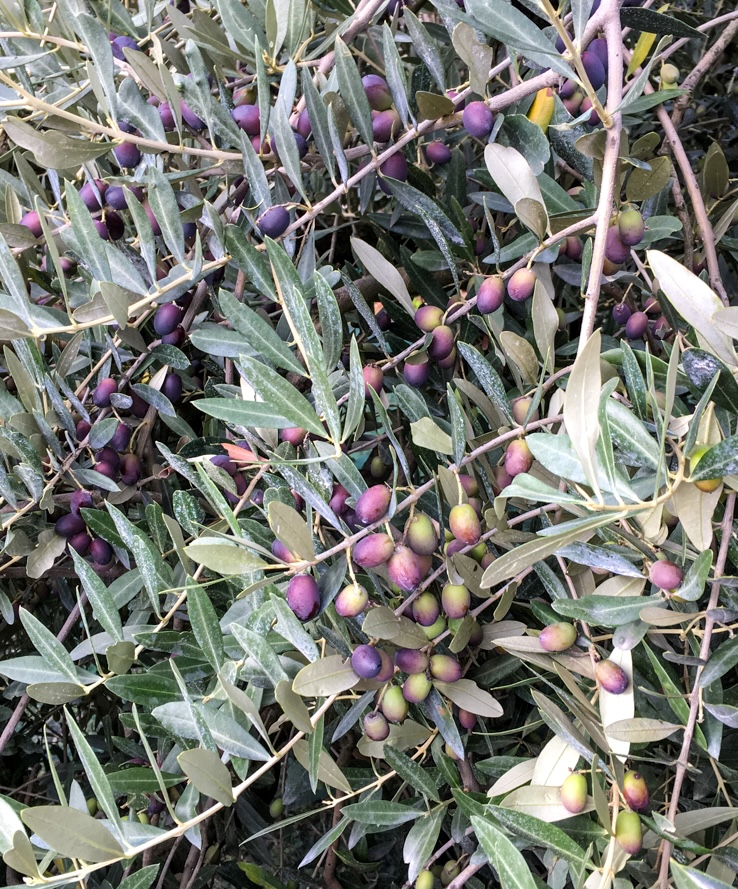
Nel corso dell’estate, le olive si ingrossano e maturano, sempre che lo consentano la siccità, avversità meteorologiche sempre più frequenti come la grandine e la moltitudine di insetti che vivono negli oliveti. Se tutto va bene, a settembre le olive iniziano a cambiare colore: da verdi diventano giallastre, poi viola e infine, piano piano, nere.
Le olive sono tutte uguali?
Naturalmente no, le olive non sono tutte uguali: ne esistono tantissime varietà diverse, chiamate cultivar. Ci sono le olive da tavola, chiamate anche olive da mensa, meno adatte alla produzione di olio, che in genere vengono raccolte e consumate verdi, come l’Ascolana Tenera, la Bella di Cerignola, la Nocellara del Belice; e poi ci sono le varietà coltivate specificamente per produrre l’olio. In totale, esistono in Italia più di cinquecento varietà di olive diverse, e tante altre si coltivano nel mondo. Ogni varietà ha un grado di maturazione ideale diverso: per produrre l’olio perfetto, alcune olive vanno raccolte completamente nere, altre non appena virano al violetto.
L’olivo si coltiva soltanto in Italia meridionale?
L’olivo è una pianta mediterranea che ama il sole e il caldo: sono particolarmente famosi i grandi oliveti pugliesi, con i loro alberi millenari, che negli ultimi anni sono stati decimati dalla famigerata Xylella. L’olivo però si coltiva in quasi tutta Italia, anche al nord dove tradizionalmente si usavano altri grassi per cucinare, come il burro e lo strutto. A causa del cambiamento climatico, oggi troviamo oliveti ad altitudini sempre più alte, anche oltre 600 metri sul livello del mare. Ci sono poi zone dal microclima particolarmente favorevole, come la riviera ligure o il lago di Garda, dove si coltivano varietà locali. In Liguria si producono le famose olive Taggiasche, dal paesino di Taggia, in provincia di Imperia; nel Veneto c’è la cultivar Grignano, originaria di Verona, con cui si produce un olio particolarmente amaro e fruttato; in Toscana si coltiva soprattutto il Leccino, diffuso anche più a nord perché resistente al freddo.
Ma bando alle ciance: le olive sono mature, è ora di portarle al frantoio!
Cosa succede al frantoio
Il frantoio è il luogo in cui si frangono (cioè si frantumano, si macinano) le olive per produrre l’olio. Può essere enorme, su scala industriale, di medie dimensioni oppure piccolo, familiare. Nelle zone di produzione dell’olio ci sono frantoi un po’ dappertutto, in ogni paese. Chiunque può portare le proprie olive al frantoio, anche chi ha solo qualche olivo in giardino!
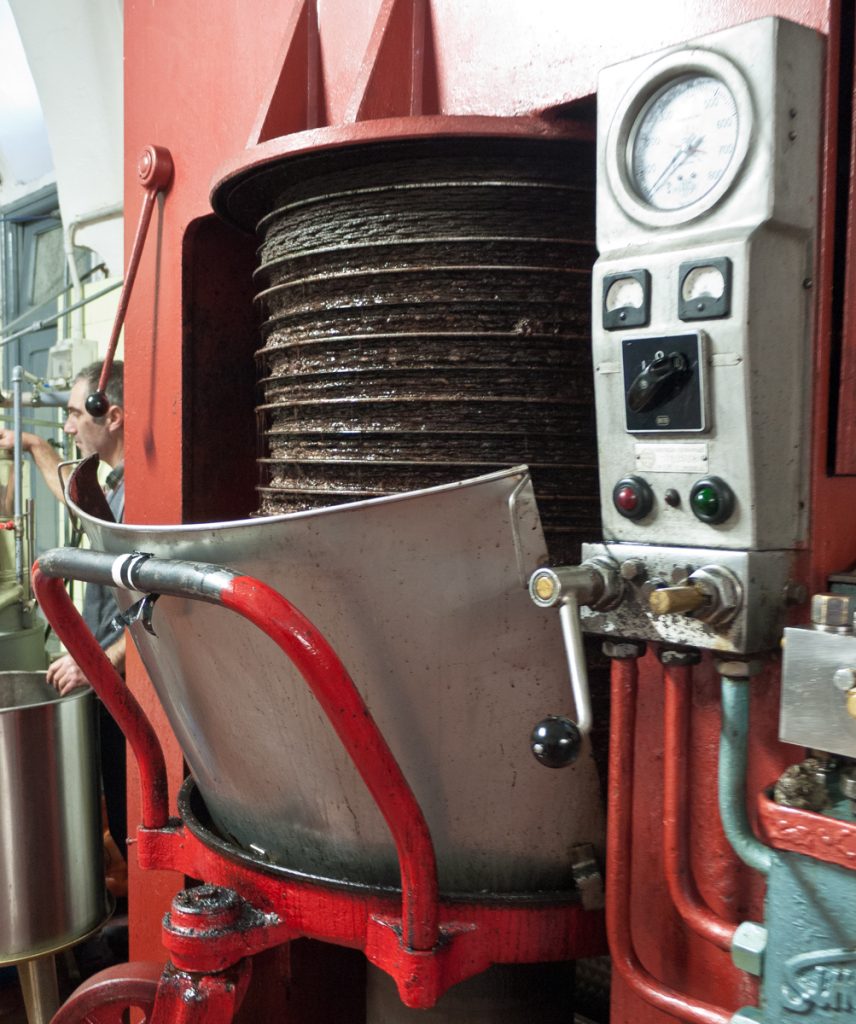
Come si “spremono” le olive? Prima di tutto si macinano; una volta si usavano delle grandi mole in pietra. Poi la pasta di olive così ottenuta si spalmava sui fiscoli, dei dischi di fibre vegetali intrecciate. Qui a destra potete vedere una pila di fiscoli all’interno di un torchio, la macchina che applicando una forte pressione fa uscire l’olio dalla pasta di olive.
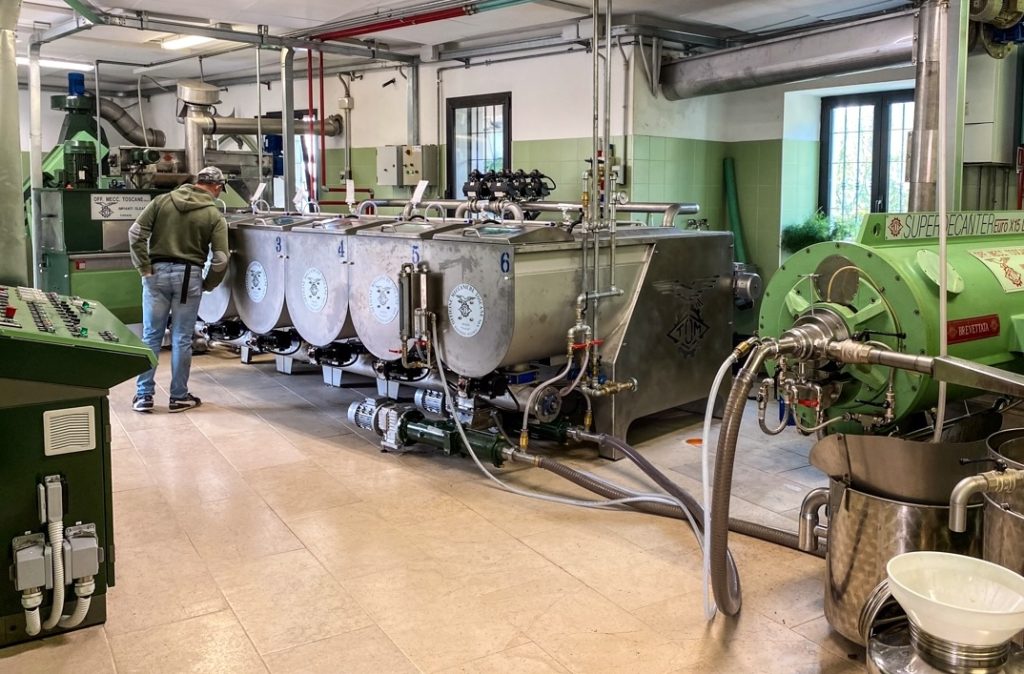
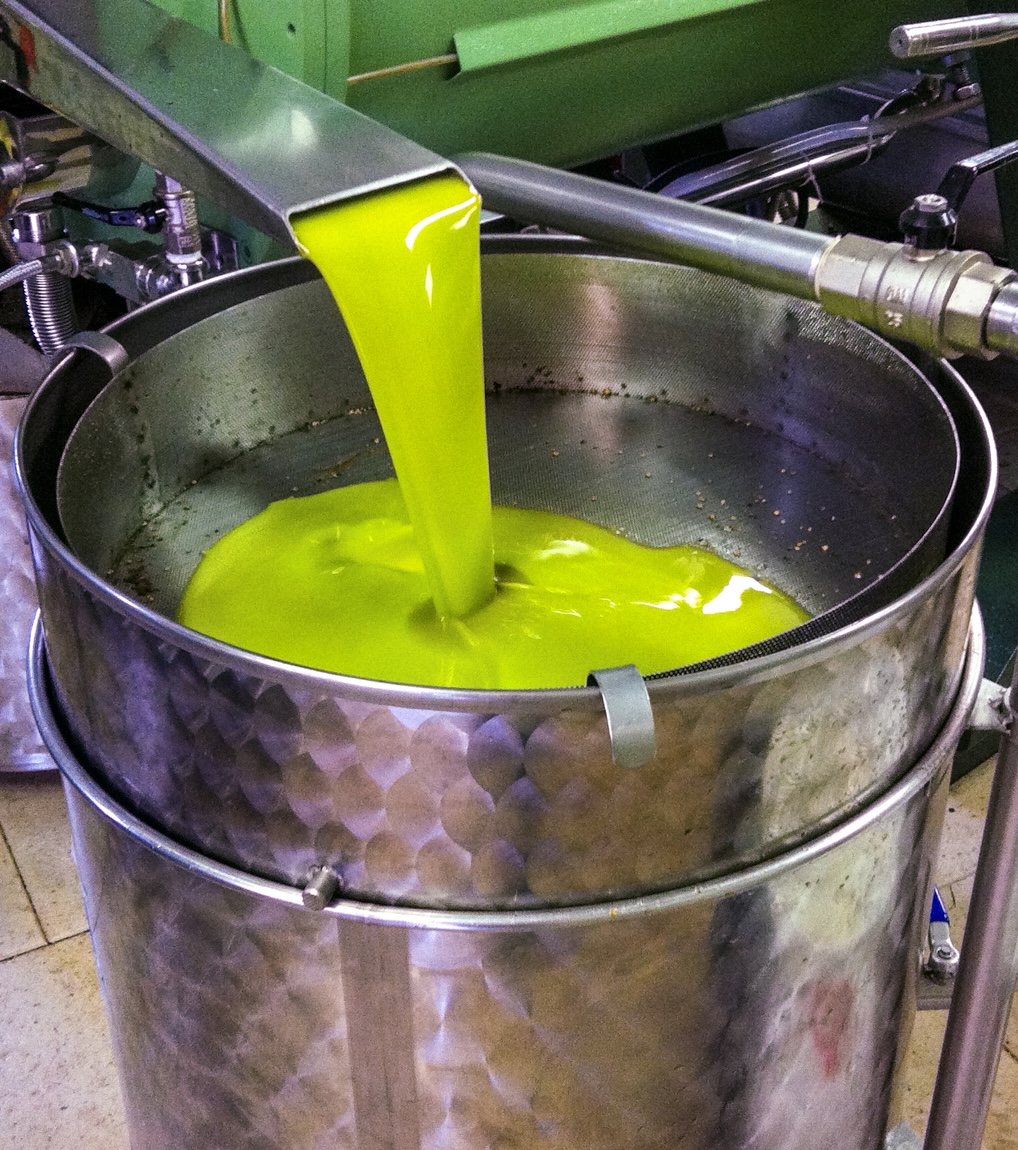
Alcuni frantoi “storici” usano ancora le mole e i fiscoli, ma nei frantoi più moderni si utilizza una tecnica diversa, in cui le olive vengono trasformate in olio in un processo continuo, senza mai esporle all’aria. Le olive vengono immesse in una macchina in cui vengono automaticamente lavate, private delle foglie che possono essere cadute durante la raccolta e macinate. La pasta di olive viene quindi mescolata lentamente in una gramola per favorire la separazione dell’olio dall’acqua, e infine si estrae l’olio per decantazione: l’olio, più leggero dell’acqua, sale in superficie. Un’ultima fase di filtrazione elimina i frammenti di nocciolo eventualmente rimasti, et voilà: abbiamo il nostro olio extravergine di oliva.
A questo punto, se si tratta del nostro olio, lo porteremo a casa in contenitori di plastica o di acciaio, e poi lo imbottiglieremo al più presto. Dopo qualche giorno potremo cominciare a gustare il nostro oro verde: sarà amaro e piccante all’inizio, e poi sempre più fruttato e complesso con il passare del tempo.
Quanto costa l’olio d’oliva?
L’olio extravergine di oliva italiano è sempre più costoso. Le avversità e l’incertezza del clima rendono più difficile la coltivazione; la raccolta delle olive è lunga e faticosa, soprattutto nei terreni aspri e scoscesi che caratterizzano buona parte d’Italia; la frangitura e l’imbottigliamento hanno un costo non indifferente.
Produrre l’olio non è come fare il vino: la resa dell’oliva è molto bassa, in media intorno al 10%. Questo significa che se portiamo 100 chilogrammi di olive al frantoio, con una spesa media di 20 euro circa, otterremo poco più di 10 litri d’olio. Aggiungendo il costo del tappo e della bottiglia, ogni litro d’olio ci costerà almeno 3 euro, senza considerare il tempo e le risorse necessarie per curare l’oliveto, potare gli olivi, fare i trattamenti fitosanitari, raccogliere le olive e imbottigliare l’olio. Non deve sorprendere, quindi, se il prezzo previsto per un buon olio extravergine di oliva prodotto quest’anno in Italia è di 12-14 euro al litro.
Spero che vi sia piaciuto questo viaggio nell’oliveto insieme a me. Voi cosa ne pensate? Vi piace l’olio extravergine italiano, o scegliete alternative più economiche? Scrivetemi!
Alla prossima,
Diana
Glossario
dicembre inoltrato: late December
appezzamento: plot of land, field
staccare: to detach, to pick
frantoio: oil mill
in fiore: blossoming
grappolo: bunch, cluster
impollinazione: pollination
clemente: clement, mild
allegagione: fruit set
maturare: to ripen
siccità: drought
grandine: hail
mensa: kitchen table
virare: to change color
millenario: thousand-year old
decimare: to decimate, to wipe out
microclima: microclimate
fruttato: fruity
bando alle ciance: enough talking
frangere: to break; commonly said of waves: le onde si frangono sugli scogli
spremere: to squeeze
mola: millstone
spalmare: to spread
pila: stack
decantazione: settling
nocciolo: pit, bone
imbottigliare: to bottle
piccante: spicy, hot
scosceso: steep
resa: yield
fitosanitario: phytosanitary, related to plant health
If you’re reading this, you probably love the Italian language, and maybe you also love old Italian movies, as I do. In this article, I outline certain themes that often appear in movies made from the 1940s through the 1970s, such as language differences; the dichotomy between North and South; emigration; and the post-war economic boom. Often, these themes might pass unnoticed without some understanding of the cultural background. The information I provide here lays the basis for a deeper appreciation of the films. For example, when you see a film where a northerner makes a disparaging remark about a southerner, or where an Italian emigrant misses home, you’ll know that these are themes of Italian life and culture, and not just the experience of a single individual.
I illustrate the themes with images from some of my favorite Italian films, which include Italian subtitles translated, in some cases, from dialect. I’ve included links to the cineracconti (photo-stories) on my blog www.liconoscevobene.net, where, if your curiosity is piqued, you can read a narrative of each film, complete with dialogue, scene description, cultural notes, and images.
I write the blog Liconoscevobene.net,* which consists of cineracconti (photo-stories) about classic Italian movies, some famous, some obscure. I started the blog out of a passion for those movies and for the Italian language, as a way to share them with other Italian language students. Using the skills I learned in working on my Masters degree and in many years of Teaching English as a Second Language, I tailor the writing to students’ needs.
The cineracconti are published in serial format. Each puntata (installment) is about 600 English words – about half the length of this post – or ten minutes of film. The blog aims to be a fun and useful tool for Italian language students, especially those who love movies. The puntate published after September 2001 have the Italian and English side by side; prior to that there is a separate PDF document with the English translation.
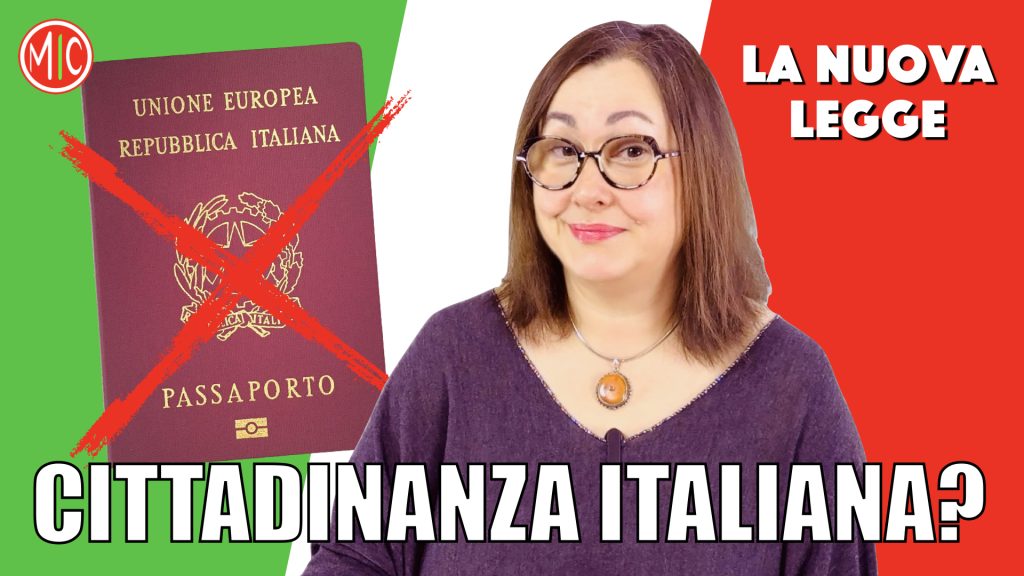
Che cos’è un sogno infranto? È un sogno che non si può realizzare. E questa è la dura realtà per molti cittadini stranieri di origine italiana, che hanno sperato per lungo tempo di ottenere la cittadinanza del Bel Paese. (Se ti stai domandando quale sia il Bel Paese, te lo dico io: è l’Italia!) La nuova legge sulla cittadinanza italiana per molti è una nuova, dura realtà.
Un viaggio attraverso il tempo
Con la vecchia legge, era sufficiente dimostrare di avere un antenato (una persona della tua famiglia vissuta molto tempo fa) italiano per chiedere la cittadinanza italiana. Questo antenato doveva essere nato in Italia dopo il 17 marzo 1861. Per noi italiani questa data è molto importante: è il giorno in cui Vittorio Emanuele II di Savoia, Re di Sardegna e Piemonte, uno dei principali promotori del movimento indipendentista italiano, diventò il primo Re d’Italia. (un re è una persona che governa un paese per diritto di famiglia, come Re Carlo d’Inghilterra). Questa legge era un filo che legava i discendenti degli italiani nel mondo a quel momento unico nel passato, quando l’Italia è diventata un paese unito e indipendente!
Carissimi, anche quest’anno è arrivato il momento fatidico: è febbraio e sui media italiani non si parla d’altro che del Festival di Sanremo. A quanto pare questa è l’edizione numero SETTANTACINQUE! Incredibile, inossidabile, inarrestabile!
Ormai dal 1951, nella cittadina di Sanremo, in Liguria, si tiene il concorso musicale più famoso, più amato e più odiato d’Italia: il Festival della canzone italiana. Oggi il festival si tiene al Teatro Ariston e viene trasmesso in diretta per cinque interminabili serate sul canale televisivo nazionale di RAI 1. Tutti i cantanti più noti, vecchi e giovani, belli e brutti, bravi e meno bravi, sono passati dal palcoscenico dell’Ariston e ci hanno regalato dei tormentoni indimenticabili e anche tantissime canzoni che invece, per fortuna, sono finite in fretta nel dimenticatoio.
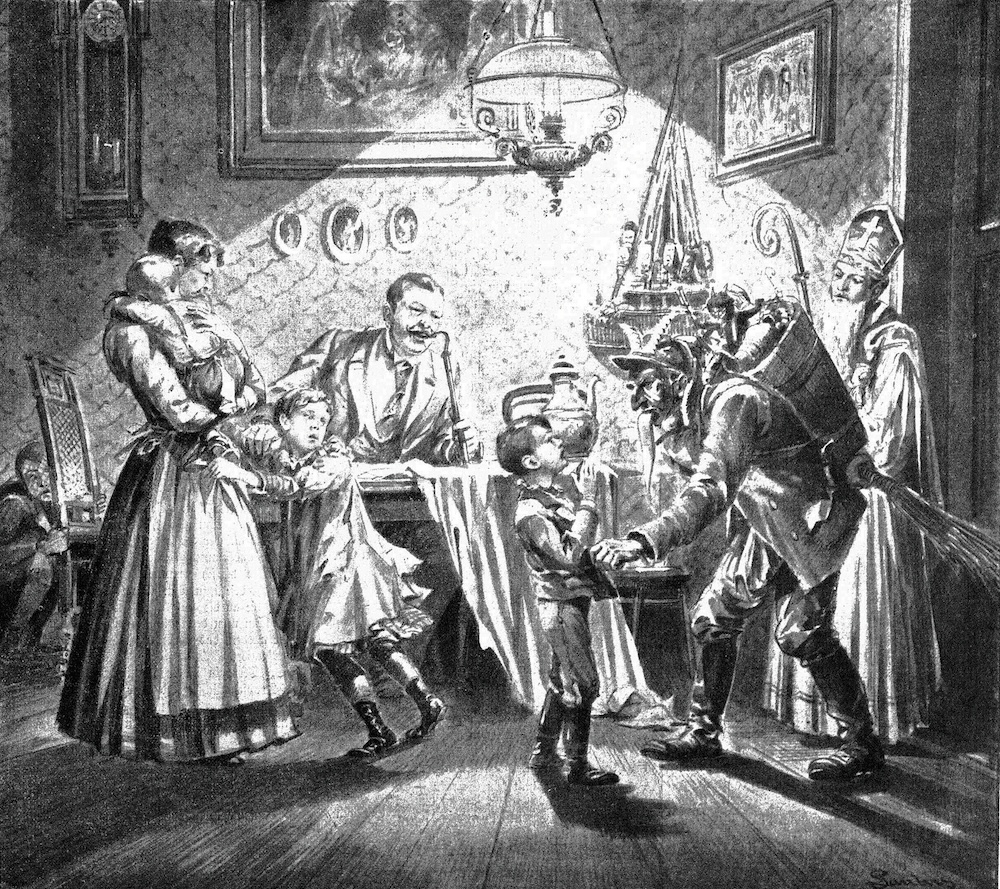
oggi intervengo qui sul nostro blog per parlarvi di una tradizione natalizia particolarissima. Anna mi ha ordinato di raccontarvi di cosa si tratta, così eccomi qua!
Sicuramente sapete già che in ogni regione d’Italia ci sono tradizioni molto diverse, e anche il Natale si festeggia spesso in modo differente. Nell’estremo nord dello stivale, nella regione dell’Alto Adige, al confine con l’Austria, la maggioranza della popolazione è di lingua e cultura tedesca e ha delle abitudini davvero molto speciali.