

• Luoghi d'Italia

    Step into the Renaissance: Inside the Uffizi Gallery in Florence

    Reading Time: 9 minutes

    Some museums display art; others allow you to feel as though you have stepped into the very space where art history took shape. The Uffizi Gallery belongs firmly to the second category: a place where the distance between present and past narrows so much that you begin to sense the Renaissance not as a historical period, but as a living presence unfolding around you.

    The Uffizi Gallery sits right in the centre of Florence, between the river and Piazza della Signoria, yet the moment you step inside, the atmosphere changes. The noise of the city fades, replaced by the soft echo of footsteps on stone floors and the quiet movement of visitors adjusting to the light. The building seems to invite you to slow down, look carefully, and let the Renaissance reveal itself room by room.

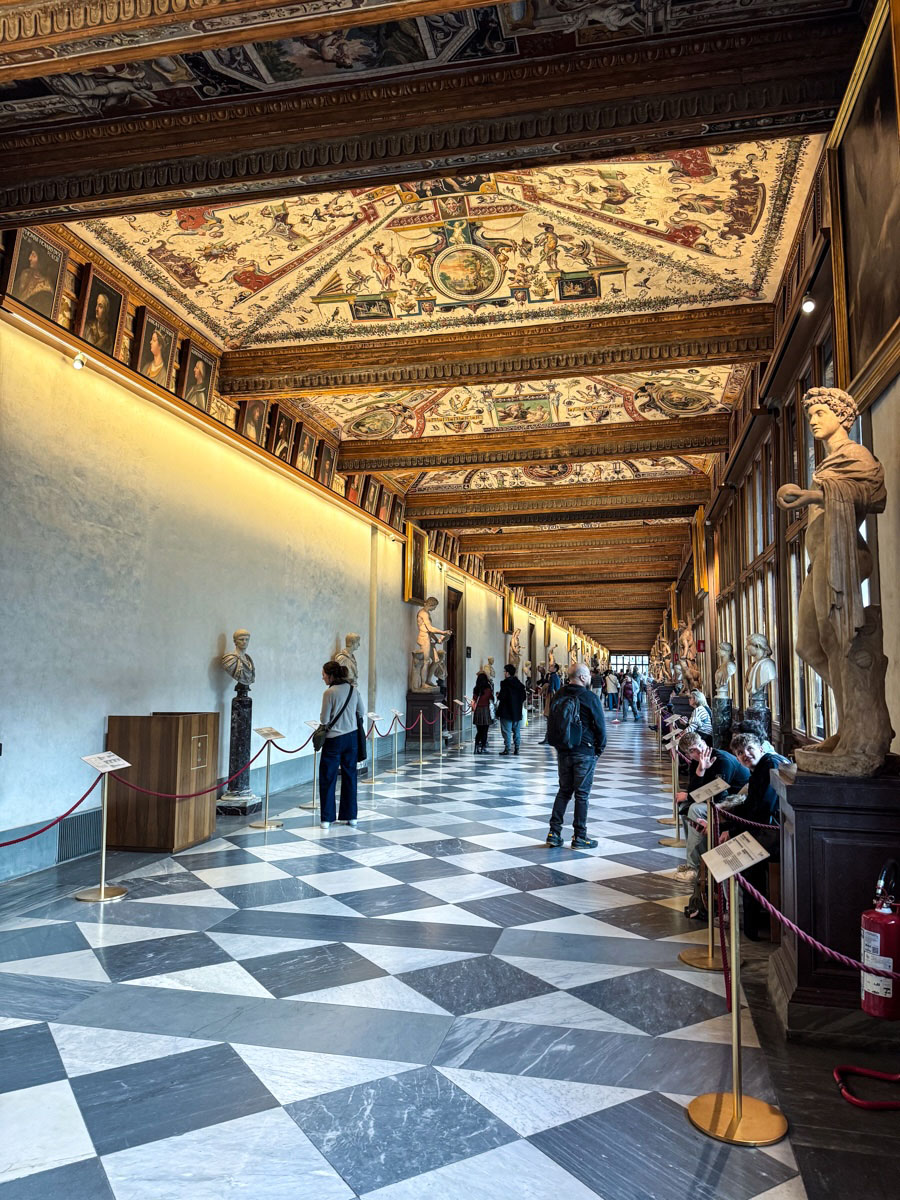
    As you move through the entrance, the building itself guides your attention. The visit begins with a long walk up the staircase and into the corridors designed by Giorgio Vasari in the 16th century. The long sequence of vaulted ceilings and the rhythm of statues and portraits create an atmosphere that encourages you to slow down and prepare for the encounters ahead. Through the windows, Florence appears framed like a series of paintings: Ponte Vecchio, the rooftops, the dome of the cathedral in the distance. It’s a moment of transition, a gentle shift from the present into a different kind of time.

    This is where the word rinascimento — “rebirth” — starts to feel appropriate. It’s not just a historical term; it describes the sense of curiosity and renewal that shaped the art you are about to see.

    Cimabue, Giotto, and the First Steps Toward the Renaissance

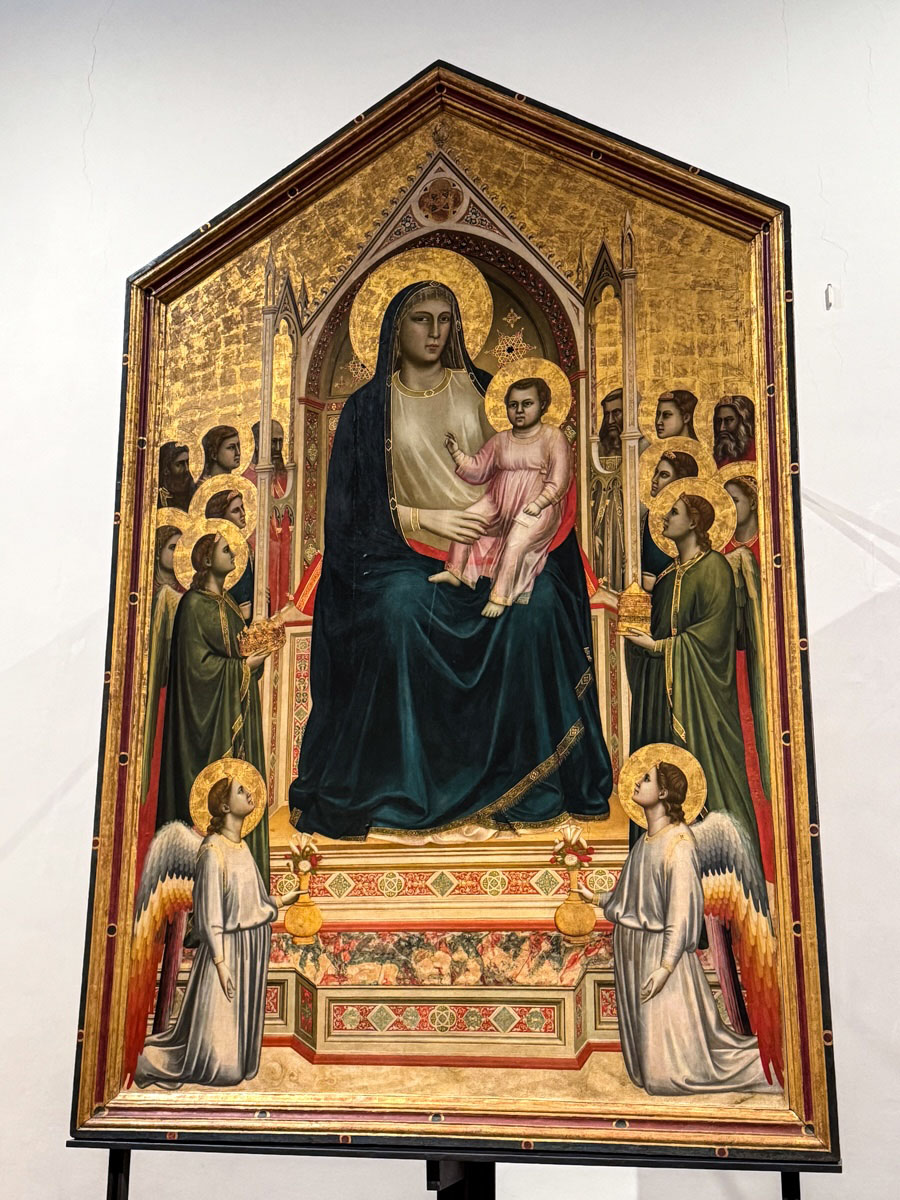
    The Uffizi’s story begins before the Renaissance itself, in the rooms dedicated to the early masters. Here, works by Cimabue and Giotto show the moment Italian painting began to shift away from the rigid, symbolic language of Byzantine art toward something more human, spatial, and emotionally legible. Cimabue’s altarpieces still carry the solemn gold backgrounds and elongated figures of medieval tradition, yet you can sense an early curiosity for volume and presence. His Madonnas feel slightly more grounded, their gestures more intentional, as if the painter were testing how far he could push the boundaries of the sacred image without breaking them.

    Giotto takes that tentative step and turns it into a confident stride. His works in the Uffizi reveal a painter who understood space not as a decorative surface but as a stage where human stories unfold. Faces gain weight and individuality, drapery falls with believable gravity, and gestures begin to express real emotion rather than symbolic convention. Standing before these panels, you can feel the Renaissance gathering momentum long before Botticelli or Leonardo appear.

    Botticelli: Where Mythology and Light Converge

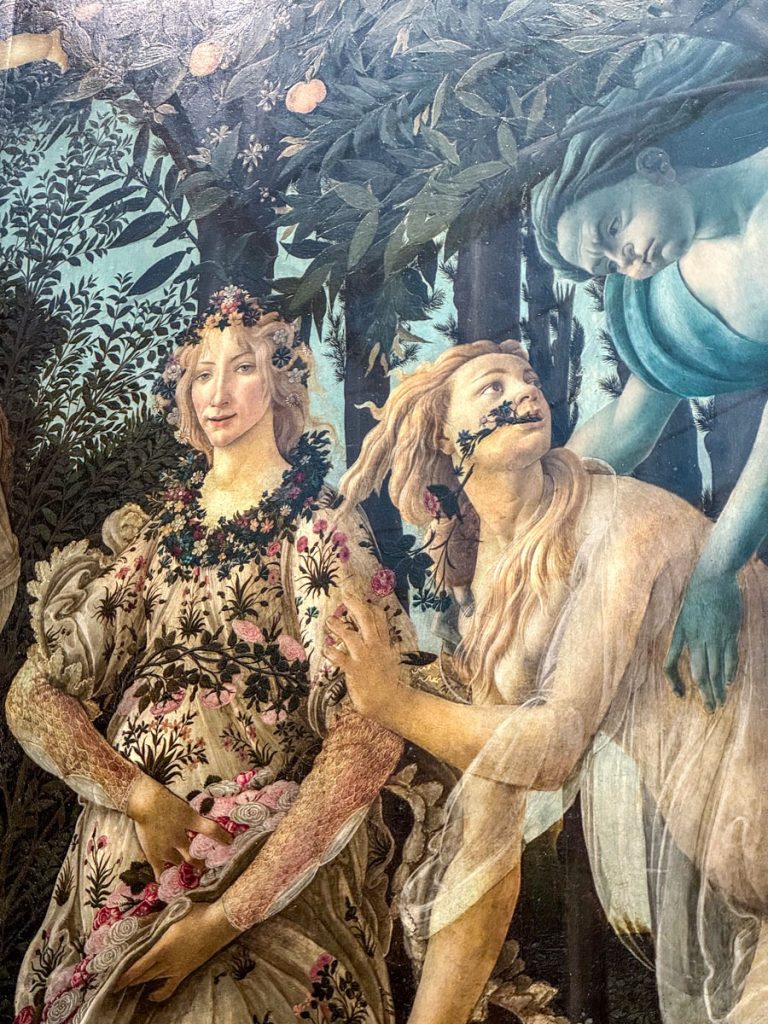
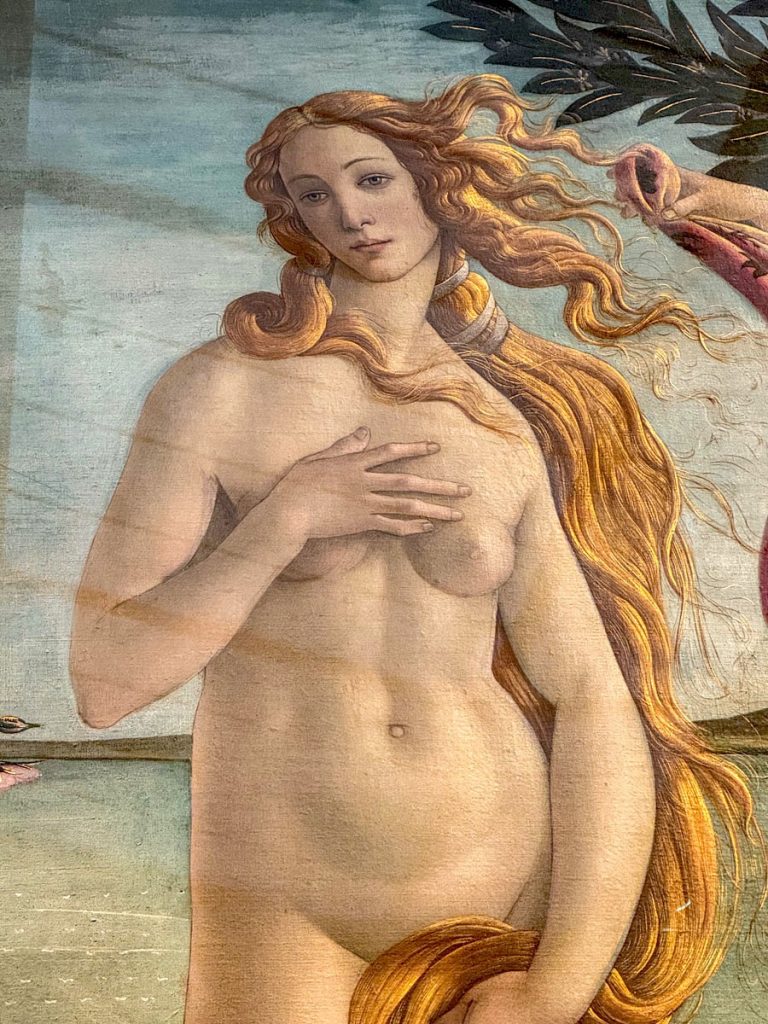
    The transition into the Botticelli rooms is almost imperceptible, yet unmistakable. Standing before the Birth of Venus or Primavera, you realize how inadequate reproductions are: the paintings are larger, more delicate, and more complex than memory suggests. The figures appear suspended in a world where myth and nature coexist. Botticelli’s idea of bellezza — beauty as harmony and proportion — becomes clearer when you can stand close enough to see his fine brushwork.

    What makes these paintings unforgettable is not only their beauty but the physical experience of encountering them. The room is almost always crowded, a constant flow of visitors trying to find a clear view, yet the moment you finally stand in front of these iconic masterpieces, everything else seems to recede. Even with people shifting and cameras clicking, there is a brief, thrilling instant when the paintings seem to belong only to you — a private encounter with images that have shaped the world’s idea of beauty for centuries.

    Michelangelo and Leonardo: Two Opposing Visions of Creation

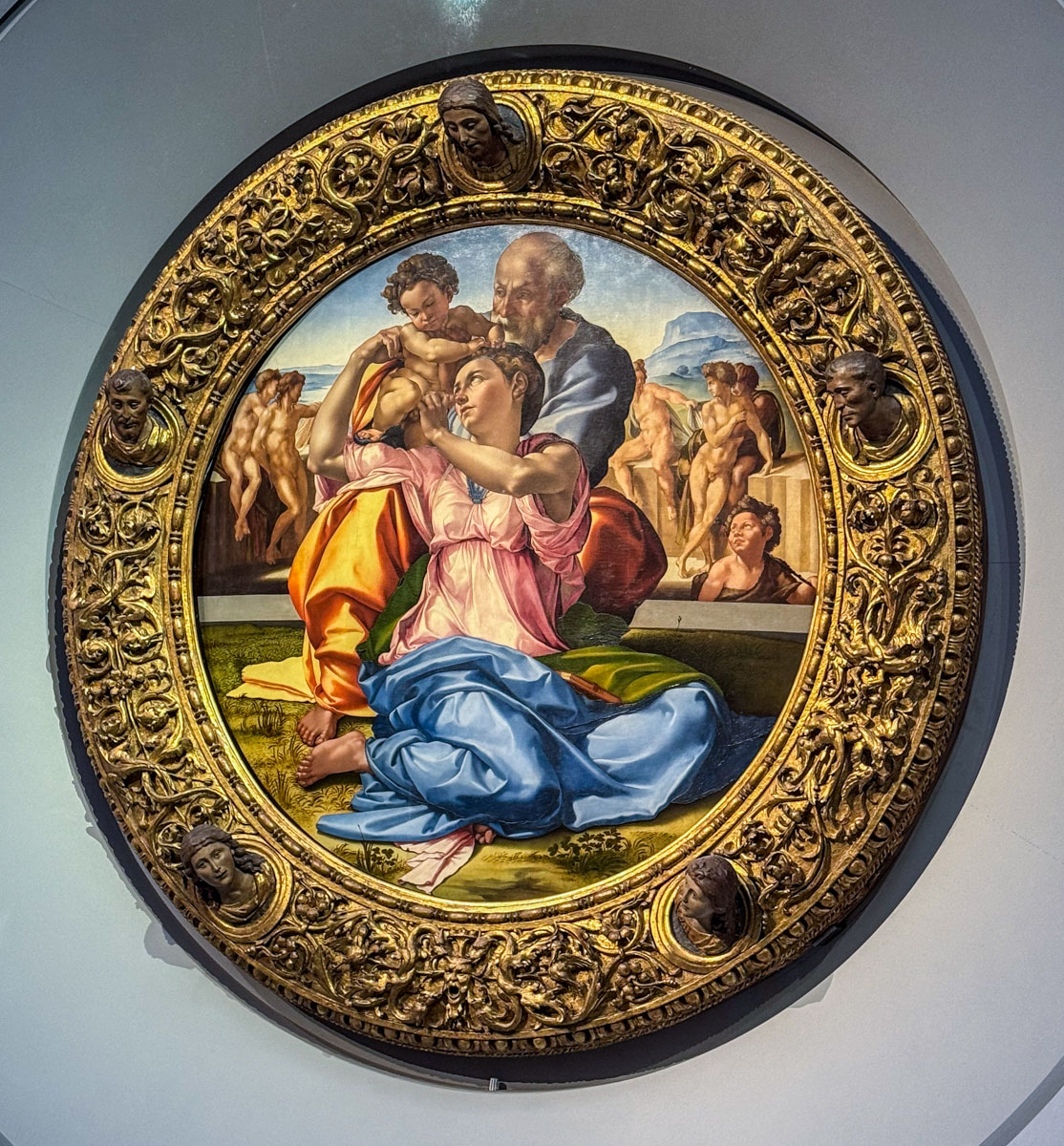
    Michelangelo - Tondo Doni

    Michelangelo is represented in the Uffizi by a single work of extraordinary intensity: the Tondo Doni, the only surviving finished panel painting by his hand. Its circular format seems to concentrate the energy of the scene, drawing the figures into a tight, sculptural knot. Mary twists in a powerful, almost athletic movement as she lifts the Christ Child. The colors are vivid, the contours sharply defined, and the bodies carry the weight and tension of carved marble — a reminder that Michelangelo approached painting with the mind and discipline of a sculptor. Even the enigmatic group of nudes in the background feels like a meditation on the human form, a bridge between the spiritual subject and the artist’s lifelong fascination with anatomy and physical strength. This single painting is enough to show how radically Michelangelo reshaped the language of Renaissance art through movement, tension, and the unmistakable vitality of the human body.

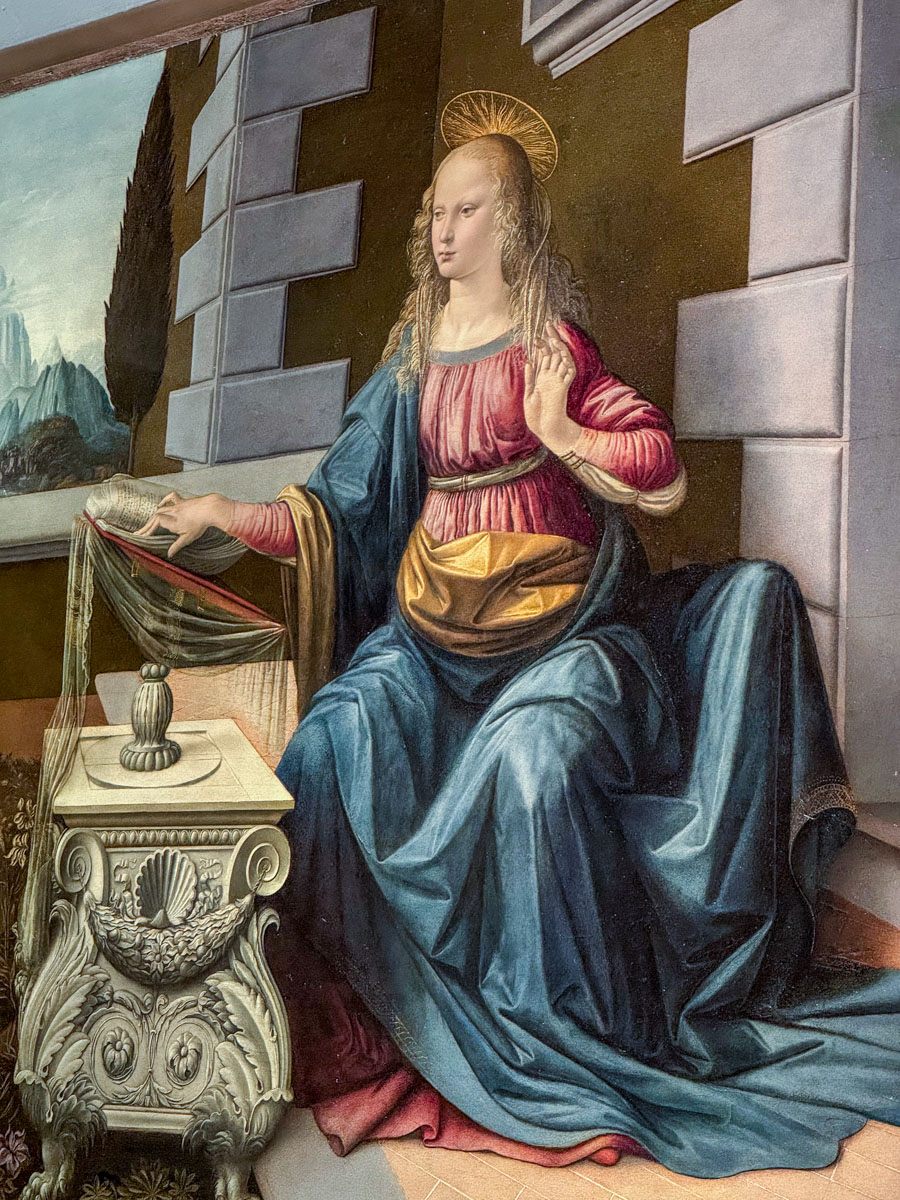
    Leonardo da Vinci - Annunciazione

    Leonardo’s paintings in the Uffizi feel like moments suspended between observation and imagination. His Annunciazione is a perfect example: the angel approaches with a quiet, almost hesitant grace, while Mary turns toward him with a gesture so subtle it seems to unfold in real time. The landscape behind them dissolves into soft blues and distant light, a world built from Leonardo’s fascination with nature and atmosphere. Even in this detail of the Madonna’s posture, you can see the delicacy of his sfumato, that gentle transition between light and shadow that gives her expression its calm, inward depth.

    Nearby, the Adorazione dei Magi reveals a different side of Leonardo: restless, experimental, and endlessly curious. The unfinished surface exposes his thought process, the way he layered gestures, architecture, and swirling groups of figures to create a composition that feels alive even in its incomplete state. Together, these works show Leonardo searching for a new visual language, one that blends scientific observation with emotional nuance. They form a bridge between the clarity of the early Renaissance and the psychological complexity that later artists would explore in their own ways.

    Raphael and Caravaggio: Balance and Contrast

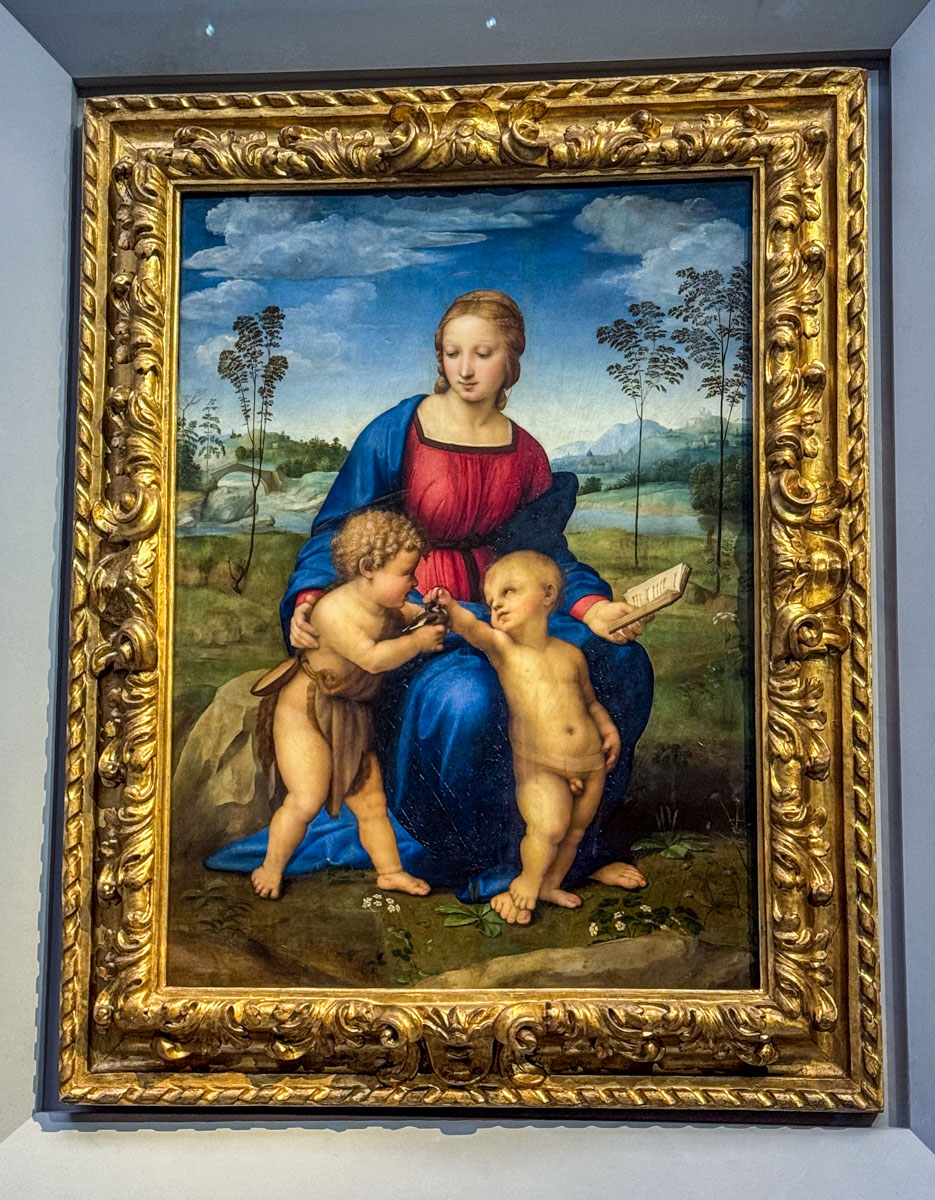
    Raffaello - Madonna del Cardellino

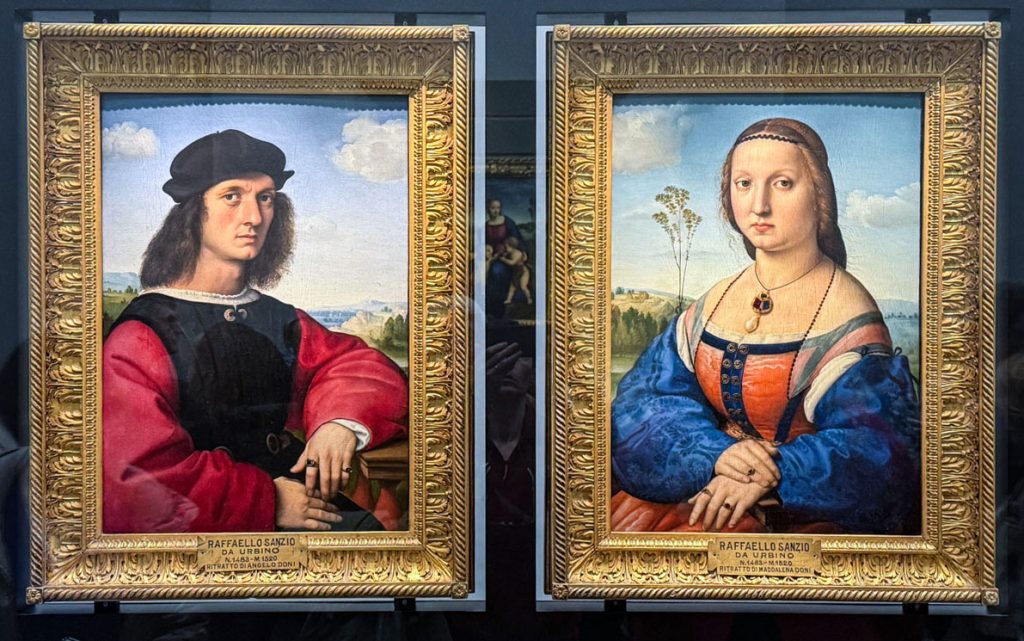
    Raphael’s portraits offer a moment of quiet clarity. Their elegance lies not in ornament but in the psychological depth of the sitters, who seem to inhabit the space with a naturalness that feels surprisingly modern. This quality becomes especially clear in the Madonna del Cardellino, where the tenderness between Mary, the Christ Child, and the young John the Baptist is expressed through gentle gestures and a serene landscape that seems to breathe around them. The painting embodies the Renaissance ideal of misura — balance, proportion, and thoughtful restraint — yet it also reveals Raphael’s gift for creating scenes that feel intimate rather than idealized, as if the viewer were quietly invited into a private moment.

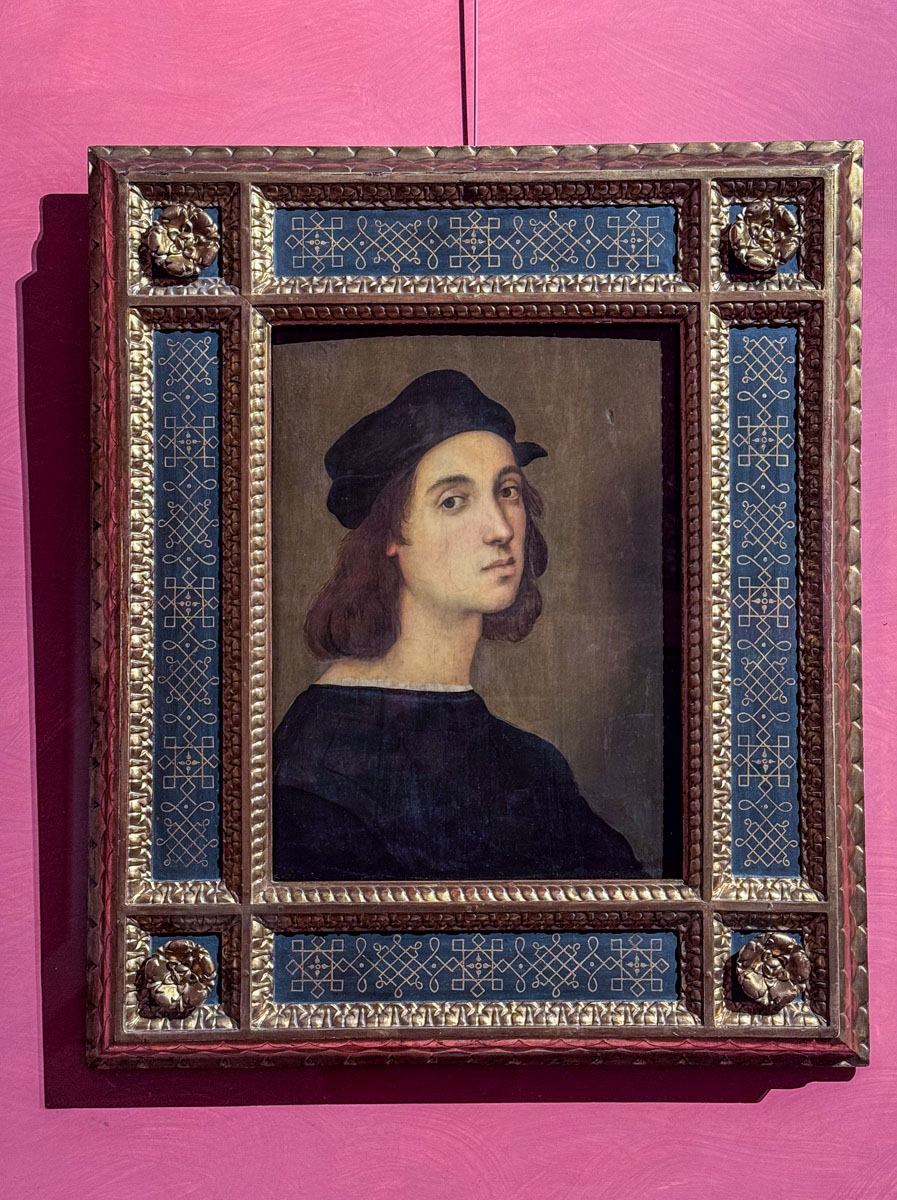
    Raffaello - Autoritratto

    Raphael’s self‑portrait adds another layer to this experience: a young artist looking out with calm confidence, aware of his place within the evolving language of Renaissance art. These works form a small but powerful constellation within the Uffizi, offering a pause between the intensity of Leonardo and the drama of Caravaggio — a space where clarity, balance, and human presence quietly take center stage. Read more about Raphael in our article L’arte sublime di Raffaello: la Dama col liocorno (in Italian).

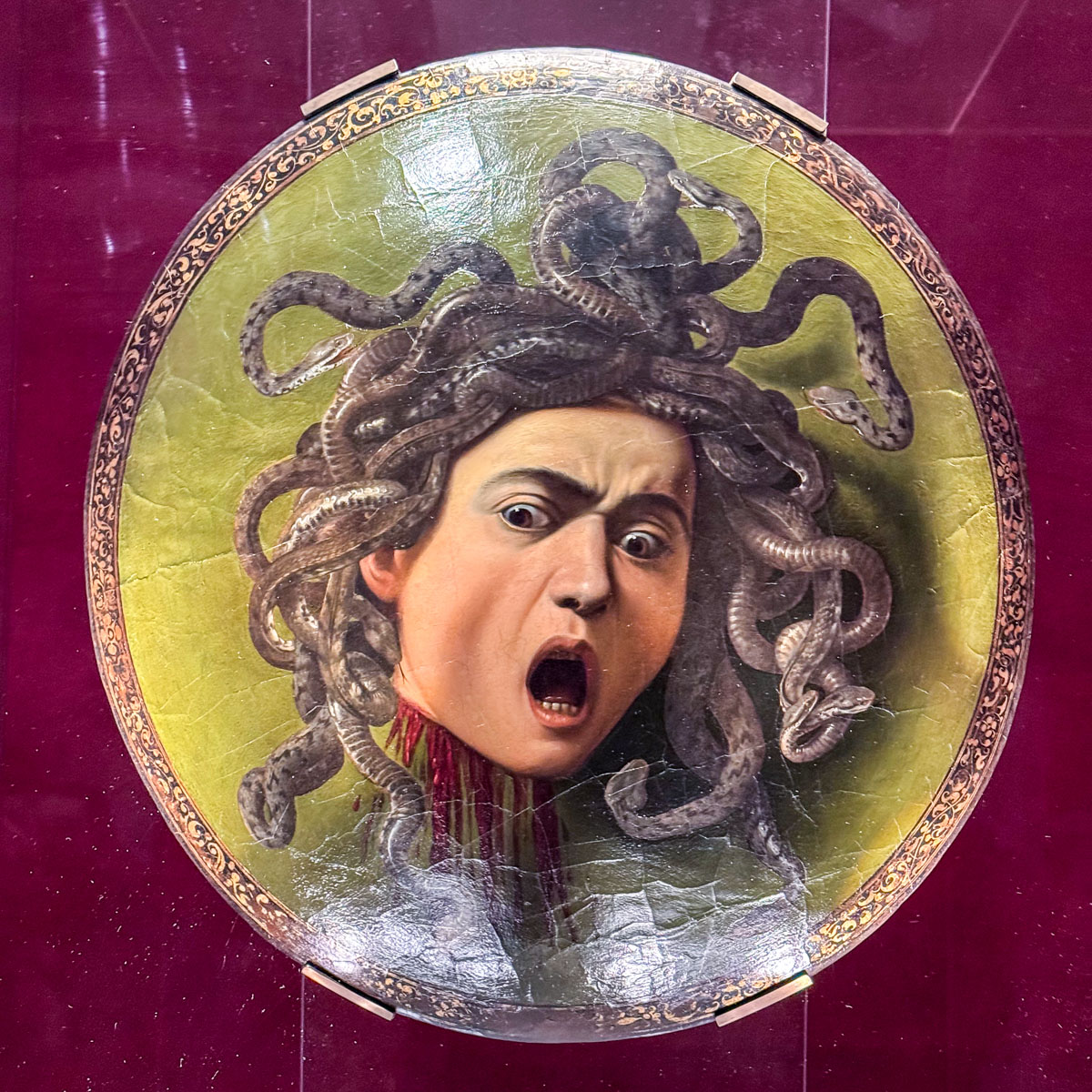
    Caravaggio - Medusa

    Caravaggio’s rooms in the Uffizi feel like a sudden plunge into a different emotional temperature. His paintings confront you with a world where light slices through darkness and human drama is stripped of every decorative veil. His Medusa, painted on a ceremonial shield, is one of the most unsettling images in the museum: the moment of decapitation frozen with terrifying immediacy, the head still alive in its final instant of shock. Caravaggio turns a myth into something disturbingly real, using his own face as the model and letting the chiaroscuro (contrast between light and darkness) carve out every detail with surgical precision.

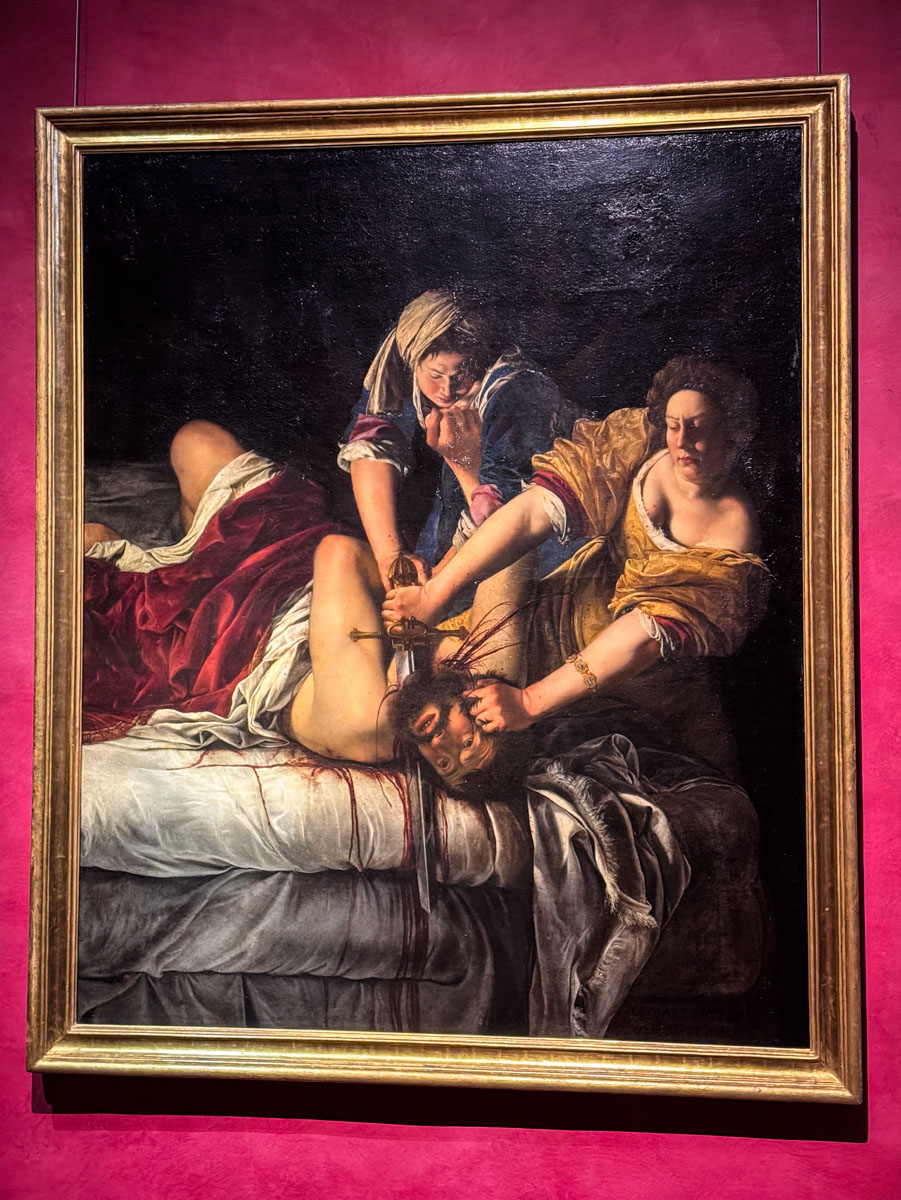
    Nearby, Giuditta e Oloferne pushes this realism even further. Here the dark background heightens the drama, pulling the figures into sharp relief. The scene is intimate and brutal, illuminated by a single, merciless beam of light that exposes both the violence of the act and the psychological tension between the figures. Caravaggio’s genius lies in the way he makes you feel the weight of the moment, the moral complexity, the raw humanity beneath the biblical story. Standing before these works, you sense how radically he broke with tradition, opening a path that would redefine European painting for centuries.

    Seeing Raphael and Caravaggio in close succession highlights how the Renaissance gradually opened the way to new forms of realism and emotional intensity. This is where the Italian word “umanesimo” — humanism — feels particularly relevant. The Renaissance was built on the belief that human experience, emotion, and intellect deserved to be at the center of artistic creation, and the Uffizi’s layout reflects that philosophy.

    Learn Italian with Art

    Passionate about art? You might enjoy our book and video course Learn Italian with Art – The Language of Renaissance Masterpieces, where we analyze six works from Italian Renaissance masters. A different way to improve your Italian, for late beginners and beyond.

    Learn more and watch sample videos on our Website.

    Practical Information for Your Visit

    Tickets

    The Uffizi Gallery is extremely popular, and many unofficial websites sell overpriced “priority” tickets or tours that look like the only option. To avoid this, always book through the official Gallerie degli Uffizi website:

    👉 Official tickets: https://www.uffizi.it/biglietti

    This is the only site that offers standard prices and timed entry without extra fees.

    What you’ll find on the official site

    • Free entry on the first Sunday of the month (very crowded)
    • Timed-entry tickets for the Uffizi
    • Combined passes (Uffizi + Pitti Palace + Boboli Gardens)
    • Reduced tickets for EU visitors aged 18–25

    Duration

    A focused visit takes about two to three hours, but spending half a day allows you to explore at a comfortable pace and revisit the rooms that interest you most.

    Best Times

    Weekday mornings and late afternoons tend to be quieter. The low season (November to February) offers a more relaxed experience.

    Accessibility

    The museum provides accessible routes and elevators. It’s a good idea to check the official website for updated information.

    Audio Guides

    Given the number of important works, an audio guide or a guided tour can help you navigate the collection without feeling overwhelmed.

    A Pause with a View

    The rooftop café offers a terrace overlooking Florence — a pleasant break and a good opportunity to take in the city from above.

    A Brief Historical Note

    The Uffizi began as a practical project rather than a museum. In 1560, Cosimo I de’ Medici commissioned Giorgio Vasari to design a new administrative complex for Florence — the uffizi, or “offices”. The long, narrow courtyard between the two wings was intentionally aligned with the river to create a sense of openness in a dense medieval city. Over time, the upper floor became a private gallery where the Medici displayed portraits, ancient statues, and the works of contemporary Florentine artists.

    When the Medici dynasty ended, their last heir, Anna Maria Luisa de’ Medici, signed the Patto di Famiglia, ensuring that the family’s artistic collections would remain in Florence “for the ornament of the State, for the utility of the Public, and to attract the curiosity of Foreigners”. This gesture transformed the Uffizi from a private treasure house into a public institution.

    A visit to the Uffizi is an opportunity to see some of the most influential works of Western art in their original context. When you finally step back into the streets of Florence, the experience lingers in a way that is difficult to articulate. Perhaps it is a color, a gesture, or a face that stays with you; perhaps it is the realization that the Renaissance is not a distant chapter in a textbook but a living conversation that continues each time someone stands before a painting and truly looks.

    At the Uffizi Gallery, there is a lot more that will catch your eye, of course. Masaccio, Beato Angelico, Piero della Francesca, Mantegna, Tiziano, Tintoretto, Paolo Veronese; a stunning collection of self-portraits; Rembrandt and other Dutch and Flemish masters; a room devoted to Painting by Candlelight.

    Tell me about your expectations and experience. Buona visita!

    Diana

    Related Videos from our Series Learn Italian with Art

  • Luoghi d'Italia

    Arena di Verona: The Most Italian Place on Earth

    Reading Time: 6 minutes
    Facts about Arena di Verona

    I was born and raised in Verona, and I spent most of my adult life here. It’s a small city with a big history and an even bigger landmark to remind us of it: the Arena, a 2,000-year-old amphitheater, one of the best-preserved Roman buildings in the world. The Arena withstood time, fires and earthquakes, and is still standing today on our largest square, Piazza Bra, next to the City Hall. I remember a time when cars could circle the Arena like a roundabout, and I never thought much of it: it was standing there as it had always been, smog-stained and massive.

    Imagine my surprise when I discovered that the Arena di Verona had become The Most Italian Place on Earth™. Yes, that’s a trademark. We have a trademarked Roman monument now.

    What Does “Italian” Even Mean Here?

    The Arena di Verona Foundation, the institution that manages the amphitheater and the events organized inside of it, registered the trademark in 2023. It sounds bold, poetic, and slightly bizarre — which, to be fair, is already quite Italian. All in all, it has a nice ring to it, but I couldn’t help but wonder about the reasons behind this decision, and what they meant by Italian.

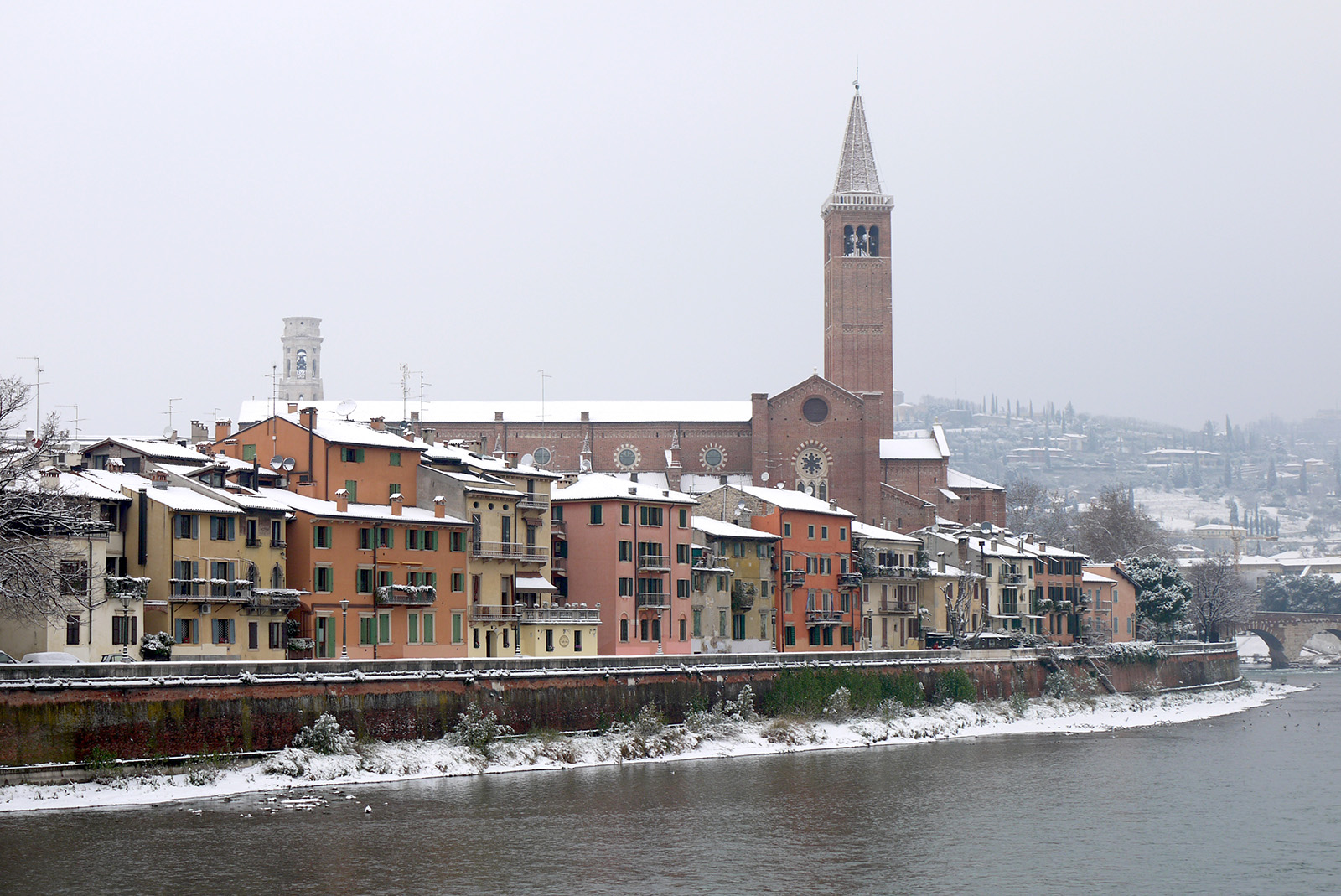
    Verona a few winters ago

    Verona has never struck me as stereotypically Italian. We’re in the north, between the fog of the Po Valley and the German‑speaking mountains of Trentino‑Alto Adige. Winters can be dull and gray, summers are humid, and we even have snow every now and then. Not exactly the postcard Italy of lemon trees and turquoise skies.

    The people of Verona don’t really fit the stereotype either, and never looked particularly Italian to me. I never thought of myself as very Italian! Many of us are reserved and suspicious, not at all warm and cheery like real Italians are supposed to be. We only open up with old friends — or after a Spritz or two.

    If Verona isn’t stereotypically Italian, why would the Arena claim that title? What makes it so Italian? Short answer: ancient Rome and opera. The Arena is where they collide.

    Which is more Italian, the Arena or the Colosseum?

    The Arena is essentially a scaled-down Colosseum, but with some crucial differences. It’s built from local red ammonitic limestone rather than Rome’s travertine, giving it a warmer, rosier glow at sunset. It’s smaller, more intimate, and — crucially — it’s still alive.

    Where the Colosseum is a ruin, the Arena is a venue. Where the Colosseum is a symbol, the Arena is a habit. Where the Colosseum is history, the Arena is experience. This is where the “Italian” part begins to make sense.

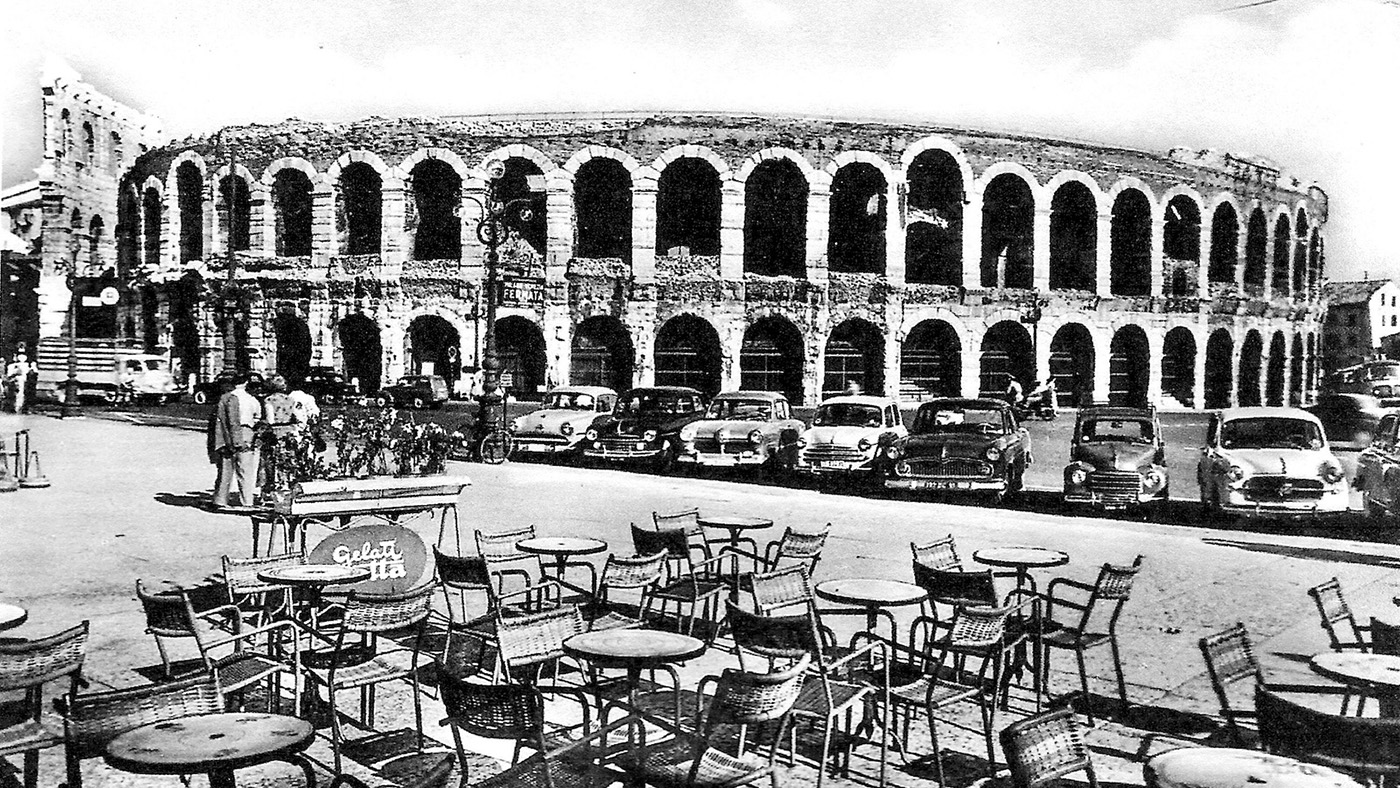
    Verona's Arena, historical photo
    When Piazza Bra was open to car traffic: historical photo of the Arena di Verona

    Opera: Italy’s Emotional Engine

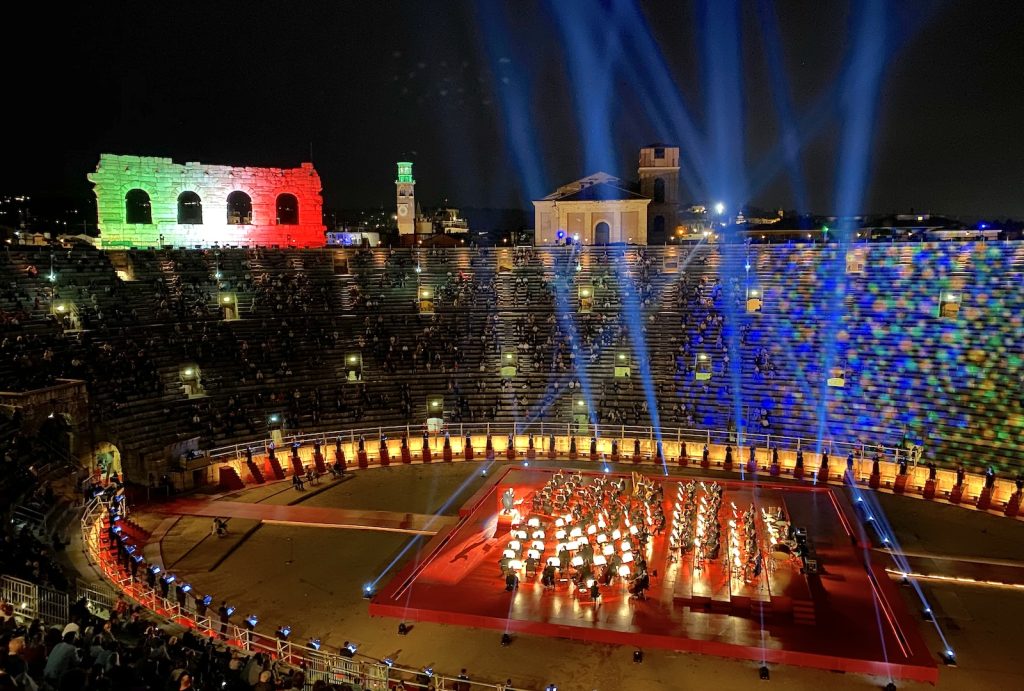
    If ancient Rome gave the Arena its body, opera gave it its soul. In the summer, the Arena di Verona opera season fills the amphitheater with up to 10,000 people every night — locals, tourists, opera lovers, opera skeptics dragged along by opera lovers — all waiting for the lights to go down. Cushions appear on the stone steps, the orchestra tunes, candles flicker, and the magic begins.

    Opera is the only sport where Italians cheer for heartbreak, and the Arena is its stadium. Opera was never meant for the elite: it was a popular form of entertainment. This is where Verdi and Puccini feel less like musical legends and more like friends and relatives. Where even people who claim to “hate opera” end up shedding a tear during the most compelling arias. If there is a place where Italy performs its own identity — loudly, dramatically, unapologetically — it’s here.

    For learners of Italian, a night at the opera is a linguistic gift, when words like amore, notte, cuore, vendetta stretch across the amphitheater in long, generous vowels.

    Why Trademark “The Most Italian Place on Earth™”?

    Because Italy is a brand, and the Arena di Verona is its logo.

    The trademark is not about nationalism; it’s about storytelling. Verona needed a hook — something that captured the Arena’s unique blend of history, emotion, and spectacle. “The Most Italian Place on Earth™” is a provocation, a wink, a promise. It says: If you want to understand something about Italy, come sit on these stones for a night. And honestly? They’re not wrong.

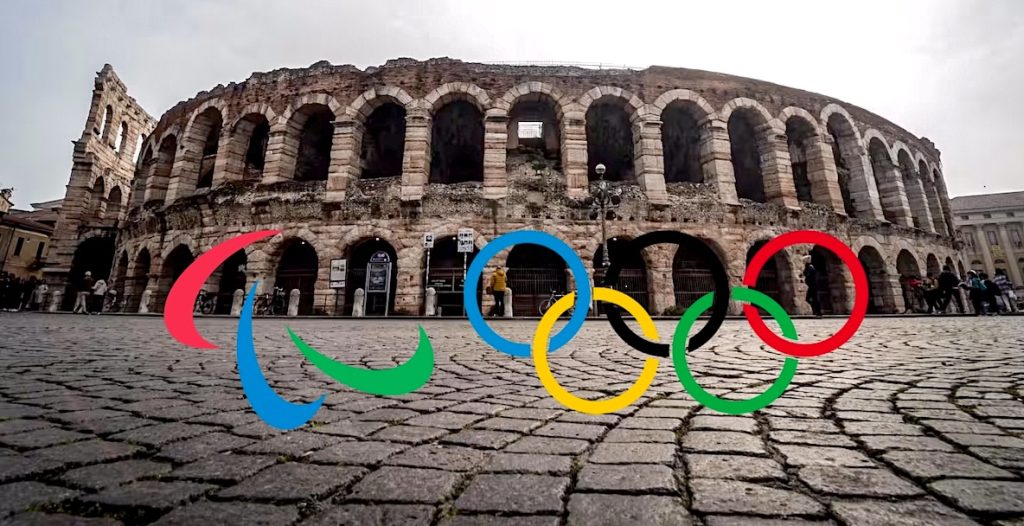
    The Arena recently hosted the closing ceremony of the 2026 Winter Olympics and the opening ceremony of the Paralympics. Look back on these events in this post.

    A Guide to the Arena di Verona: Practical Tips for Visitors

    Even the most poetic amphitheater requires logistics. Here’s what you need to know if you are planning a night at the Arena:

    Best time to visit the Arena di Verona: the opera season goes from June to September, with approximately four shows every week. Check the updated calendar on the official website. Other events, including major pop and rock concerts, take place throughout the year, except for the coldest months.

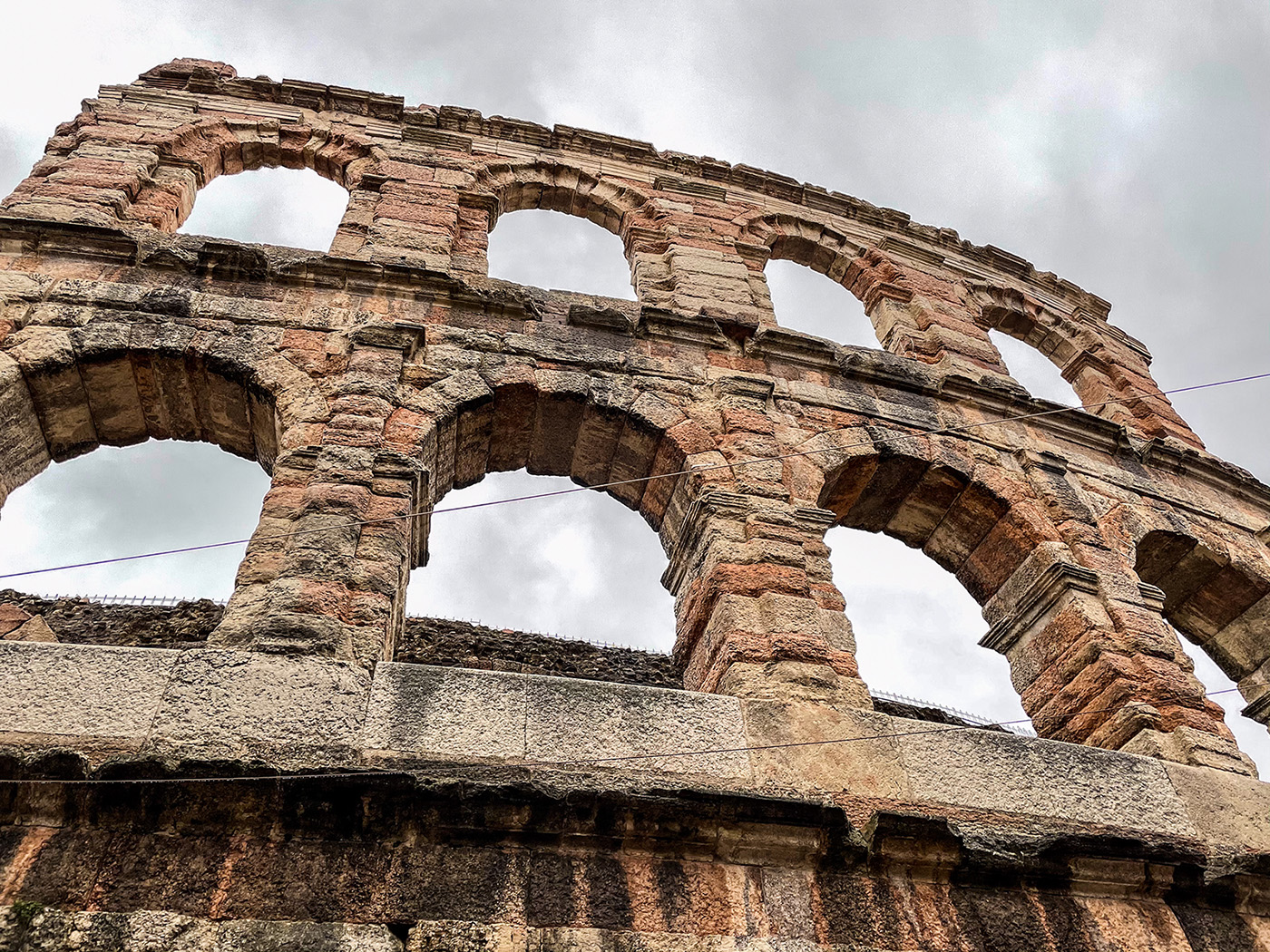
    The “wing” of the Arena

    Where to sit: once upon a time, people with tickets for the stone steps would queue for hours to get a decent spot, but now all seats are numbered, and several sectors include padded seats. Remember: central sectors are great if you want to see the entire stage and all the choreography, but the acoustics is much better on the sides. There are no amplifiers at the opera, so it will all depend on how loud the singers are.

    The gradinata — the stone steps — is the most authentic (and least forgiving) option, while the platea offers more comfortable seats. Here, a poltrona will feel luxurious compared to the ancient limestone, and a poltronissima will guarantee a more central view of the stage. Your ticket will list a settore, fila, and posto, plus the ingresso (entrance) you should use to enter. And whatever you choose, don’t forget the most important word of all: cuscino (cushion). Bring one or rent one from the Red Cross staff if you opt for the stone steps (Gradinata numerata, Sectors 4, 5 and 6).

    What to bring: Water, a light jacket, an umbrella for that fickle summer weather.

    What to expect: long evenings, scorching heat and/or dramatic weather, and an earworm or two.

    If you are learning Italian, the Arena is a listening lab disguised as a monument. Before the show you will hear people muttering Che caldo! (It’s so hot!) or politely squeezing past exchanging Permesso (Excuse me) and Prego, passi pure (Please, go on). Once seated, someone invariably announces Si vede benissimo da qui! (You can see very well from here), even when it isn’t true. During the interval it becomes a chorus of Andiamo a prendere qualcosa? (Shall we go get something?) and C’è una fila lunghissima. (there’s a very long queue). And when the final note fades, the whole crowd spills into Piazza Bra whispering Che serata! (What a night!), as if they’ve all shared the same dream.

    Couldn’t find a ticket for your favorite show? Listen from outside! Go near the Arena’s ala (wing, the only remaining part of the outer circle) for a free musical experience.

    You can also just visit the monument during the day: it’s open Tuesday to Sunday from 9 am to 7 pm, except on opera/concert days. Check the calendar on this page. The ticket is 12 euro.

    Best spritz near the Arena: locals avoid the outdoor bars and restaurants in Piazza Bra. Look just a little further and walk to Via Roma, in front of the Teatro Filarmonico, or to Via Oberdan. Central bars are always packed, so just stand outside, if you can: it’s a totally Italian thing to do.

    So… Is the Arena di Verona Really the Most Italian Place on Earth™?

    After a lifetime of walking past it, I think I finally understand the trademark.

    It’s not about geography or stereotypes, it’s about layers — of history, of emotion, of people, of language. The Arena is one of the few places where you can hear three Italians at once: the musical Italian of opera, the everyday Italian of the crowd, and the soft Veneto inflections of Verona.

    It’s about a place that has been applauded for twenty centuries and still isn’t tired. It’s about the moment when thousands of strangers fall silent together, waiting for the first note. If Italy has a heartbeat, it echoes inside the Arena di Verona.

    Diana

  • Cultura e società

    L’arte sublime di Raffaello: la Dama con liocorno

    Reading Time: 6 minutes

    Mi hanno sempre affascinato i ritratti; ho sempre amato visitare musei e pinacoteche alla ricerca di quei volti che arrivano da un tempo lontano, e osservare anziani signori con barba e nobili dame che sembrano nascondere segreti nelle pieghe dei loro vestiti. Quello che cerco di incontrare è il loro sguardo, come se fissare quelle pupille dipinte potesse farmi attraversare il tempo e arrivare in quelle stanze di pietra con finestre su montagne e fiumi. Il ritratto che amo di più è ora visibile al Metropolitan Museum of Art di New York, dove è stata inaugurata Raphael: Sublime Poetry, la prima mostra negli Stati Uniti interamente dedicata a Raffaello. Visitabile fino al 28 giugno 2026, la mostra raccoglie 237 opere, di cui circa cinquanta provengono da musei italiani. Un’occasione imperdibile per incontrare la poesia e l’arte sublime di Raffaello.

    Oggi voglio accompagnarti dentro uno dei dipinti più affascinanti di Raffaello: un ritratto elegante, misterioso e pieno di particolari da osservare con attenzione. E già che ci siamo, impareremo anche alcune parole utili in italiano, perfette per parlare di bellezza e di opere d’arte con più sicurezza!

    Ritratto, paesaggio, sfondo, loggiato, grembo

    Dama col liocorno di Raffaello
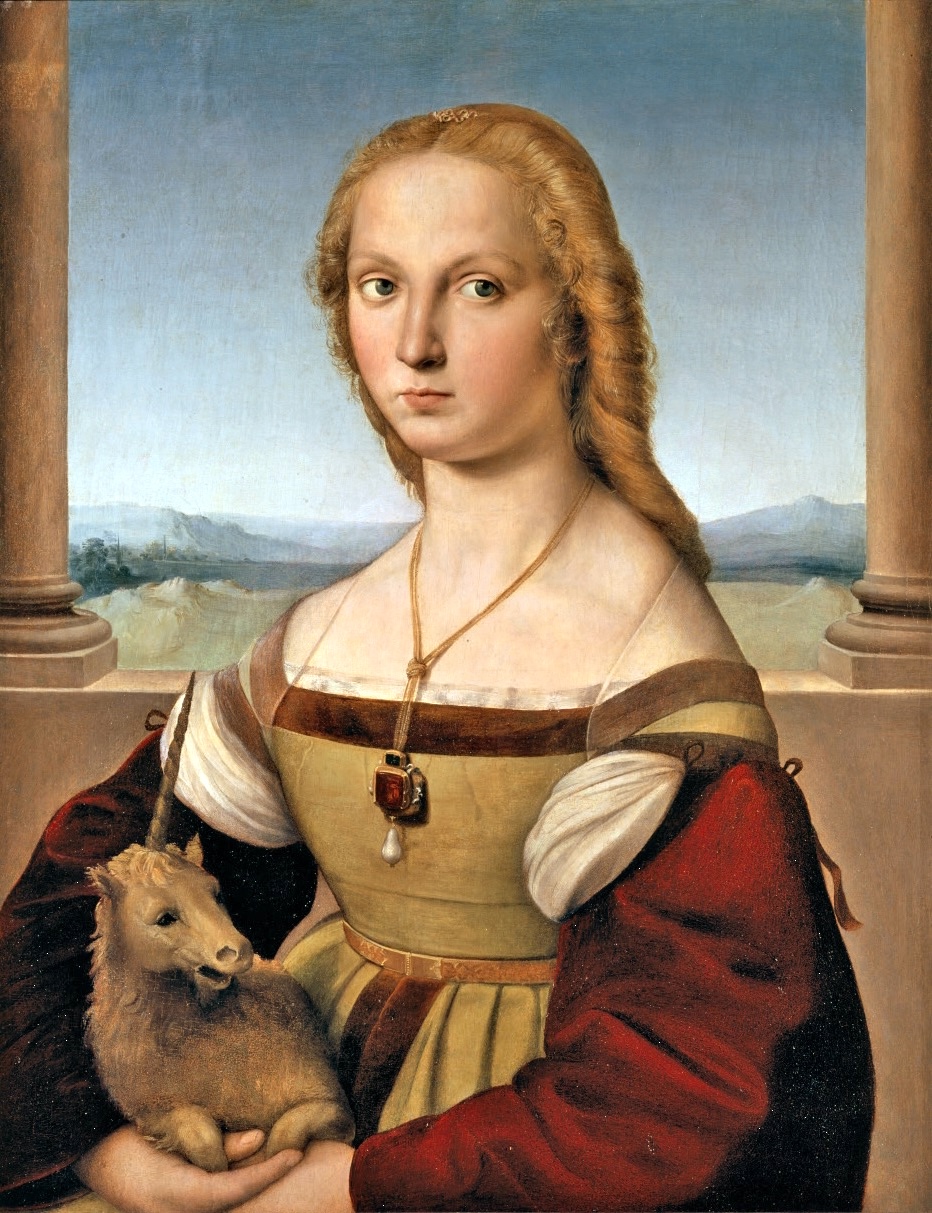
    Raffaello Sanzio, 1505-1506, Dama con liocorno. Roma, Galleria Borghese

    Il quadro di cui voglio parlarti si intitola Dama con liocorno, uno dei capolavori più celebri di Raffaello. Presente nella mostra del Met, normalmente si trova alla Galleria Borghese di Roma. Il dipinto fu realizzato tra il 1505 e il 1506, negli anni in cui l’artista si trovava a Firenze, poco prima del suo trasferimento a Roma. Protagonista di questo dipinto è una giovane donna dallo sguardo intenso, con lunghi capelli biondi, occhi azzurri e un’eleganza tranquilla. È seduta in un loggiato, incorniciata da due colonne, mentre sullo sfondo vediamo un paesaggio collinare. In grembo tiene un piccolo unicorno, detto anche liocorno, un dettaglio che rende il ritratto ancora più affascinante e misterioso.

    Possiamo già imparare alcune parole utili dell’arte: il ritratto è un dipinto che rappresenta una persona; il paesaggio è ciò che vediamo dietro il soggetto del quadro, cioè sullo sfondo; il loggiato è uno spazio aperto con colonne; il grembo è la parte del corpo su cui appoggiamo qualcosa quando siamo seduti. Queste parole ci permettono non solo di capire meglio la descrizione di un’opera, ma anche di parlarne in italiano con più precisione.

    Chi è la Dama con liocorno?

    Non sappiamo con certezza chi sia la donna raffigurata nel dipinto di Raffaello. Gli studiosi pensano che si tratti di una giovane nobildonna fiorentina, perché i suoi abiti ricordano la moda di Firenze all’inizio del Cinquecento. Indossa un vestito elegante, con grandi maniche e tessuti preziosi, e porta gioielli raffinati che ci fanno parlano del suo status sociale. Anche i capelli pettinati con cura e il piccolo diadema sulla testa contribuiscono a dare un’immagine di nobiltà. Agli occhi del moderno visitatore l’elemento più curioso del dipinto, però, è il piccolo unicorno che la dama tiene in grembo.

    Nel Medioevo e nel Rinascimento l’unicorno era un simbolo di purezza e castità; non si tratta quindi di un animale fantastico scelto per decorazione, ma di un dettaglio che voleva comunicare un messaggio preciso su questa giovane donna. Non sappiamo chi abbia chiesto a Raffaello di dipingere quest’opera; probabilmente, però, il quadro era un dono di nozze. Alcuni dettagli infatti lo suggeriscono: oltre all’unicorno, le pietre del gioiello, come il rubino e lo zaffiro, nella tradizione richiamano le virtù del matrimonio e la purezza della sposa. Anche la perla rimanda a un amore puro e spirituale, mentre il nodo della collana può essere letto come un simbolo del legame matrimoniale. Ricorda: il diadema è un piccolo ornamento prezioso che si porta sulla testa; il dono di nozze è un regalo fatto in occasione di un matrimonio.

    Il capolavoro di Raffaello nasconde altri segreti

    Dama col liocorno di Raffaello prima del restauro
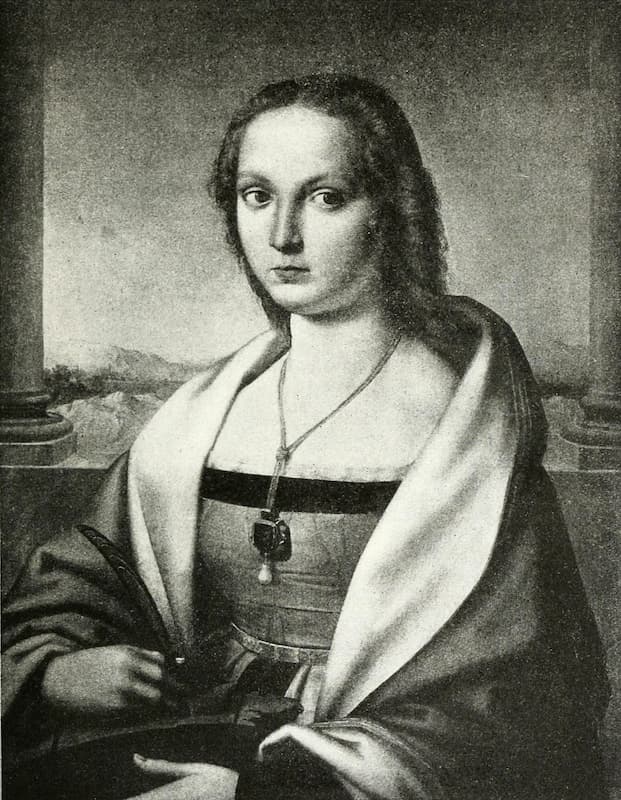
    L’opera prima del restauro del 1936

    Nel corso del tempo l’opera è stata modificata, ridipinta e restaurata, e per un lungo periodo è apparsa molto diversa da come la vediamo oggi. Il capolavoro è un’opera d’arte molto importante e di grande valore; il restauro è un intervento fatto per conservare o recuperare un’opera; un’opera ridipinta è un’opera su cui qualcuno ha dipinto di nuovo in un secondo momento.

    Le analisi fatte sul dipinto hanno rivelato una scoperta sorprendente: in origine, al posto dell’unicorno, c’era probabilmente un piccolo cane. Anche questo animale aveva un significato simbolico, ma diverso: il cane rappresentava la fedeltà coniugale. In un momento successivo, però, il cane fu trasformato in unicorno, cambiando così anche il messaggio del ritratto.

    La storia del quadro non finisce qui. Per un certo periodo, infatti, la dama fu addirittura trasformata in una santa. Prima di un importante restauro del 1936, il dipinto mostrava attributi legati a Santa Caterina d’Alessandria, come la palma e la ruota dentata del martirio al posto dell’unicorno. Gli attributi sono oggetti o dettagli che aiutano a riconoscere un personaggio. Solo dopo il restauro queste aggiunte furono eliminate e l’opera è tornata più vicina al suo aspetto originario, cioè all’aspetto che aveva all’inizio.

    Leonardo da Vinci come modello per Raffaello

    Dama con l'ermellino di Leonardo da Vinci
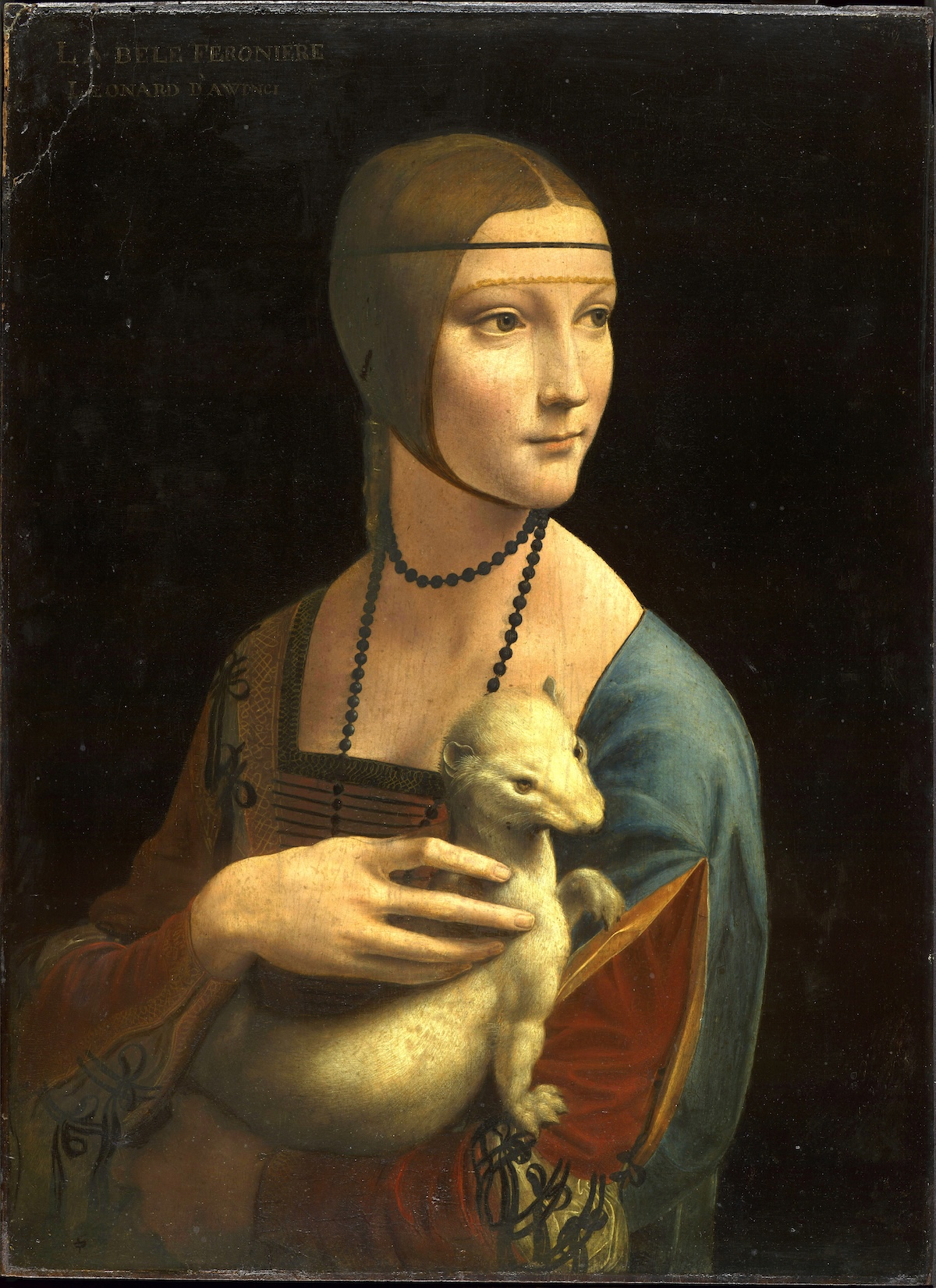
    Leonardo da Vinci, Dama con l’Ermellino, 1487 – 1490 ca. Museo Nazionale di Cracovia

    Anche nella posa della giovane dama possiamo notare qualcosa di interessante: molti esperti hanno sottolineato che ricorda altri celebri ritratti del Rinascimento. In particolare, il modo in cui il busto è girato, lo sguardo della protagonista e le mani che stringono l’animale fanno pensare alla Dama con l’ermellino di Leonardo da Vinci.

    Si può quindi pensare che Raffaello si sia ispirato a Leonardo; ma nel suo dipinto colpiscono soprattutto la limpidezza, lo sguardo più diretto e soprattutto la luce. La limpidezza è la chiarezza dell’immagine, quando tutto appare nitido e armonioso. Anche la figura, cioè la persona rappresentata nel quadro, risalta con grande delicatezza. Il volto, i gioielli, i tessuti e il paesaggio sullo sfondo sono resi con molta cura. Ne nasce un’opera equilibrata, delicata e luminosa.

    Perché la Dama con liocorno ci affascina così tanto?

    La Dama con liocorno continua ad affascinare ancora oggi perché unisce bellezza e mistero. Non sappiamo con certezza chi sia la donna del ritratto. Non sappiamo nemmeno quale fosse esattamente l’aspetto originario del dipinto. E proprio questi dubbi rendono l’opera così viva e interessante.

    Raffaello ci lascia quindi non solo il ritratto di una giovane elegante, ma anche un piccolo enigma della storia dell’arte. Ed è forse proprio questo il suo fascino più grande: ci invita a osservare con attenzione, a soffermarci sui dettagli e a immaginare le storie nascoste dietro un volto, un gioiello, un animale simbolico. È questo, in fondo, il potere dei ritratti: non mostrano solo una persona, ma aprono una finestra su un mondo lontano.

    Hai mai visto un’opera di Raffaello dal vivo? Andrai alla mostra Rapahel: Sublime Poetry del Metropolitan Museum? Raccontami del tuo rapporto con i capolavori del Rinascimento italiano!

    Anna

    Learn Italian with Art

    Passionate about art? You might enjoy our book and video course Learn Italian with Art – The Language of Renaissance Masterpieces, where we analyze six works from Italian Renaissance masters. A different way to improve your Italian, for late beginners and beyond.

    Video correlati

    • Learn more about Raphael while also improving your Italian with a video lesson from our series Learn Italian with Art.

    Parole dell’arte da ricordare

    • ritratto: dipinto che rappresenta una persona
    • paesaggio: quello che vediamo dietro la figura principale, cioè nello sfondo del quadro
    • sfondo: la parte dietro il soggetto principale di un dipinto
    • loggiato: spazio aperto con colonne
    • grembo: parte del corpo su cui appoggiamo qualcosa quando siamo seduti
    • diadema: piccolo ornamento prezioso che si porta sulla testa
    • dono di nozze: regalo fatto in occasione di un matrimonio
    • capolavoro: opera d’arte molto importante e di grande valore
    • restauro: intervento fatto per conservare o recuperare un’opera d’arte
    • attributi: oggetti o dettagli che aiutano a riconoscere un personaggio
    • aspetto originario: aspetto iniziale, cioè quello che l’opera aveva all’inizio
    • limpidezza: grande chiarezza dell’immagine o delle forme
    • figura: persona rappresentata nel quadro
    • simbolico: che ha un significato più profondo oltre a quello visibile
  • Luoghi d'Italia

    Milano-Cortina 2026: Look Back on the Italian Winter Olympics

    Reading Time: 5 minutes
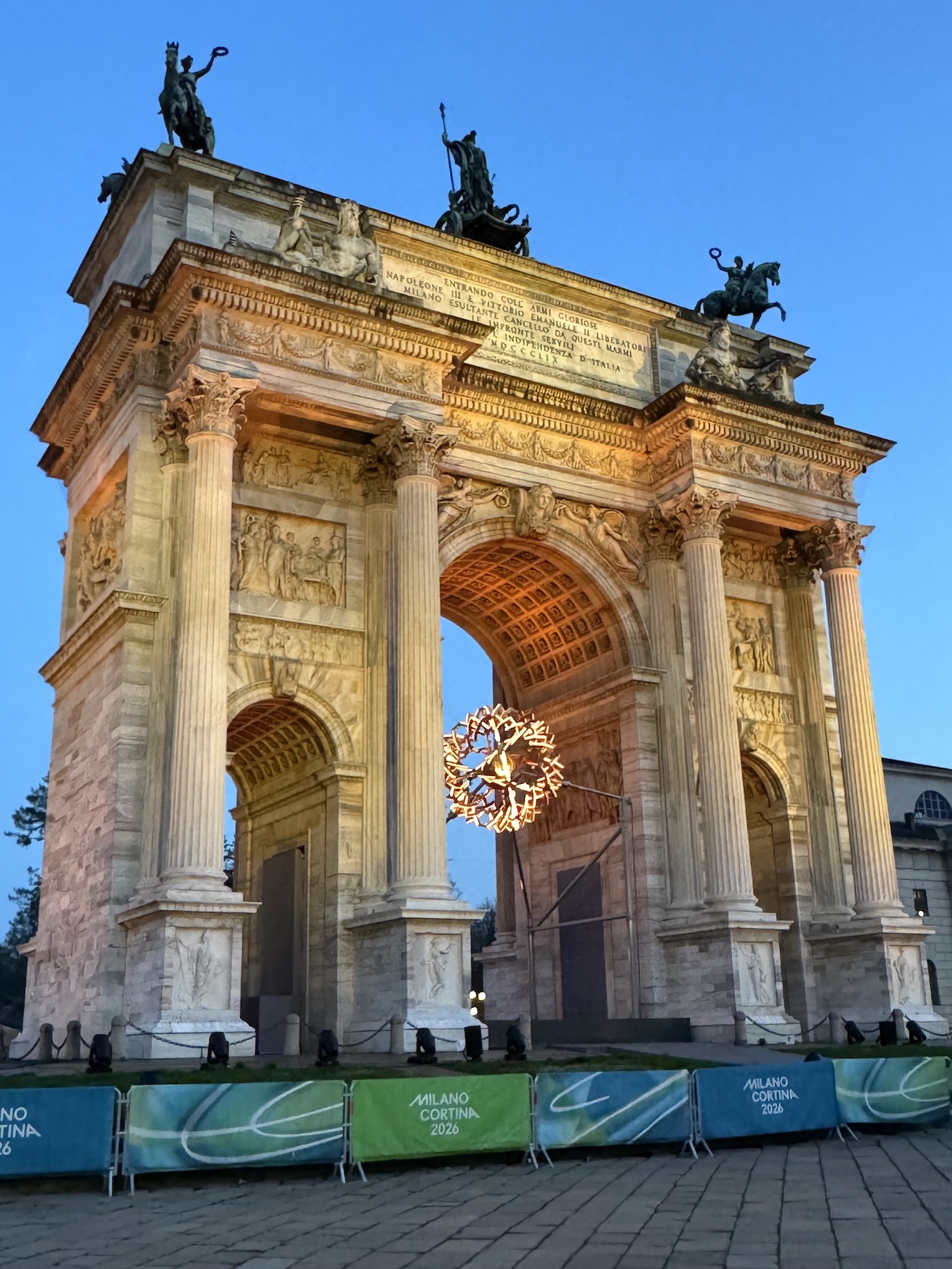
    Arco della Pace in Milan

    Sports events are a great opportunity to discover places you may have never seen before, or see the ones you already know from a different angle. The Giro d’Italia, one of the most important cycling races in the world, is a notable example. The 2026 Winter Olympics, hosted across several locations in northern Italy, showcased not only some of our most beautiful mountain resorts, but also one of the most impressive and best preserved Roman monuments in Italy. Which is not in Rome.

    This year, the Olympics were back to Italy… but where exactly? Discover the venues of Milano-Cortina 2026 and look back on the Italian Winter Olympics.

    The first polycentric Olympics

    A febbraio, occhi puntati sull’Italia: this February, all eyes were on Italy! The 2026 Winter Olympics were held from 6 to 22 February in three regions of northern Italy: Lombardia, Veneto, and Trentino Alto-Adige. Fourteen different venues hosted i primi giochi olimpici diffusi, the first Olympic Games to adopt a polycentric approach, spreading events across multiple locations over 22,000 square kilometers.

    The venues of Milano-Cortina 2026

    The key venues of this edition of the Winter Olympics were Milano and Cortina, of course. Milan, the capital of Lombardy, was by far the biggest city among this year’s Olympic venues, and hosted the opening ceremony and most ice sports events. It did not host the closing ceremony, though: this took place in Verona, a much smaller city in a different region, which also hosted the Paralympics opening ceremony on 6 March, 2026.

    Unlike Milan, which featured for the first time as an Olympic venue, the mountain town of Cortina d’Ampezzo, in Veneto, was not new to this kind of events. Cortina had already hosted the Winter Olympics in 1956, the first Olympic event to be held in an Italian city.

    We went back seventy years in this special content for intermediate and advanced learners of Italian: Olimpiadi di ieri e di oggi: Cortina 1956-2026.

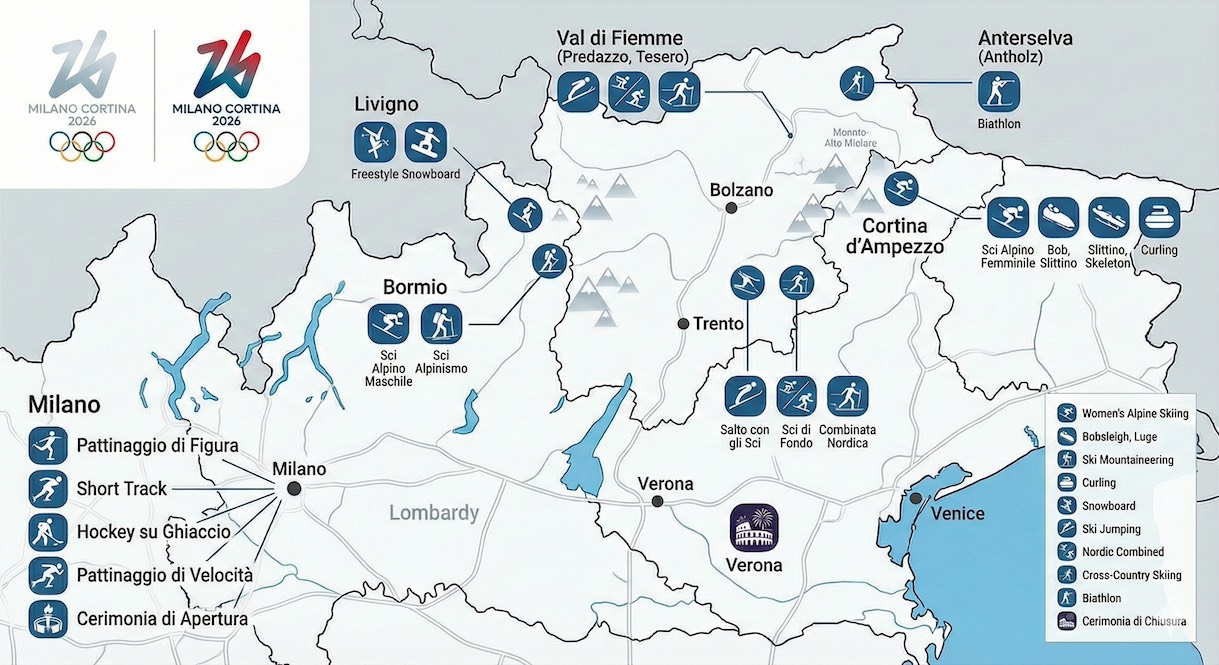
    Map of the Milano-Cortina 2026 Winter Olympics

    Mountain lovers know Cortina as an upscale tourist resort in the Dolomites, but this was just one of the spectacular venues of the 2026 Winter Olympics: Bormio and Livigno, in Lombardy’s Valtellina, hosted the main alpine skiing events; Predazzo and Tesero, in Trentino’s Val di Fiemme, hosted ski jumping and cross-country skiing competitions; and Anterselva, in Alto-Adige, hosted biathlon events.

    Were the 2026 Olympics a logistical nightmare?

    As an article on the New York Times pointed out, the cross-country nature of the 2026 Winter Olympics could very well turn out to be a logistical nightmare, due to long distances, narrow roads, complex connections, and the heavy snowfall that affected Cortina and other mountain locations.

    While at first snow cannons and even helicopters were being used to bring in snow to the bare slopes of the Alps and Prealps, closer to the opening ceremony intensive snow storms and fog created even more difficulties. Traveling around northern Italy to follow the various competitions required some planning, but local infrastructure was improved and new tunnels were completed just before the Games. All things considered, it is safe to say that everything went pretty smoothly in the end.

    The Olympic flame crossed all 20 Italian regions

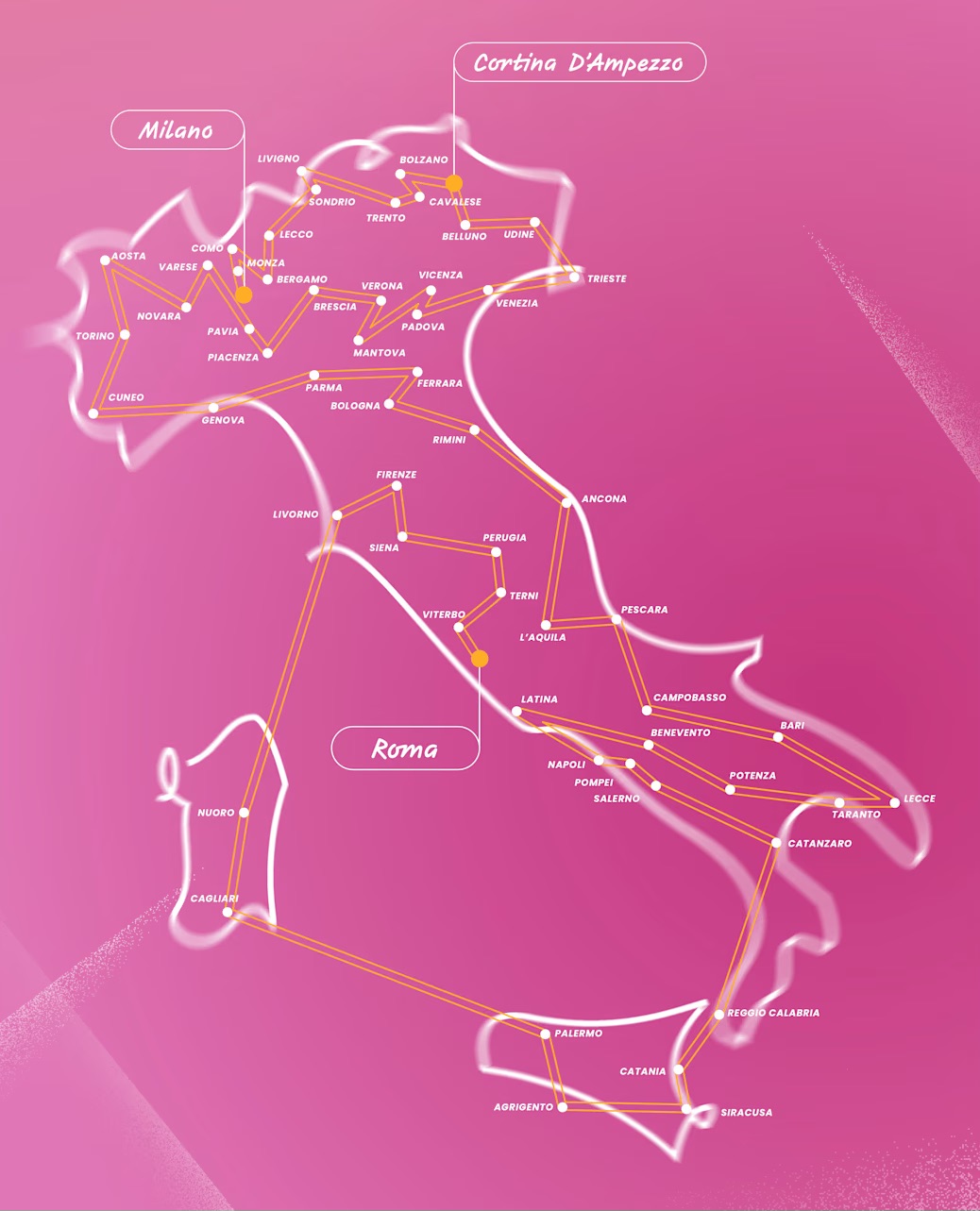
    2026 Winter Olympics torch relay
    The 2026 Winter Olympics torch relay

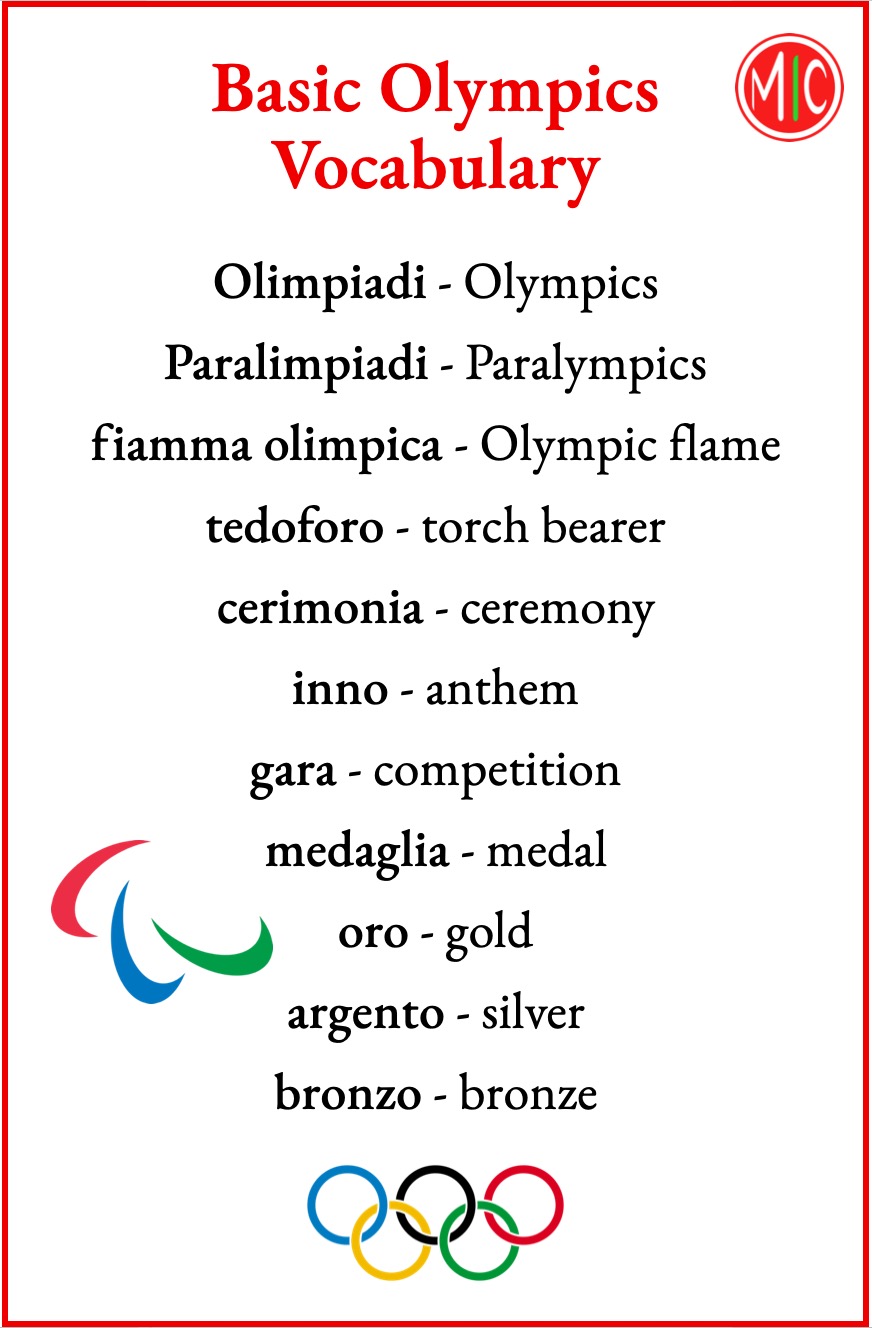
    Not just northern Italy: the torch relay for the 2026 Winter Olympics – il viaggio della fiamma olimpica – touched all 20 Italian regions and 110 provinces, and some stops were truly unique. Relive this amazing journey on the official website.

    The Olympic flame left Olympia on 26 November, 2025. After travelling across Greece, the flame left Athens and arrived in Rome on 4 December. From here, it went up to Florence, travelled by sea to the islands of Sardinia and Sicily, and moved back up through the peninsula, arriving in Turin on 11 January, 2026. Torino was the last Italian city to host the Olympic Games in 2006, fifty years after Cortina 1956.

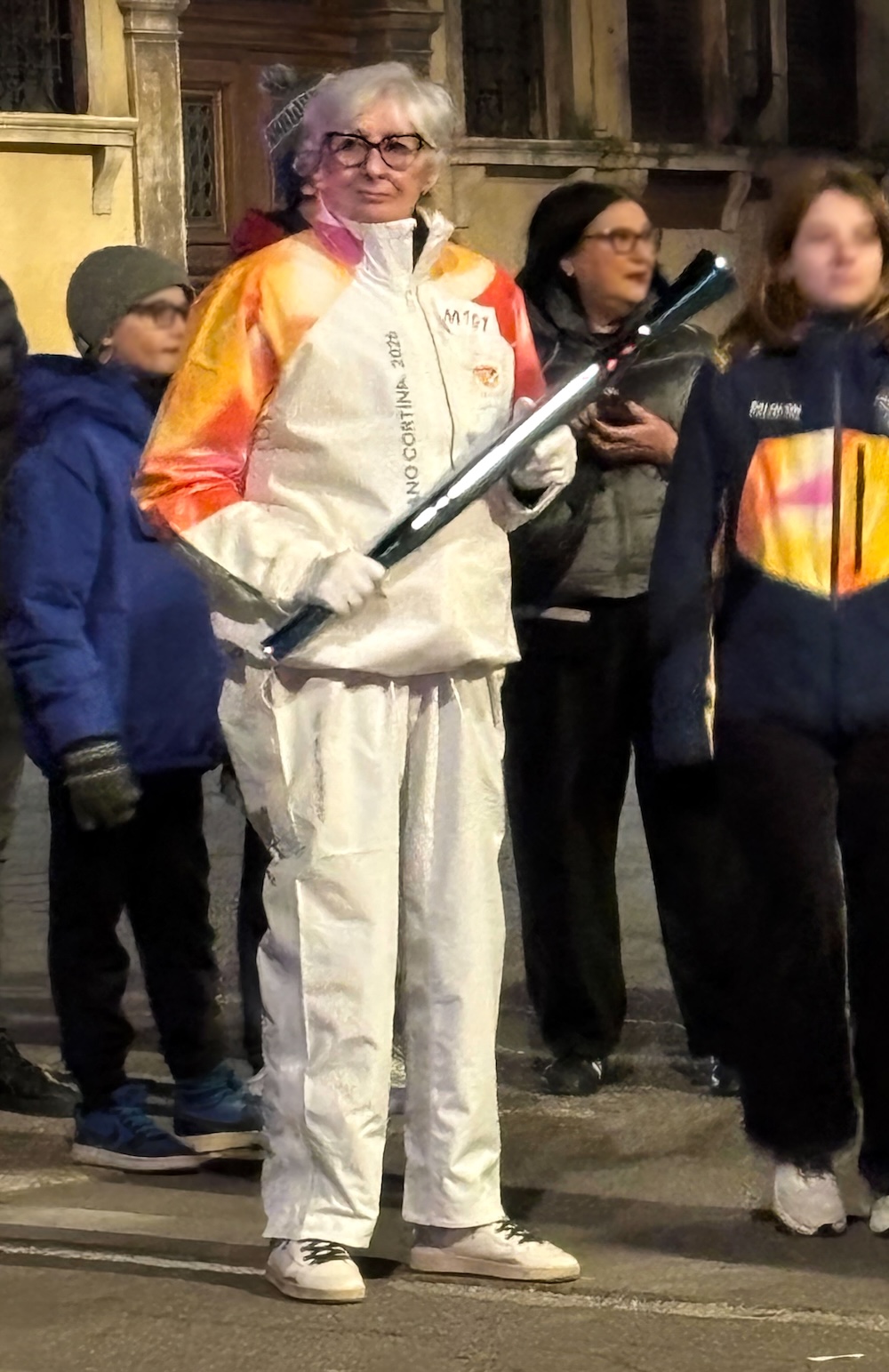
    Sara Simeoni waiting for the Olympic flame in Verona
    Sporting legend Sara Simeoni in Verona

    From Turin, the Olympic flame travelled across northern Italy, reaching Verona on 18 January. On the 22nd it was on a gondola in Venice, making a historic passage down the Grand Canal. After a stop in Cortina d’Ampezzo, the torch reached its final destination, the San Siro Stadium in Milan, just before the opening ceremony– la cerimonia di apertura – on 6 February, 2026. ESA astronaut Luca Parmitano was one of the torch bearers on the last stop of the Olympic flame. Spaziale!

    When the Olympic flame crossed the historic centre of Verona, the entire city gathered along the river Adige to witness the event. The flame was passed from one athlete or celebrity to the next, until it finally reached Sara Simeoni, the legendary high jumper who twice set a world record and won a gold medal at the Moscow Olympics in 1980. Born in the province of Verona, she is considered one of the best Italian female athletes of all time.

    The closing ceremony may have been the most spectacular event of the 2026 Winter Olympics

    Verona Olympic venue 2026

    The 2026 Winter Olympics opened in one of the largest stadiums in Europe, built over a hundred years ago in 1925. This was already quite impressive, but the closing ceremony – la cerimonia di chiusura – took place in a much older and more scenic venue: the 2,000-year old Arena, Verona’s Roman amphitheater.

    The Milano-Cortina 2026 Closing Ceremony, themed Beauty in Action, combined art, technology, and tradition on the backdrop of the Arena, featuring opera, dance, music, and design, connecting mountains to cities and culminating in an immersive celebration of sports and Italian culture. Star dancer Roberto Bolle appeared alongside sports icons like Carolina Kostner, Deborah Compagnoni, Francesco Totti, Bebe Vio, and Jannik Sinner.

    The closing ceremony took place on 22 February from 8 pm CET, and was broadcast worldwide. You can watch it on YouTube on the official Olympics channel.

    Did you come to Italy during the Olympics?

    Despite the official narrative celebrating Milano-Cortina 2026 as a flawlessly executed triumph, the reality was a little more nuanced. Italy genuinely earned much of the international praise it received: the atmosphere was warm and vibrant, the volunteers were widely admired, and the country showcased its landscapes and cultural flair with unmistakable style. Many athletes and visitors left with the impression of a welcoming, well‑run event.

    At the same time, not everything unfolded as smoothly as the authorities suggested. Several venues were completed at the last minute, budgets swelled beyond early projections, and some mountain areas struggled with congestion and accommodation pressure. Environmental concerns also resurfaced. Italy delivered a successful Olympics, just not an effortless one.

    Did you experience the Italian Winter Olympics firsthand? How did it go? Write a comment below!

    Diana

    Related Videos on our YouTube Channel (in Italian)

  • Italian Grammar

    How to Use Italian Relative Pronouns Correctly: CHE & CHI

    Reading Time: 5 minutes

    Nouns, articles, adjectives, pronouns… there is no escaping some grammar jargon when we study the building blocks of Italian. We have already talked about subject, object and reflexive pronouns in this article: How to Identify and Use Italian Pronouns Correctly. Have a quick look at it if you are not sure what pronouns are. Our focus today is on the relative pronouns CHE and CHI: I will explain how to use them correctly.

    When do we use CHE, and when do we use CHI? These two pronouns look very similar, but they have different functions, and they are quite easy to confuse with one another. Mind the pronunciation! CHE is pronounced keh, while CHI is pronounced kee.

    Relative pronouns in a nutshell

    First of all, what are relative pronouns? Relative pronouns introduce relative clauses: when you have two separate clauses, a main one and a dependent one, a relative pronoun is one of the little words that you can use to connect them. In English, relative pronouns are basically that/which and who, which correspond to the Italian relative pronouns che and chi, respectively. We also have cui and il quale, which I covered in a specific video lesson in Italian, but che and chi are definitely the most common ones.

    These pronouns are called relative because they are related to an element in the main clause and they create a relationship, a connection between our two clauses. We have already seen that pronouns are used to replace nouns. The relative pronoun replaces a noun that would otherwise be mentioned twice, once in the main clause and once in the dependent clause. Let’s clarify with some examples.

    The pronoun CHE replaces a common element

    The relative pronoun CHE means that or which, and is used to join two sentences that have an element in common, in order to avoid unnecessary repetition:

    • Hai preso i posti. I posti non vanno bene. —> I posti CHE hai preso non vanno bene. – The seats (that) you have chosen aren’t suitable.

    Another one:

    • Questo è il film. Io voglio vedere il film. —> Questo è il film CHE voglio vedere. – This is the film (that) I want to see.

    You may have noticed that the relative pronoun CHE is invariable: in the first sentence it replaces i posti, while in the second one it replaces il film.Good news! CHE is always the same for masculine, feminine, singular and plural nouns; moreover, it can replace inanimate objects, but also people. In English though, you would usually replace people with the pronoun who, not with the pronoun that. This is where things may become confusing!

    Have a look at this sentence:

    • Ci sono dei criminali. I criminali rubano dei gioielli. —> Ci sono dei criminali CHE rubano dei gioielli. – There are criminals who steal jewellery.

    And another one:

    • Non sopporto i maleducati. I maleducati parlano al cinema. —> Non sopporto i maleducati CHE parlano al cinema. – I can’t stand rude people who talk in the cinema.

    In both sentences, we used CHE in Italian, and not CHI, even if we are talking about people. Why? Let’s see how the pronoun CHI works.

    CHI or CHE? What’s the difference?

    Let’s look at the relative pronoun CHI. Can we use it in the same way as the English who? Not always! Now look at the following sentences: are they correct?

    • Ci sono dei criminali CHI rubano dei gioielli.
    • Non sopporto i maleducati CHI parlano al cinema.

    If you are an English speaker, they may look correct to you, because in English the relative pronoun for people is who, and who translates as CHI in Italian. However, as we just saw above, in these two sentences we use CHE and not CHI.

    Think of it this way: the pronoun CHI means la persona che or la gente che (the person who, people who). It does not refer to a noun I have already mentioned, so it does not replace a noun in a previous sentence. We must also remember that the verb that follows CHI is always singular.

    So this sentence is not correct: Ci sono dei criminali *CHI rubano dei gioielli.

    The correct version is: Ci sono dei criminali CHE rubano dei gioielli.

    This is wrong: Non sopporto i maleducati *CHI parlano al cinema.

    This is right: Non sopporto i maleducati CHE parlano al cinema.

    How to use the relative pronoun CHI

    So when do we use CHI? Let’s look at some examples. This is a famous proverb:

    • Chi va piano va sano e va lontano. It means: people who take it slow stay healthy and go far. Hence, those who do things calmly and prudently achieve results. Here we need CHI: la persona che, la gente che.

    Another example, another proverb:

    • Chi non risica, non rosica. People who don’t take risks don’t achieve anything. In other words: those who don’t take risks don’t achieve anything.

    I can also say: Io so CHI ha rubato i gioielli. I know who stole the jewellery, I know the person who stole the jewellery. Instead of la persona che, I can say chi.

    And I can say: Non sopporto CHI parla al cinema. Here too, it means: I can’t stand people who talk in the cinema. Instead of la gente che, I say chi.

    CHI is also an interrogative pronoun:

    A2 pre-intermediate Italian course
    • Chi ha visto questo film? – Who saw this film?
    • Chi ha scelto questi posti? – Who chose these seats?

    The last few example sentences are more intuitive for English speakers, because here CHI works just like who.

    Before we continue, I want to let you know that the relative pronouns CHE and CHI are the subject of lesson 12 of our A2 course, which you can find on Amazon. The course has 20 lessons and combines grammar and vocabulary with lots of exercises. You can use this book to study on your own or with a teacher!

    How to use CHE and CHI: let’s practise!

    Let’s put all this into practice. Let’s join two sentences with the relative pronoun CHE. Remember, you use CHE to replace a noun that occurs in both clauses. For example:

    Ho comprato una moto. La moto è rossa. —> La moto CHE ho comprato è rossa.

    1. Luigi ha una sorella. La sorella vive a Torino.
    2. Sandra ha letto il libro. Il libro è bellissimo.
    3. Luigi ha fatto un errore. L’errore è grave.
    4. Ho scelto i posti. I posti sono in prima fila.

    Now another exercise: find the mistakes, if there are any, and correct them. Pay attention to the difference between CHE and CHI.

    1. Il film che fanno oggi è un poliziesco.
    2. Io conosco la persona chi ha comprato questa casa. 
    3. Mi piace molto il libro chi mi hai regalato.
    4. Io so che è stato a rubare i gioielli.
    5. Il ragazzo che lavora al bar è francese.

    Easy or difficult? Have a look at the solutions below, and ask me questions in the comments if anything is unclear.

    That’s all for today: I hope you found this useful. Remember: listen, speak and study Italian with me!

    Buono studio,

    Anna

    Exercise Solutions

    1. Luigi ha una sorella. La sorella vive a Torino. -> Luigi ha una sorella CHE vive a Torino.
    2. Sandra ha letto il libro. Il libro è bellissimo. -> Il libro CHE ha letto Sandra è bellissimo.
    3. Luigi ha fatto un errore. L’errore è grave. -> L’errore CHE ha fatto Luigi è grave.
    4. Ho scelto i posti. I posti sono in prima fila. -> I posti CHE ho scelto sono in prima fila.
    1. Il film che fanno oggi è un poliziesco. Correct!
    2. Io conosco la persona CHE ha comprato questa casa. 
    3. Mi piace molto il libro CHE mi hai regalato.
    4. Io so CHI è stato a rubare i gioielli.
    5. Il ragazzo che lavora al bar è francese. Correct!

    Related video lessons:

  • Learn Italian

    How to Study Italian in 2026: A Sustainable Method

    Reading Time: 7 minutes

    If you are wondering how to study Italian in 2026 without burning out or giving up, this guide is for you.

    Every year, the same thing happens. Learners of Italian around the world start off with great enthusiasm, diving into a full immersion of apps, videos, textbooks, podcasts and grammar guides, often without a clear learning path.

    This initial phase of binge learning creates a powerful but deceptive feeling of progress. For a short time, everything seems to work. Then life gets in the way: lessons are skipped, words are forgotten, speaking still feels difficult, motivation slowly fades, and everything becomes a struggle. If this sounds familiar, keep reading!

    At the same time, more and more AI-based language learning apps promise quick results and effortless fluency. The concept is always the same: learn Italian quicklyspeak in weeksno effort required. This message is literally everywhere. Quick. Easy. Effortless.

    Seriously? No effort required?
    Learning a language is not effortless, and that’s exactly WHY it works.

    The truth is that improving your Italian does not depend on quantity only and is not effortless. It is based on something much simpler and much harder to maintain: consistency. Learning Italian (or any other language, for that matter) is not about finding the next tool, app or shortcut. It’s about choosing a study method that you can sustain over time.

    My take on how to study Italian in 2026

    In this article, I explain what it really means to study Italian in 2026, why fragmented learning rarely works, what research on language learning tells us, and how listening and speaking can become the centre of a realistic and effective routine.

    As I mentioned above, we should first and foremost get rid of the word “effortless.” Learning a language is never effortless, and it doesn’t need to be.

    Why do I keep saying in 2026?

    It’s very tempting for learners to jump from one book to another, from a video to a film or a deck of flashcards. While this may work for some of the most dedicated students, the result is usually frustration and a sense of dispersion.

    Since the advent of AI, the temptation to give in to a magical app or a magical prompt has complicated the picture, and in 2026 the risk will increase. The great promise of AI is to make everything easy for us, and that soon we will no longer need to put in any effort at all. But do we really want to give up that small but essential part of self-respect that pushes us to try, test our abilities, stay engaged with something meaningful? I hope not. Real progress comes from engagement, not shortcuts. And engagement is exactly what makes learning lasting. Clearly, any tool for learning languages is useful in itself; it’s how we use it that matters.

    How to study Italian effectively: less fragmentation, more continuity

    To reach our goal in Italian in 2026 let’s make a clear commitment: less fragmentation, more continuity. In Italian, we call this costanza, consistency, tenacity. Costanza means showing up again and again, even when progress feels slow.

    Prenditi tempo! Take your time. The hard truth is: learning Italian takes time.

    There are no magic formulas, but there is an effective way to avoid quitting along the way: studying in a consistent and sustainable way. In Italian: studiare con costanza, not occasionally, not only when motivation is high, but especially when things require some effort.

    Why studying Italian feels difficult (and why it’s not your fault)

    Many learners believe they are either good or bad at languages; but in reality, your natural ability is rarely the issue. The most common difficulties are:

    • fragmented study habits;
    • unrealistic expectations at the beginning;
    • intensive study periods followed by long breaks;
    • little actual practice – pratica reale – of the language.

    The result is often the same: progress for a while, then nothing. And every long break makes restarting harder.

    That’s why the key issue is not how much you study, but how often you return to the language. In Italian, this idea is simple: continuare. How to study Italian effectively? By keeping at it.

    What research says about language learning

    Research in cognitive psychology offers clear insights into how learning actually works. Our brain learns better through spaced practice and active recall rather than intensive study sessions and passive repetition (Dunlosky et al., 2013).

    In practical terms, this means that learning is more effective when:

    • you return frequently to the same content (ritornare sugli stessi contenuti);
    • you actively try to recall (recupero attivo);
    • you use the language out loud (parlare ad alta voce);
    • you leave time between study sessions (studio distribuito nel tempo).

    This approach favours consistent practice, pratica costante, not short-term performance.

    Consistency does not mean studying less

    This is an important point: costanza non significa studiare meno. It means studying in a sustainable way, at a pace you can maintain over time without burnout or frustration. In Italian: studiare in modo sostenibile. Here’s what an effective routine looks like:

    • it does not have to be extreme;
    • it does not have to be perfect;
    • it must be repeatable over time – ripetibile nel tempo.

    Regular study, even with variations in intensity, works better than occasional intense sessions that are impossible to maintain. If only I had known that back in my university days!

    Why listening and speaking are central

    Many students focus mainly on reading and writing exercises. These activities are useful, but they are not sufficient. A language is first of all suono, ritmo, movimento della bocca. If you do not listen (ascoltare) often and do not try to speak (parlare), the language remains an abstract concept.

    This is why listening and speaking are central to our method.

    In our Ascolta e Parla videos, the goal is not to understand everything. The real goal is to train:

    • your ear (orecchio);
    • your pronunciation (pronuncia);
    • your rhythm (ritmo);
    • your confidence (sicurezza) when speaking.

    Full understanding comes later; first comes the active use of the language, l’uso attivo della lingua, even with mistakes.

    How to use audio and video content effectively

    Watching a video passively is not enough: to study effectively, content must be reused. A productive approach includes:

    1. a first listen for general meaning (ascolto generale);
    2. a second listen and repeating aloud (ripetizione ad alta voce);
    3. an active recall phase: answering questions using the same words (recupero attivo);
    4. returning to the same content after a few days (ritornare dopo qualche giorno).

    Parla con me!

    This is the reason why in our videos I always encourage you to speak up, to respond, even with a yes or no or a few simple words. Passively watching a video is already something, but participating and being active gives us much more: it gives us confidence.

    An active approach is a real game-changer. Sometimes I ask for an immediate, intuitive response; other times I prompt for an answer on content, or ask learners to answer questions using the vocabulary presented in the lesson. All of this is repeated several times; additionally, committed learners have the opportunity to practise even more with the special content we prepare for our patrons on Patreon.

    Ama la tua voce italiana!

    Responding aloud makes all the difference. This way, we train our mouth to form sounds, familiarise ourselves with the melody and rhythm of sentences, and practise pronunciation. The next time we want to say something in Italian in real life, it will be much easier, because we have already done it.

    Consistency and repetition are essential. It is not wise to use study material only once, whether it is an article, an exercise, or a video. Watch a video over and over again until your answers come naturally. This way you will assimilate words, phrases, collocations, sounds; in short, you will develop a feel for the language.

    Common mistakes when studying Italian

    Many learners slow down or get stuck not because they lack ability, but because they fall into very common patterns: they keep looking up new ways to study Italian effectively and change methods too often, study only when motivation is high, avoid speaking for fear of making mistakes, and aim for perfection far too early. Making mistakes is not failure. Speaking imperfectly is simply part of the learning process.

    Esame B1 Cittadinanza - B1 Italian Citizenship Certification

    On our YouTube channel, we talk a great deal about the B1 citizenship certification: during the oral exam, perfection is NOT a requirement, but clear communication is. The simple principle of keeping the main objective clear, i.e. communication, helps us to get started and get into the right gear. So, should we lower our ultimate goal and not worry about improving and correcting our mistakes? Should we abandon the desire to speak correctly? Absolutely not. But the fear of making mistakes shouldn’t stop us from opening our mouths and speaking Italian. And this is a major obstacle for many learners.

    Il tuo obiettivo per il 2026

    In 2026, the goal is not to study an enormous amount of grammar or vocabulary, to finish every textbook, to understand everything immediately, or to speak perfect sentences from the start. The real goal is continuare: to keep listening, to keep speaking, and to keep returning to Italian. Because what you practise with costanza, over time, truly becomes yours. This year, learn Italian consistently!

    In short: your 2026 routine should include regular and sustainable study, frequent listening, active use of the language, repeated exposure to the same material, and acceptance of imperfection. Create a path that you can realistically maintain over time.

    Visit our main website to find all our video lessons and additional learning materials listed by topic and level, and get in touch if you need advice on your specific situation: I will be happy to help.

    Buono studio!

    Anna

    Italian Lessons for Beginners

    Italian Textbooks

    (Amazon affiliate links)

  • Cultura e società - Learn Italian

    How to Wish a Merry Christmas in Italian

    Reading Time: 5 minutes

    So… you are spending the holiday season in Italy, and your Italian friends have invited you over on Christmas Day. You are thrilled at the idea, but you are feeling a bit anxious because you can’t tell the difference between panettone and pandoro, and you are not sure how to wish a Merry Christmas to your friend’s parents in a polite way. Then there is the matter of New Year’s Eve, when a flood of good wishes is exchanged even with strangers, and lots of toasts are made. How to join the conversation?

    Buon Natale e felice anno nuovo!

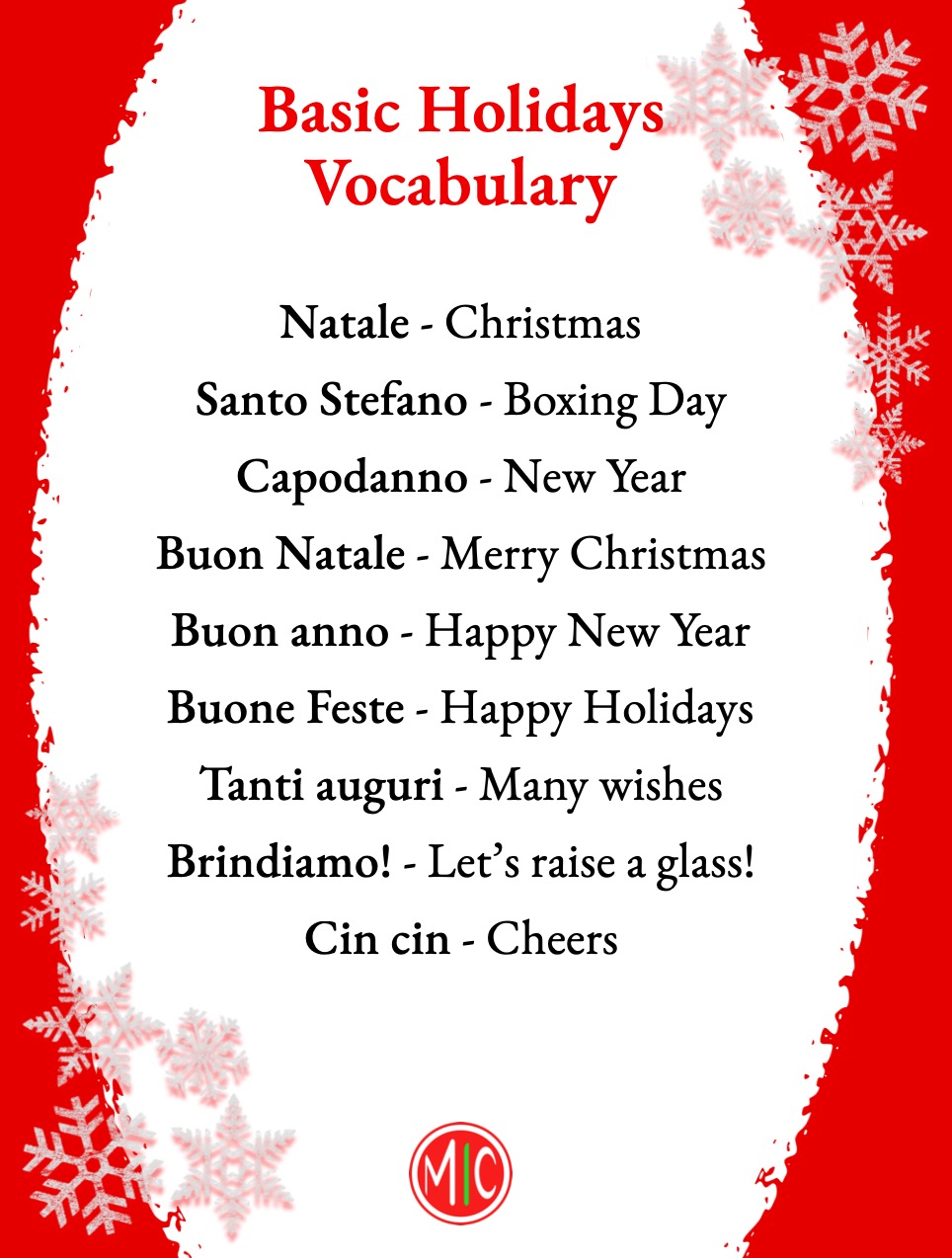
    Let’s start with wishes – in Italian, auguri. This simple word can be used in various situations, including on a birthday or other anniversaries. Tanti auguri is a a step further: many wishes. If you want to overdo it, you can say Tantissimi auguri!

    Most Italians are raised Catholic and celebrate Christmas with family, even those who do not go to church at all or only go on Easter and Christmas. Buon Natale (Merry Christmas) is a wish that anyone will welcome and return, but throughout the holiday season you can also use a more generic Buone Feste (happy holidays).

    Here’s a nice wish for a friend and their family:

    • Buone Feste a te e alla tua famiglia.

    If you don’t know the person very well, use the polite form:

    • Buone Feste a Lei e alla Sua famiglia.

    Fast forward to New Year’s Eve: la vigilia di Capodanno. It is usually celebrated with a big dinner – il cenone – and lots of toasts – brindisi – as the clock strikes midnight. Then you can say:

    • Buon anno! or Felice anno nuovo! – Happy New Year!
    • Buona fine e buon inizio! – Happy endings and happy beginnings!

    Tanti auguri works great here, too. Cin cin (cheers) is mandatory during a toast, to be said as you clink your glasses together and look at the other person in the eye. What to do if you don’t drink? Remember that toasting with water is considered bad luck, so you may want to fill your glass with wine anyway, just for show.

    As an aside, do not believe those who claim that simple words like auguri, cin cin, grazie and prego should not be used. We say them all the time and they can go a long way! It’s great to have a large vocabulary at hand, but do not feel compelled to use long, convoluted sentences.

    Il Natale in Italia

    Some Italian families celebrate on Christmas Eve – la vigilia di Natale, while others have a big Christmas lunch – il pranzo di Natale, and some do both. Some go to Mass on Christmas Eve – la Messa di Natale, and may have a glass of wine and a slice of pandoro with fellow parishioners afterwards.

    What do we eat on Christmas? Traditions vary widely throughout the peninsula, but Christmas lunch is usually very rich and features a lot of meat. Tortellini in brodo, lasagne or another kind of pasta are a staple, followed by lesso or bollito (boiled meat with various sauces), arrosto (roast), abbacchio (roast lamb), or cappone ripieno (stuffed capon). Not quite vegetarian friendly!

    Pandoro o panettone?

    After lunch, the dilemma is: pandoro o panettone? Or maybe another traditional Christmas cake? Pandoro hails from Verona, in Veneto, while panettone originated in Milan. Both are very popular all over Italy, with new fillings and variants created every year, but there are alternatives. In the South, a huge variety of traditional desserts is made, including struffoli, mostaccioli, cartellate, torrone and many others. 

    I regali di Natale – Christmas presents – are a big part of the celebration, and not just for children. They can be opened after dinner on Christmas Eve, on the morning of Christmas day or after lunch. They are brought by Babbo Natale (Santa Claus), of course, who puts them under each family’s Christmas tree – l’albero di Natale. L’albero e gli addobbi natalizi (Christmas decorations) are usually put up on December 8th, which is a public holiday: l’Immacolata Concezione di Maria. Many families also prepare a nativity scene, il presepe, with figurines of Giuseppe, Maria, il bue, l’asinello, le pecore e i pastori. Il Bambin Gesù, baby Jesus, is put in the manger at midnight on Christmas Eve. I Re Magi, the Three Wise Men, arrive on January 6th, il giorno dell’Epifania, when all festivities end: L’Epifania tutte le feste porta via.

    A Christmas tradition that is fading away with the older generations is la tombola, a board game similar to bingo which originated in Naples three centuries ago. For some families, though, giocare a tombola is still a popular afternoon activity to spend more time together after lunch.

    The day after Christmas is called Santo Stefano – Boxing Day. It’s also a public holiday in Italy, and may be spent visiting relatives, going to the mountains, or just chilling out. 

    Cosa fai a Capodanno?

    As the new year approaches, the same question resounds everywhere: Cosa fai a Capodanno? What are you doing on New Year’s Eve? And the second most common question is Cosa ti metti? What will you wear? Whatever your answer may be, make sure to wear something red for good luck!

    Most people will spend New Year’s Eve at dinners and parties, usually with friends. Festeggiamo la fine dell’anno e l’inizio dell’anno nuovo, we celebrate the end of the year and the beginning of the new one. Brindiamo all’anno nuovo, we raise a glass to the new year, e speriamo che sia migliore del precedente, and we hope it will be better than the last one. Around midnight we eat cotechino e lenticchie: pork sausage and lentils. The latter are said to bring money because they look like tiny coins.

    Festeggiamo il Natale insieme

    Let’s put all this together and celebrate Christmas the Italian way! Marta invites Janet to spend Christmas together. Their exchange may go like this:

    Marta: Cosa fai a Natale? Vieni a pranzo da noi?

    Janet: Molto volentieri, grazie.

    On Christmas, Janet arrives at Marta’s house. She brings a bottle of wine, a foolproof gift.

    Janet: Buon Natale! Ho portato una bottiglia di vino.

    Marta: Che gentile! Vieni, ti presento mio marito e i miei genitori.

    Janet: Piacere! Grazie dell’invito. Che bella casa!

    Marta: Ti piacciono gli addobbi? Li ho presi ai mercatini di Natale.

    Janet: Mi piacciono molto. Quest’albero di Natale è meraviglioso!

    After a light aperitivo, the Christmas lunch begins with homemade tortellini.

    Marta: Andiamo a tavola! È pronto.

    Janet: Che bella tavola!

    Marta: Ecco i tortellini. Li abbiamo fatti in casa.

    Janet: Sono buonissimi, complimenti!

    Marta: Ti piace il lesso con la mostarda?

    Janet: Non l’ho mai mangiato, ma lo assaggio volentieri.

    Marta: Preferisci il pandoro o il panettone?

    Janet: Per me una fetta di pandoro, grazie.

    Marta: Brindiamo! Buon Natale a tutti!

    Janet: Cin cin! Tanti auguri!

    Marta: E ora apriamo i regali di Natale. Questo è per te!

    Janet: Grazie, non dovevi. È bellissimo!

    Marta: È solo un pensierino. Giochiamo a tombola?

    Janet: Certo!

    We hope you will now feel ready for your Italian Christmas.

    Auguriamo a voi e alle vostre famiglie Buone Feste e un felice Natale! We wish you and your loved ones Happy Holidays and a Merry Christmas.

    Anna & Diana

    Related videos:

  • Italian Grammar

    Le preposizioni articolate: Understand Prepositional Contractions in Italian

    Reading Time: 5 minutes

    Bentornata grammatica! We learned in our simple guide to Italian prepositions that Italian has nine main prepositions: DI, A, DA, IN, CON, SU, PER, TRA, FRA. However, you may have noticed that these same prepositions often look and sound different in everyday Italian: they are combined with definite articles to form prepositional contractions – le preposizioni articolate. We use definite articles a lot in Italian, so you will encounter prepositional contractions all the time, even in very simple sentences. 

    Prepositional contractions are everywhere

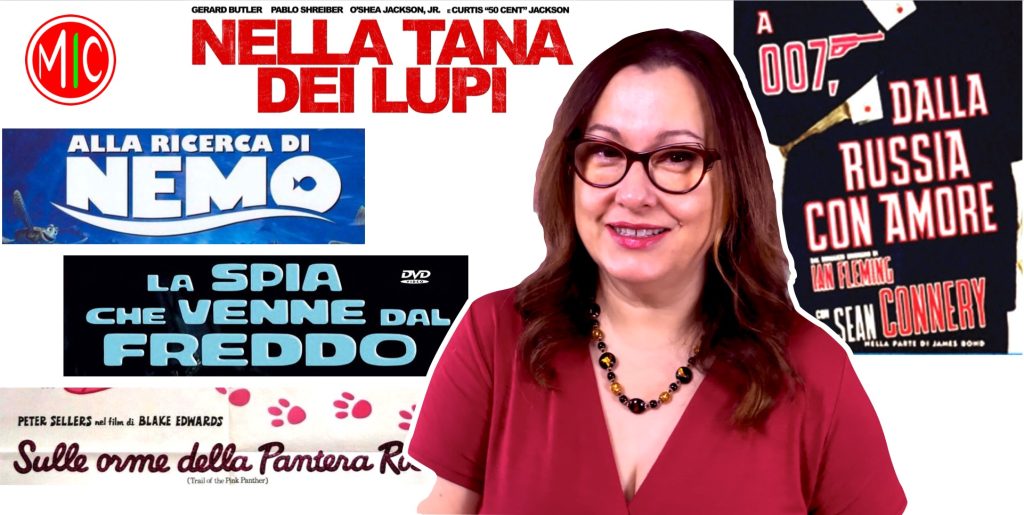
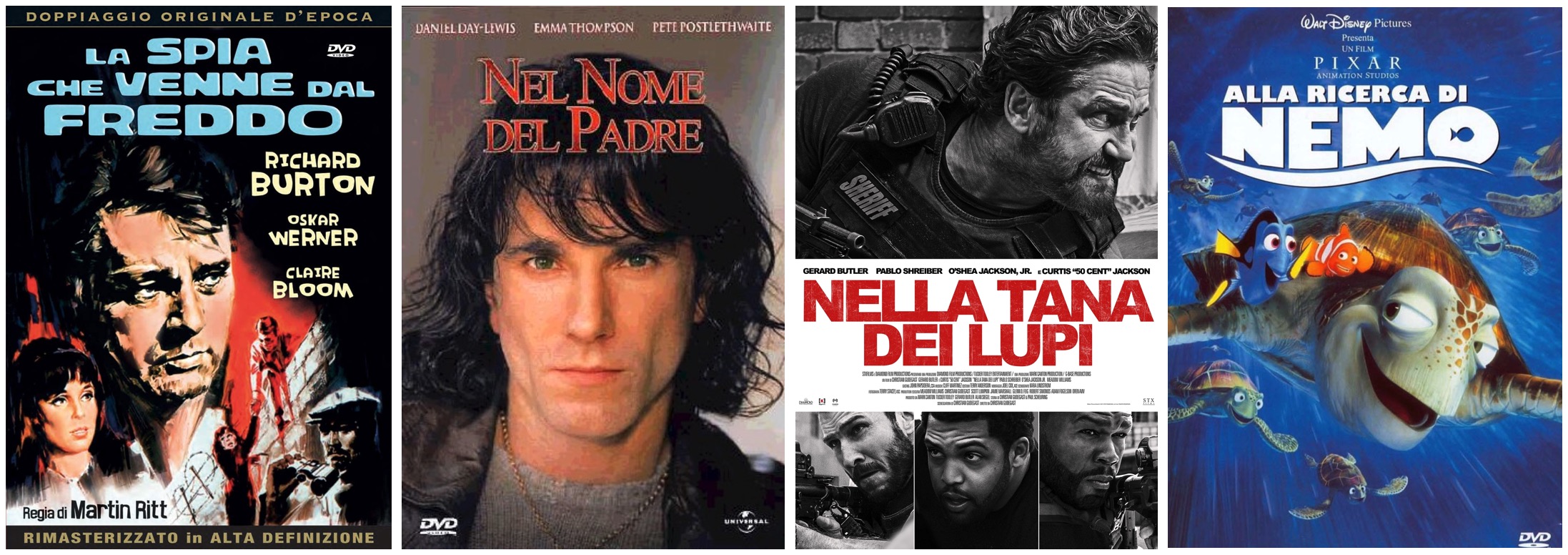
    Have a look at the titles in the posters below:

    La spia che venne dal freddo – Nel nome del padre – Nella tana dei lupi – Alla ricerca di Nemo

    Dal, nel, del, nella, dei, alla are all prepositional contractions – the combination of a preposition and a definite article. In Italian, the article changes depending on the gender, number, and sound of the word that follows, and so do prepositional contractions. If you are unsure about articles in Italian, you may want to review this post on definite articles.

    The main concept that you need to remember is that prepositional contractions follow the same rules of definite articles. When some prepositions are followed by an article, they are combined into prepositional contractions. Out of nine prepositions, only five (di, a, da, in, su) are contracted. Con, per, tra, and fra used to have contracted forms, but they are rarely used nowadays, so you can happily forget about them here!

    How to form prepositional contractions

    How to form a prepositional contraction? First of all you have to choose the correct preposition, and then you add the definite article that goes with the noun you are talking about. You do this by paying attention to the first letters of the word that follows, and to its gender and number: is it masculine or feminine? Singular or plural?

    For example:

    • Sandra telefona alle sue amiche. – Sandra calls her friends.

    What is the prepositional contractions here? Alle. Alle is actually a + le: the preposition a (to), which is needed after the verb telefonare, and the definite article le, which is feminine plural, like the noun amiche.

    Let’s say Sandra called just one of her girlfriends. The sentence would be:

    • Sandra telefona alla sua amica Lucia. – Sandra calls her friend Lucia.

    Amica is feminine singular. Alla = a + la.

    Masculine words require special attention, because there are two different masculine definite articles, il and lo. This is to avoid an unpleasant clash of sounds. Let’s see.

    The prepositional contractions del, al, dal, nel, sul are used before masculine singular words that begin with a consonant (except x, y, z and the groups gn, pn, ps, s + consonant, vowel):

    • La gamba del tavolo. (del = di + il)
    • Diamo il tonno al gatto. (al = a + il)
    • Vengono dal deserto. (dal = da + il)
    • È scritto nel libro. (nel = in + il)
    • Metti la coperta sul divano. (sul = su + il)

    The prepositions dello, allo, dallo, nello, sullo are used before masculine singular words beginning with x, y, z, the groups gn, pn, ps, s + consonant, and the very few words that begin with i + vowel:

    • Il vasetto dello yogurt. (dello = di + lo)
    • Telefoniamo allo psicologo. (allo = a + lo)
    • È attivato dallo iodio. (dallo = da + lo)
    • I guanti sono nello zaino. (nello = in + lo)
    • C’è un buco sullo stivale. (sullo = su + lo)

    As we saw above, feminine words are easier. The prepositions della, alla, dalla, nella, sulla are used before feminine singular words beginning with any consonant:

    • La porta della casa. (della = di + la)
    • Scendo alla prima fermata. (alla = a + la)
    • Usciamo dalla scuola. (dalla = da + la)
    • Nella cucina c’è un bel tavolo. (nella = in + la)
    • Siediti sulla sedia. (sulla = su + la)

    And the prepositions dell’, all’, all’, nell’, and sull’ are used before words beginning with a vowel, both masculine and feminine:

    • Il negozio all’angolo. (all’ = a + l’)
    • Il telefono dell’amica. (dell’ = di + l’)
    • Viene dall’Asia. (dall’ = da + l’)
    • Nell’antico castello. (nell’ = in + l’)
    • La casa sull’albero. (sull’ = su + l’)

    Prepositional contractions before plural words

    Now, what about plural words? Here again, masculine words are trickier, because there are two different plural articles: i and gli.

    The prepositions dei, ai, dai, nei, sui are used before masculine plural words beginning with a consonant (except x, y, z, the groups gn, pn, ps, s + consonant, vowel):

    • Sono i padroni dei cani. (dei = di + i)
    • Diamo le chiavi ai vicini. (ai = a + i)
    • Vado dai bambini. (dai = da + i)
    • Passeggiamo nei boschi. (nei = in + i)
    • I ragazzi ballano sui tavoli. (sui = su + i)

    The prepositions degli, agli, dagli, negli, sugli are used before masculine plural words beginning with  x, y, z, the groups gn, pn, ps, s + consonant, or a vowel:

    • La vita degli animali. (degli = di + gli)
    • Mando gli inviti agli amici. (agli = a + gli)
    • Vado dagli studenti. (dagli = da + gli)
    • Negli angoli c’è la polvere. (negli = in + gli)
    • Non arrampicarti sugli alberi. (sugli = su + gli)

    Here, again, feminine nouns are easier: the prepositions delle, alle, dalle, nelle, sulle are used before all feminine plural words:

    • I vetri delle finestre. (delle = di + le)
    • Mando gli inviti alle studentesse. (alle = a + le)
    • Vado dalle mie amiche. (dalle = da + le)
    • Cosa hai messo nelle valigie? (nelle = in + le)
    • Camminare sulle uova. (sulle = su + le)

    As I mentioned above, these are exactly the same rules of Italian definite articles. If you can use articles correctly, it will be easy for you to identify and understand prepositional contractions.

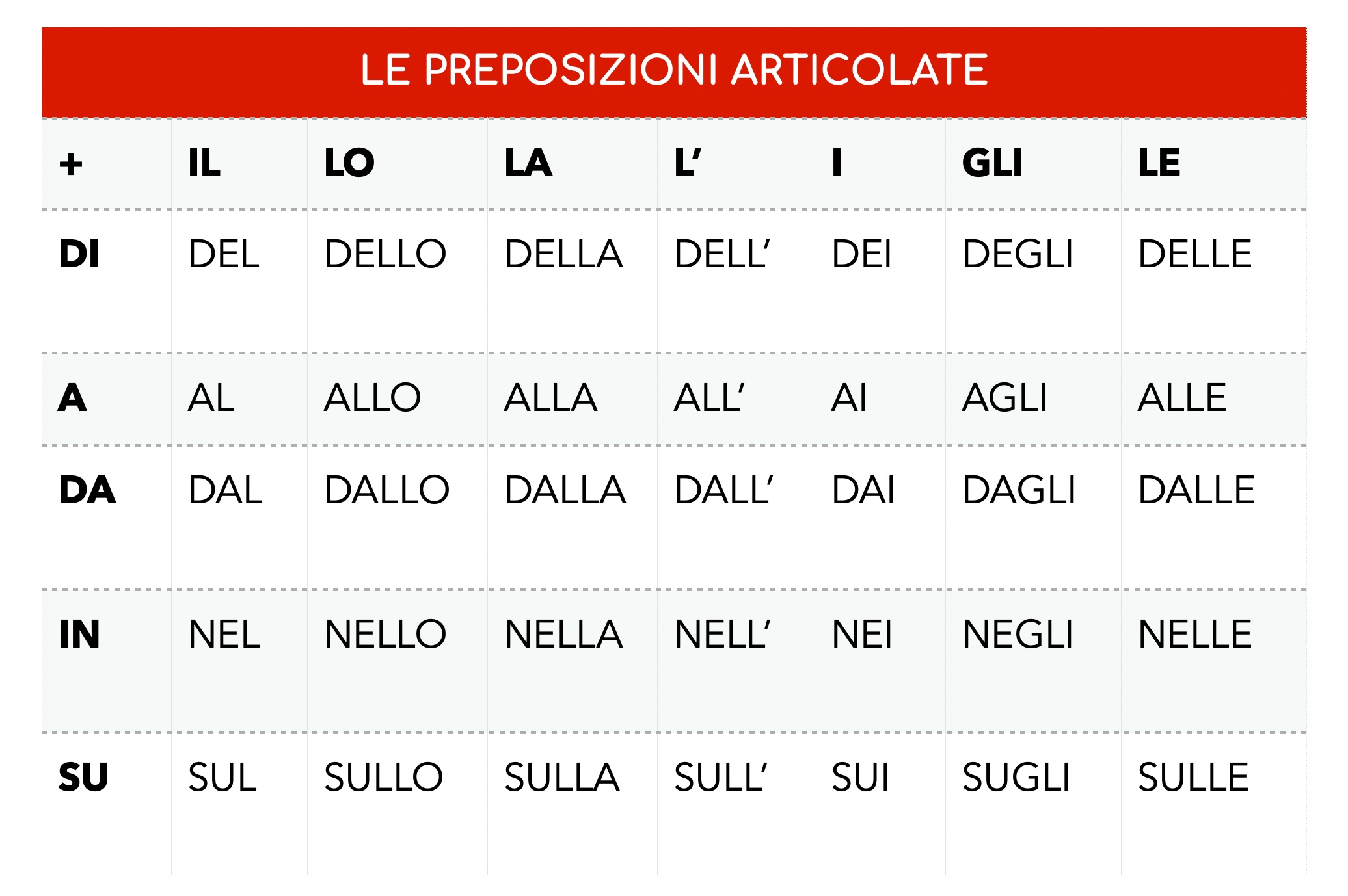
    In the following table you can find all the combinations we have seen above:

    How to use prepositional contractions

    Prepositional contractions have basically the same functions of simple prepositions, but there are a few differences that are worth mentioning. Since they are the contraction of a preposition and a definite article, prepositional contractions are generally used when the noun that follows is something specific. Compare:

    • Entra in casa! Come in, come inside. Here we are inviting someone to come in, and this is a fixed expression, the focus is more on the action of entering the house than on a specific house.
    • Entrarono nella casa di nascosto. They sneaked into the house. Here we’re focusing on the fact that someone sneaked into a specific house: la casa —> nella casa.
    • Vado in vacanza in Francia. Here again, we are referring to France in general.
    • Vado in vacanza nella Francia del sud. This is more specific, nella Francia del sud, in the South of France.

    As a rule, we use simple prepositions before names, surnames and most names of places:

    • Ho telefonato a Chiara. (although in some regions you may hear: Ho telefonato alla Chiara.)
    • Un tributo a Maradona. (you may hear: la Meloni, but the article before a woman’s surname is now considered disrespectful)
    • Vengo da Venezia e vado a Firenze.
    • Vado in vacanza in Toscana.

    As always, practice is key. Notice which prepositions follow specific verbs when you read something in Italian, and why not, try to write simple sentences with prepositions in the comments below!

    Alla prossima 😉

    Anna

    Related video lessons:

  • Cultura e società

    Lemons, Water Fountains, and Washing Lines: Motifs in Post-War Italian Films

    Reading Time: 15 minutes

    If you love watching movies, you may also enjoy spotting motifs: little things – objects, concepts, design elements – that the filmmaker has added to enrich the film’s message, setting, or feeling or maybe just for fun. Many of these motifs, recurring in post-war Italian films, are examples of italianità – characteristically Italian things. Recognizing them will help you get a feel for the culture. 

    As I write the cineracconti (photo-stories) for my blog, I go frame by frame, making screenshots along the way. By slow, attentive viewing, I spot motifs that might otherwise fly by, perhaps to be noticed on a second – or third or fourth – encounter. 

    When you’re familiar with the motifs that crop up in Italian films, you’ll be alert to their coded meanings and you’ll also get it when the filmmaker uses them for comic effect. 

    Below, I share some motifs that have caught my eye in the post-war Italian films that I love. I hope that, once aware of these, you’ll have a deeper understanding of the films and you’ll get an idea of how to watch movies more attentively so as to get a better understanding of the filmmaker’s intent and, ultimately, to take more pleasure in what you’re seeing. Note: spoiler alert!

    (For a discussion of common themes in post-war Italian films, please read my earlier article published in July 2025, right here in My Italian Circle, “Understand Italian Movies Better! Common Themes in Classic Italian Movies.”)

    Oranges and Lemons

    The sight, smell, or flavor of oranges is bound to make an appearance in films set in Sicily or in the South

    1. In Mafioso, Nino (Alberto Sordi) is headed to his Sicilian hometown, along with his wife and children, who’ve never left northern Italy. As their ferry approaches Sicily, he shares his excitement.

    “Look! That’s the city of Messina! Smell that fragrance! You can already smell the fragrance of oranges, of lemons.” 

    1. In Rocco e i suoi fratelli, the Parondi brothers come north to Milan. Their first stop is a party, and they have brought oranges with them! 

    A party guest who also hails from the South is delighted. She exclaims, “Oranges! From our region! Thank you! What a fragrance!” 

    1. These citrus fruits are so iconic for Sicily that they appear throughout Nuovo Cinema Paradiso as a symbol of being away from home and of coming home.

    In an early scene, light floods in on a plate of lemons in front of two figures: Toto’s mother when young and when old. In the final scene, after Toto returns as an adult to visit his mother, a partially eaten orange sits between them on the table, as light filters in through lace curtains. 

    In a pan between little Toto and his mother across the table, a bowl of lemons links them.

    Making the sign of the cross

    Naturally, the church plays a big role in the lives of Italians, and so we have the motif of people making the sign of the cross

    1. In I fidanzati, Giovanni (Carlo Cabrini) enters a church and automatically makes the sign of the cross, using the hand in which he holds his newspaper.
    1. In Ladri di biciclette, director De Sica emphasizes how compulsive this gesture is for Italians (as well as for many Catholics worldwide).

    In a mad rush, church volunteers chase Antonio (​Lamberto Maggiorani​) through the chapel. But they interrupt their frantic pursuit to kneel and make the sign of the cross. Antonio’s little son Bruno (Enzo Staiola), also rushing, likewise stops, kneels, and blesses himself before hurrying on. 

    1. Similarly, in Roma città aperta, Don Pietro (Aldo Fabrizi) and Marcello (Vito Annicchiarico), before they leave the church, kneel at the altar and then dip their hands in holy water and cross themselves.
    1. In La ciociara, Cesira (Sophia Loren) brings her daughter Rosetta (Eleonora Brown) to the countryside to avoid the Allied bombing in Rome. As the war nears its end, they make their way back home. Stopping in a bombed-out church, the religious Rosetta spits out her gum, genuflects, and blesses herself, though even the altar has been reduced to rubble. (Cesira doesn’t bother.)
    1. Commedia all’italiana director Mario Monicelli uses this gesture for a comic moment. In Risate di Gioia, madcap actress Gioia (Anna Magnani) dips her hand into the holy water and then wets Umberto’s (Totò) with her own, to save him the trouble of dipping. With this water, they each make the sign of the cross.

    Communal Water Fountains – Fontanelle pubbliche

    The source of water for Italy’s villages – and even some urban neighborhoods – is the communal fountain, which provides a frequent setting for film storytelling.

    1. Two fountains appear in the opening of Ladri di biciclette. First, we see Antonio, lounging next to a water fountain outside the employment office. His name is called for a job and he doesn’t notice, so his friend comes to find him. (“They want you. Are you deaf? Let’s go!”) Behind him, a woman kneels at the fountain, collecting water for her family. Next we see Antonio’s wife, Maria (Lianella Carell), who’s also collecting water at a communal pump.

    Antonio and Maria walk home, but he’s too agitated to notice that she’s struggling with the heavy buckets.

    1. In Salvatore Giuliano, the military has imposed a curfew. Given just one hour to collect water and groceries, the villagers crowd around the town water pump.
    1. In L’onorevole Angelina, the persistent lack of water in Rome’s Pietralata neighborhood is critical to the story. Angelina (Anna Magnani) rallies the other neighborhood women to protest to the local government. Their campaign is successful, the water is fixed, and the women embark on further political action to improve their lives. 

    In this final image of women washing clothes together, we see the essential place of the communal water sinks in the life of the community.

    1. In Le quattro giornate di Napoli, filmmaker Nanni Loy placed key scenes at water fountains. In the first, a sailor – based on a real person – celebrates the end of the war with a German soldier. They ride a bike together to a fountain, where the sailor washes his face. 

    But, while he is washing, a German military vehicle drives by; the war is not over. When the sailor looks up, he sees the barrel of a gun; he is a prisoner of war.

    In another neighborhood of now-occupied Naples, the women are warned that the Germans are rounding up men to send to labor camps. “The Germans want to pick up all the males and take them to Germany.”

    Word spreads to the communal fountain, where people scatter. The camera remains focused on Maria (Lea Massari), carrying her bucket: we first meet this important character at the fountain.

    Another character spotted at a water fountain is Gennaro (Domenico Formato), based on the 11-year-old resistance hero Gennaro Capuozzo. He’s come to fill his bucket.

    When Gennaro sees the German jeeps coming, he runs away, beginning an adventure that will end in tragedy.

    1. In Il cammino della speranza, when the criminal Vanni (Franco Navarra) spots a Carabiniere, he hides his face in a nearby water fountain. The officer keeps on walking.

    Living in Caves

    During World War II – and in the years before and after – the poorest of the poor in Italy lived in caves. This motif has produced some powerful scenes.

    1. In Gli anni ruggenti, Omero (Nino Manfredi), a visitor to a town in Puglia, is mistaken for a Fascist inspector and so is wined and dined by the local officials. In this scene, he’s besieged with requests by the impoverished residents. One old woman has this message for Mussolini: “Tell him I’m in a cave with six children and a donkey.”

    On the train, heading home, Omero reads a letter that a villager has slipped him: a simple plea to Mussolini from a cave dweller for a window. It’s clear to the viewer that no one – and certainly not il Duce – is going to do anything to help these people.

    1. In Le notti di Cabiria, the streetwalker Cabiria (Giulietta Masina) accompanies a good samaritan bringing food to people living in caves. Cabiria is shocked to see an old friend: Bomba, once a prosperous streetwalker: “They’d shower me with gifts, money in the bank, jewelry!” 

    Cabiria, seeing what her own future may be, begins a desperate effort to turn her life around.

    1. In the second episode of Paisà, American soldier Joe (Dots Johnson) catches a street urchin who’s stolen his boots. He forces the boy to take him home so that he can get the boots back. What he learns is that the boy, whose parents are dead, is living in a vast cave thronged with families. Horrified, Joe leaves without taking the boots. 

    Clotheslines – I panni stesi

    1. In Il bidone, about a group of scam artists, the ragged clothes hanging from clotheslines let us know that the swindlers have targeted the very poor. 
    1. In La strada, a young woman hanging fresh laundry on a line catches the attention of the heartless Zampanò (Anthony Quinn). He hears her singing a song that he knows. 

    It’s a song that his companion Gelsomina used to play on her trumpet

    The woman tells him that Gelsomina (Giulietta Masina), whom he had mistreated and finally abandoned, has died. For the first time in the film, Zampanò shows emotion. 

    1. A beautiful use of the clothes-on-the-line motif appears in Una giornata particolare, a wartime story made much later. Antonietta (Sophia Loren) is a beleaguered housewife, with six spoiled children and a brutish Fascist husband. Her neighbor Gabriele (Marcello Mastroianni) is a homosexual radio announcer, about to be sent off to internal exile. They meet by accident.

    Antonietta, accompanied by Gabriele, brings her basket up to the roof to take the sheets and clothes off the line. As we witness the pair’s interactions, we hear Fascist announcements from a rally with Hitler and Mussolini in the background. The lovely white sheets loft in the breeze as the neighbors enjoy a brief moment of abandon in troubled times.

    1. Once a motif is established, it’s ripe for comedy. Director Mario Monicelli plays with the clothesline motif in his commedia all’italiana I soliti ignoti, about a group of bumblers planning a bank heist. First, we see a photographer’s studio where photos and underwear are hung side by side to dry on a line. Later, as the robbers plan their heist, the film they have shot of the point of entry is useless because it’s covered by washing on a line.

    Finally, the thieves consult Dante (Totò), an expert, who gives them a lesson on safecracking up on the roof, surrounded by hanging laundry.

    Outdoor Dancing 

    Reflecting a culture of sidewalk cafes and piazza life, Italian films often feature a scene of people dancing outdoors. As with the other motifs, the filmmaker may use this one as a device to say something about the characters or the situation or perhaps just as a moment of light relief for the viewer. 

    1. In I vitelloni, Fausto (Franco Fabrizi) sets up his record player for a mambo.

    But the event doesn’t go as quite as intended: Fausto and Alberto (Alberto Sordi) end up as the only ones dancing.

    1. In an iconic scene from Le notti di Cabiria, streetwalker Cabiria dances a carefree mambo with one of the pimps, to music from a record player. In the third image, note that Cabiria’s friend walks away for a moment to meet a potential client who’s pulled up in a car.

    This scene of the ordinary – and communal – life of the streetwalkers is one of the few carefree moments of the film.

    1. In the neorealist melodrama Riso amaro, director De Santis, in a tribute to American pop culture, shoots his star, Silvana Mangano, dancing to boogie-woogie music on her portable record player. 

    This scene also stirs up a little sensuality, not much seen in neorealist films.

    1. In Il sorpasso, carefree Bruno (Vittorio Gassman) and serious Roberto (Jean-Louis Trintignant), on a road trip, drive by a meadow where country folk are dancing. They make fun of some of the characters.

    This sets up the tenderest line in the film. Delighted that Roberto is finally letting go, Bruno tells him: “Well done! I like you like that. When you laugh, I like you more. Oh, Robe’, to hell with sadness.”

    Train Farewells

    It seems people are always leaving in Italian films. In post-war films, that is usually – though not always – by train.

    1. Near the end of I compagni, Raoul (Renato Salvatori) leaves town before he can be arrested for attacking a police officer during a textile strike. 

    As the train roars away, Adelle (Gabriella Giorgelli) seems finally to declare her love for him: “Write to me!” He replies: “But you don’t know how to read!”

    1. In the World War II film La ciociara, Cesira has decided to leave Rome for the countryside to protect her daughter from the Allied bombing. She asks Giovanni (Raf Vallone), a married family friend, to take care of her shop while she’s gone. He agrees, but makes it clear that, in return, she must have sex with him.

    She’s offended at the time, but when he comes to see her off, she asks, “Maybe you could come up some Sunday?”

    1. In I vitelloni, when Moraldo (Franco Interlenghi) finally decides to leave home, railroad worker Guido (Guido Martufi) sees him as he boards the train, and asks where he’s going, what’s he going to do, doesn’t he like their home town?

    Moraldo doesn’t have any answers for Guido – or for himself.

    1. In order to survive, the sulfur miners of Il cammino della speranza decide to emigrate to France. They embark on a series of journeys by train, bus, and truck, which sets up a succession of goodbyes throughout the film.

    I hope that you’ve enjoyed this glimpse into some of the motifs that we encounter in post-war Italian films – and that these images and descriptions will inspire you to watch the films, attentive to the italianità that enriches their stories.

    We’ve written cineracconti (photo-stories) about most of the films represented above, which include dialogue, scene description, and cultural notes side by side in Italian and English. We hope you’ll subscribe to the blog and enjoy reading these wonderful film stories.

    Judy Cohen 

    judycohen.iknewthemwell@gmail.com

    www.liconoscevobene.net 

    with 

    Editor: Alberto Maio

    Italian teacher reviewer: Michela Badii

    Proofreader: Lucrezia Grussani

  • Cultura e società

    Dalle olive all’olio: come si produce l’oro verde d’Italia

    Reading Time: 5 minutes

    Dentro l’oliveto

    Oliveto durante la raccolta

    È ottobre: negli oliveti di tutta Italia comincia la raccolta delle olive, che in alcune zone dura fino a dicembre inoltrato. Dalle distese immense di olivi in Toscana e Puglia agli appezzamenti familiari o addirittura ai giardini, dalla mattina alla sera ferve l’attività nel tentativo di raccogliere le preziose olive nel minor tempo possibile. Una volta staccati dagli alberi, questi frutti delicati devono essere portati al frantoio al più presto, idealmente entro uno o due giorni, per diventare olio extravergine della massima qualità.

    Come nascono le olive

    Fiori di olivo
    Le piccole olivine

    Questo viaggio inizia diversi mesi prima, all’inizio di giugno, quando gli olivi sono in fiore. Avete mai visto dei fiori di olivo? Eccoli qui a sinistra: sono dei piccoli grappoli di fiorellini bianchi. L’impollinazione dell’olivo è anemofila, cioè avviene grazie al vento. Se il tempo è clemente, ben presto i fiori diventano piccole olivine. L’allegagione, cioè la trasformazione del fiore in frutto, è piuttosto difficoltosa nell’olivo: solo l’1-4% dei fiori riescono a diventare olive.

    Nel corso dell’estate, le olive si ingrossano e maturano, sempre che lo consentano la siccità, avversità meteorologiche sempre più frequenti come la grandine e la moltitudine di insetti che vivono negli oliveti. Se tutto va bene, a settembre le olive iniziano a cambiare colore: da verdi diventano giallastre, poi viola e infine, piano piano, nere.

    Le olive sono tutte uguali?

    Olive mature

    Naturalmente no, le olive non sono tutte uguali: ne esistono tantissime varietà diverse, chiamate cultivar. Ci sono le olive da tavola, chiamate anche olive da mensa, meno adatte alla produzione di olio, che in genere vengono raccolte e consumate verdi, come l’Ascolana Tenera, la Bella di Cerignola, la Nocellara del Belice; e poi ci sono le varietà coltivate specificamente per produrre l’olio. In totale, esistono in Italia più di cinquecento varietà di olive diverse, e tante altre si coltivano nel mondo. Ogni varietà ha un grado di maturazione ideale diverso: per produrre l’olio perfetto, alcune olive vanno raccolte completamente nere, altre non appena virano al violetto.

    L’olivo si coltiva soltanto in Italia meridionale?

    L’olivo è una pianta mediterranea che ama il sole e il caldo: sono particolarmente famosi i grandi oliveti pugliesi, con i loro alberi millenari, che negli ultimi anni sono stati decimati dalla famigerata Xylella. L’olivo però si coltiva in quasi tutta Italia, anche al nord dove tradizionalmente si usavano altri grassi per cucinare, come il burro e lo strutto. A causa del cambiamento climatico, oggi troviamo oliveti ad altitudini sempre più alte, anche oltre 600 metri sul livello del mare. Ci sono poi zone dal microclima particolarmente favorevole, come la riviera ligure o il lago di Garda, dove si coltivano varietà locali. In Liguria si producono le famose olive Taggiasche, dal paesino di Taggia, in provincia di Imperia; nel Veneto c’è la cultivar Grignano, originaria di Verona, con cui si produce un olio particolarmente amaro e fruttato; in Toscana si coltiva soprattutto il Leccino, diffuso anche più a nord perché resistente al freddo.

    Ma bando alle ciance: le olive sono mature, è ora di portarle al frantoio!

    Cosa succede al frantoio

    Il frantoio è il luogo in cui si frangono (cioè si frantumano, si macinano) le olive per produrre l’olio. Può essere enorme, su scala industriale, di medie dimensioni oppure piccolo, familiare. Nelle zone di produzione dell’olio ci sono frantoi un po’ dappertutto, in ogni paese. Chiunque può portare le proprie olive al frantoio, anche chi ha solo qualche olivo in giardino!

    Come si “spremono” le olive? Prima di tutto si macinano; una volta si usavano delle grandi mole in pietra. Poi la pasta di olive così ottenuta si spalmava sui fiscoli, dei dischi di fibre vegetali intrecciate. Qui a destra potete vedere una pila di fiscoli all’interno di un torchio, la macchina che applicando una forte pressione fa uscire l’olio dalla pasta di olive.

    Alcuni frantoi “storici” usano ancora le mole e i fiscoli, ma nei frantoi più moderni si utilizza una tecnica diversa, in cui le olive vengono trasformate in olio in un processo continuo, senza mai esporle all’aria. Le olive vengono immesse in una macchina in cui vengono automaticamente lavate, private delle foglie che possono essere cadute durante la raccolta e macinate. La pasta di olive viene quindi mescolata lentamente in una gramola per favorire la separazione dell’olio dall’acqua, e infine si estrae l’olio per decantazione: l’olio, più leggero dell’acqua, sale in superficie. Un’ultima fase di filtrazione elimina i frammenti di nocciolo eventualmente rimasti, et voilà: abbiamo il nostro olio extravergine di oliva.

    A questo punto, se si tratta del nostro olio, lo porteremo a casa in contenitori di plastica o di acciaio, e poi lo imbottiglieremo al più presto. Dopo qualche giorno potremo cominciare a gustare il nostro oro verde: sarà amaro e piccante all’inizio, e poi sempre più fruttato e complesso con il passare del tempo.

    Quanto costa l’olio d’oliva?

    L’olio extravergine di oliva italiano è sempre più costoso. Le avversità e l’incertezza del clima rendono più difficile la coltivazione; la raccolta delle olive è lunga e faticosa, soprattutto nei terreni aspri e scoscesi che caratterizzano buona parte d’Italia; la frangitura e l’imbottigliamento hanno un costo non indifferente.

    Produrre l’olio non è come fare il vino: la resa dell’oliva è molto bassa, in media intorno al 10%. Questo significa che se portiamo 100 chilogrammi di olive al frantoio, con una spesa media di 20 euro circa, otterremo poco più di 10 litri d’olio. Aggiungendo il costo del tappo e della bottiglia, ogni litro d’olio ci costerà almeno 3 euro, senza considerare il tempo e le risorse necessarie per curare l’oliveto, potare gli olivi, fare i trattamenti fitosanitari, raccogliere le olive e imbottigliare l’olio. Non deve sorprendere, quindi, se il prezzo previsto per un buon olio extravergine di oliva prodotto quest’anno in Italia è di 12-14 euro al litro.

    Spero che vi sia piaciuto questo viaggio nell’oliveto insieme a me. Voi cosa ne pensate? Vi piace l’olio extravergine italiano, o scegliete alternative più economiche? Scrivetemi!

    Alla prossima,

    Diana

    Glossario

    • dicembre inoltrato: late December
    • appezzamento: plot of land, field
    • staccare: to detach, to pick
    • frantoio: oil mill
    • in fiore: blossoming
    • grappolo: bunch, cluster
    • impollinazione: pollination
    • clemente: clement, mild
    • allegagione: fruit set
    • maturare: to ripen
    • siccità: drought
    • grandine: hail
    • mensa: kitchen table
    • virare: to change color
    • millenario: thousand-year old
    • decimare: to decimate, to wipe out
    • microclima: microclimate
    • fruttato: fruity
    • bando alle ciance: enough talking
    • frangere: to break; commonly said of waves: le onde si frangono sugli scogli
    • spremere: to squeeze
    • mola: millstone
    • spalmare: to spread
    • pila: stack
    • decantazione: settling
    • nocciolo: pit, bone
    • imbottigliare: to bottle
    • piccante: spicy, hot
    • scosceso: steep
    • resa: yield
    • fitosanitario: phytosanitary, related to plant health