
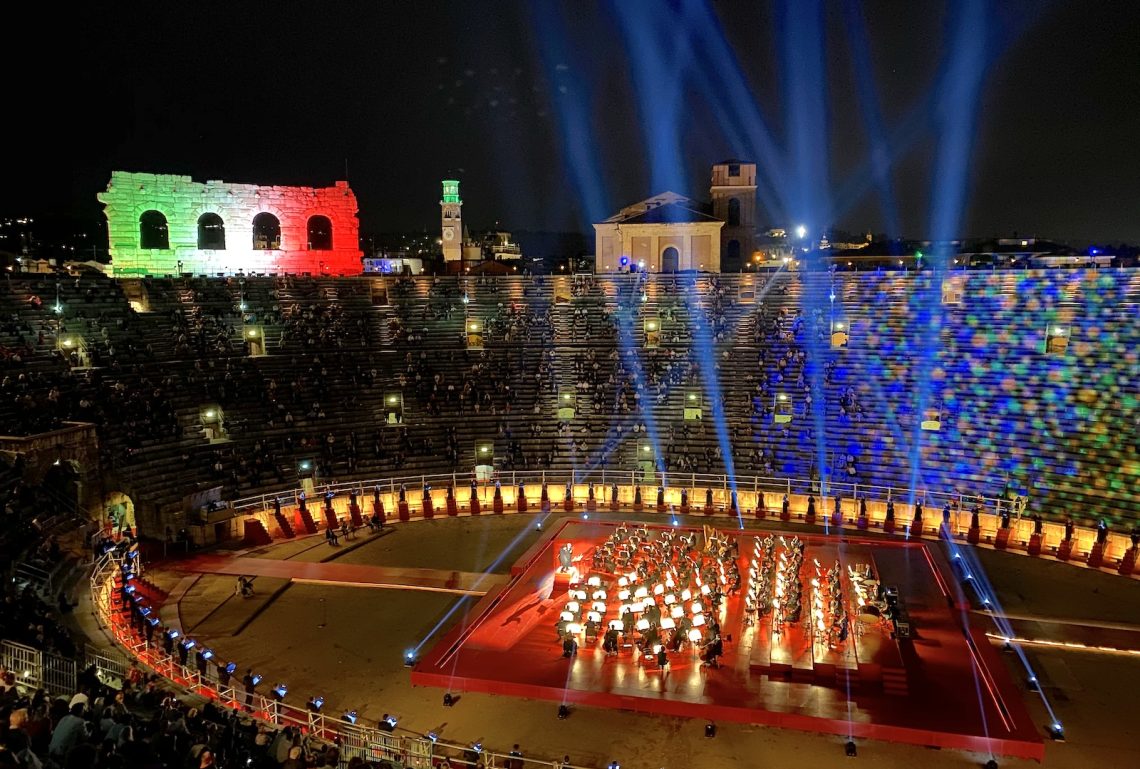
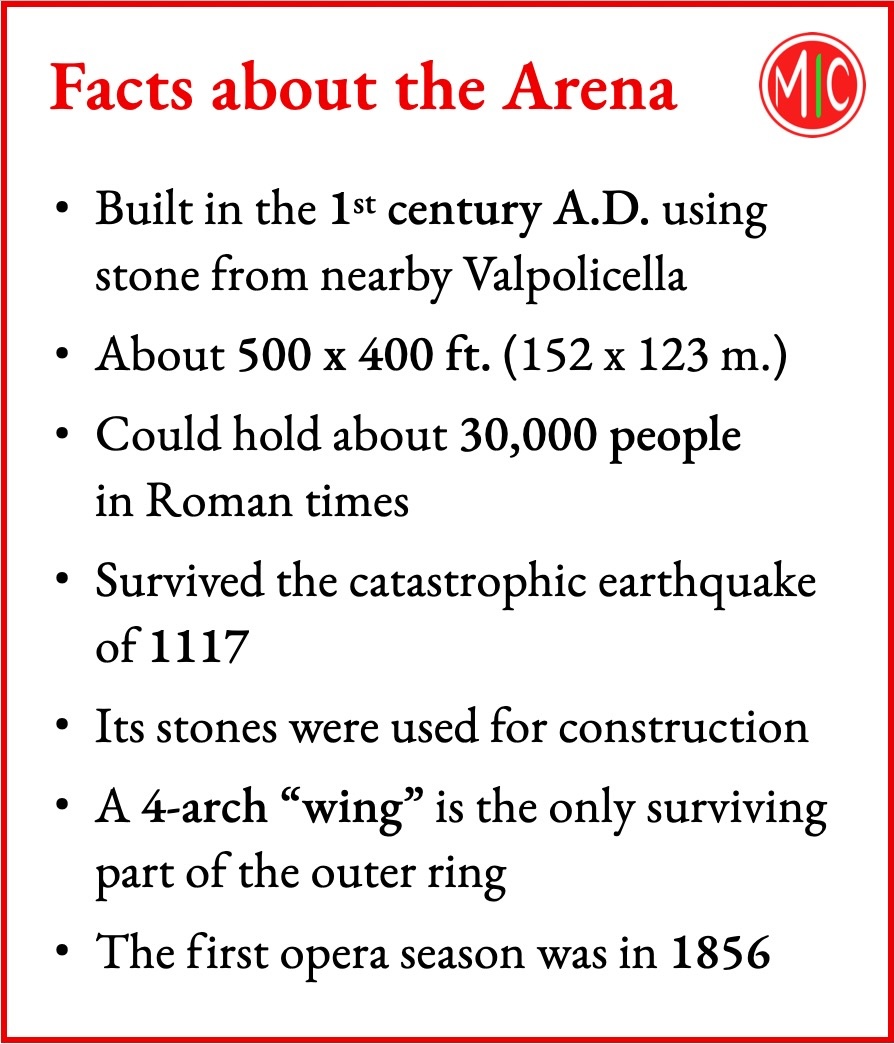
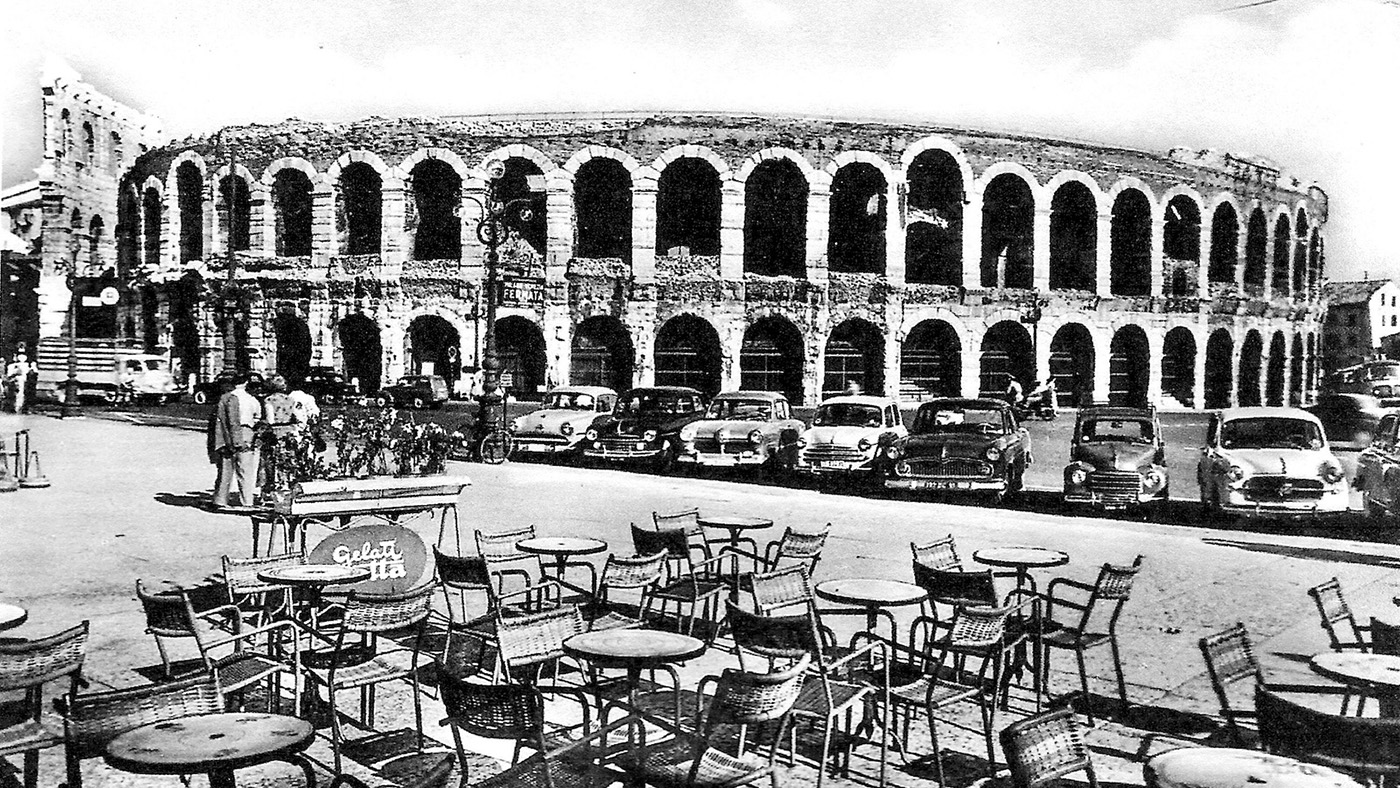
I was born and raised in Verona, and I spent most of my adult life here. It’s a small city with a big history and an even bigger landmark to remind us of it: the Arena, a 2,000-year-old amphitheater, one of the best-preserved Roman buildings in the world. The Arena withstood time, fires and earthquakes, and is still standing today on our largest square, Piazza Bra, next to the City Hall. I remember a time when cars could circle the Arena like a roundabout, and I never thought much of it: it was standing there as it had always been, smog-stained and massive.
Imagine my surprise when I discovered that the Arena di Verona had become The Most Italian Place on Earth™. Yes, that’s a trademark. We have a trademarked Roman monument now.
What Does “Italian” Even Mean Here?
The Arena di Verona Foundation, the institution that manages the amphitheater and the events organized inside of it, registered the trademark in 2023. It sounds bold, poetic, and slightly bizarre — which, to be fair, is already quite Italian. All in all, it has a nice ring to it, but I couldn’t help but wonder about the reasons behind this decision, and what they meant by Italian.
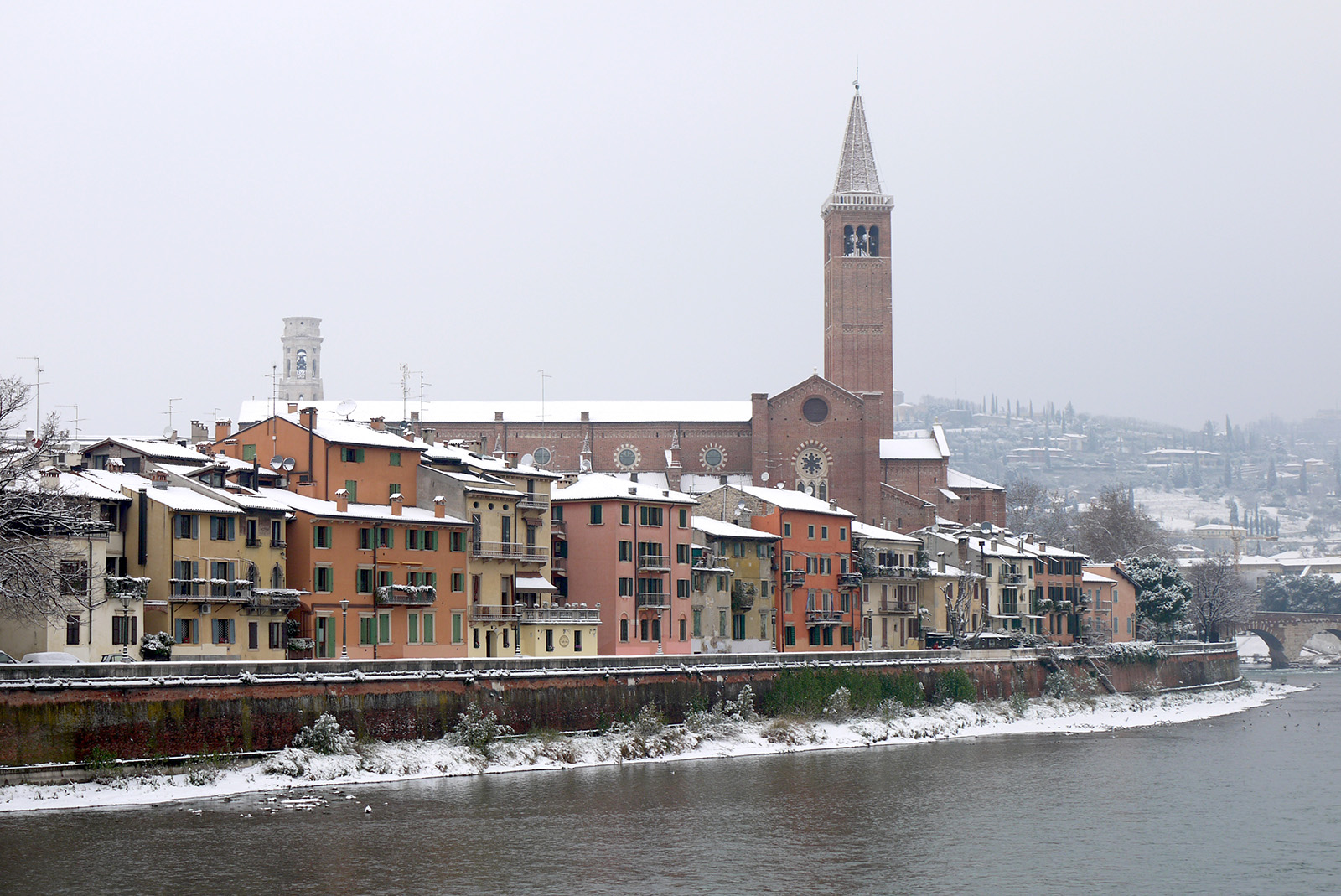
Verona has never struck me as stereotypically Italian. We’re in the north, between the fog of the Po Valley and the German‑speaking mountains of Trentino‑Alto Adige. Winters can be dull and gray, summers are humid, and we even have snow every now and then. Not exactly the postcard Italy of lemon trees and turquoise skies.
The people of Verona don’t really fit the stereotype either, and never looked particularly Italian to me. I never thought of myself as very Italian! Many of us are reserved and suspicious, not at all warm and cheery like real Italians are supposed to be. We only open up with old friends — or after a Spritz or two.
If Verona isn’t stereotypically Italian, why would the Arena claim that title? What makes it so Italian? Short answer: ancient Rome and opera. The Arena is where they collide.
Which is more Italian, the Arena or the Colosseum?
The Arena is essentially a scaled-down Colosseum, but with some crucial differences. It’s built from local red ammonitic limestone rather than Rome’s travertine, giving it a warmer, rosier glow at sunset. It’s smaller, more intimate, and — crucially — it’s still alive.
Where the Colosseum is a ruin, the Arena is a venue. Where the Colosseum is a symbol, the Arena is a habit. Where the Colosseum is history, the Arena is experience. This is where the “Italian” part begins to make sense.
Opera: Italy’s Emotional Engine
If ancient Rome gave the Arena its body, opera gave it its soul. In the summer, the Arena di Verona opera season fills the amphitheater with up to 10,000 people every night — locals, tourists, opera lovers, opera skeptics dragged along by opera lovers — all waiting for the lights to go down. Cushions appear on the stone steps, the orchestra tunes, candles flicker, and the magic begins.
Opera is the only sport where Italians cheer for heartbreak, and the Arena is its stadium. Opera was never meant for the elite: it was a popular form of entertainment. This is where Verdi and Puccini feel less like musical legends and more like friends and relatives. Where even people who claim to “hate opera” end up shedding a tear during the most compelling arias. If there is a place where Italy performs its own identity — loudly, dramatically, unapologetically — it’s here.
For learners of Italian, a night at the opera is a linguistic gift, when words like amore, notte, cuore, vendetta stretch across the amphitheater in long, generous vowels.
Why Trademark “The Most Italian Place on Earth™”?
Because Italy is a brand, and the Arena di Verona is its logo.
The trademark is not about nationalism; it’s about storytelling. Verona needed a hook — something that captured the Arena’s unique blend of history, emotion, and spectacle. “The Most Italian Place on Earth™” is a provocation, a wink, a promise. It says: If you want to understand something about Italy, come sit on these stones for a night. And honestly? They’re not wrong.
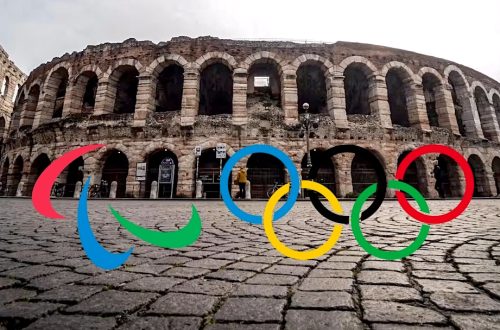
The Arena recently hosted the closing ceremony of the 2026 Winter Olympics and the opening ceremony of the Paralympics. Look back on these events in this post.
A Guide to the Arena di Verona: Practical Tips for Visitors
Even the most poetic amphitheater requires logistics. Here’s what you need to know if you are planning a night at the Arena:
Best time to visit the Arena di Verona: the opera season goes from June to September, with approximately four shows every week. Check the updated calendar on the official website. Other events, including major pop and rock concerts, take place throughout the year, except for the coldest months.
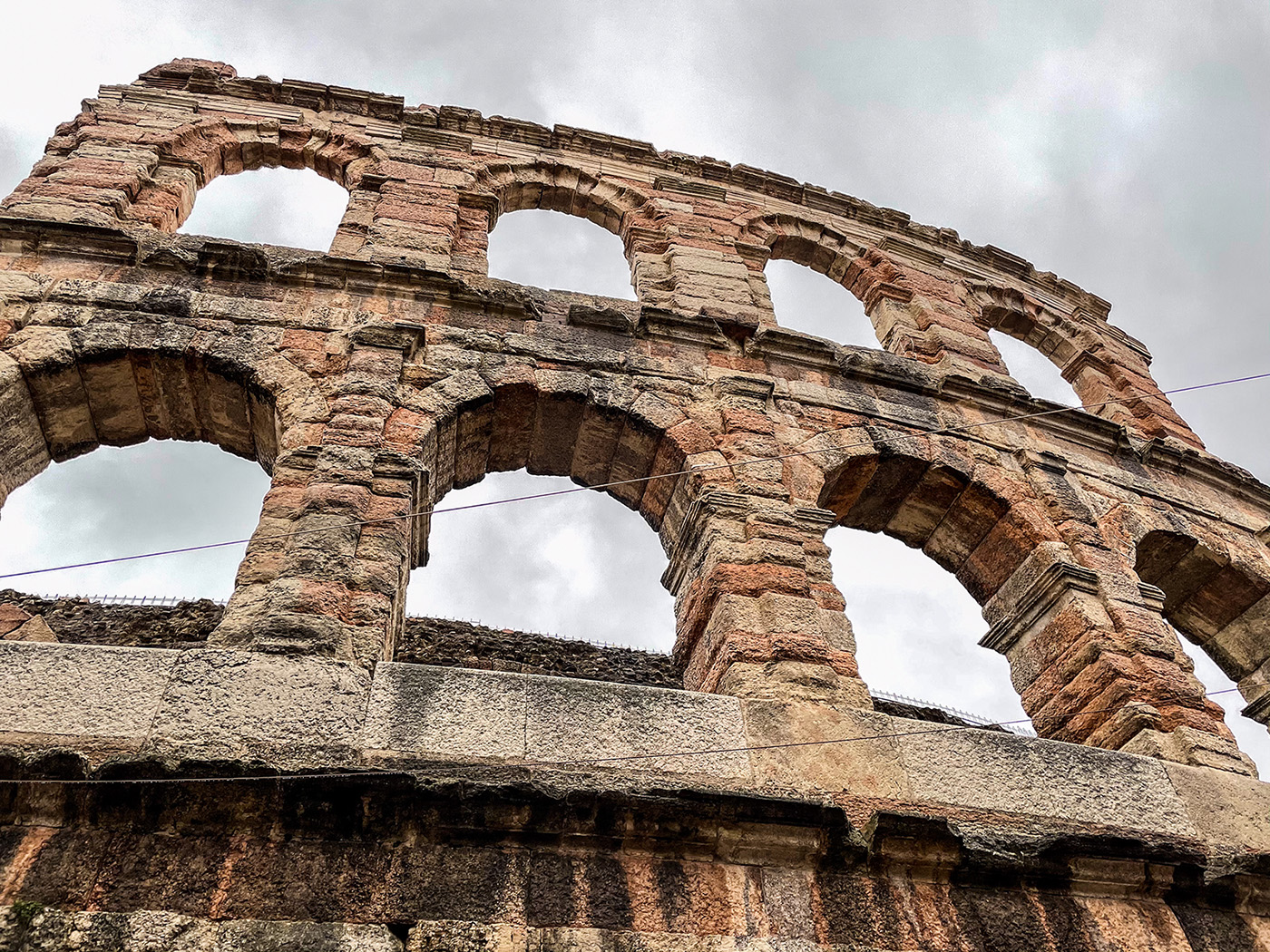
Where to sit: once upon a time, people with tickets for the stone steps would queue for hours to get a decent spot, but now all seats are numbered, and several sectors include padded seats. Remember: central sectors are great if you want to see the entire stage and all the choreography, but the acoustics is much better on the sides. There are no amplifiers at the opera, so it will all depend on how loud the singers are.
The gradinata — the stone steps — is the most authentic (and least forgiving) option, while the platea offers more comfortable seats. Here, a poltrona will feel luxurious compared to the ancient limestone, and a poltronissima will guarantee a more central view of the stage. Your ticket will list a settore, fila, and posto, plus the ingresso (entrance) you should use to enter. And whatever you choose, don’t forget the most important word of all: cuscino (cushion). Bring one or rent one from the Red Cross staff if you opt for the stone steps (Gradinata numerata, Sectors 4, 5 and 6).
What to bring: Water, a light jacket, an umbrella for that fickle summer weather.
What to expect: long evenings, scorching heat and/or dramatic weather, and an earworm or two.
If you are learning Italian, the Arena is a listening lab disguised as a monument. Before the show you will hear people muttering Che caldo! (It’s so hot!) or politely squeezing past exchanging Permesso (Excuse me) and Prego, passi pure (Please, go on). Once seated, someone invariably announces Si vede benissimo da qui! (You can see very well from here), even when it isn’t true. During the interval it becomes a chorus of Andiamo a prendere qualcosa? (Shall we go get something?) and C’è una fila lunghissima. (there’s a very long queue). And when the final note fades, the whole crowd spills into Piazza Bra whispering Che serata! (What a night!), as if they’ve all shared the same dream.
Couldn’t find a ticket for your favorite show? Listen from outside! Go near the Arena’s ala (wing, the only remaining part of the outer circle) for a free musical experience.
You can also just visit the monument during the day: it’s open Tuesday to Sunday from 9 am to 7 pm, except on opera/concert days. Check the calendar on this page. The ticket is 12 euro.
Best spritz near the Arena: locals avoid the outdoor bars and restaurants in Piazza Bra. Look just a little further and walk to Via Roma, in front of the Teatro Filarmonico, or to Via Oberdan. Central bars are always packed, so just stand outside, if you can: it’s a totally Italian thing to do.
So… Is the Arena di Verona Really the Most Italian Place on Earth™?
After a lifetime of walking past it, I think I finally understand the trademark.
It’s not about geography or stereotypes, it’s about layers — of history, of emotion, of people, of language. The Arena is one of the few places where you can hear three Italians at once: the musical Italian of opera, the everyday Italian of the crowd, and the soft Veneto inflections of Verona.
It’s about a place that has been applauded for twenty centuries and still isn’t tired. It’s about the moment when thousands of strangers fall silent together, waiting for the first note. If Italy has a heartbeat, it echoes inside the Arena di Verona.
Diana


Great blog Diana. Very helpful for my first visit to Verona in October. I look forward to it. Non ne vado l’ora! 👍
C’è un articolo molto interessante. C’è un mito che gli italiani del sud sono più amichevole che le persone del nord. Ho visitato la Sicilia molte volte e Verona in tre occasioni ma a me, come un uomo inglese, tutti gli italiani sono amichevole. Tuttavia, vengo di un’isola freddo e umido, sebbene non esattamente. Ho misurato una temperatura di trentacinque gradi nel mio giardino po’ giorni fa e abbiamo bisogno della pioggia. Viva Italia, nord e sud. Tuttavia, devo aggiungere che l’Arena, piazza Bra, e le strade intorno la piazza sono speciale.
Sono contenta che tu abbia trovato tutte persone amichevoli, ma penso che dal punto di vista dell’ospitalità gli italiani del sud abbiano una marcia in più. Prima o poi voglio andare in Puglia, perché oltre alle bellezze del paesaggio hanno anche tante cose buonissime da mangiare!