
• Cultura e società

    Ancora Sanremo?! – The 2025 Sanremo Music Festival

    Reading Time: 2 minutes

    Carissimi, anche quest’anno è arrivato il momento fatidico: è febbraio e sui media italiani non si parla d’altro che del Festival di Sanremo. A quanto pare questa è l’edizione numero SETTANTACINQUE! Incredibile, inossidabile, inarrestabile!

    Ormai dal 1951, nella cittadina di Sanremo, in Liguria, si tiene il concorso musicale più famoso, più amato e più odiato d’Italia: il Festival della canzone italiana. Oggi il festival si tiene al Teatro Ariston e viene trasmesso in diretta per cinque interminabili serate sul canale televisivo nazionale di RAI 1. Tutti i cantanti più noti, vecchi e giovani, belli e brutti, bravi e meno bravi, sono passati dal palcoscenico dell’Ariston e ci hanno regalato dei tormentoni indimenticabili e anche tantissime canzoni che invece, per fortuna, sono finite in fretta nel dimenticatoio.

  • Italian Grammar

    Ti sei lavato i denti? Italian Reflexive Verbs

    Reading Time: 3 minutes

    Italian reflexive verbs, a simple subject that can sometimes confuse even advanced learners!

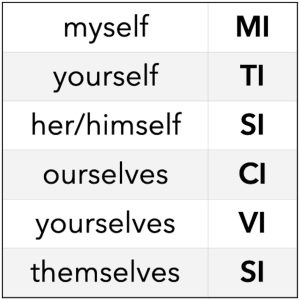
    Simply put, a reflexive verb is a verb conjugated with reflexive pronouns. We call them reflexive because, in most cases, the action performed by the subject reflects on the subject: I’m enjoying myself, mi diverto.

    In Italian these verbs are quite common, and you are likely to encounter them early on because many verbs that describe our daily routine are reflexive: alzarsi, lavarsi, pettinarsi, and so on.

    Compare English and Italian

    Italian has a higher number of reflexive verbs compared to English. However, there is positive news: English verbs that are reflexive in English are likely to be reflexive in Italian. For example:

    To enjoy oneself/To have fun – Divertirsi

    I am enjoying myself —> (io) mi diverto

    You are enjoying yourself —>(tu) ti diverti

    She/he is enjoying herself —> (lei/lui) si diverte

    We are enjoying ourselves —> (noi) ci divertiamo

    You are enjoying yourselves —> (voi) vi divertite

    They are enjoying themselves —> (loro) si divertono

    Mi lavo le mani, lavo le mie mani o mi lavo le mie mani?

    Often in Italian there is a reflexive verb where in English there is a verb followed by a possessive pronoun. For example: I brush my teeth, she combs her hair: io mi lavo i denti, lei si pettina i capelli. In Italian we don’t need the possessive adjective, it’s redundant, so do not say: mi lavo le mie mani or lavo le mie mani, but simply: mi lavo le mani.

    A common mistake

    The infinitive form of reflexive verbs ends with the pronoun -si, so the endings of the three conjugations are not -are, -ere, -ire, but -arsi, -ersi, -irsi. A common mistake is to keep the ending -si of the infinitive when conjugating the verb. Don’t say *mi divertirsi, but mi diverto. Conjugate the verb normally, and put the reflexive pronoun before the verb.

    The past tense of reflexive verbs

    We can conjugate reflexive verbs in all tenses; let’s look at the passato prossimo of lavarsi. Basic rules:

    1. Reflexive verbs take the auxiliary essere and not avere: sono lavato.
    1. Add the reflexive pronoun in front of the verb: mi sono lavato.
    1. Remember! When the passato prossimo is formed with essere, the past participle agrees with the subject: Elena si è lavata i denti; Leonardo e Marco si sono lavati le mani.

    L’importanza di lavarsi i denti

    Lavarsi i denti è importante, il mio dentista lo dice sempre! Io mi lavo i denti tutte le sere, mentre Paolo non si lava i denti prima di andare a letto, ma solo la mattina. Questa non è una buona idea! Nella mia famiglia ci laviamo i denti con molta attenzione e usiamo lo spazzolino elettrico. I miei vicini di casa non si lavano i denti molto bene, infatti hanno i denti gialli!

    Brushing your teeth is important, my dentist always says so! I brush my teeth every night, while Paolo does not brush his teeth before going to bed, but only in the morning. This is not a good idea! In my family, we brush our teeth very carefully, and we use an electric toothbrush. My neighbours don’t brush their teeth very well, in fact they have yellow teeth!

    In this little story the verb lavarsi is conjugated with different pronouns, could you identify them all? Write your answer in a comment below!

    Alla prossima,

    Anna

    Related content:
    • I verbi riflessivi in italiano – VIDEO
  • Italian Grammar

    Viva l’Italia! How to Use the Subjunctive Mood in Italian

    Reading Time: 4 minutes

    The subjunctive is the most elegant mood of the Italian language, and at some point you need to at least be able to identify it when you hear it. If you can also use it correctly, then you will be well on your way to fluency. This article will introduce all you need to know on the Italian subjunctive mood.

    What is the subjunctive mood?

    What is the subjunctive mood – il congiuntivo? Il congiuntivo congiunge – the subjunctive joins two clauses. Most of the times (but not always!), you will find it in a dependent clause, a statement that is connected to another one by the conjunction (congiunzione) CHE, that or which.

    For example:

    Penso che Jannik Sinner sia bravissimo.

    Penso —> I think, main clause

    che —> that, conjunction

    Jannik Sinner sia bravissimo —> Jannik Sinner is very good, dependent clause.

    The verb SIA in the dependent clause is present subjunctive; here it means (he) is. Look at a similar sentence:

    So che Jannik Sinner è bravissimo.

    So —> I know, main clause

    che —> that, conjunction

    Jannik Sinner è bravissimo —> Jannik Sinner is very good, dependent clause.

    Here we didn’t use SIA, subjunctive, but the basic form È, (he) is, present indicative. Why? It all depends on the verb that comes before CHE. First we had Penso, I think, then we had So, I know.

    The Golden Rule

    Bear in mind that this is a simplification, but we can think of the matter this way: the subjunctive is the mood that expresses everything that is subjective – uncertainty, possibility, fear, doubt, wish, personal opinion. A few examples:

    • Possibility —> Magari oggi fosse una bella giornata! I wish today was a good day!
    • Assumption —> Penso che Luca sia un medico. I think Luca is a doctor.
    • Fear —> Ho paura che Sara non passi l’esame. I’m afraid Sara won’t pass the exam.
    • Doubt —> Paolo è in ritardo: che abbia perso il treno? Paolo is late: could he have missed the train?

    The indicative mood, instead, presents facts as true, real, certain:

    • Oggi è una bella giornata. It’s a fine day today.
    • So che Luca è un medico. I know Luca is a doctor.
    • Sono sicura che Sara passerà l’esame. I’m sure Sara will pass the exam.
    • Paolo è in ritardo: ha perso il treno. Paolo is late: he missed the train.

    Alas, there are exceptions to this rule. For example, the expression secondo me, in my opinion, is followed by the indicative mood, not the subjunctive. What you really need to focus on is the verb in the main clause: some verbs must be followed by the subjunctive. Pensare, ritenere, credere, dubitare, sperare, temere, augurarsi che… are all followed by the subjunctive.

    But don’t use the subjunctive all the time!

    There is a rule that has no exceptions: do not use che + subjunctive when the subject of the dependent clause is the same as the subject of the main clause. For example:

    Lucia thinks she is special.

    Lucia is the subject of both clauses: she thinks and she is special. In Italian we cannot say: Lucia pensa *che lei sia speciale. We must use di + infinitive instead:

    Lucia pensa di essere speciale.

    You can find the infinitive in English as well:

    I hope to understand. —> Io spero di capire. (and NOT Io spero *che io capisca.)

    If the subject is different, then it’s time to use the subjunctive!

    I hope he understands. —> Spero che lui capisca.

    The subjunctive in independent clauses

    Sometimes, the subjunctive is also used by itself, in independent clauses, usually to express a wish, a doubt, or an exhortation, or in an exclamation:

    • Paolo è in ritardo: che abbia perso il treno? Here che abbia perso il treno is similar to forse ha perso il treno, maybe he missed the train, but it has more emphasis.
    • Viva l’Italia! (Long live Italy!) is also subjunctive: here the word che is not expressed, but the sentence actually means Che viva l’Italia! We find this in Spanish: ¡Que viva!
    • Magari fosse vero! How I wish it were true. Fosse is imperfect subjunctive, and here we use the subjunctive in English, too.

    Let’s sum it all up!

    • The subjunctive mood is used to express possibility, wish, fear, doubt, personal opinion. The indicative mood, in contrast, presents a fact as true, certain.
    • The subjunctive is often used in dependent clauses introduced by che: Io spero che tu vinca la gara. BUT if the subject of the two clauses is the same, we use di + infinitive: Io spero di vincere la gara.
    • The subjunctive is also used in independent clauses to express a doubt, a wish, an exhortation, an exclamation: Fosse vero! Viva l’Italia!
    • The subjunctive has four tenses: presente, imperfetto, passato, trapassato.

    Some say the subjunctive is dead. While it’s true that it is often replaced by the indicative mood in informal speech among friends and family, it’s actually very well alive and kicking, and not only in high-register written Italian. Try to identify it whenever you listen or read in Italian, and you won’t be caught off-guard when someone uses it with you.

    Alla prossima!

    Anna

    We also wrote three articles on the subjunctive mood for our favourite website for learners of Italian, Daily Italian Words.

    Related content:

    • Il congiuntivo 1: Independent Clauses – VIDEO
    • Il congiuntivo 2: Dependent Clauses – VIDEO
    • Il congiuntivo 3: Conjunctions – VIDEO
    • Il congiuntivo passato – VIDEO
    • Congiuntivo o infinito? – VIDEO
    • Corso A2 Lezione 19: Il congiuntivo – Patreon
  • Luoghi d'Italia

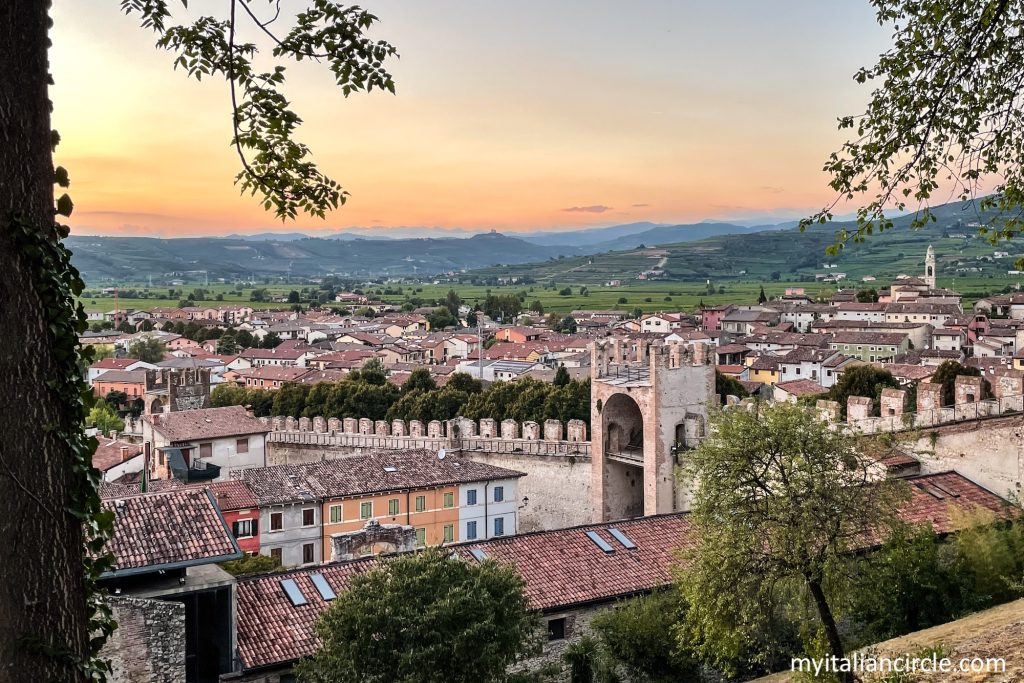
    Il borgo più bello d’Italia

    Reading Time: 2 minutes

    Una cittadina fortificata tra i vigneti del Veneto

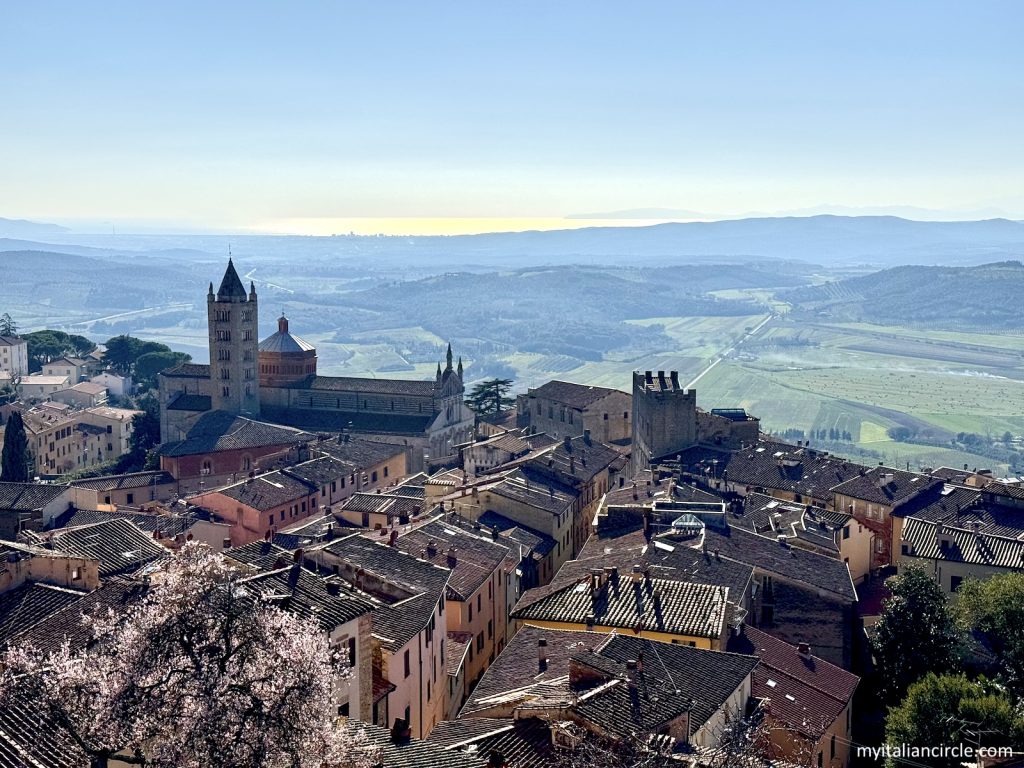
    Carissimi, oggi voglio parlarvi di una località italiana che forse non conoscete, anche se – udite udite! – un paio d’anni fa è stata eletta addirittura “borgo più bello d’Italia”.

    Innanzitutto, cosa vuol dire borgo? Il borgo è un centro abitato, una cittadina, un paese, o anche un quartiere di una città: a Verona molti quartieri si chiamano borghi, ma questo ve lo racconterò un’altra volta. In latino però voleva dire castello fortificato, e in questo caso è proprio così: si tratta di una cittadina murata, cioè circondata da mura tutto intorno, con ben ventiquattro torri e un meraviglioso castello medievale che domina il paese, in cima alla collina.

  • Italian Grammar

    Imperfetto o passato prossimo? How to talk about the past in Italian

    Reading Time: 4 minutes

    Italian has several past tenses, but the passato prossimo and the imperfetto are the two most common ones. The imperfetto does not exist in English, but it can be translated using the past simple or the past continuous. The passato prossimo is a compound tense, similar to the English present perfect, but it can also be translated with the past simple. How do we choose between one or the other?

    What is the difference?

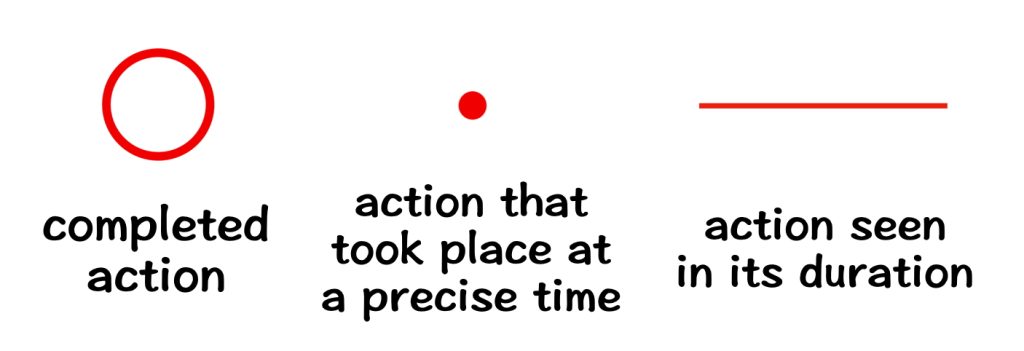
    To understand the nature of these tenses, let us consider three shapes: a circle, a point, a line. We can associate a completed action to a circle, an action that took place at a precise moment to a point, and an action seen in its duration to a line.

    Imperfetto o passato prossimo?

    In Italian, a completed action corresponds to the passato prossimo: 

    • Ho guardato questo video tre volte. I have watched this video three times.

    Here I underline the completed nature of the action; I don’t care when exactly I watched the video, or what happened while I was watching it, I care about the fact that the action was completed: a circle.

    The passato prossimo is also used to describe an action that took place at a specific time: a point.

    • Ieri ho guardato il video che mi hai consigliato. Yesterday I watched the video you recommended.

    The passato prossimo corresponds to a circle: action completed, in general; or to a point: action completed at a specific time.

    What is the imperfetto?

    What about the imperfetto? This tense is imperfect, unfinished, not because the actions it describes are incomplete, but because we are interested in their duration, not in their completion. The imperfetto describes a state, a situation, an action seen in its duration: a line. We don’t care when the action began or when it ended, we are interested in the fact that the action or the state lasted for some time:

    • Ieri non volevo parlare con nessuno. Yesterday I didn’t want to talk to anyone. —> Probably for the entire day.

    The imperfetto is also used to talk about a past habit, a habitual, repeated action in the past, like the English “used to“:

    • Da piccolo andavo al mare ogni anno. As a child I used to go to the seaside every year. —> Ogni anno, spesso, sempre are often used in this kind of sentences.

    If we talk about actions that we did once or more than once, but which are not habits, we use the passato prossimo, instead:

    • Sono stato a Roma due volte. I went to Rome twice. —> I went and came back: completed actions.

    Instead, we use the imperfetto to talk about a state or a continuous action in the past:

    • Nel 2010 vivevo a Roma. I was living in Rome in 2010. —> Past continuous.
    • Ieri ero di cattivo umore. Yesterday I was in a bad mood. —> My bad mood lasted for some time.

    Can we use both tenses in the same sentence? Yes, if we have an action that interrupted another one, for example:

    • Mentre dormivo ho sentito un rumore improvviso. While I was sleeping I heard a sudden noise. —> Imperfetto for the continuous action of sleeping, passato prossimo for the sudden noise.

    When talking about the past, the conjunction mentre, while, is always used with the imperfetto. Quando, when, can use both:

    • Quando ero all’università sono andato in Cina. When I was at university I went to China. —> I went to China while I was at university.
    • Quando mi sono laureato sono andato in Cina. When I graduated I went to China. —> First I graduated, then I went to China.

    Another use of the imperfetto that is becoming increasingly common is the imperfetto ipotetico. Here the imperfetto is used in a conditional sentence instead of more complex compound tenses:

    • Se lo sapevo, non venivo. 

    In standard Italian, this sentence would be:

    • Se lo avessi saputo (congiuntivo trapassato), non sarei venuto (condizionale passato). If I had known it, I wouldn’t have come.

    Conclusion – When to use the imperfetto

    This is just the tip of the iceberg, but it should give you a sense of the difference between imperfetto and passato prossimo. The imperfetto is a powerful tense that we use a lot in conversation, so it’s important to keep it in mind as an option when you need to talk about the past.

    Use the imperfetto to describe people, places or situations in the past; to talk about a state of mind or a physical state in the past; to describe things you used to do or that you did for some time; to talk about actions that took place at an unspecified time, or something that was going on when something else happened.

    Ask me questions in the comments if you have any, and watch our video lessons on these tenses for more examples and exercises.

    A presto!

    Anna

    We also discuss the choice between imperfetto and passato prossimo, in more detail and using different examples, on Daily Italian Words.

    Related video lessons:
  • Varie

    I miei propositi per il 2025 – My new Year’s Resolutions

    Reading Time: 2 minutes

    Carissimi, ben ritrovati in questo 2025 nuovo di zecca!

    Nei primi giorni del nuovo anno si parla sempre di desideri, obiettivi, propositi: ne parla anche Anna nel primo video del 2025. Potevo essere da meno? E allora ecco i miei propositi.

    Per prima cosa mi propongo di scrivere spesso su questo blog. Ho così tante idee… troppe! Dovrò mettere ordine e tirarle fuori una per una. Spero che verrete a leggerle.

    In secondo luogo vorrei visitare ogni tanto una città, un paesino o una località che non conoscevo o cui non ho mai prestato attenzione. Vorrei fuggire dai luoghi turistici, dalla folla, dalle persone intente solo a farsi dei selfie col telefonino invece di guardarsi intorno, di respirare l’atmosfera, di cogliere la bellezza che li circonda. Vorrei trovare degli scorci che non avevo mai notato prima. Un’angolino d’Italia solo per me, anzi tanti angolini. So che ci sono, e li troverò! Magari li condividerò con voi.

  • Cultura e società

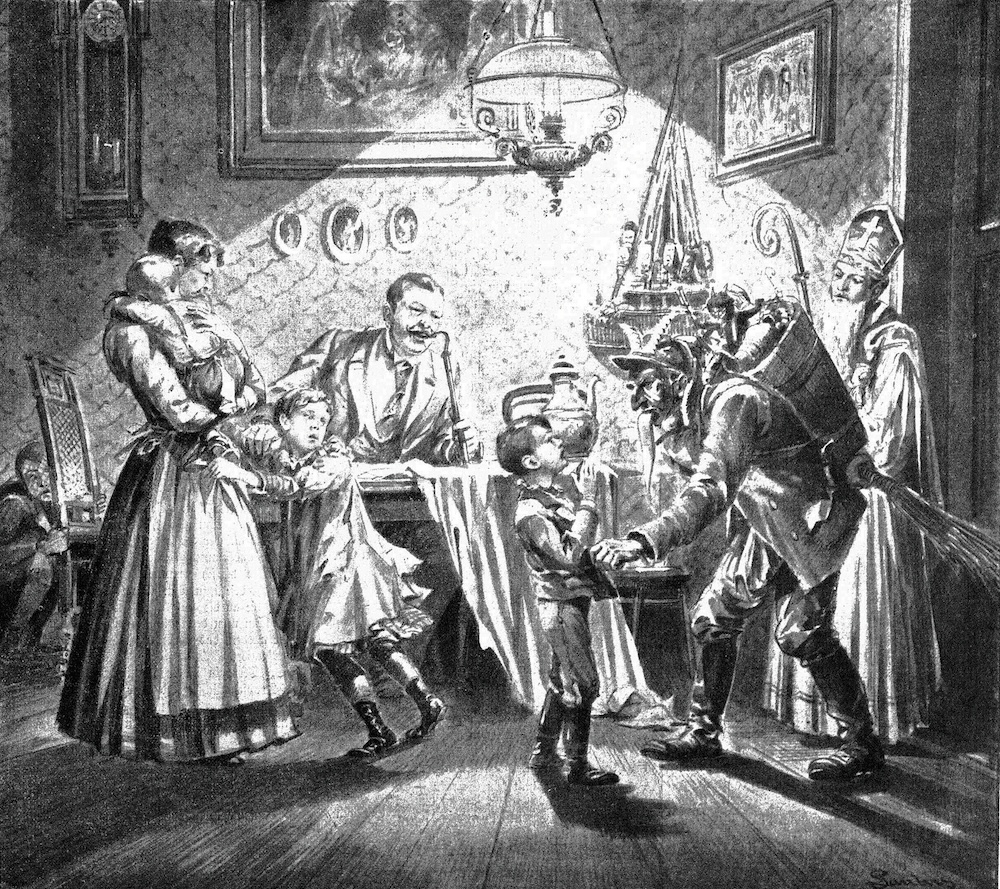
    San Nicola e i Krampus – A Christmas Tradition from Northern Italy

    Reading Time: 2 minutes

    Una tradizione natalizia dell’Alto Adige

    Carissimi,

    oggi intervengo qui sul nostro blog per parlarvi di una tradizione natalizia particolarissima. Anna mi ha ordinato di raccontarvi di cosa si tratta, così eccomi qua!

    Sicuramente sapete già che in ogni regione d’Italia ci sono tradizioni molto diverse, e anche il Natale si festeggia spesso in modo differente. Nell’estremo nord dello stivale, nella regione dell’Alto Adige, al confine con l’Austria, la maggioranza della popolazione è di lingua e cultura tedesca e ha delle abitudini davvero molto speciali.

  • Italian Grammar

    Essere o avere? How to form compound tenses in Italian

    Reading Time: 4 minutes

    What is all the fuss about essere and avere in Italian? Why do we bring up this topic so often in our grammar lessons? Essere and avere have their own meanings, be and have, but they are also used to form compound tenses.

    What is a compound tense? The English present perfect, for example: I have done. Have is an auxiliary here, it helps or supports the verb to do. English has many auxiliaries, but to form compound tenses it uses have. In Italian, instead, we can use have, avere, or be, essere. So we say Io ho fatto and Io sono andato. We cannot say *Io ho andato, it would sound awful! But how to choose? There are a few rules that can help us remember.

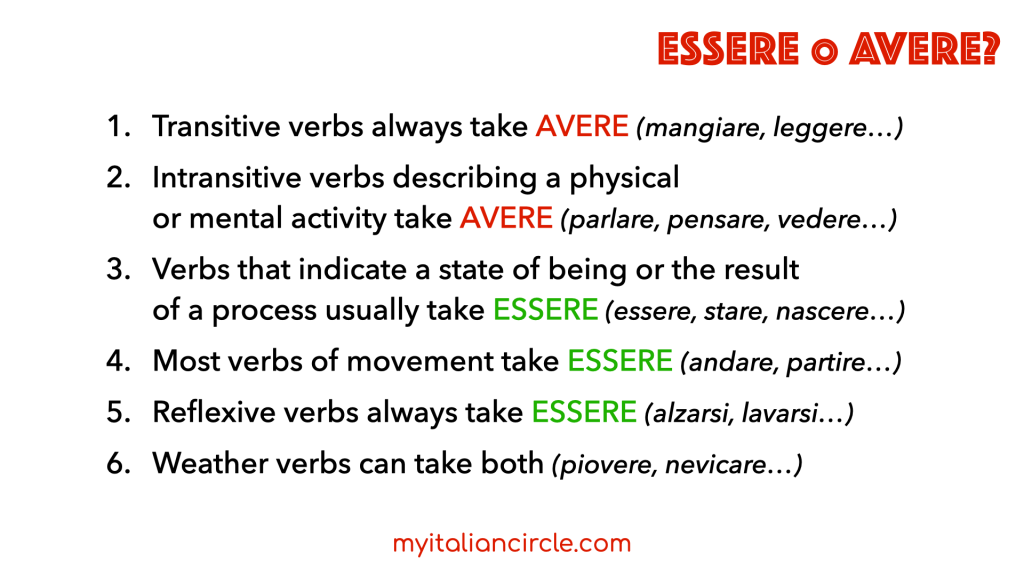
    Regola! The basic rule is that transitive verbs always form compound tenses with avere: 

    • Ho organizzato una mostra al museo e ho fatto tutto io. I set up an exhibition at the museum and I did it all myself.

    Una mostra and tutto are the objects of organizzare and fare, respectively, therefore these are transitive verbs that form compound tenses with avere.

    Now, what is a transitive verb? It’s a verb that makes the action transition to a direct object. There is something or someone that receives the action of the verb. How to figure out if a verb is transitive? If our sentence answers the question “Chi?” or “Che cosa?”, who or what, we have a transitive verb, and we form compound tenses with avere.

    Io leggo un libro. I read a book. This is the present tense.

    Io leggo – che cosa? – un libro.

    Libro is the object, so leggere is transitive, the passato prossimo is:

    Io ho letto un libro. Auxiliary avere. Easy.

    You might end up thinking that intransitive verbs, those that cannot take an object, always use essere. Yes and no, it depends on the type of verb.

    Regola! Intransitive verbs describing a physical or mental activity take avere: ho respirato (I breathed), ho pensato (I thought), ho parlato (I spoke).

    What about essere? Essere indicates a state, and these types of verbs take the auxiliary essere: sono stato.

    • Sono stato molto impegnato con il lavoro. I have been very busy with work.

    Regola! So, remember: among the verbs that usually take essere are those that indicate a state of being or the result of a process, such as rimanere and restare (stay), diventare (become), nascere (be born).

    • Paolo Sorrentino è nato a Napoli, io sono nata a Bologna. Paolo Sorrentino was born in Naples, I was born in Bologna.
    • Dove sei stata ieri? Sono rimasta a casa. Where were you yesterday? I stayed home.

    So, there are two main rules to keep in mind:

    1. Transitive verbs take avere.
    2. Verbs that indicate a state of being or the result of a process usually take essere.

    Regola! Let’s move on and add one more piece to the puzzle: the vast majority of verbs of movement also take essere, so a sentence like: yesterday I went to Venice in Italian is Ieri sono andata a Venezia.

    Andare is a verb of movement, so we have to use essere: io sono andata, Luca è andato, le ragazze sono andate and so on.

    You may have noticed an additional complication here: when the auxiliary is essere, the past participle agrees with the subject. Luca, masculine singular: è andato; le ragazze, the girls, feminine plural: sono andate. This does not happen with avere.

    Now, this rule seems simple enough, but watch out! A few verbs of movement take avere, such as camminare and viaggiare, so we say ho viaggiato and ho camminato. Rule of thumb: when the verb indicates only a movement, the auxiliary is avere; when it expresses a movement from a place or to another, then it takes essere. Compare:

    Sono partita ieri (even if the place is not expressed, I must have come from somewhere), ho viaggiato tutta la notte e sono arrivata a casa alle 16.00. I left yesterday, I travelled all night and I got home at 4pm.

    Compare again: Ho corso per due ore – I ran for two hours (here I’m focusing on the movement) and Sono corsa a casa – I ran home (here I have a destination). Correre can take both avere and essere, and it’s not the only verb that can do this!

    Regola! Now, to cheer you up, let’s add a rule that’s always true: reflexive verbs always take essere. These are verbs whose action reflects on the subject or something that belongs to it, like alzarsi and lavarsi:

    • Marco si è alzato alle sette. Marco got up at seven.
    • Io mi sono lavata i denti dopo colazione. I brushed my teeth after breakfast.
    • I ragazzi non si sono lavati le mani. The boys did not wash their hands.

    What about the weather? Freedom! For weather verbs, use either essere or avere:

    • Ha piovuto tutta la notte. / È piovuto tutta la notte. It rained all night.
    • Ieri è nevicato. / Ieri ha nevicato. It snowed yesterday.

    Finally, we need to remember that some verbs are not intrinsically transitive or intransitive, but can be used in one way or the other: they may have an object or not, such as cominciare, finire, iniziare, terminare, vivere, aumentare, cambiare. For example:

    • Il professore ha cominciato (transitive use) la lezione (direct object).
      The professor started the lesson. Transitive verbs form compound tenses with avere.
    • La lezione è cominciata (intransitive use, no direct object).
      The lesson started. Intransitive verbs form compound tenses with essere.

    Let us sum it all up:

    How to remember all this? Learning the rules is a good starting point, but you also need to read and listen to as much Italian as you can, paying attention to auxiliaries when you read your favourite Italian magazine, Italian website, or when you listen to your favourite Italian TV programme. This way, you will naturally pick up these patterns. Ultimately, you will figure out what sounds right and what sounds wrong. And whenever in doubt… check the dictionary! It will tell you which auxiliary to use.

    A presto!

    Anna

    Related video lessons:

  • Varie

    Benvenuti sul nostro blog!

    Reading Time: < 1 minute

    Eccoci finalmente insieme sul nostro nuovo blog! Sono la vostra simpaticissima Genoveffa, protagonista di tante discussioni intelligenti e furbe con la nostra insegnante di italiano preferita, Anna di My Italian Circle.

    In queste pagine parlerò un po’ di tutto, di lingua italiana naturalmente, ma anche di cultura e società, abitudini e luoghi comuni, il tutto visto attraverso l’occhio acuto della vostra Genoveffa! Anna invece parlerà di grammatica… che noia!

    A prestissimo. Vi amo!

    Genoveffa