• Learn Italian

    How to Study Italian in 2026: A Sustainable Method

    Reading Time: 7 minutes

    If you are wondering how to study Italian in 2026 without burning out or giving up, this guide is for you.

    Every year, the same thing happens. Learners of Italian around the world start off with great enthusiasm, diving into a full immersion of apps, videos, textbooks, podcasts and grammar guides, often without a clear learning path.

    This initial phase of binge learning creates a powerful but deceptive feeling of progress. For a short time, everything seems to work. Then life gets in the way: lessons are skipped, words are forgotten, speaking still feels difficult, motivation slowly fades, and everything becomes a struggle. If this sounds familiar, keep reading!

    At the same time, more and more AI-based language learning apps promise quick results and effortless fluency. The concept is always the same: learn Italian quicklyspeak in weeksno effort required. This message is literally everywhere. Quick. Easy. Effortless.

    Seriously? No effort required?
    Learning a language is not effortless, and that’s exactly WHY it works.

    The truth is that improving your Italian does not depend on quantity only and is not effortless. It is based on something much simpler and much harder to maintain: consistency. Learning Italian (or any other language, for that matter) is not about finding the next tool, app or shortcut. It’s about choosing a study method that you can sustain over time.

    My take on how to study Italian in 2026

    In this article, I explain what it really means to study Italian in 2026, why fragmented learning rarely works, what research on language learning tells us, and how listening and speaking can become the centre of a realistic and effective routine.

    As I mentioned above, we should first and foremost get rid of the word “effortless.” Learning a language is never effortless, and it doesn’t need to be.

    Why do I keep saying in 2026?

    It’s very tempting for learners to jump from one book to another, from a video to a film or a deck of flashcards. While this may work for some of the most dedicated students, the result is usually frustration and a sense of dispersion.

    Since the advent of AI, the temptation to give in to a magical app or a magical prompt has complicated the picture, and in 2026 the risk will increase. The great promise of AI is to make everything easy for us, and that soon we will no longer need to put in any effort at all. But do we really want to give up that small but essential part of self-respect that pushes us to try, test our abilities, stay engaged with something meaningful? I hope not. Real progress comes from engagement, not shortcuts. And engagement is exactly what makes learning lasting. Clearly, any tool for learning languages is useful in itself; it’s how we use it that matters.

    How to study Italian effectively: less fragmentation, more continuity

    To reach our goal in Italian in 2026 let’s make a clear commitment: less fragmentation, more continuity. In Italian, we call this costanza, consistency, tenacity. Costanza means showing up again and again, even when progress feels slow.

    Prenditi tempo! Take your time. The hard truth is: learning Italian takes time.

    There are no magic formulas, but there is an effective way to avoid quitting along the way: studying in a consistent and sustainable way. In Italian: studiare con costanza, not occasionally, not only when motivation is high, but especially when things require some effort.

    Why studying Italian feels difficult (and why it’s not your fault)

    Many learners believe they are either good or bad at languages; but in reality, your natural ability is rarely the issue. The most common difficulties are:

    • fragmented study habits;
    • unrealistic expectations at the beginning;
    • intensive study periods followed by long breaks;
    • little actual practice – pratica reale – of the language.

    The result is often the same: progress for a while, then nothing. And every long break makes restarting harder.

    That’s why the key issue is not how much you study, but how often you return to the language. In Italian, this idea is simple: continuare. How to study Italian effectively? By keeping at it.

    What research says about language learning

    Research in cognitive psychology offers clear insights into how learning actually works. Our brain learns better through spaced practice and active recall rather than intensive study sessions and passive repetition (Dunlosky et al., 2013).

    In practical terms, this means that learning is more effective when:

    • you return frequently to the same content (ritornare sugli stessi contenuti);
    • you actively try to recall (recupero attivo);
    • you use the language out loud (parlare ad alta voce);
    • you leave time between study sessions (studio distribuito nel tempo).

    This approach favours consistent practice, pratica costante, not short-term performance.

    Consistency does not mean studying less

    This is an important point: costanza non significa studiare meno. It means studying in a sustainable way, at a pace you can maintain over time without burnout or frustration. In Italian: studiare in modo sostenibile. Here’s what an effective routine looks like:

    • it does not have to be extreme;
    • it does not have to be perfect;
    • it must be repeatable over time – ripetibile nel tempo.

    Regular study, even with variations in intensity, works better than occasional intense sessions that are impossible to maintain. If only I had known that back in my university days!

    Why listening and speaking are central

    Many students focus mainly on reading and writing exercises. These activities are useful, but they are not sufficient. A language is first of all suono, ritmo, movimento della bocca. If you do not listen (ascoltare) often and do not try to speak (parlare), the language remains an abstract concept.

    This is why listening and speaking are central to our method.

    In our Ascolta e Parla videos, the goal is not to understand everything. The real goal is to train:

    • your ear (orecchio);
    • your pronunciation (pronuncia);
    • your rhythm (ritmo);
    • your confidence (sicurezza) when speaking.

    Full understanding comes later; first comes the active use of the language, l’uso attivo della lingua, even with mistakes.

    How to use audio and video content effectively

    Watching a video passively is not enough: to study effectively, content must be reused. A productive approach includes:

    1. a first listen for general meaning (ascolto generale);
    2. a second listen and repeating aloud (ripetizione ad alta voce);
    3. an active recall phase: answering questions using the same words (recupero attivo);
    4. returning to the same content after a few days (ritornare dopo qualche giorno).

    Parla con me!

    This is the reason why in our videos I always encourage you to speak up, to respond, even with a yes or no or a few simple words. Passively watching a video is already something, but participating and being active gives us much more: it gives us confidence.

    An active approach is a real game-changer. Sometimes I ask for an immediate, intuitive response; other times I prompt for an answer on content, or ask learners to answer questions using the vocabulary presented in the lesson. All of this is repeated several times; additionally, committed learners have the opportunity to practise even more with the special content we prepare for our patrons on Patreon.

    Ama la tua voce italiana!

    Responding aloud makes all the difference. This way, we train our mouth to form sounds, familiarise ourselves with the melody and rhythm of sentences, and practise pronunciation. The next time we want to say something in Italian in real life, it will be much easier, because we have already done it.

    Consistency and repetition are essential. It is not wise to use study material only once, whether it is an article, an exercise, or a video. Watch a video over and over again until your answers come naturally. This way you will assimilate words, phrases, collocations, sounds; in short, you will develop a feel for the language.

    Common mistakes when studying Italian

    Many learners slow down or get stuck not because they lack ability, but because they fall into very common patterns: they keep looking up new ways to study Italian effectively and change methods too often, study only when motivation is high, avoid speaking for fear of making mistakes, and aim for perfection far too early. Making mistakes is not failure. Speaking imperfectly is simply part of the learning process.

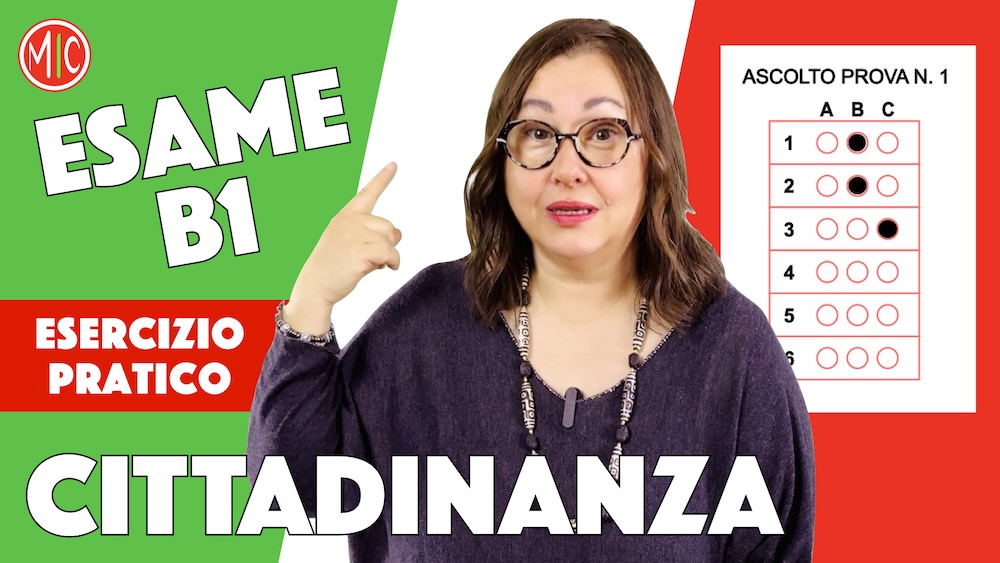
    Esame B1 Cittadinanza - B1 Italian Citizenship Certification

    On our YouTube channel, we talk a great deal about the B1 citizenship certification: during the oral exam, perfection is NOT a requirement, but clear communication is. The simple principle of keeping the main objective clear, i.e. communication, helps us to get started and get into the right gear. So, should we lower our ultimate goal and not worry about improving and correcting our mistakes? Should we abandon the desire to speak correctly? Absolutely not. But the fear of making mistakes shouldn’t stop us from opening our mouths and speaking Italian. And this is a major obstacle for many learners.

    Il tuo obiettivo per il 2026

    In 2026, the goal is not to study an enormous amount of grammar or vocabulary, to finish every textbook, to understand everything immediately, or to speak perfect sentences from the start. The real goal is continuare: to keep listening, to keep speaking, and to keep returning to Italian. Because what you practise with costanza, over time, truly becomes yours. This year, learn Italian consistently!

    In short: your 2026 routine should include regular and sustainable study, frequent listening, active use of the language, repeated exposure to the same material, and acceptance of imperfection. Create a path that you can realistically maintain over time.

    Visit our main website to find all our video lessons and additional learning materials listed by topic and level, and get in touch if you need advice on your specific situation: I will be happy to help.

    Buono studio!

    Anna

    Italian Lessons for Beginners

    Italian Textbooks

    (Amazon affiliate links)

  • Italian Grammar

    Le preposizioni articolate: Understand Prepositional Contractions in Italian

    Reading Time: 5 minutes

    Bentornata grammatica! We learned in our simple guide to Italian prepositions that Italian has nine main prepositions: DI, A, DA, IN, CON, SU, PER, TRA, FRA. However, you may have noticed that these same prepositions often look and sound different in everyday Italian: they are combined with definite articles to form prepositional contractions – le preposizioni articolate. We use definite articles a lot in Italian, so you will encounter prepositional contractions all the time, even in very simple sentences. 

    Prepositional contractions are everywhere

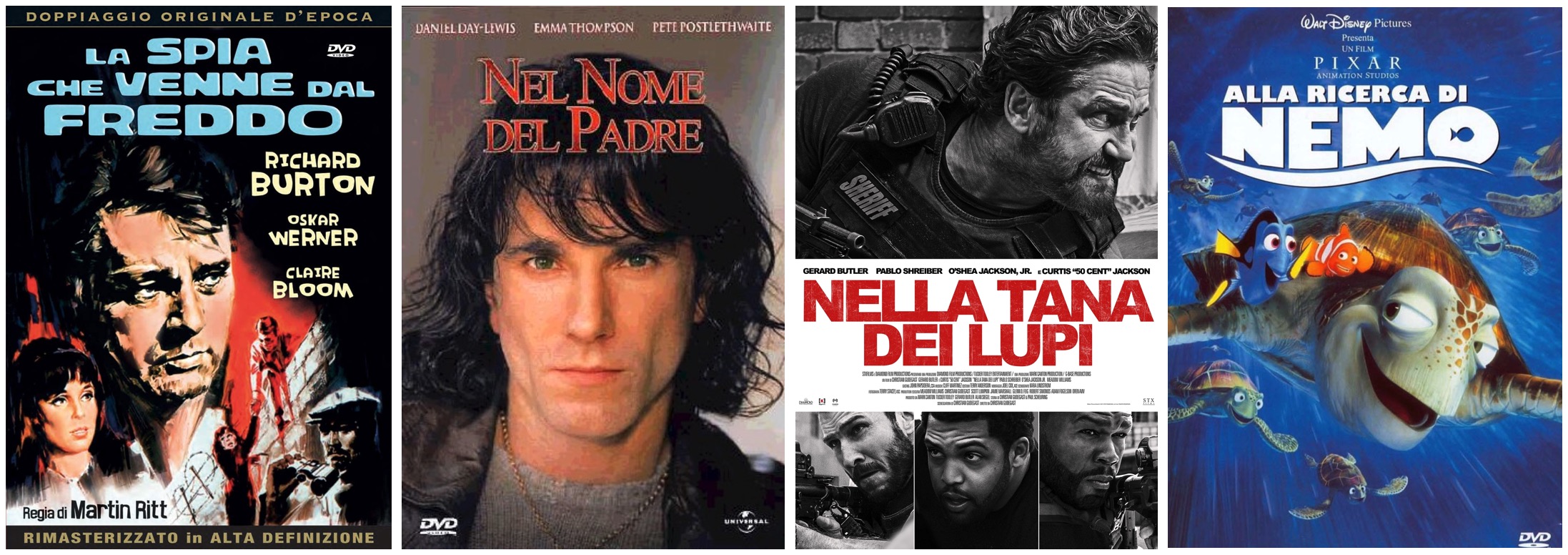
    Have a look at the titles in the posters below:

    La spia che venne dal freddo – Nel nome del padre – Nella tana dei lupi – Alla ricerca di Nemo

    Dal, nel, del, nella, dei, alla are all prepositional contractions – the combination of a preposition and a definite article. In Italian, the article changes depending on the gender, number, and sound of the word that follows, and so do prepositional contractions. If you are unsure about articles in Italian, you may want to review this post on definite articles.

    The main concept that you need to remember is that prepositional contractions follow the same rules of definite articles. When some prepositions are followed by an article, they are combined into prepositional contractions. Out of nine prepositions, only five (di, a, da, in, su) are contracted. Con, per, tra, and fra used to have contracted forms, but they are rarely used nowadays, so you can happily forget about them here!

    How to form prepositional contractions

    How to form a prepositional contraction? First of all you have to choose the correct preposition, and then you add the definite article that goes with the noun you are talking about. You do this by paying attention to the first letters of the word that follows, and to its gender and number: is it masculine or feminine? Singular or plural?

    For example:

    • Sandra telefona alle sue amiche. – Sandra calls her friends.

    What is the prepositional contractions here? Alle. Alle is actually a + le: the preposition a (to), which is needed after the verb telefonare, and the definite article le, which is feminine plural, like the noun amiche.

    Let’s say Sandra called just one of her girlfriends. The sentence would be:

    • Sandra telefona alla sua amica Lucia. – Sandra calls her friend Lucia.

    Amica is feminine singular. Alla = a + la.

    Masculine words require special attention, because there are two different masculine definite articles, il and lo. This is to avoid an unpleasant clash of sounds. Let’s see.

    The prepositional contractions del, al, dal, nel, sul are used before masculine singular words that begin with a consonant (except x, y, z and the groups gn, pn, ps, s + consonant, vowel):

    • La gamba del tavolo. (del = di + il)
    • Diamo il tonno al gatto. (al = a + il)
    • Vengono dal deserto. (dal = da + il)
    • È scritto nel libro. (nel = in + il)
    • Metti la coperta sul divano. (sul = su + il)

    The prepositions dello, allo, dallo, nello, sullo are used before masculine singular words beginning with x, y, z, the groups gn, pn, ps, s + consonant, and the very few words that begin with i + vowel:

    • Il vasetto dello yogurt. (dello = di + lo)
    • Telefoniamo allo psicologo. (allo = a + lo)
    • È attivato dallo iodio. (dallo = da + lo)
    • I guanti sono nello zaino. (nello = in + lo)
    • C’è un buco sullo stivale. (sullo = su + lo)

    As we saw above, feminine words are easier. The prepositions della, alla, dalla, nella, sulla are used before feminine singular words beginning with any consonant:

    • La porta della casa. (della = di + la)
    • Scendo alla prima fermata. (alla = a + la)
    • Usciamo dalla scuola. (dalla = da + la)
    • Nella cucina c’è un bel tavolo. (nella = in + la)
    • Siediti sulla sedia. (sulla = su + la)

    And the prepositions dell’, all’, all’, nell’, and sull’ are used before words beginning with a vowel, both masculine and feminine:

    • Il negozio all’angolo. (all’ = a + l’)
    • Il telefono dell’amica. (dell’ = di + l’)
    • Viene dall’Asia. (dall’ = da + l’)
    • Nell’antico castello. (nell’ = in + l’)
    • La casa sull’albero. (sull’ = su + l’)

    Prepositional contractions before plural words

    Now, what about plural words? Here again, masculine words are trickier, because there are two different plural articles: i and gli.

    The prepositions dei, ai, dai, nei, sui are used before masculine plural words beginning with a consonant (except x, y, z, the groups gn, pn, ps, s + consonant, vowel):

    • Sono i padroni dei cani. (dei = di + i)
    • Diamo le chiavi ai vicini. (ai = a + i)
    • Vado dai bambini. (dai = da + i)
    • Passeggiamo nei boschi. (nei = in + i)
    • I ragazzi ballano sui tavoli. (sui = su + i)

    The prepositions degli, agli, dagli, negli, sugli are used before masculine plural words beginning with  x, y, z, the groups gn, pn, ps, s + consonant, or a vowel:

    • La vita degli animali. (degli = di + gli)
    • Mando gli inviti agli amici. (agli = a + gli)
    • Vado dagli studenti. (dagli = da + gli)
    • Negli angoli c’è la polvere. (negli = in + gli)
    • Non arrampicarti sugli alberi. (sugli = su + gli)

    Here, again, feminine nouns are easier: the prepositions delle, alle, dalle, nelle, sulle are used before all feminine plural words:

    • I vetri delle finestre. (delle = di + le)
    • Mando gli inviti alle studentesse. (alle = a + le)
    • Vado dalle mie amiche. (dalle = da + le)
    • Cosa hai messo nelle valigie? (nelle = in + le)
    • Camminare sulle uova. (sulle = su + le)

    As I mentioned above, these are exactly the same rules of Italian definite articles. If you can use articles correctly, it will be easy for you to identify and understand prepositional contractions.

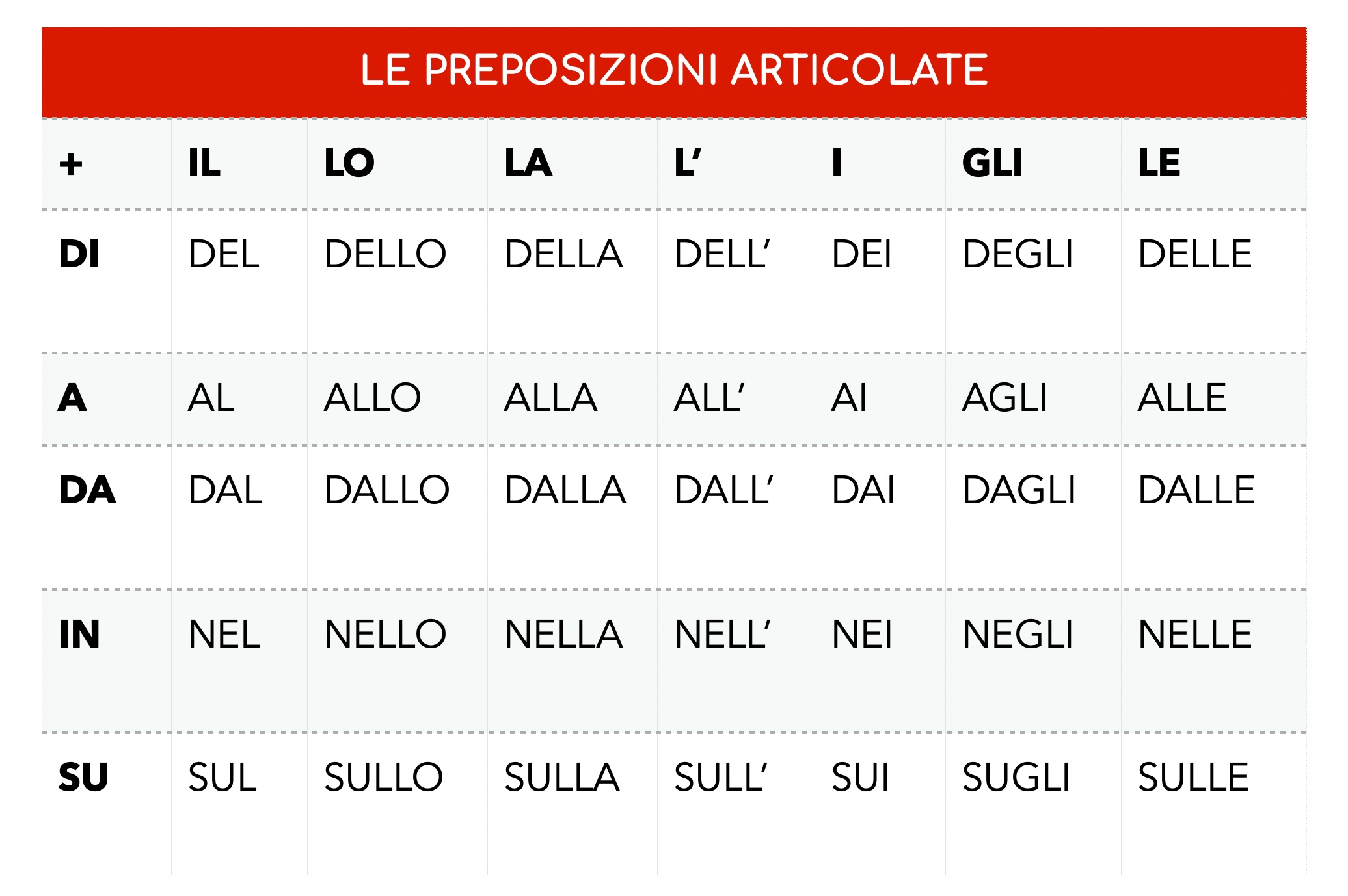
    In the following table you can find all the combinations we have seen above:

    How to use prepositional contractions

    Prepositional contractions have basically the same functions of simple prepositions, but there are a few differences that are worth mentioning. Since they are the contraction of a preposition and a definite article, prepositional contractions are generally used when the noun that follows is something specific. Compare:

    • Entra in casa! Come in, come inside. Here we are inviting someone to come in, and this is a fixed expression, the focus is more on the action of entering the house than on a specific house.
    • Entrarono nella casa di nascosto. They sneaked into the house. Here we’re focusing on the fact that someone sneaked into a specific house: la casa —> nella casa.
    • Vado in vacanza in Francia. Here again, we are referring to France in general.
    • Vado in vacanza nella Francia del sud. This is more specific, nella Francia del sud, in the South of France.

    As a rule, we use simple prepositions before names, surnames and most names of places:

    • Ho telefonato a Chiara. (although in some regions you may hear: Ho telefonato alla Chiara.)
    • Un tributo a Maradona. (you may hear: la Meloni, but the article before a woman’s surname is now considered disrespectful)
    • Vengo da Venezia e vado a Firenze.
    • Vado in vacanza in Toscana.

    As always, practice is key. Notice which prepositions follow specific verbs when you read something in Italian, and why not, try to write simple sentences with prepositions in the comments below!

    Alla prossima 😉

    Anna

    Related video lessons:

  • Italian Grammar

    A Simple Guide to Italian Prepositions

    Reading Time: 7 minutes

    What are prepositions, and why are they one of the trickiest topics of Italian grammar? English has prepositions, too, and they are not easy to master either: they are words like to, about, in, on, for. Italian prepositions are DI, A, DA, IN, CON, SU, PER, TRA, FRA. There are many more, but these are the basic ones. Again: DI, A, DA, IN, CON, SU, PER, TRA, FRA. This is the order we learn them in school, like a tongue twister. This will help you remember! Now, let’s see what they mean and how to choose one or the other.

    Why Prepositions Matter

    Prepositions are tiny words that contain a lot of information. They express, for example, where you are, where you are going or where you come from; the moment something happened; the position of something, and much more.

    They are called prepositions because they are placed before the noun or pronoun they refer to. Remember! We never put prepositions at the end of a sentence in Italian, like you sometimes do in English. In Italian prepositions always go in front of another word:

    • Di cosa stai parlando? What are you talking about?
    • Con chi vai al mare? Who are you going to the seaside with?

    English and Italian often use prepositions differently, so you cannot always translate them literally. For example, in English you say I live in Milan, while in Italian we don’t use IN for cities, we use A:

    • Io vivo a Milano. I live in Milan.

    We use IN for bigger areas, like regions or countries:

    • Io vivo in Veneto, Alberto vive in Francia. I live in Veneto, Alberto lives in France.

    Sometimes you need a preposition in Italian but not in English, or the other way around. It all boils down to the verb you are using. Let’s translate this sentence: I will phone/call Luca later.

    Here we have two possibilities:

    1. Telefonerò a Luca più tardi.
    2. Chiamerò Luca più tardi.

    The verb chiamare is transitive and is not followed by a preposition, while the verb telefonare must be followed by the preposition A. This is why it’s a good idea to learn verbs together with the preposition(s) they are usually accompanied by.

    Now let’s learn the basic meaning and usage of Italian prepositions, one by one. As you will notice, for most of them there are many different English translations. For the sake of simplicity, in this article we will not get into prepositional contractions (the combination of a preposition with a definite article), but they are very important as well. We have a video lesson on prepositional contractions and we will cover them soon here as well.

    The preposition DI (of, by, on, about, from, than)

    1. DI shows possession, ownership: la casa di Anita, il giardino di Ernesto, il cane di Luigi – Anita’s house, Ernesto’s garden, Luigi’s dog.

    2. DI is also used to say who made, wrote, or composed something: una poesia di Ungaretti, il ponte di Renzo Piano – A poem by Ungaretti, Renzo Piano’s bridge.

    3. DI introduces the topic of something:

    • Oggi parliamo di grammatica. Today we talk about grammar.
    • Questo è un libro di storia. This is a history book.

    4. DI indicates the material something is made of: casa di carta, bottiglia di vetro – paper house, glass bottle.

    5. DI shows origin, like from:

    • Di dove sei? Sono di Firenze. Where are you from? I am from Florence.

    All the uses mentioned above express a close relationship, similar to ownership. Here you would use several different English prepositions, but we only use DI.

    6. Together with the days of the week, DI shows that something happens on a regular basis:

    • Di domenica non lavoro. I don’t work on Sundays.
    • Di mattina mi alzo presto. I get up early in the morning.

    Here, though, you can also use the article and say: La domenica non lavoro. La mattina mi alzo presto.

    7. DI is used in comparative and superlative structures:

    • Alberto è più alto di Mauro. Alberto is taller than Mauro.

    8. DI often introduces a verb in the infinitive in subordinate clauses:

    • Penso di andare al mare. I’m thinking of going to the seaside.
    • Finisco di lavorare alle cinque. I finish work at five.

    The preposition A (at, to, in)

    Our next preposition is A. It’s tricky because it shows movement toward a place, but also just location.

    1. A is both at and to: Sono a casa / a scuola / a teatro (I am at home, at school, at the theatre), but also Vado a casa / a scuola / a teatro (I go home, to school, to the theatre).

    2. A often introduces the recipient of something (the indirect object, answering the question to whom/what?):

    • Ho scritto una lettera a mia sorella. I wrote a letter to my sister.
    • Ho mandato un pacco a Stefano. I sent a parcel to Stefano.

    3. A also shows distance:

    • Abitiamo a 20 chilometri da Venezia. We live 20 kilometres from Venice.

    4. A is used with some expressions of time:

    • Cosa fai a Natale? What are you doing for Christmas?
    • A presto! A domani! A più tardi! See you soon / tomorrow / later!

    5. A can also introduce verbs in the infinitive:

    • Comincia a piovere. It’s starting to rain.
    • Vado a dormire. I’m going to bed.

    The preposition DA (from, at, off, for, by)

    1. DA translates the English from when talking about place of origin:

    • Il treno viene da Milano. The train is coming from Milan.

    2. We use DA with the verbs essere and stare to say that we are at someone’s place or shop, or that we are going to someone’s place or shop:

    • Sono da una mia amica. I’m at a friend’s house.
    • Fra poco vado da Renzo. I’m going to Renzo’s place shortly.

    3. You can use DA with a verb in the present to say how long you have been doing something:

    • Lavoro qui da tre mesi. I have been working here for three months.

    4. DA shows the purpose of something: vestito da sposa, scarpe da ginnastica, tuta da lavoro – wedding dress, trainers, work overalls.

    5. DA translates the English by in passive sentences:

    • Una torta fatta da Lucia. A cake made by Lucia.

    6. DA can also be followed by a verb in the infinitive when talking about things we have to do:

    • C’è molto da fare! There is much to do!
    • Questo è un film da vedere! This is a film you must see!
    • Ho molto da imparare. I have a lot to learn.

    The preposition IN (in, to, by)

    1. IN shows location but also movement towards a place, just like A, but is used with different words.

    • La valigia è in macchina. The suitcase is in the car.
    • Sono in Italia. I am in Italy. (Remember! With cities use A: Sono a Torino.)
    • Vado in ufficio / in banca / in fabbrica. I’m going to the office / to the bank / to the factory.

    So, when to use IN, and when to use A? I know it sounds random, but it’s not. My advice is to memorise complete expressions, so you will just know that you should say IN ufficio and A casa, without thinking too much.

    2. IN also means by when used with means of transport:

    • Andiamo a Berlino in treno. We are going to Berlin by train.
    • È tornata da Londra in macchina. She returned from London by car.

    It’s a bit like saying that we are in the train or she was in the car.

    3. IN can be used with time: in aprile, in autunno, in dieci minuti – in April, in autumn, in ten minutes.

    The preposition CON (with)

    1. CON corresponds to the English with:

    • Stasera esco con gli amici. Tonight I’m going out with friends.
    • Hanno lavorato con Arianna. They worked with Arianna.

    2. CON is used to add information about something:

    • Mi piacciono i dolci con il cioccolato. I like desserts with chocolate.
    • Ho visto delle scarpe con i tacchi alti. I saw some high-heeled shoes.

    3. CON can be used to say how something is done:

    • Mangia con calma! Eat slowly!
    • Taglio la carta con le forbici. I cut the paper with scissors.
    • Pago con la carta di credito. I pay by credit card.

    The preposition SU (on, about, out of)

    1. SU basically means ON:

    • L’ho comprato su internet. I bought it on the internet.

    2. SU corresponds also to the English about, with reference to a topic, like DI:

    • Un libro su Dante Alighieri. A book about Dante Alighieri.

    3. With numbers, SU expresses a ratio: uno su tre, sette su dieci – one in three, seven out of ten

    The preposition PER (for, to)

    1. PER corresponds roughly to the English FOR:

    • Questo regalo è per te. This gift is for you.
    • Per me un caffè, grazie. A coffee for me, please.

    2. Used with the passato prossimo, PER expresses the duration of an action that is no longer happening:

    • Ho lavorato a Berlino per due anni. I worked in Berlin for two years (and I no longer work there).

    Compare this construction with the use of DA with the present simple that we saw above:

    • Lavoro a Berlino da due anni. I have been working in Berlin for two years (and I’m still working there).

    3. PER shows the reason for something:

    • Sono qui per lavorare. I am here to work.
    • Ho cancellato il file per errore. I deleted the file by mistake.
    • Ho comprato la tenda per andare in campeggio. I bought the tent to go camping.

    4. With the verb partire, PER shows destination:

    • Domani parto per Varsavia. I’m leaving for Warsaw tomorrow.

    The prepositions TRA and FRA (between, among, in)

    TRA and FRA are the same preposition, there is no difference and the choice is personal. Usually we tend to avoid repeating the same sound, so I wouldn’t say FRA fratelli, but TRA fratelli, and FRA trenta minuti instead of TRA trenta minuti.

    1. TRA and FRA mean between, among:

    • La biglietteria è tra il bar e il museo. The ticket office is between the bar and the museum.
    • Fra tutti questi, scelgo quello blu. Of all these, I choose the blue one.

    2. In reference with time, TRA and FRA also mean in:

    • Sarò da te fra due ore. I’ll be with you in two hours.

    That was a lot of information, and yet it’s just the tip of the iceberg. It’s a good start, though! As I mentioned above, most of the prepositions we saw today are often combined with a definite article, but their usage is the same. More about this later!

    As always, practice is key. Notice which prepositions follow specific verbs when you read something in Italian. And why not, try to write simple sentences with prepositions in the comments below!

    A presto,

    Anna

    Related video lessons:

  • Italian Grammar

    Italian Pronouns: A Simple Guide to Identify and Use Them Correctly

    Reading Time: 5 minutes

    What is a pronoun? A pronoun is a tiny word that replaces a noun, usually to avoid repetition, like she, him, them, it. Italians hate redundancy, especially in writing, so we use pronouns a lot. Pronouns are introduced early on, at the A1 level, but they are a tricky topic: let’s learn how to identify and use them correctly!

    In Italian there is considerable overlapping between different kinds of pronouns, which can be helpful and confusing at the same time. As always, practice is key, but understanding the grammatical function of these little words is crucial: you need to know what a direct object is and be able to identify it in a sentence. No worries! Practical examples will make everything clear. Then you can test yourself with exercises on our YouTube channel.

    Subject pronoun

    Subject pronouns in Italian

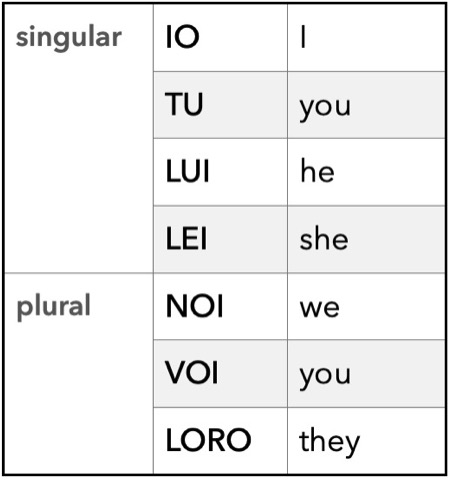
    Grammar experts disagree on the exact definition of the term subject, but for our purposes it will suffice to say that the subject is the person, animal or thing that performs the action expressed by the verb. Subject pronouns have the same function:

    Luca prende l’autobus. Lui va a scuola. – Luca takes the bus. He goes to school.

    Luca is a subject. Lui is a subject as well, but it’s a pronoun. We use it to avoid saying Luca again.

    Very important: in Italian, the subject is often omitted, because the verb already contains information about it. We use subject pronouns only for emphasis or contrast. For example:

    Io vado al lavoro e lui dorme tutto il giorno! – I go to work and he sleeps all day.

    Chi va a prendere la pizza? Ci vado io! – Who’s going to pick up the pizza? I’ll go!

    In the sentence above, the subject pronoun is emphasised by its position after the verb: ci vado io.

    When reading a book, you may stumble upon old-fashioned forms of subject pronouns: egli for lui, ella for lei, essi for loro. These are the original forms of subject pronouns, but they are uncommon in speech. The pronoun esso translates the English it and applies to inanimate objects, but is not very common either.

    Direct object pronouns

    Direct object pronouns replace the direct object of a verb, i.e. the person or thing that receives the action and answers the question Whom? or What?

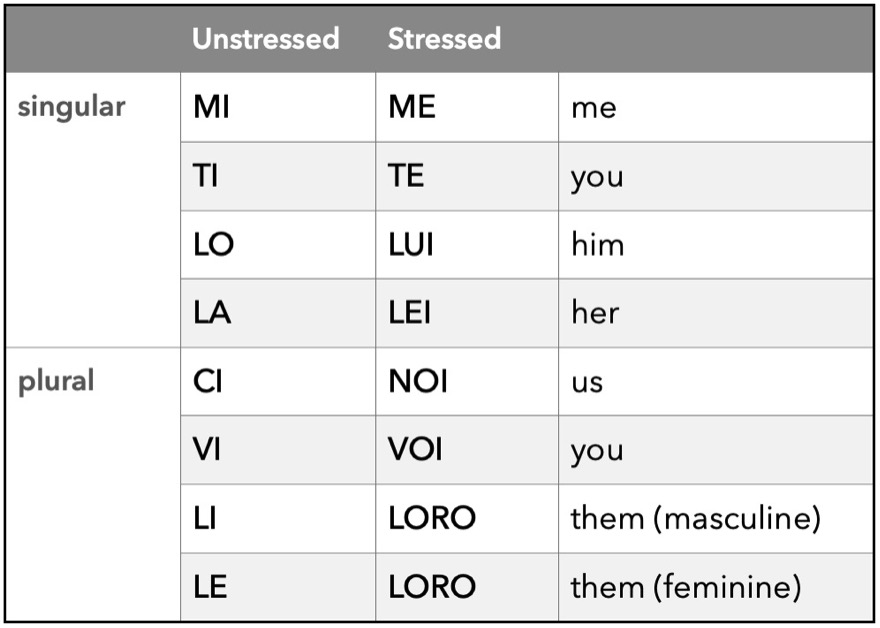
    Direct object pronouns have two forms, stressed (forti) and unstressed (deboli). The stressed form is used for emphasis and follows the verb, while the unstressed form, which is more common, comes before the verb.

    Direct object pronouns in Italian

    Some example sentences:

    • Il mio cane mi segue sempre. — My dog follows me at all times.
    • Il mio cane segue me, non te. — My dog follows me, not you.
    • Quel bambino ci guarda. — That child is looking at us.
    • Quel bambino guarda noi, non loro. — That child is looking at us, not at them.

    Attenzione! If the verb is in the infinitive, gerund or imperative, unstressed pronouns are attached to the verb:

    • Bambini, seguitemi! (= seguite me) — Children, follow me! (imperative)
    • Quel bambino continua a guardarci. ( = a guardare noi) — That child keeps looking at us. (infinitive)

    Indirect object pronouns

    An indirect object is the person or thing that receives the direct object (if any) and answers the question To whom? or To what? Indirect objects are called indirect because there is a preposition between them and the verb, while direct objects do not need prepositions, they directly follow the verb. Indirect object pronouns replace the indirect object of a verb.

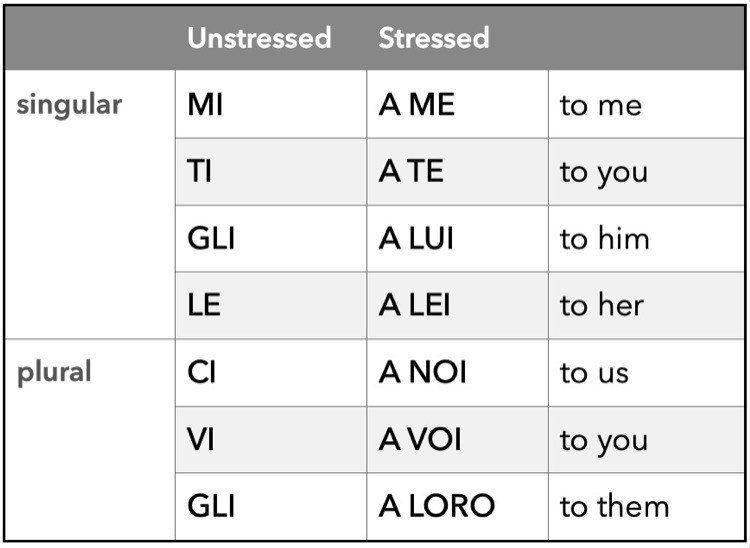
    Indirect object pronouns in Italian

    Keep in mind that verbs that are followed by direct object pronouns in English may require indirect object pronouns in Italian and viceversa. Telefonare works like this:

    Più tardi telefono a Luca. — Later I will phone/call Luca.

    Let’s replace Luca with a pronoun: Più tardi gli telefono. — I will phone/call him later.

    Here, gli is an indirect object pronoun. The English verb is followed by a direct object, him, but in Italian the verb is followed by the preposition a, to, so we need an indirect object. We cannot say: Più tardi *lo telefono, we must say Più tardi gli telefono. This is a very common mistake.

    Like direct object pronouns, indirect object pronouns also have two forms, stressed (forti) and unstressed (deboli). The stressed form usually follows the verb + preposition, while the unstressed form comes before the verb, but is attached to it when the verb is in the infinitive, gerund or imperative.

    Tip: stressed indirect pronouns are the same as stressed direct pronouns, but they come after a preposition; unstressed indirect pronouns are the same as unstressed direct pronouns, except for the third person singular and plural.

    Some example sentences with unstressed indirect pronouns and the related stressed forms:

    • Anna sta mentendo, non le credo. ( = non credo a lei) — Anna is lying, I don’t believe her.
    • Vi piace la pizza? (= A voi piace la pizza?) — Do you (plural) like pizza?
    • Questa borsa non mi serve più. (= non serve più a me) — I no longer need this bag.
    • Ci hanno spedito un pacco. (= Hanno spedito un pacco a noi) — They sent us a parcel.
    • Ti voglio tanto bene! (= Voglio tanto bene a te) — I really care for you!

    What happens if the preposition that follows the verb is not a, but another one, for example con, with, or per, for? We use stressed pronouns: 

    • Aspettami, vengo con te! — Wait for me, I’m coming with you!
    • Questo regalo è per lei. — This present is for her.

    Reflexive pronouns

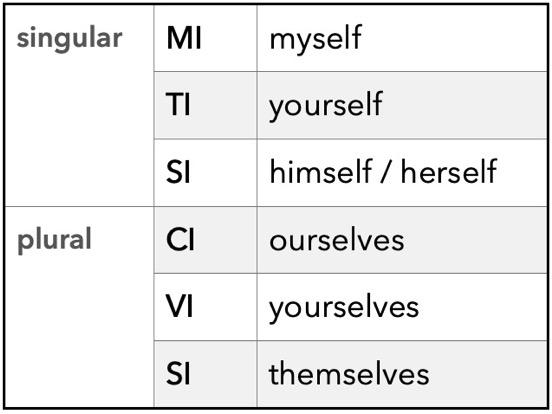
    Reflexive pronouns in Italian

    Reflexive pronouns are used with reflexive verbs, i.e. verbs whose action affects the subject or reflects on the subject. These verbs are quite common in Italian: you can read this article to learn more about them.

    Reflexive pronouns come before the verb but can be attached to it when the verb is in the infinitive, gerund or imperative:

    • Ti alzi presto. — You get up early.
    • Ti devi alzare presto. / Devi alzarti presto. — You have to get up early.
    • Gianni si veste. — Gianni gets dressed.
    • Gianni si sta vestendo. / Gianni sta vestendosi. — Gianni is getting dressed.

    Once again, notice how reflexive pronouns are the same as unstressed direct object and indirect object pronouns, except for the third person singular and plural. This overlapping makes it harder to identify their function in a sentence, but makes it easier to memorise them.

    Sometimes multiple pronouns are used together, and pronouns can be used with the particles ci and ne. We will discuss this topic – i pronomi combinati – in a separate article!

    I hope this clarified the basic concepts for you. Ask me questions in the comments if you have any! I’ll see you soon on YouTube and on this website.

    Anna

    Related video lessons:

  • Learn Italian

    Certificazione B1 Cittadinanza: cos’è e come è fatto l’esame

    Reading Time: 4 minutes

    L’esame B1 Cittadinanza è l’esame necessario per ottenere la cittadinanza italiana. Chi deve farlo? Quali sono le prove dell’esame e come bisogna prepararsi? Oggi risponderò a tutte queste domande.

    1. La cittadinanza italiana: residenza, matrimonio, discendenza

    La certificazione linguistica di livello B1 Cittadinanza è quella richiesta per ottenere la cittadinanza italiana per residenza o matrimonio: oltre a tutti i documenti che devi presentare, devi anche fare un esame per dimostrare che conosci abbastanza bene l’italiano.

  • Italian Grammar

    The Trapassato Prossimo: When Something Happened Before Something Else

    Reading Time: 3 minutes

    Have you ever told a story about the past… but starting from before the main event? Welcome to the fascinating world of the trapassato prossimo, the Italian past perfect. This tense lets you describe an action that happened even earlier than another past action.

    La tensione cresce

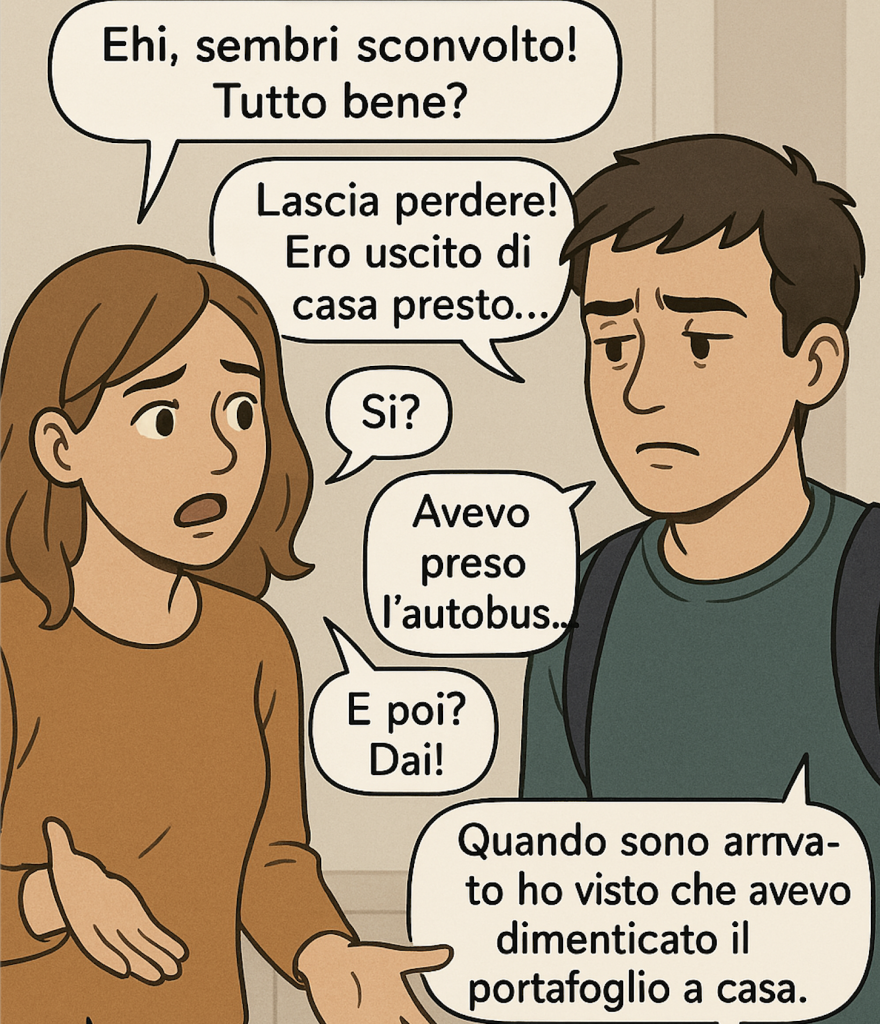
    Let’s read a short exchange between two friends, Marco and Giulia:

    Giulia: Ehi, sembri sconvolto! Tutto bene?
    Marco: Lascia perdere! Ero uscito di casa presto…
    Giulia: Sì?
    Marco: Avevo preso l’autobus…
    Giulia: E poi? Dai!
    Marco: Quando sono arrivato ho visto che avevo dimenticato il portafoglio a casa.
    Giulia: Ma no! E cosa hai fatto?
    Marco: Niente… sono tornato indietro, ma a quel punto avevo già perso il colloquio di lavoro.

    Giulia: You look upset! Everything okay?
    Marco: Don’t even ask… I had left the house early…
    Giulia: Yeah?
    Marco: I had taken the bus…
    Giulia: And then? Come on!
    Marco: When I got there I saw that I had forgotten my wallet at home.
    Giulia: Oh no! What did you do?
    Marco: Nothing… I went back, but by then I had already missed the job interview.

    Can you see what’s happening? Marco builds tension using the trapassato prossimo, and only later reveals what happened in the end. 

    So, What Is the Trapassato?

    In English, we call it the past perfect. In Italian, it’s formed like this:

    Imperfetto of “essere” or “avere” + past participle of the main verb.

    Examples:

    1. Avevo mangiato prima di uscire. – I had eaten before going out.
    2. Era arrivata troppo tardi. – She had arrived too late.

    We use the trapassato to show that an action happened before another one in the past.

    Sequence of past events; describing a state

    1. Sequence of past events

    Quando siamo arrivati, il film era già iniziato.
    When we got there, the film had already started.

    Ho perso il cellulare che avevo appena comprato.
    I lost the phone that I had just bought.

    2. With the imperfetto (describing a state)

    Ero triste perché avevo ricevuto una brutta notizia.
    I was sad because I had received bad news.

    Volevo uscire, ma avevo dimenticato l’ombrello.
    I wanted to go out, but I had forgotten my umbrella.

    Be Careful with “prima di…”

    If the subject of the sentence stays the same, you can use the trapassato with prima di + infinitive:

     Avevo già fatto la spesa prima di tornare a casa.
    I had already done the shopping before going home.

    Luca aveva studiato molto prima di sostenere l’esame.
    Luca had studied a lot before taking the exam.

    The “Polite” Trapassato

    Yes! Italians sometimes use the trapassato to sound more polite, especially in shops or formal situations:

    Scusi, avevo visto una giacca rossa ieri… è ancora disponibile?
    Excuse me, I had seen (= I saw) a red jacket yesterday… is it still available?

    Ero venuto per chiedere un’informazione…
    I had come (= I came) to ask for some information…

    In these cases, you can also use the passato prossimo instead, and the meaning stays the same:

    Scusi, ho visto una giacca rossa ieri…
    Sono venuto per chiedere…

    Using It Alone (With mai)

    Sometimes the trapassato is used on its own, when the context makes the meaning clear. This often happens with the word mai (never):

    Buono questo dolce! Non lo avevo mai assaggiato.
    This dessert is great! I had never tasted it before.

    Marco non era mai stato a Roma prima d’ora.
    Marco had never been to Rome before now.

    Let’s Recap!

    Use the trapassato prossimo to:

    1. Talk about past actions that happened before other actions in the past.
    2. Describe emotional states or situations caused by earlier events.
    3. Make polite requests in formal or service situations.
    4. Express something that had never happened until that moment (often with mai).

    Would you like to practice? Try writing a short story using at least three verbs in the trapassato prossimo. If you want, send it to me and I’ll give you some feedback. Don’t forget to watch our video lesson on this useful tense!

    Anna

  • Italian Grammar

    Gli articoli determinativi: How to Use Definite Articles in Italian

    Reading Time: 4 minutes

    L’amore. Gli spaghetti. La nonna. Il vino. L’Italia. What are the little words you see before all these nouns? They all mean the; they are all definite articles. What are they and why so many different ones? How to use definite articles in Italian? In this article I will answer these questions and I will help you make sense of this tricky feature of the Italian language.

    What are definite articles?

    Basic rule, which applies to many different languages, including English: definite articles are used to refer to a specific thing or person. So:

    THE house you see is mine. = LA casa che vedi è mia.

    THE black dog is mine. = IL cane nero è mio.

  • Learn Italian

    Learn Italian Quickly? The Best Way to Learn Italian

    Reading Time: 5 minutes

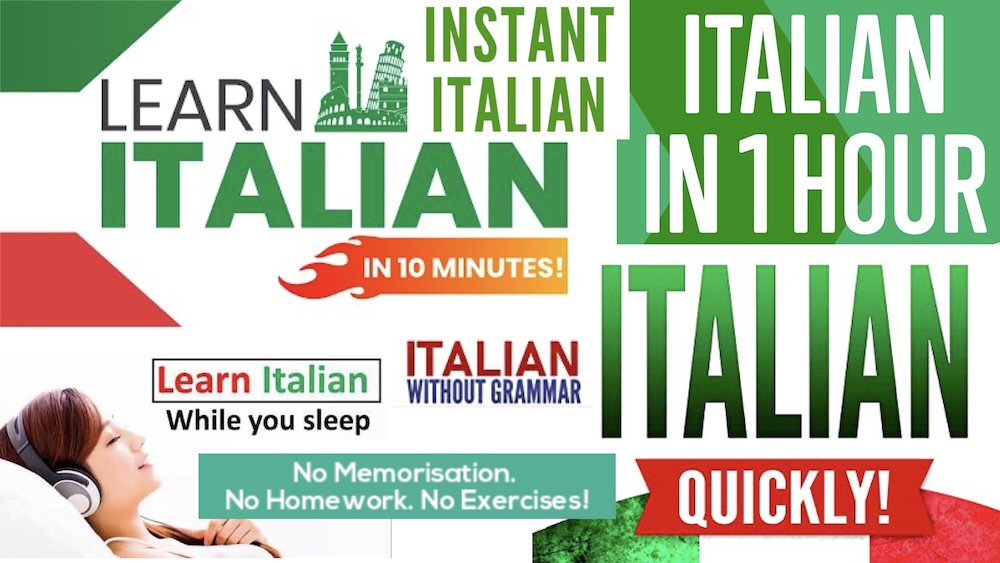
    Learn Italian quickly! Learn Italian in 30 minutes! No, in 5 minutes! Learn Italian in your sleep! Become fluent in 2 months! In 2 weeks! Speak Italian now!

    So… we are all keen on doing things quickly nowadays — we want to learn new things and squeeze as many activities as we can into our busy days. Is this the right attitude to learn a language? Is it the best way to learn Italian? We are all looking for a secret recipe that will make it quick and easy, but what is it? I will tell you my ‘secret’ below.

  • Cultura e società - Varie

    Il passaporto italiano: un sogno infranto?

    Reading Time: 3 minutes
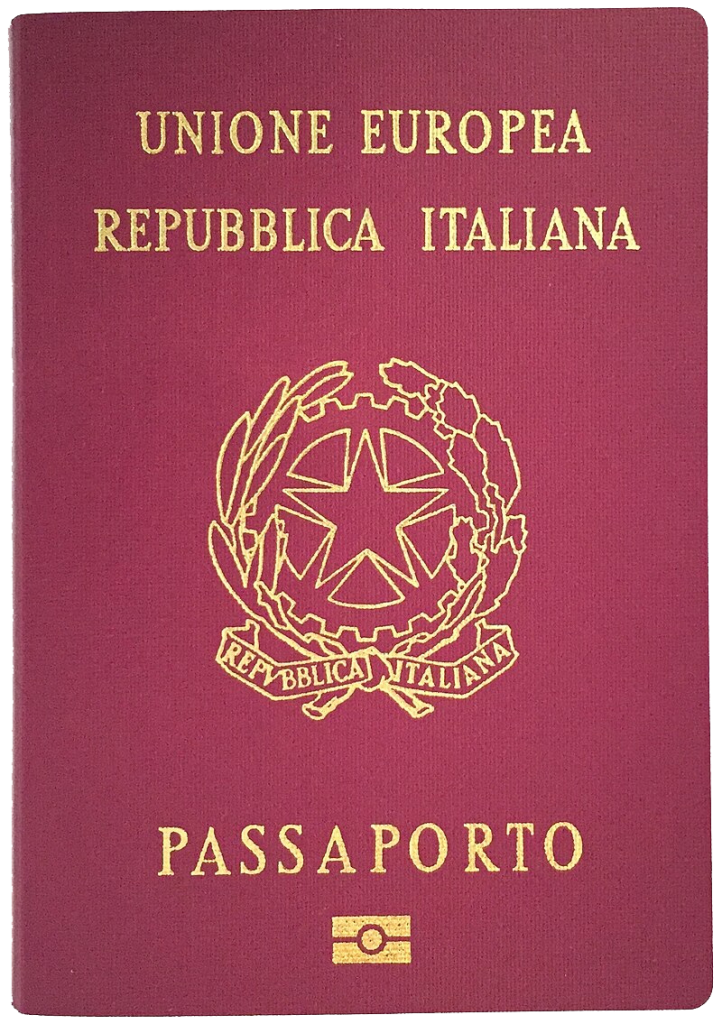
    Nuova legge cittadinanza italiana

    Che cos’è un sogno infranto? È un sogno che non si può realizzare. E questa è la dura realtà per molti cittadini stranieri di origine italiana, che hanno sperato per lungo tempo di ottenere la cittadinanza del Bel Paese. (Se ti stai domandando quale sia il Bel Paese, te lo dico io: è l’Italia!) La nuova legge sulla cittadinanza italiana per molti è una nuova, dura realtà.

    Un viaggio attraverso il tempo

    Con la vecchia legge, era sufficiente dimostrare di avere un antenato (una persona della tua famiglia vissuta molto tempo fa) italiano per chiedere la cittadinanza italiana. Questo antenato doveva essere nato in Italia dopo il 17 marzo 1861. Per noi italiani questa data è molto importante: è il giorno in cui Vittorio Emanuele II di Savoia, Re di Sardegna e Piemonte, uno dei principali promotori del movimento indipendentista italiano, diventò il primo Re d’Italia. (un re è una persona che governa un paese per diritto di famiglia, come Re Carlo d’Inghilterra). Questa legge era un filo che legava i discendenti degli italiani nel mondo a quel momento unico nel passato, quando l’Italia è diventata un paese unito e indipendente!

  • Italian Grammar

    How to Be Polite in Italian: the Present Conditional

    Reading Time: 4 minutes

    Vuoi fare bella figura? Usa il condizionale presente!

    What is a bella figura? It’s a good impression. Read this article if you want to learn how to be polite in Italian and make a bella figura.

    Your new friend: the present conditional

    The present conditional tense is extremely versatile: mastering its usage in Italian will enhance your communication skills and leave a positive impression. This tense is very common in everyday conversation, from chatting with friends to ordering your favourite meal at your go-to restaurant in Italy, so the use of the conditional is a practical skill that is never too early to acquire.

    When to use the present conditional

    We use the present conditional tense to:

    1. Express a wish: Un giorno vorrei visitare la Sicilia. I would like to visit Sicily one day.
    2. Make a polite request: Potresti passarmi il sale, per favore? Could you pass me the salt, please?
    3. Express a possibility or make a hypothesis: Sarebbe divertente partecipare a un corso di cucina insieme. It would be fun to take a cooking class together.
    4. Give advice: Secondo me dovresti leggere quel libro, è davvero interessante. In my opinion, you should read that book; it’s really interesting.
    5. Make a suggestion: Potremmo andare al cinema stasera. We could go to the movies tonight.

    Vorrei, potresti, sarebbe, dovresti, potremmo are all examples of present conditional.

    How to form the present conditional

    The regular conjugation of the present conditional is quite simple: verbs in -ARE and verbs in -ERE follow the same pattern, while verbs in -IRE just change the -E- to -I-.

    How to form the present conditional in Italian: regular conjugation
    Condizionale presente – coniugazione regolare

    Two spelling rules to keep in mind for some verbs:

    • Verbs ending in -ciare and giare lose the I before the ending: Io mangerei qualcosa, ma non so cosa. I would eat something, but I don’t know what. Mangerei, not *mangierei.
    • Verbs ending in -care and -gare add an H before the ending to maintain the hard sound of c and g: Pagherei io il conto, ma ho lasciato il portafogli in macchina. I would pay the bill, but I left my wallet in the car. Pagherei, not *pagerei.

    The conditional of irregular verbs

    Many common verbs are irregular, but they share a common pattern.

    Dare, fare and stare keep the A in their endings:

    How to form the present conditional in Italian: irregular verbs

    Other verbs drop the first E of their endings: Avresti un po’ di farina? Do you have some flour? Avresti, not *averesti.

    These verbs include: andare, avere, dovere, potere, sapere, vedere, vivere:

    How to form the present conditional in Italian: irregular verbs
    How to form the present conditional in Italian: volere
    Volere – condizionale presente

    The verb volere changes its stem from VOL- to VOR-. Vorrei fare una torta. I’d like to bake a cake. Vorrei, not *volerei.

    Some other verbs behave like volere: they drop the E of the infinitive, and the last consonant of the verb stem changes to R: rimanere, tenere, venire. Verrei al cinema con te, ma quel film non mi piace. I would go to the cinema with you, but I don’t like that film. So it’s verrei, not *venirei; rimarrei, not *rimanerei; terrei, not *tenirei.

    Sarei e andrei

    How to form the present conditional in Italian: essere
    Essere – condizionale presente

    The verb to be, essere, is in many languages the most irregular of all. In the present conditional it has a completely different stem: we do not say *esserei but sarei, not *esseresti but saresti, and so on.

    How to form the present conditional in Italian: andare
    Andare – condizionale presente

    The same is true for the verb andare: while the present indicative alternates between the stem VAD and the stem AND, the present conditional is based solely on the stem AND:

    Let’s practise!

    E ora un piccolo esercizio! Completa le frasi con il condizionale presente. Complete the sentences with the present conditional and Write your answers in the comments!

    1. (Io, volere) _________ un caffè corretto, per favore.
    2. (Tu, venire) _________ a Milano con me la settimana prossima?
    3. (Loro, potere) _________ aiutarci, ma sono pigri.
    4. Al tuo posto, non (io, dare) _________ la mia auto a Paolo.

    Alla prossima,

    Anna

    Related content:

    • The Italian Present Conditional – VIDEO
    • The Italian Past Conditional – VIDEO