• Italian Grammar

    How to Use Italian Relative Pronouns Correctly: CHE & CHI

    Reading Time: 5 minutes

    Nouns, articles, adjectives, pronouns… there is no escaping some grammar jargon when we study the building blocks of Italian. We have already talked about subject, object and reflexive pronouns in this article: How to Identify and Use Italian Pronouns Correctly. Have a quick look at it if you are not sure what pronouns are. Our focus today is on the relative pronouns CHE and CHI: I will explain how to use them correctly.

    When do we use CHE, and when do we use CHI? These two pronouns look very similar, but they have different functions, and they are quite easy to confuse with one another. Mind the pronunciation! CHE is pronounced keh, while CHI is pronounced kee.

    Relative pronouns in a nutshell

    First of all, what are relative pronouns? Relative pronouns introduce relative clauses: when you have two separate clauses, a main one and a dependent one, a relative pronoun is one of the little words that you can use to connect them. In English, relative pronouns are basically that/which and who, which correspond to the Italian relative pronouns che and chi, respectively. We also have cui and il quale, which I covered in a specific video lesson in Italian, but che and chi are definitely the most common ones.

    These pronouns are called relative because they are related to an element in the main clause and they create a relationship, a connection between our two clauses. We have already seen that pronouns are used to replace nouns. The relative pronoun replaces a noun that would otherwise be mentioned twice, once in the main clause and once in the dependent clause. Let’s clarify with some examples.

    The pronoun CHE replaces a common element

    The relative pronoun CHE means that or which, and is used to join two sentences that have an element in common, in order to avoid unnecessary repetition:

    • Hai preso i posti. I posti non vanno bene. —> I posti CHE hai preso non vanno bene. – The seats (that) you have chosen aren’t suitable.

    Another one:

    • Questo è il film. Io voglio vedere il film. —> Questo è il film CHE voglio vedere. – This is the film (that) I want to see.

    You may have noticed that the relative pronoun CHE is invariable: in the first sentence it replaces i posti, while in the second one it replaces il film.Good news! CHE is always the same for masculine, feminine, singular and plural nouns; moreover, it can replace inanimate objects, but also people. In English though, you would usually replace people with the pronoun who, not with the pronoun that. This is where things may become confusing!

    Have a look at this sentence:

    • Ci sono dei criminali. I criminali rubano dei gioielli. —> Ci sono dei criminali CHE rubano dei gioielli. – There are criminals who steal jewellery.

    And another one:

    • Non sopporto i maleducati. I maleducati parlano al cinema. —> Non sopporto i maleducati CHE parlano al cinema. – I can’t stand rude people who talk in the cinema.

    In both sentences, we used CHE in Italian, and not CHI, even if we are talking about people. Why? Let’s see how the pronoun CHI works.

    CHI or CHE? What’s the difference?

    Let’s look at the relative pronoun CHI. Can we use it in the same way as the English who? Not always! Now look at the following sentences: are they correct?

    • Ci sono dei criminali CHI rubano dei gioielli.
    • Non sopporto i maleducati CHI parlano al cinema.

    If you are an English speaker, they may look correct to you, because in English the relative pronoun for people is who, and who translates as CHI in Italian. However, as we just saw above, in these two sentences we use CHE and not CHI.

    Think of it this way: the pronoun CHI means la persona che or la gente che (the person who, people who). It does not refer to a noun I have already mentioned, so it does not replace a noun in a previous sentence. We must also remember that the verb that follows CHI is always singular.

    So this sentence is not correct: Ci sono dei criminali *CHI rubano dei gioielli.

    The correct version is: Ci sono dei criminali CHE rubano dei gioielli.

    This is wrong: Non sopporto i maleducati *CHI parlano al cinema.

    This is right: Non sopporto i maleducati CHE parlano al cinema.

    How to use the relative pronoun CHI

    So when do we use CHI? Let’s look at some examples. This is a famous proverb:

    • Chi va piano va sano e va lontano. It means: people who take it slow stay healthy and go far. Hence, those who do things calmly and prudently achieve results. Here we need CHI: la persona che, la gente che.

    Another example, another proverb:

    • Chi non risica, non rosica. People who don’t take risks don’t achieve anything. In other words: those who don’t take risks don’t achieve anything.

    I can also say: Io so CHI ha rubato i gioielli. I know who stole the jewellery, I know the person who stole the jewellery. Instead of la persona che, I can say chi.

    And I can say: Non sopporto CHI parla al cinema. Here too, it means: I can’t stand people who talk in the cinema. Instead of la gente che, I say chi.

    CHI is also an interrogative pronoun:
    A2 pre-intermediate Italian course
    • Chi ha visto questo film? – Who saw this film?
    • Chi ha scelto questi posti? – Who chose these seats?

    The last few example sentences are more intuitive for English speakers, because here CHI works just like who.

    Before we continue, I want to let you know that the relative pronouns CHE and CHI are the subject of lesson 12 of our A2 course, which you can find on Amazon. The course has 20 lessons and combines grammar and vocabulary with lots of exercises. You can use this book to study on your own or with a teacher!

    How to use CHE and CHI: let’s practise!

    Let’s put all this into practice. Let’s join two sentences with the relative pronoun CHE. Remember, you use CHE to replace a noun that occurs in both clauses. For example:

    Ho comprato una moto. La moto è rossa. —> La moto CHE ho comprato è rossa.

    1. Luigi ha una sorella. La sorella vive a Torino.
    2. Sandra ha letto il libro. Il libro è bellissimo.
    3. Luigi ha fatto un errore. L’errore è grave.
    4. Ho scelto i posti. I posti sono in prima fila.

    Now another exercise: find the mistakes, if there are any, and correct them. Pay attention to the difference between CHE and CHI.

    1. Il film che fanno oggi è un poliziesco.
    2. Io conosco la persona chi ha comprato questa casa. 
    3. Mi piace molto il libro chi mi hai regalato.
    4. Io so che è stato a rubare i gioielli.
    5. Il ragazzo che lavora al bar è francese.

    Easy or difficult? Have a look at the solutions below, and ask me questions in the comments if anything is unclear.

    That’s all for today: I hope you found this useful. Remember: listen, speak and study Italian with me!

    Buono studio,

    Anna

    Exercise Solutions

    1. Luigi ha una sorella. La sorella vive a Torino. -> Luigi ha una sorella CHE vive a Torino.
    2. Sandra ha letto il libro. Il libro è bellissimo. -> Il libro CHE ha letto Sandra è bellissimo.
    3. Luigi ha fatto un errore. L’errore è grave. -> L’errore CHE ha fatto Luigi è grave.
    4. Ho scelto i posti. I posti sono in prima fila. -> I posti CHE ho scelto sono in prima fila.
    1. Il film che fanno oggi è un poliziesco. Correct!
    2. Io conosco la persona CHE ha comprato questa casa. 
    3. Mi piace molto il libro CHE mi hai regalato.
    4. Io so CHI è stato a rubare i gioielli.
    5. Il ragazzo che lavora al bar è francese. Correct!

    Related video lessons:

  • Italian Grammar

    A Simple Guide to Italian Prepositions

    Reading Time: 7 minutes

    What are prepositions, and why are they one of the trickiest topics of Italian grammar? English has prepositions, too, and they are not easy to master either: they are words like to, about, in, on, for. Italian prepositions are DI, A, DA, IN, CON, SU, PER, TRA, FRA. There are many more, but these are the basic ones. Again: DI, A, DA, IN, CON, SU, PER, TRA, FRA. This is the order we learn them in school, like a tongue twister. This will help you remember! Now, let’s see what they mean and how to choose one or the other.

    Why Prepositions Matter

    Prepositions are tiny words that contain a lot of information. They express, for example, where you are, where you are going or where you come from; the moment something happened; the position of something, and much more.

    They are called prepositions because they are placed before the noun or pronoun they refer to. Remember! We never put prepositions at the end of a sentence in Italian, like you sometimes do in English. In Italian prepositions always go in front of another word:

    • Di cosa stai parlando? What are you talking about?
    • Con chi vai al mare? Who are you going to the seaside with?

    English and Italian often use prepositions differently, so you cannot always translate them literally. For example, in English you say I live in Milan, while in Italian we don’t use IN for cities, we use A:

    • Io vivo a Milano. I live in Milan.

    We use IN for bigger areas, like regions or countries:

    • Io vivo in Veneto, Alberto vive in Francia. I live in Veneto, Alberto lives in France.

    Sometimes you need a preposition in Italian but not in English, or the other way around. It all boils down to the verb you are using. Let’s translate this sentence: I will phone/call Luca later.

    Here we have two possibilities:

    1. Telefonerò a Luca più tardi.
    2. Chiamerò Luca più tardi.

    The verb chiamare is transitive and is not followed by a preposition, while the verb telefonare must be followed by the preposition A. This is why it’s a good idea to learn verbs together with the preposition(s) they are usually accompanied by.

    Now let’s learn the basic meaning and usage of Italian prepositions, one by one. As you will notice, for most of them there are many different English translations. For the sake of simplicity, in this article we will not get into prepositional contractions (the combination of a preposition with a definite article), but they are very important as well. We have a video lesson on prepositional contractions and we will cover them soon here as well.

    The preposition DI (of, by, on, about, from, than)

    1. DI shows possession, ownership: la casa di Anita, il giardino di Ernesto, il cane di Luigi – Anita’s house, Ernesto’s garden, Luigi’s dog.

    2. DI is also used to say who made, wrote, or composed something: una poesia di Ungaretti, il ponte di Renzo Piano – A poem by Ungaretti, Renzo Piano’s bridge.

    3. DI introduces the topic of something:

    • Oggi parliamo di grammatica. Today we talk about grammar.
    • Questo è un libro di storia. This is a history book.

    4. DI indicates the material something is made of: casa di carta, bottiglia di vetro – paper house, glass bottle.

    5. DI shows origin, like from:

    • Di dove sei? Sono di Firenze. Where are you from? I am from Florence.

    All the uses mentioned above express a close relationship, similar to ownership. Here you would use several different English prepositions, but we only use DI.

    6. Together with the days of the week, DI shows that something happens on a regular basis:

    • Di domenica non lavoro. I don’t work on Sundays.
    • Di mattina mi alzo presto. I get up early in the morning.

    Here, though, you can also use the article and say: La domenica non lavoro. La mattina mi alzo presto.

    7. DI is used in comparative and superlative structures:

    • Alberto è più alto di Mauro. Alberto is taller than Mauro.

    8. DI often introduces a verb in the infinitive in subordinate clauses:

    • Penso di andare al mare. I’m thinking of going to the seaside.
    • Finisco di lavorare alle cinque. I finish work at five.

    The preposition A (at, to, in)

    Our next preposition is A. It’s tricky because it shows movement toward a place, but also just location.

    1. A is both at and to: Sono a casa / a scuola / a teatro (I am at home, at school, at the theatre), but also Vado a casa / a scuola / a teatro (I go home, to school, to the theatre).

    2. A often introduces the recipient of something (the indirect object, answering the question to whom/what?):

    • Ho scritto una lettera a mia sorella. I wrote a letter to my sister.
    • Ho mandato un pacco a Stefano. I sent a parcel to Stefano.

    3. A also shows distance:

    • Abitiamo a 20 chilometri da Venezia. We live 20 kilometres from Venice.

    4. A is used with some expressions of time:

    • Cosa fai a Natale? What are you doing for Christmas?
    • A presto! A domani! A più tardi! See you soon / tomorrow / later!

    5. A can also introduce verbs in the infinitive:

    • Comincia a piovere. It’s starting to rain.
    • Vado a dormire. I’m going to bed.

    The preposition DA (from, at, off, for, by)

    1. DA translates the English from when talking about place of origin:

    • Il treno viene da Milano. The train is coming from Milan.

    2. We use DA with the verbs essere and stare to say that we are at someone’s place or shop, or that we are going to someone’s place or shop:

    • Sono da una mia amica. I’m at a friend’s house.
    • Fra poco vado da Renzo. I’m going to Renzo’s place shortly.

    3. You can use DA with a verb in the present to say how long you have been doing something:

    • Lavoro qui da tre mesi. I have been working here for three months.

    4. DA shows the purpose of something: vestito da sposa, scarpe da ginnastica, tuta da lavoro – wedding dress, trainers, work overalls.

    5. DA translates the English by in passive sentences:

    • Una torta fatta da Lucia. A cake made by Lucia.

    6. DA can also be followed by a verb in the infinitive when talking about things we have to do:

    • C’è molto da fare! There is much to do!
    • Questo è un film da vedere! This is a film you must see!
    • Ho molto da imparare. I have a lot to learn.

    The preposition IN (in, to, by)

    1. IN shows location but also movement towards a place, just like A, but is used with different words.

    • La valigia è in macchina. The suitcase is in the car.
    • Sono in Italia. I am in Italy. (Remember! With cities use A: Sono a Torino.)
    • Vado in ufficio / in banca / in fabbrica. I’m going to the office / to the bank / to the factory.

    So, when to use IN, and when to use A? I know it sounds random, but it’s not. My advice is to memorise complete expressions, so you will just know that you should say IN ufficio and A casa, without thinking too much.

    2. IN also means by when used with means of transport:

    • Andiamo a Berlino in treno. We are going to Berlin by train.
    • È tornata da Londra in macchina. She returned from London by car.

    It’s a bit like saying that we are in the train or she was in the car.

    3. IN can be used with time: in aprile, in autunno, in dieci minuti – in April, in autumn, in ten minutes.

    The preposition CON (with)

    1. CON corresponds to the English with:

    • Stasera esco con gli amici. Tonight I’m going out with friends.
    • Hanno lavorato con Arianna. They worked with Arianna.

    2. CON is used to add information about something:

    • Mi piacciono i dolci con il cioccolato. I like desserts with chocolate.
    • Ho visto delle scarpe con i tacchi alti. I saw some high-heeled shoes.

    3. CON can be used to say how something is done:

    • Mangia con calma! Eat slowly!
    • Taglio la carta con le forbici. I cut the paper with scissors.
    • Pago con la carta di credito. I pay by credit card.

    The preposition SU (on, about, out of)

    1. SU basically means ON:

    • L’ho comprato su internet. I bought it on the internet.

    2. SU corresponds also to the English about, with reference to a topic, like DI:

    • Un libro su Dante Alighieri. A book about Dante Alighieri.

    3. With numbers, SU expresses a ratio: uno su tre, sette su dieci – one in three, seven out of ten

    The preposition PER (for, to)

    1. PER corresponds roughly to the English FOR:

    • Questo regalo è per te. This gift is for you.
    • Per me un caffè, grazie. A coffee for me, please.

    2. Used with the passato prossimo, PER expresses the duration of an action that is no longer happening:

    • Ho lavorato a Berlino per due anni. I worked in Berlin for two years (and I no longer work there).

    Compare this construction with the use of DA with the present simple that we saw above:

    • Lavoro a Berlino da due anni. I have been working in Berlin for two years (and I’m still working there).

    3. PER shows the reason for something:

    • Sono qui per lavorare. I am here to work.
    • Ho cancellato il file per errore. I deleted the file by mistake.
    • Ho comprato la tenda per andare in campeggio. I bought the tent to go camping.

    4. With the verb partire, PER shows destination:

    • Domani parto per Varsavia. I’m leaving for Warsaw tomorrow.

    The prepositions TRA and FRA (between, among, in)

    TRA and FRA are the same preposition, there is no difference and the choice is personal. Usually we tend to avoid repeating the same sound, so I wouldn’t say FRA fratelli, but TRA fratelli, and FRA trenta minuti instead of TRA trenta minuti.

    1. TRA and FRA mean between, among:

    • La biglietteria è tra il bar e il museo. The ticket office is between the bar and the museum.
    • Fra tutti questi, scelgo quello blu. Of all these, I choose the blue one.

    2. In reference with time, TRA and FRA also mean in:

    • Sarò da te fra due ore. I’ll be with you in two hours.

    That was a lot of information, and yet it’s just the tip of the iceberg. It’s a good start, though! As I mentioned above, most of the prepositions we saw today are often combined with a definite article, but their usage is the same. More about this later!

    As always, practice is key. Notice which prepositions follow specific verbs when you read something in Italian. And why not, try to write simple sentences with prepositions in the comments below!

    A presto,

    Anna

    Related video lessons:

  • Italian Grammar

    Italian Pronouns: A Simple Guide to Identify and Use Them Correctly

    Reading Time: 5 minutes

    What is a pronoun? A pronoun is a tiny word that replaces a noun, usually to avoid repetition, like she, him, them, it. Italians hate redundancy, especially in writing, so we use pronouns a lot. Pronouns are introduced early on, at the A1 level, but they are a tricky topic: let’s learn how to identify and use them correctly!

    In Italian there is considerable overlapping between different kinds of pronouns, which can be helpful and confusing at the same time. As always, practice is key, but understanding the grammatical function of these little words is crucial: you need to know what a direct object is and be able to identify it in a sentence. No worries! Practical examples will make everything clear. Then you can test yourself with exercises on our YouTube channel.

    Subject pronoun

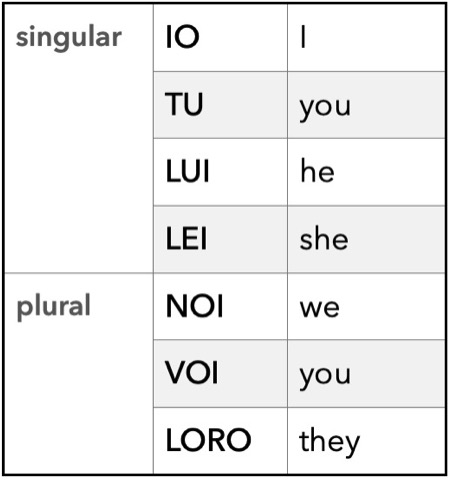
    Subject pronouns in Italian

    Grammar experts disagree on the exact definition of the term subject, but for our purposes it will suffice to say that the subject is the person, animal or thing that performs the action expressed by the verb. Subject pronouns have the same function:

    Luca prende l’autobus. Lui va a scuola. – Luca takes the bus. He goes to school.

    Luca is a subject. Lui is a subject as well, but it’s a pronoun. We use it to avoid saying Luca again.

    Very important: in Italian, the subject is often omitted, because the verb already contains information about it. We use subject pronouns only for emphasis or contrast. For example:

    Io vado al lavoro e lui dorme tutto il giorno! – I go to work and he sleeps all day.

    Chi va a prendere la pizza? Ci vado io! – Who’s going to pick up the pizza? I’ll go!

    In the sentence above, the subject pronoun is emphasised by its position after the verb: ci vado io.

    When reading a book, you may stumble upon old-fashioned forms of subject pronouns: egli for lui, ella for lei, essi for loro. These are the original forms of subject pronouns, but they are uncommon in speech. The pronoun esso translates the English it and applies to inanimate objects, but is not very common either.

    Direct object pronouns

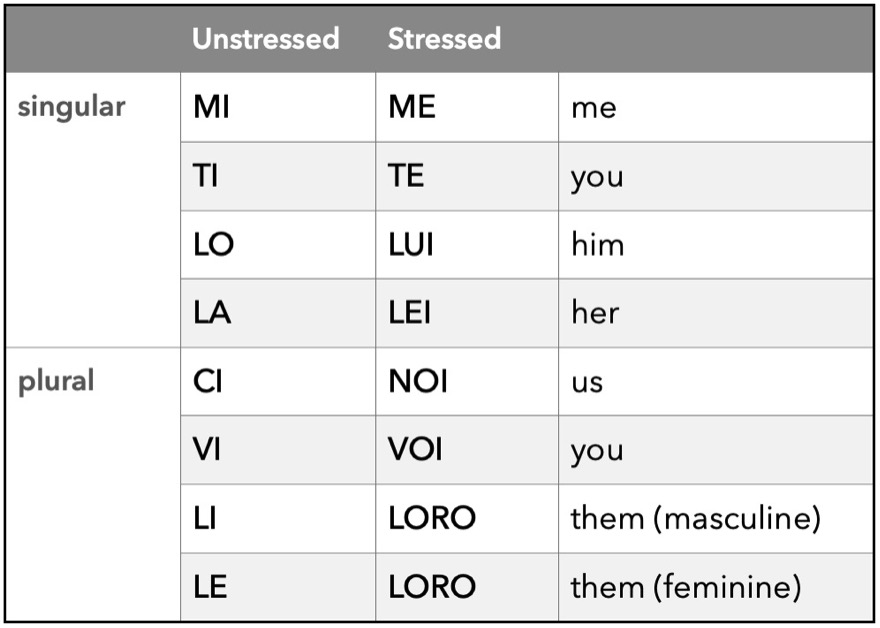
    Direct object pronouns replace the direct object of a verb, i.e. the person or thing that receives the action and answers the question Whom? or What?

    Direct object pronouns have two forms, stressed (forti) and unstressed (deboli). The stressed form is used for emphasis and follows the verb, while the unstressed form, which is more common, comes before the verb.

    Direct object pronouns in Italian

    Some example sentences:

    • Il mio cane mi segue sempre. — My dog follows me at all times.
    • Il mio cane segue me, non te. — My dog follows me, not you.
    • Quel bambino ci guarda. — That child is looking at us.
    • Quel bambino guarda noi, non loro. — That child is looking at us, not at them.

    Attenzione! If the verb is in the infinitive, gerund or imperative, unstressed pronouns are attached to the verb:

    • Bambini, seguitemi! (= seguite me) — Children, follow me! (imperative)
    • Quel bambino continua a guardarci. ( = a guardare noi) — That child keeps looking at us. (infinitive)

    Indirect object pronouns

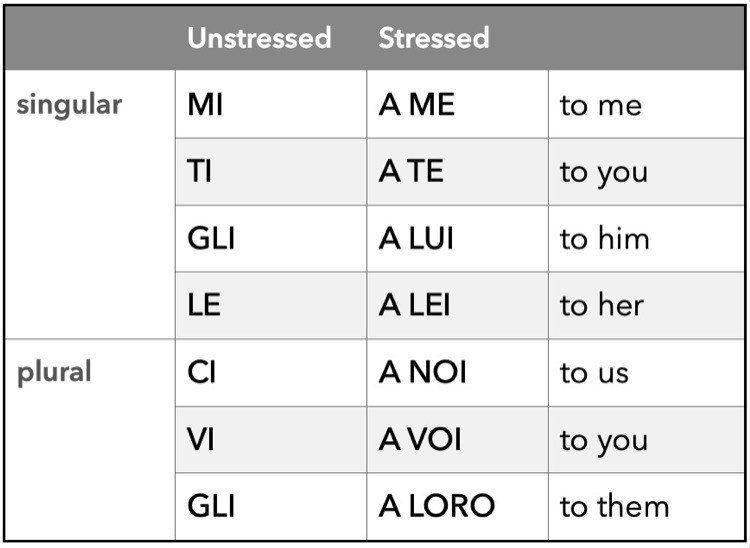
    An indirect object is the person or thing that receives the direct object (if any) and answers the question To whom? or To what? Indirect objects are called indirect because there is a preposition between them and the verb, while direct objects do not need prepositions, they directly follow the verb. Indirect object pronouns replace the indirect object of a verb.

    Indirect object pronouns in Italian

    Keep in mind that verbs that are followed by direct object pronouns in English may require indirect object pronouns in Italian and viceversa. Telefonare works like this:

    Più tardi telefono a Luca. — Later I will phone/call Luca.

    Let’s replace Luca with a pronoun: Più tardi gli telefono. — I will phone/call him later.

    Here, gli is an indirect object pronoun. The English verb is followed by a direct object, him, but in Italian the verb is followed by the preposition a, to, so we need an indirect object. We cannot say: Più tardi *lo telefono, we must say Più tardi gli telefono. This is a very common mistake.

    Like direct object pronouns, indirect object pronouns also have two forms, stressed (forti) and unstressed (deboli). The stressed form usually follows the verb + preposition, while the unstressed form comes before the verb, but is attached to it when the verb is in the infinitive, gerund or imperative.

    Tip: stressed indirect pronouns are the same as stressed direct pronouns, but they come after a preposition; unstressed indirect pronouns are the same as unstressed direct pronouns, except for the third person singular and plural.

    Some example sentences with unstressed indirect pronouns and the related stressed forms:

    • Anna sta mentendo, non le credo. ( = non credo a lei) — Anna is lying, I don’t believe her.
    • Vi piace la pizza? (= A voi piace la pizza?) — Do you (plural) like pizza?
    • Questa borsa non mi serve più. (= non serve più a me) — I no longer need this bag.
    • Ci hanno spedito un pacco. (= Hanno spedito un pacco a noi) — They sent us a parcel.
    • Ti voglio tanto bene! (= Voglio tanto bene a te) — I really care for you!

    What happens if the preposition that follows the verb is not a, but another one, for example con, with, or per, for? We use stressed pronouns: 

    • Aspettami, vengo con te! — Wait for me, I’m coming with you!
    • Questo regalo è per lei. — This present is for her.

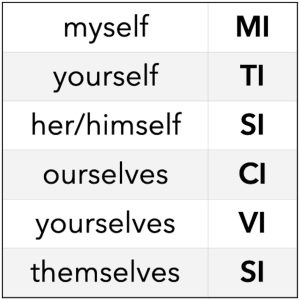
    Reflexive pronouns

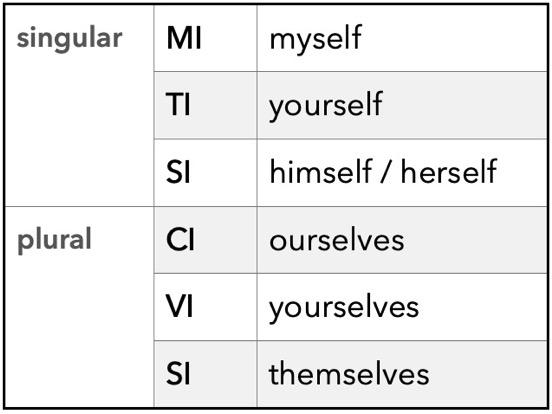
    Reflexive pronouns in Italian

    Reflexive pronouns are used with reflexive verbs, i.e. verbs whose action affects the subject or reflects on the subject. These verbs are quite common in Italian: you can read this article to learn more about them.

    Reflexive pronouns come before the verb but can be attached to it when the verb is in the infinitive, gerund or imperative:

    • Ti alzi presto. — You get up early.
    • Ti devi alzare presto. / Devi alzarti presto. — You have to get up early.
    • Gianni si veste. — Gianni gets dressed.
    • Gianni si sta vestendo. / Gianni sta vestendosi. — Gianni is getting dressed.

    Once again, notice how reflexive pronouns are the same as unstressed direct object and indirect object pronouns, except for the third person singular and plural. This overlapping makes it harder to identify their function in a sentence, but makes it easier to memorise them.

    Sometimes multiple pronouns are used together, and pronouns can be used with the particles ci and ne. We will discuss this topic – i pronomi combinati – in a separate article!

    I hope this clarified the basic concepts for you. Ask me questions in the comments if you have any! I’ll see you soon on YouTube and on this website.

    Anna

    Related video lessons:

  • Italian Grammar

    The Trapassato Prossimo: When Something Happened Before Something Else

    Reading Time: 3 minutes

    Have you ever told a story about the past… but starting from before the main event? Welcome to the fascinating world of the trapassato prossimo, the Italian past perfect. This tense lets you describe an action that happened even earlier than another past action.

    La tensione cresce

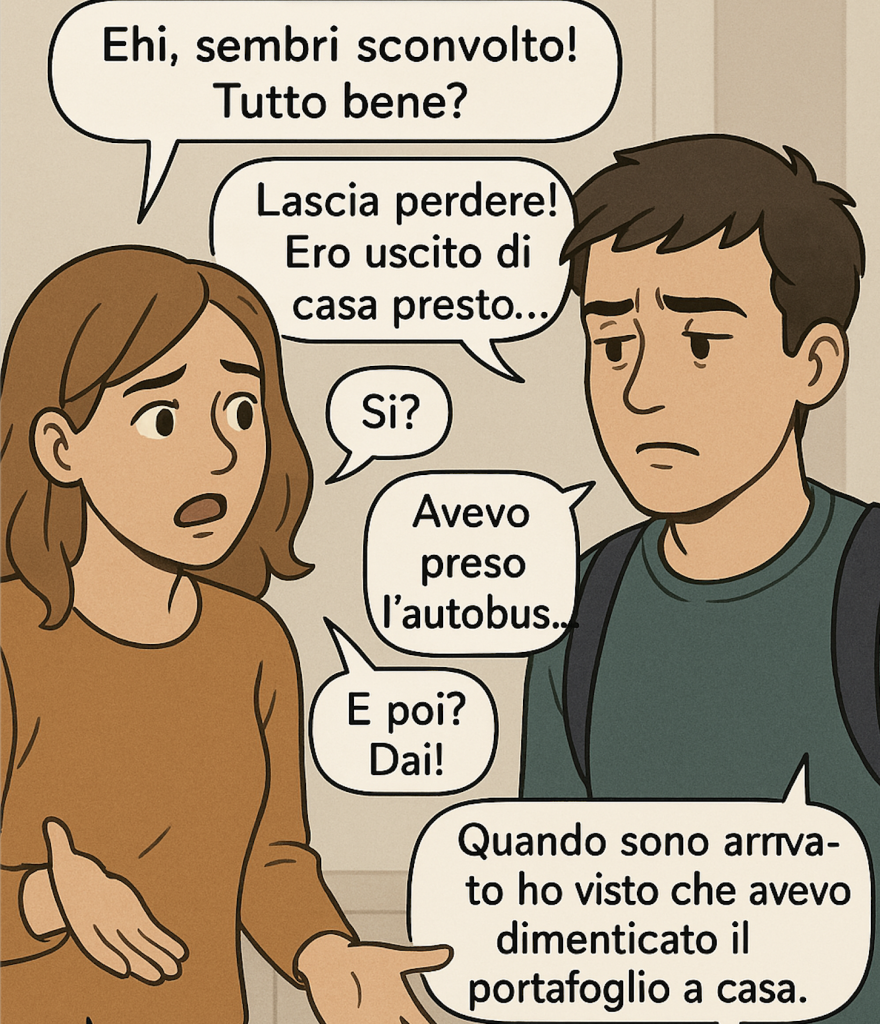
    Let’s read a short exchange between two friends, Marco and Giulia:

    Giulia: Ehi, sembri sconvolto! Tutto bene?
    Marco: Lascia perdere! Ero uscito di casa presto…
    Giulia: Sì?
    Marco: Avevo preso l’autobus…
    Giulia: E poi? Dai!
    Marco: Quando sono arrivato ho visto che avevo dimenticato il portafoglio a casa.
    Giulia: Ma no! E cosa hai fatto?
    Marco: Niente… sono tornato indietro, ma a quel punto avevo già perso il colloquio di lavoro.

    Giulia: You look upset! Everything okay?
    Marco: Don’t even ask… I had left the house early…
    Giulia: Yeah?
    Marco: I had taken the bus…
    Giulia: And then? Come on!
    Marco: When I got there I saw that I had forgotten my wallet at home.
    Giulia: Oh no! What did you do?
    Marco: Nothing… I went back, but by then I had already missed the job interview.

    Can you see what’s happening? Marco builds tension using the trapassato prossimo, and only later reveals what happened in the end. 

    So, What Is the Trapassato?

    In English, we call it the past perfect. In Italian, it’s formed like this:

    Imperfetto of “essere” or “avere” + past participle of the main verb.

    Examples:

    1. Avevo mangiato prima di uscire. – I had eaten before going out.
    2. Era arrivata troppo tardi. – She had arrived too late.

    We use the trapassato to show that an action happened before another one in the past.

    Sequence of past events; describing a state

    1. Sequence of past events

    Quando siamo arrivati, il film era già iniziato.
    When we got there, the film had already started.

    Ho perso il cellulare che avevo appena comprato.
    I lost the phone that I had just bought.

    2. With the imperfetto (describing a state)

    Ero triste perché avevo ricevuto una brutta notizia.
    I was sad because I had received bad news.

    Volevo uscire, ma avevo dimenticato l’ombrello.
    I wanted to go out, but I had forgotten my umbrella.

    Be Careful with “prima di…”

    If the subject of the sentence stays the same, you can use the trapassato with prima di + infinitive:

     Avevo già fatto la spesa prima di tornare a casa.
    I had already done the shopping before going home.

    Luca aveva studiato molto prima di sostenere l’esame.
    Luca had studied a lot before taking the exam.

    The “Polite” Trapassato

    Yes! Italians sometimes use the trapassato to sound more polite, especially in shops or formal situations:

    Scusi, avevo visto una giacca rossa ieri… è ancora disponibile?
    Excuse me, I had seen (= I saw) a red jacket yesterday… is it still available?

    Ero venuto per chiedere un’informazione…
    I had come (= I came) to ask for some information…

    In these cases, you can also use the passato prossimo instead, and the meaning stays the same:

    Scusi, ho visto una giacca rossa ieri…
    Sono venuto per chiedere…

    Using It Alone (With mai)

    Sometimes the trapassato is used on its own, when the context makes the meaning clear. This often happens with the word mai (never):

    Buono questo dolce! Non lo avevo mai assaggiato.
    This dessert is great! I had never tasted it before.

    Marco non era mai stato a Roma prima d’ora.
    Marco had never been to Rome before now.

    Let’s Recap!

    Use the trapassato prossimo to:

    1. Talk about past actions that happened before other actions in the past.
    2. Describe emotional states or situations caused by earlier events.
    3. Make polite requests in formal or service situations.
    4. Express something that had never happened until that moment (often with mai).

    Would you like to practice? Try writing a short story using at least three verbs in the trapassato prossimo. If you want, send it to me and I’ll give you some feedback. Don’t forget to watch our video lesson on this useful tense!

    Anna

  • Italian Grammar

    Gli articoli determinativi: How to Use Definite Articles in Italian

    Reading Time: 4 minutes

    L’amore. Gli spaghetti. La nonna. Il vino. L’Italia. What are the little words you see before all these nouns? They all mean the; they are all definite articles. What are they and why so many different ones? How to use definite articles in Italian? In this article I will answer these questions and I will help you make sense of this tricky feature of the Italian language.

    What are definite articles?

    Basic rule, which applies to many different languages, including English: definite articles are used to refer to a specific thing or person. So:

    THE house you see is mine. = LA casa che vedi è mia.

    THE black dog is mine. = IL cane nero è mio.

  • Italian Grammar

    How to Be Polite in Italian: the Present Conditional

    Reading Time: 4 minutes

    Vuoi fare bella figura? Usa il condizionale presente!

    What is a bella figura? It’s a good impression. Read this article if you want to learn how to be polite in Italian and make a bella figura.

    Your new friend: the present conditional

    The present conditional tense is extremely versatile: mastering its usage in Italian will enhance your communication skills and leave a positive impression. This tense is very common in everyday conversation, from chatting with friends to ordering your favourite meal at your go-to restaurant in Italy, so the use of the conditional is a practical skill that is never too early to acquire.

    When to use the present conditional

    We use the present conditional tense to:

    1. Express a wish: Un giorno vorrei visitare la Sicilia. I would like to visit Sicily one day.
    2. Make a polite request: Potresti passarmi il sale, per favore? Could you pass me the salt, please?
    3. Express a possibility or make a hypothesis: Sarebbe divertente partecipare a un corso di cucina insieme. It would be fun to take a cooking class together.
    4. Give advice: Secondo me dovresti leggere quel libro, è davvero interessante. In my opinion, you should read that book; it’s really interesting.
    5. Make a suggestion: Potremmo andare al cinema stasera. We could go to the movies tonight.

    Vorrei, potresti, sarebbe, dovresti, potremmo are all examples of present conditional.

    How to form the present conditional

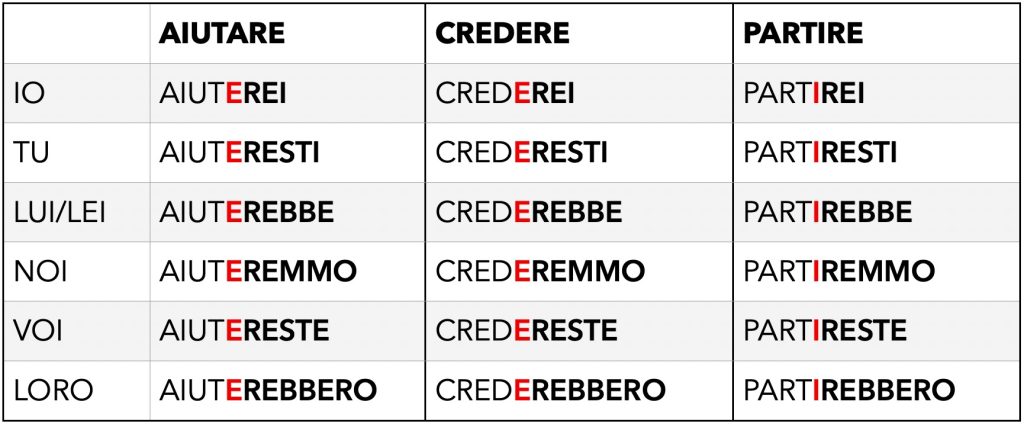
    The regular conjugation of the present conditional is quite simple: verbs in -ARE and verbs in -ERE follow the same pattern, while verbs in -IRE just change the -E- to -I-.

    How to form the present conditional in Italian: regular conjugation
    Condizionale presente – coniugazione regolare

    Two spelling rules to keep in mind for some verbs:

    • Verbs ending in -ciare and giare lose the I before the ending: Io mangerei qualcosa, ma non so cosa. I would eat something, but I don’t know what. Mangerei, not *mangierei.
    • Verbs ending in -care and -gare add an H before the ending to maintain the hard sound of c and g: Pagherei io il conto, ma ho lasciato il portafogli in macchina. I would pay the bill, but I left my wallet in the car. Pagherei, not *pagerei.

    The conditional of irregular verbs

    Many common verbs are irregular, but they share a common pattern.

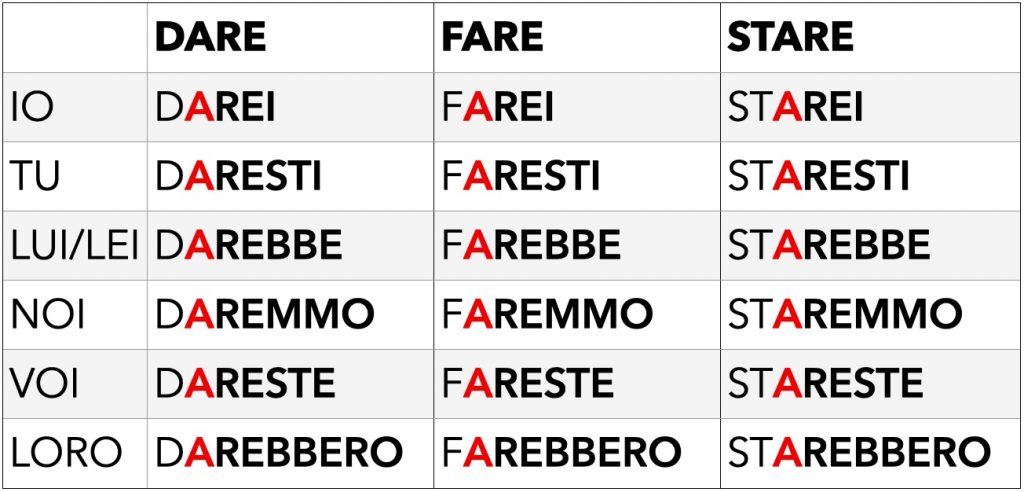
    Dare, fare and stare keep the A in their endings:

    How to form the present conditional in Italian: irregular verbs

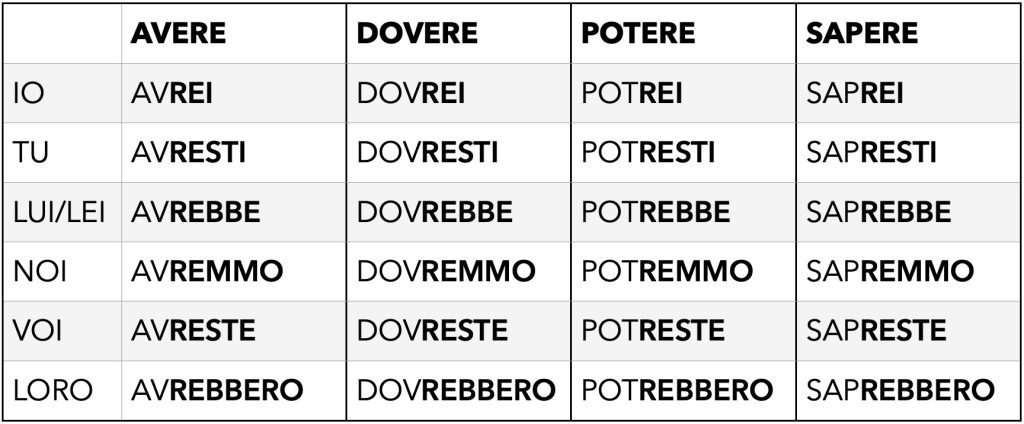
    Other verbs drop the first E of their endings: Avresti un po’ di farina? Do you have some flour? Avresti, not *averesti.

    These verbs include: andare, avere, dovere, potere, sapere, vedere, vivere:

    How to form the present conditional in Italian: irregular verbs
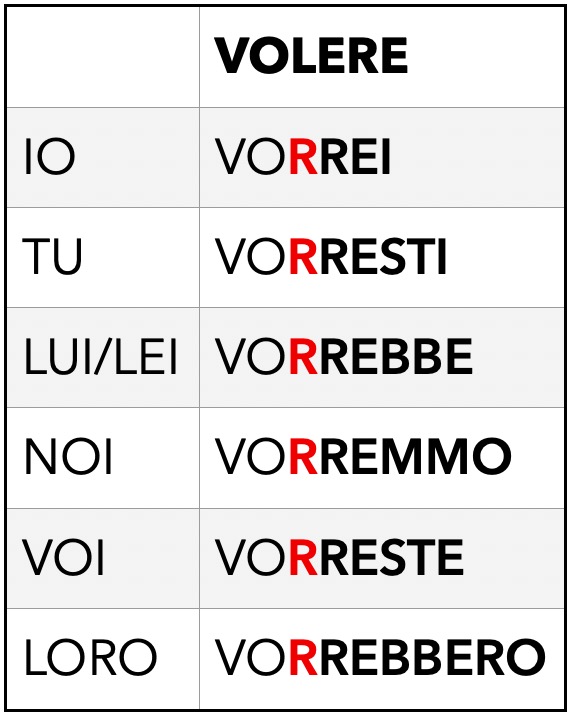
    How to form the present conditional in Italian: volere
    Volere – condizionale presente

    The verb volere changes its stem from VOL- to VOR-. Vorrei fare una torta. I’d like to bake a cake. Vorrei, not *volerei.

    Some other verbs behave like volere: they drop the E of the infinitive, and the last consonant of the verb stem changes to R: rimanere, tenere, venire. Verrei al cinema con te, ma quel film non mi piace. I would go to the cinema with you, but I don’t like that film. So it’s verrei, not *venirei; rimarrei, not *rimanerei; terrei, not *tenirei.

    Sarei e andrei

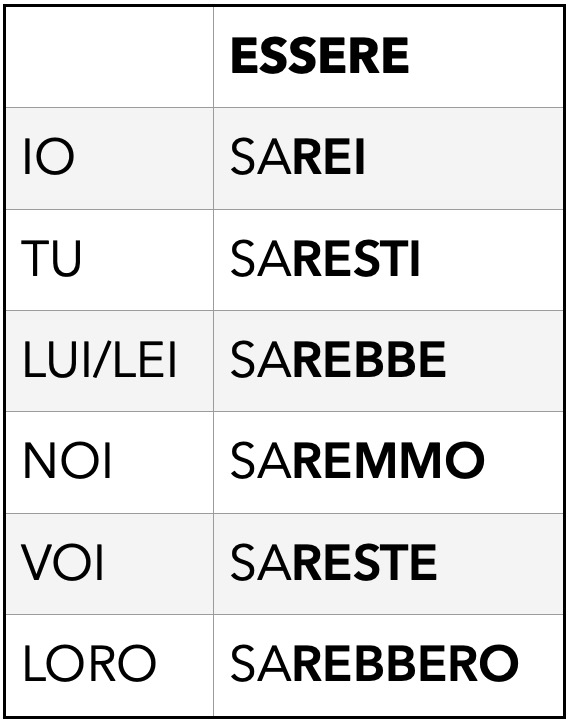
    How to form the present conditional in Italian: essere
    Essere – condizionale presente

    The verb to be, essere, is in many languages the most irregular of all. In the present conditional it has a completely different stem: we do not say *esserei but sarei, not *esseresti but saresti, and so on.

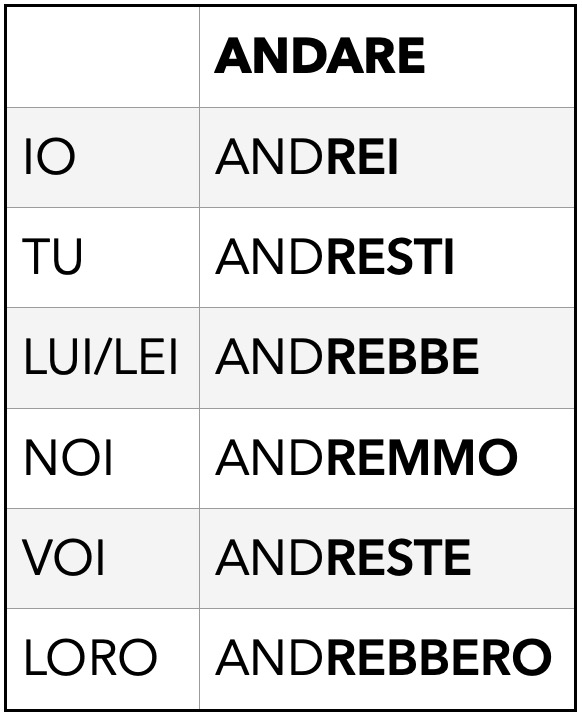
    How to form the present conditional in Italian: andare
    Andare – condizionale presente

    The same is true for the verb andare: while the present indicative alternates between the stem VAD and the stem AND, the present conditional is based solely on the stem AND:

    Let’s practise!

    E ora un piccolo esercizio! Completa le frasi con il condizionale presente. Complete the sentences with the present conditional and Write your answers in the comments!

    1. (Io, volere) _________ un caffè corretto, per favore.
    2. (Tu, venire) _________ a Milano con me la settimana prossima?
    3. (Loro, potere) _________ aiutarci, ma sono pigri.
    4. Al tuo posto, non (io, dare) _________ la mia auto a Paolo.

    Alla prossima,

    Anna

    Related content:

    • The Italian Present Conditional – VIDEO
    • The Italian Past Conditional – VIDEO

  • Italian Grammar

    Ti sei lavato i denti? Italian Reflexive Verbs

    Reading Time: 3 minutes

    Italian reflexive verbs, a simple subject that can sometimes confuse even advanced learners!

    Simply put, a reflexive verb is a verb conjugated with reflexive pronouns. We call them reflexive because, in most cases, the action performed by the subject reflects on the subject: I’m enjoying myself, mi diverto.

    In Italian these verbs are quite common, and you are likely to encounter them early on because many verbs that describe our daily routine are reflexive: alzarsi, lavarsi, pettinarsi, and so on.

    Compare English and Italian

    Italian has a higher number of reflexive verbs compared to English. However, there is positive news: English verbs that are reflexive in English are likely to be reflexive in Italian. For example:

    To enjoy oneself/To have fun – Divertirsi

    I am enjoying myself —> (io) mi diverto

    You are enjoying yourself —>(tu) ti diverti

    She/he is enjoying herself —> (lei/lui) si diverte

    We are enjoying ourselves —> (noi) ci divertiamo

    You are enjoying yourselves —> (voi) vi divertite

    They are enjoying themselves —> (loro) si divertono

    Mi lavo le mani, lavo le mie mani o mi lavo le mie mani?

    Often in Italian there is a reflexive verb where in English there is a verb followed by a possessive pronoun. For example: I brush my teeth, she combs her hair: io mi lavo i denti, lei si pettina i capelli. In Italian we don’t need the possessive adjective, it’s redundant, so do not say: mi lavo le mie mani or lavo le mie mani, but simply: mi lavo le mani.

    A common mistake

    The infinitive form of reflexive verbs ends with the pronoun -si, so the endings of the three conjugations are not -are, -ere, -ire, but -arsi, -ersi, -irsi. A common mistake is to keep the ending -si of the infinitive when conjugating the verb. Don’t say *mi divertirsi, but mi diverto. Conjugate the verb normally, and put the reflexive pronoun before the verb.

    The past tense of reflexive verbs

    We can conjugate reflexive verbs in all tenses; let’s look at the passato prossimo of lavarsi. Basic rules:

    1. Reflexive verbs take the auxiliary essere and not avere: sono lavato.
    1. Add the reflexive pronoun in front of the verb: mi sono lavato.
    1. Remember! When the passato prossimo is formed with essere, the past participle agrees with the subject: Elena si è lavata i denti; Leonardo e Marco si sono lavati le mani.

    L’importanza di lavarsi i denti

    Lavarsi i denti è importante, il mio dentista lo dice sempre! Io mi lavo i denti tutte le sere, mentre Paolo non si lava i denti prima di andare a letto, ma solo la mattina. Questa non è una buona idea! Nella mia famiglia ci laviamo i denti con molta attenzione e usiamo lo spazzolino elettrico. I miei vicini di casa non si lavano i denti molto bene, infatti hanno i denti gialli!

    Brushing your teeth is important, my dentist always says so! I brush my teeth every night, while Paolo does not brush his teeth before going to bed, but only in the morning. This is not a good idea! In my family, we brush our teeth very carefully, and we use an electric toothbrush. My neighbours don’t brush their teeth very well, in fact they have yellow teeth!

    In this little story the verb lavarsi is conjugated with different pronouns, could you identify them all? Write your answer in a comment below!

    Alla prossima,

    Anna

    Related content:

    • I verbi riflessivi in italiano – VIDEO
  • Italian Grammar

    Viva l’Italia! How to Use the Subjunctive Mood in Italian

    Reading Time: 4 minutes

    The subjunctive is the most elegant mood of the Italian language, and at some point you need to at least be able to identify it when you hear it. If you can also use it correctly, then you will be well on your way to fluency. This article will introduce all you need to know on the Italian subjunctive mood.

    What is the subjunctive mood?

    What is the subjunctive mood – il congiuntivo? Il congiuntivo congiunge – the subjunctive joins two clauses. Most of the times (but not always!), you will find it in a dependent clause, a statement that is connected to another one by the conjunction (congiunzione) CHE, that or which.

    For example:

    Penso che Jannik Sinner sia bravissimo.

    Penso —> I think, main clause

    che —> that, conjunction

    Jannik Sinner sia bravissimo —> Jannik Sinner is very good, dependent clause.

    The verb SIA in the dependent clause is present subjunctive; here it means (he) is. Look at a similar sentence:

    So che Jannik Sinner è bravissimo.

    So —> I know, main clause

    che —> that, conjunction

    Jannik Sinner è bravissimo —> Jannik Sinner is very good, dependent clause.

    Here we didn’t use SIA, subjunctive, but the basic form È, (he) is, present indicative. Why? It all depends on the verb that comes before CHE. First we had Penso, I think, then we had So, I know.

    The Golden Rule

    Bear in mind that this is a simplification, but we can think of the matter this way: the subjunctive is the mood that expresses everything that is subjective – uncertainty, possibility, fear, doubt, wish, personal opinion. A few examples:

    • Possibility —> Magari oggi fosse una bella giornata! I wish today was a good day!
    • Assumption —> Penso che Luca sia un medico. I think Luca is a doctor.
    • Fear —> Ho paura che Sara non passi l’esame. I’m afraid Sara won’t pass the exam.
    • Doubt —> Paolo è in ritardo: che abbia perso il treno? Paolo is late: could he have missed the train?

    The indicative mood, instead, presents facts as true, real, certain:

    • Oggi è una bella giornata. It’s a fine day today.
    • So che Luca è un medico. I know Luca is a doctor.
    • Sono sicura che Sara passerà l’esame. I’m sure Sara will pass the exam.
    • Paolo è in ritardo: ha perso il treno. Paolo is late: he missed the train.

    Alas, there are exceptions to this rule. For example, the expression secondo me, in my opinion, is followed by the indicative mood, not the subjunctive. What you really need to focus on is the verb in the main clause: some verbs must be followed by the subjunctive. Pensare, ritenere, credere, dubitare, sperare, temere, augurarsi che… are all followed by the subjunctive.

    But don’t use the subjunctive all the time!

    There is a rule that has no exceptions: do not use che + subjunctive when the subject of the dependent clause is the same as the subject of the main clause. For example:

    Lucia thinks she is special.

    Lucia is the subject of both clauses: she thinks and she is special. In Italian we cannot say: Lucia pensa *che lei sia speciale. We must use di + infinitive instead:

    Lucia pensa di essere speciale.

    You can find the infinitive in English as well:

    I hope to understand. —> Io spero di capire. (and NOT Io spero *che io capisca.)

    If the subject is different, then it’s time to use the subjunctive!

    I hope he understands. —> Spero che lui capisca.

    The subjunctive in independent clauses

    Sometimes, the subjunctive is also used by itself, in independent clauses, usually to express a wish, a doubt, or an exhortation, or in an exclamation:

    • Paolo è in ritardo: che abbia perso il treno? Here che abbia perso il treno is similar to forse ha perso il treno, maybe he missed the train, but it has more emphasis.
    • Viva l’Italia! (Long live Italy!) is also subjunctive: here the word che is not expressed, but the sentence actually means Che viva l’Italia! We find this in Spanish: ¡Que viva!
    • Magari fosse vero! How I wish it were true. Fosse is imperfect subjunctive, and here we use the subjunctive in English, too.

    Let’s sum it all up!

    • The subjunctive mood is used to express possibility, wish, fear, doubt, personal opinion. The indicative mood, in contrast, presents a fact as true, certain.
    • The subjunctive is often used in dependent clauses introduced by che: Io spero che tu vinca la gara. BUT if the subject of the two clauses is the same, we use di + infinitive: Io spero di vincere la gara.
    • The subjunctive is also used in independent clauses to express a doubt, a wish, an exhortation, an exclamation: Fosse vero! Viva l’Italia!
    • The subjunctive has four tenses: presente, imperfetto, passato, trapassato.

    Some say the subjunctive is dead. While it’s true that it is often replaced by the indicative mood in informal speech among friends and family, it’s actually very well alive and kicking, and not only in high-register written Italian. Try to identify it whenever you listen or read in Italian, and you won’t be caught off-guard when someone uses it with you.

    Alla prossima!

    Anna

    We also wrote three articles on the subjunctive mood for our favourite website for learners of Italian, Daily Italian Words.

    Related content:

    • Il congiuntivo 1: Independent Clauses – VIDEO
    • Il congiuntivo 2: Dependent Clauses – VIDEO
    • Il congiuntivo 3: Conjunctions – VIDEO
    • Il congiuntivo passato – VIDEO
    • Congiuntivo o infinito? – VIDEO
    • Corso A2 Lezione 19: Il congiuntivo – Patreon
  • Italian Grammar

    Imperfetto o passato prossimo? How to talk about the past in Italian

    Reading Time: 4 minutes

    Italian has several past tenses, but the passato prossimo and the imperfetto are the two most common ones. The imperfetto does not exist in English, but it can be translated using the past simple or the past continuous. The passato prossimo is a compound tense, similar to the English present perfect, but it can also be translated with the past simple. How do we choose between one or the other?

    What is the difference?

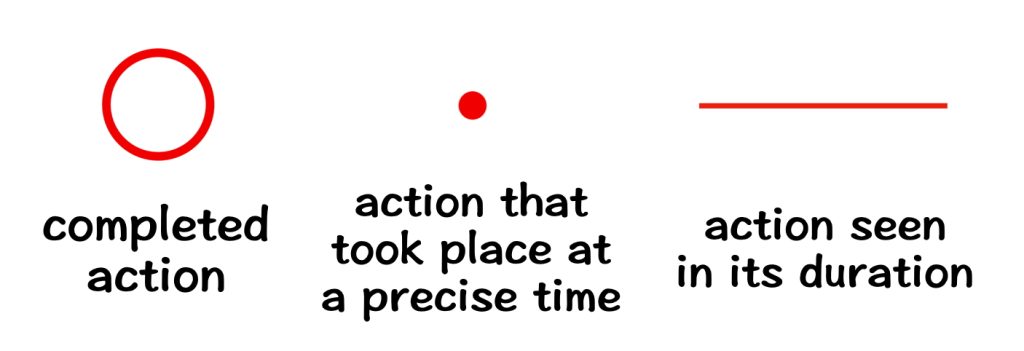
    To understand the nature of these tenses, let us consider three shapes: a circle, a point, a line. We can associate a completed action to a circle, an action that took place at a precise moment to a point, and an action seen in its duration to a line.

    Imperfetto o passato prossimo?

    In Italian, a completed action corresponds to the passato prossimo: 

    • Ho guardato questo video tre volte. I have watched this video three times.

    Here I underline the completed nature of the action; I don’t care when exactly I watched the video, or what happened while I was watching it, I care about the fact that the action was completed: a circle.

    The passato prossimo is also used to describe an action that took place at a specific time: a point.

    • Ieri ho guardato il video che mi hai consigliato. Yesterday I watched the video you recommended.

    The passato prossimo corresponds to a circle: action completed, in general; or to a point: action completed at a specific time.

    What is the imperfetto?

    What about the imperfetto? This tense is imperfect, unfinished, not because the actions it describes are incomplete, but because we are interested in their duration, not in their completion. The imperfetto describes a state, a situation, an action seen in its duration: a line. We don’t care when the action began or when it ended, we are interested in the fact that the action or the state lasted for some time:

    • Ieri non volevo parlare con nessuno. Yesterday I didn’t want to talk to anyone. —> Probably for the entire day.

    The imperfetto is also used to talk about a past habit, a habitual, repeated action in the past, like the English “used to“:

    • Da piccolo andavo al mare ogni anno. As a child I used to go to the seaside every year. —> Ogni anno, spesso, sempre are often used in this kind of sentences.

    If we talk about actions that we did once or more than once, but which are not habits, we use the passato prossimo, instead:

    • Sono stato a Roma due volte. I went to Rome twice. —> I went and came back: completed actions.

    Instead, we use the imperfetto to talk about a state or a continuous action in the past:

    • Nel 2010 vivevo a Roma. I was living in Rome in 2010. —> Past continuous.
    • Ieri ero di cattivo umore. Yesterday I was in a bad mood. —> My bad mood lasted for some time.

    Can we use both tenses in the same sentence? Yes, if we have an action that interrupted another one, for example:

    • Mentre dormivo ho sentito un rumore improvviso. While I was sleeping I heard a sudden noise. —> Imperfetto for the continuous action of sleeping, passato prossimo for the sudden noise.

    When talking about the past, the conjunction mentre, while, is always used with the imperfetto. Quando, when, can use both:

    • Quando ero all’università sono andato in Cina. When I was at university I went to China. —> I went to China while I was at university.
    • Quando mi sono laureato sono andato in Cina. When I graduated I went to China. —> First I graduated, then I went to China.

    Another use of the imperfetto that is becoming increasingly common is the imperfetto ipotetico. Here the imperfetto is used in a conditional sentence instead of more complex compound tenses:

    • Se lo sapevo, non venivo. 

    In standard Italian, this sentence would be:

    • Se lo avessi saputo (congiuntivo trapassato), non sarei venuto (condizionale passato). If I had known it, I wouldn’t have come.

    Conclusion – When to use the imperfetto

    This is just the tip of the iceberg, but it should give you a sense of the difference between imperfetto and passato prossimo. The imperfetto is a powerful tense that we use a lot in conversation, so it’s important to keep it in mind as an option when you need to talk about the past.

    Use the imperfetto to describe people, places or situations in the past; to talk about a state of mind or a physical state in the past; to describe things you used to do or that you did for some time; to talk about actions that took place at an unspecified time, or something that was going on when something else happened.

    Ask me questions in the comments if you have any, and watch our video lessons on these tenses for more examples and exercises.

    A presto!

    Anna

    We also discuss the choice between imperfetto and passato prossimo, in more detail and using different examples, on Daily Italian Words.

    Related video lessons:
  • Italian Grammar

    Essere o avere? How to form compound tenses in Italian

    Reading Time: 4 minutes

    What is all the fuss about essere and avere in Italian? Why do we bring up this topic so often in our grammar lessons? Essere and avere have their own meanings, be and have, but they are also used to form compound tenses.

    What is a compound tense? The English present perfect, for example: I have done. Have is an auxiliary here, it helps or supports the verb to do. English has many auxiliaries, but to form compound tenses it uses have. In Italian, instead, we can use have, avere, or be, essere. So we say Io ho fatto and Io sono andato. We cannot say *Io ho andato, it would sound awful! But how to choose? There are a few rules that can help us remember.

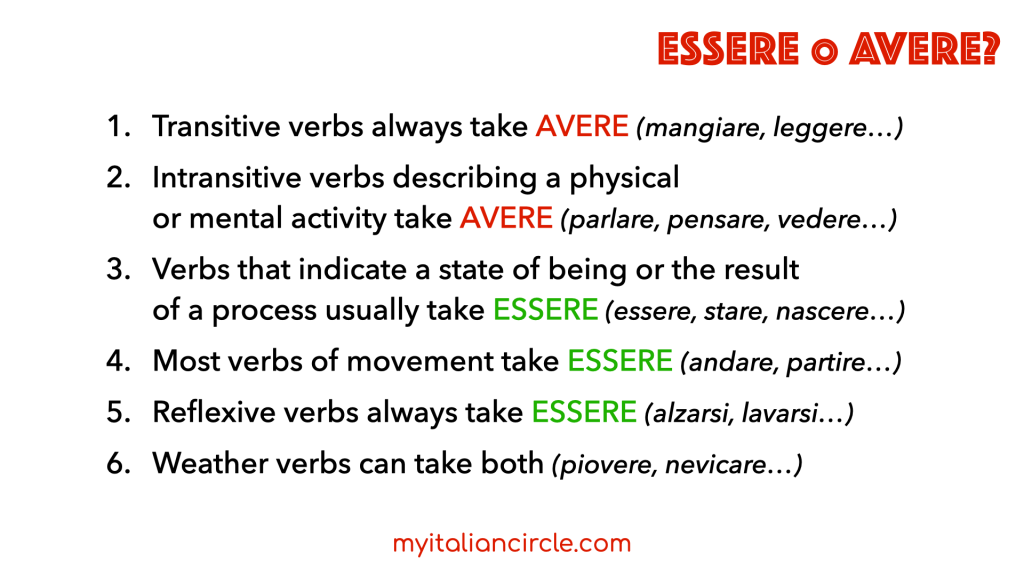
    Regola! The basic rule is that transitive verbs always form compound tenses with avere: 

    • Ho organizzato una mostra al museo e ho fatto tutto io. I set up an exhibition at the museum and I did it all myself.

    Una mostra and tutto are the objects of organizzare and fare, respectively, therefore these are transitive verbs that form compound tenses with avere.

    Now, what is a transitive verb? It’s a verb that makes the action transition to a direct object. There is something or someone that receives the action of the verb. How to figure out if a verb is transitive? If our sentence answers the question “Chi?” or “Che cosa?”, who or what, we have a transitive verb, and we form compound tenses with avere.

    Io leggo un libro. I read a book. This is the present tense.

    Io leggo – che cosa? – un libro.

    Libro is the object, so leggere is transitive, the passato prossimo is:

    Io ho letto un libro. Auxiliary avere. Easy.

    You might end up thinking that intransitive verbs, those that cannot take an object, always use essere. Yes and no, it depends on the type of verb.

    Regola! Intransitive verbs describing a physical or mental activity take avere: ho respirato (I breathed), ho pensato (I thought), ho parlato (I spoke).

    What about essere? Essere indicates a state, and these types of verbs take the auxiliary essere: sono stato.

    • Sono stato molto impegnato con il lavoro. I have been very busy with work.

    Regola! So, remember: among the verbs that usually take essere are those that indicate a state of being or the result of a process, such as rimanere and restare (stay), diventare (become), nascere (be born).

    • Paolo Sorrentino è nato a Napoli, io sono nata a Bologna. Paolo Sorrentino was born in Naples, I was born in Bologna.
    • Dove sei stata ieri? Sono rimasta a casa. Where were you yesterday? I stayed home.

    So, there are two main rules to keep in mind:

    1. Transitive verbs take avere.
    2. Verbs that indicate a state of being or the result of a process usually take essere.

    Regola! Let’s move on and add one more piece to the puzzle: the vast majority of verbs of movement also take essere, so a sentence like: yesterday I went to Venice in Italian is Ieri sono andata a Venezia.

    Andare is a verb of movement, so we have to use essere: io sono andata, Luca è andato, le ragazze sono andate and so on.

    You may have noticed an additional complication here: when the auxiliary is essere, the past participle agrees with the subject. Luca, masculine singular: è andato; le ragazze, the girls, feminine plural: sono andate. This does not happen with avere.

    Now, this rule seems simple enough, but watch out! A few verbs of movement take avere, such as camminare and viaggiare, so we say ho viaggiato and ho camminato. Rule of thumb: when the verb indicates only a movement, the auxiliary is avere; when it expresses a movement from a place or to another, then it takes essere. Compare:

    Sono partita ieri (even if the place is not expressed, I must have come from somewhere), ho viaggiato tutta la notte e sono arrivata a casa alle 16.00. I left yesterday, I travelled all night and I got home at 4pm.

    Compare again: Ho corso per due ore – I ran for two hours (here I’m focusing on the movement) and Sono corsa a casa – I ran home (here I have a destination). Correre can take both avere and essere, and it’s not the only verb that can do this!

    Regola! Now, to cheer you up, let’s add a rule that’s always true: reflexive verbs always take essere. These are verbs whose action reflects on the subject or something that belongs to it, like alzarsi and lavarsi:

    • Marco si è alzato alle sette. Marco got up at seven.
    • Io mi sono lavata i denti dopo colazione. I brushed my teeth after breakfast.
    • I ragazzi non si sono lavati le mani. The boys did not wash their hands.

    What about the weather? Freedom! For weather verbs, use either essere or avere:

    • Ha piovuto tutta la notte. / È piovuto tutta la notte. It rained all night.
    • Ieri è nevicato. / Ieri ha nevicato. It snowed yesterday.

    Finally, we need to remember that some verbs are not intrinsically transitive or intransitive, but can be used in one way or the other: they may have an object or not, such as cominciare, finire, iniziare, terminare, vivere, aumentare, cambiare. For example:

    • Il professore ha cominciato (transitive use) la lezione (direct object).
      The professor started the lesson. Transitive verbs form compound tenses with avere.
    • La lezione è cominciata (intransitive use, no direct object).
      The lesson started. Intransitive verbs form compound tenses with essere.

    Let us sum it all up:

    How to remember all this? Learning the rules is a good starting point, but you also need to read and listen to as much Italian as you can, paying attention to auxiliaries when you read your favourite Italian magazine, Italian website, or when you listen to your favourite Italian TV programme. This way, you will naturally pick up these patterns. Ultimately, you will figure out what sounds right and what sounds wrong. And whenever in doubt… check the dictionary! It will tell you which auxiliary to use.

    A presto!

    Anna

    Related video lessons: